

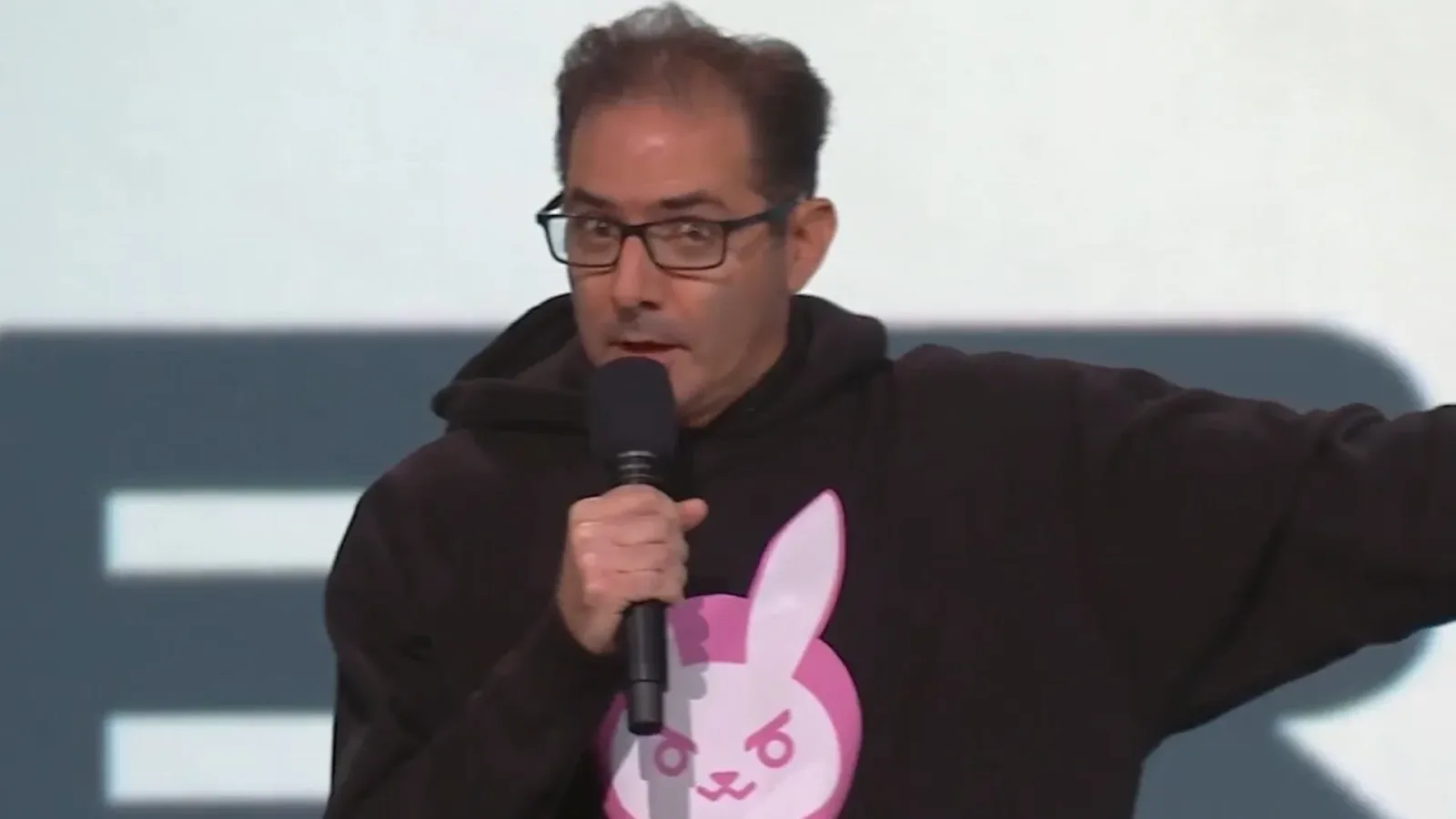
Former Overwatch game director Jeff Kaplan has offered a blunt new account of the decisions that led to Overwatch 2's complicated public debut. Speaking about his final years at Blizzard, Kaplan said he strongly objected to announcing the sequel at BlizzCon 2019 because, in his view, the project's core identity and business model had not been properly defined.
Kaplan, who left Blizzard in 2021, described confronting company leadership over the reveal. His concern was not simply that the announcement was early. He believed the team still lacked answers to foundational questions about what Overwatch 2 would actually be, how it would be monetized, and what it meant for the original game. Those doubts would become especially significant as the sequel's advertised plans changed repeatedly over the following years.
The remarks arrive after Kaplan has become more candid about the pressures surrounding the franchise late in his Blizzard career. He is now the studio lead at Kintsugiyama, where he is working on the western action game The Legend of California. In discussing that transition, he has reflected on a period in which creative authority over Overwatch increasingly felt out of his hands.
A sequel reveal Kaplan believed was premature
At BlizzCon 2019, Blizzard unveiled Overwatch 2 with a major stage presentation built around a cinematic, cooperative play, story-focused ambitions, and a promise of a shared competitive ecosystem with the first game. At the time, the announcement presented the sequel as a way to expand the hero shooter beyond its established player-versus-player foundation without fully abandoning the existing community.
For useful background on this topic, read BioWare's Legacy Continues Through a Wide Range of New Games and Stories.
Kaplan now says he fought against putting that announcement on stage. He recalled going to executives and questioning the logic of publicly committing to a game that had not yet settled its central parameters. In his retelling, the uncertainty covered both the creative side of the project and the commercial plan behind it.
"What are we doing? We don't really know what this game is, we don't know what the business model is. This is a huge mistake," Kaplan recalled telling leadership.
That concern helps explain why the 2019 announcement has remained such an unusual chapter in Overwatch history. The reveal made ambitious promises, but the years that followed were marked by delays, changing priorities, and an extended wait for meaningful new content in the original game. When Overwatch 2 finally launched in 2022, it did so as a free-to-play replacement rather than as the sequel many players had expected from the BlizzCon presentation.
Its competitive multiplayer was part of the live-service transition, while the sweeping cooperative and story elements advertised years earlier did not arrive in the form initially outlined. Blizzard ultimately canceled the planned hero-mode PvE vision in 2023. Story missions did appear, but as a considerably narrower offering than the large-scale progression-driven co-op mode that had helped define the initial pitch.
The cost of shifting development toward Overwatch 2
Kaplan also connected the troubled sequel rollout to decisions that affected the original Overwatch. He said the team was instructed not to work on new heroes for the first game because resources were needed for Overwatch 2. That mandate was a major factor in the content drought that players experienced between 2018 and the sequel's eventual launch.
For a game built around a regularly evolving roster, new maps, and seasonal reasons to return, the slowdown was conspicuous. The original Overwatch continued to receive events and balance adjustments, but the gap between hero releases grew dramatically. Players were effectively asked to wait for the larger promise of the sequel, even as the nature of that promise remained in flux behind the scenes.
Kaplan characterized the period from 2018 to 2021 as one of constant disputes with executives. In his telling, the friction was not limited to any one announcement or design feature. It was part of a broader change in who held decision-making power over the franchise.
He described a revolving cast of business-focused leaders from Activision and Blizzard entering the process and influencing creative choices. Earlier in his career, Kaplan said, he felt that being the game director meant he could steer the game's direction. Starting in 2018, he felt that control erode. After years of trying to regain it, he concluded that he no longer wanted his name attached to a project whose trajectory he did not support.
Why Diablo IV's presence at BlizzCon also bothered him
Kaplan's frustration extended beyond Overwatch 2 itself. BlizzCon 2019 also included the announcement of Diablo IV, another huge franchise reveal. Kaplan felt that presenting both projects at the same event prevented either from receiving the full spotlight it deserved.
More sharply, he interpreted the decision as an effort by new leadership to make a corporate statement: that Blizzard remained powerful and capable of delivering major games. Kaplan did not identify the executives involved. However, he made clear that he saw the impulse as driven by leadership's desire to prove something rather than by what best served the projects or their development teams.
Kaplan said the executives "had a lot to prove" and wanted to show that "Blizzard's back and Blizzard still has it." His own response, he said, was: "You guys are fucking idiots."
It is a striking recollection because it frames one of Blizzard's biggest showcase events not as a carefully coordinated celebration of its future, but as a point of internal disagreement. From Kaplan's perspective, the decision risked overselling two massive projects at once while one of them was still too unsettled to be announced with confidence.
Kaplan did not name the people with whom he argued. Based on the timing, J. Allen Brack was Blizzard's president when Overwatch 2 was announced in 2019. Kaplan specifically distinguished the executive he clashed with from former Blizzard president Mike Morhaime, whom he said he loved. Brack later stepped down in 2021 amid the company's sexual-harassment lawsuit scandal.
From Overwatch 2 back to Overwatch
The game's branding has since come full circle. Blizzard has dropped the "2" from the title, returning the active game to simply Overwatch. That change reflects how much the sequel concept transformed between the 2019 reveal and the live game that exists today.
Despite the difficult history Kaplan describes, he believes the franchise is in a comparatively healthy place now. Overwatch has been marking its 10th anniversary with 10 new heroes and a revamped approach to story. The current team has continued updating the game across PC, PlayStation, Xbox, and Nintendo platforms, rebuilding momentum after the contentious transition period.
Kaplan himself does not closely follow the game anymore, saying that distance is important for his own well-being. That separation makes sense given the intensity of his account. His comments are not a simple complaint about a single bad meeting; they describe a prolonged loss of faith in the creative process around a series he helped build.
A clearer explanation for a confusing era
For players, the path from the 2019 Overwatch 2 reveal to the present has often been difficult to parse. The game was sold first as an expansive continuation with shared multiplayer, PvE progression, and story-driven cooperative content. It later became a free-to-play relaunch whose most ambitious PvE component was abandoned. The long gap in original-game support made the transition feel even more frustrating for many fans.
Kaplan's account does not change the outcome, but it offers a perspective on why that era felt so disjointed. If the project was announced before the team had answered basic questions about its purpose and business model, many of the later revisions become easier to understand. They still do not erase the disappointment of players who waited for the original vision, but they suggest the uncertainty was present well before the public ever saw the sequel.
His comments also underline a recurring challenge in major game development: a public reveal can create momentum, but it can also lock a studio into expectations before the work is ready. For Overwatch, that pressure appears to have coincided with executive conflict, resource shifts, and an eventual break between the franchise and one of its defining creative leaders.
Now focused on The Legend of California, Kaplan is looking forward rather than returning to Blizzard. Still, his recollection of the Overwatch 2 reveal stands as one of the clearest insider explanations yet for why a sequel announced with such confidence ultimately took such a different shape.
Community
Discussion
Start the conversation.
No comments have been posted yet.