

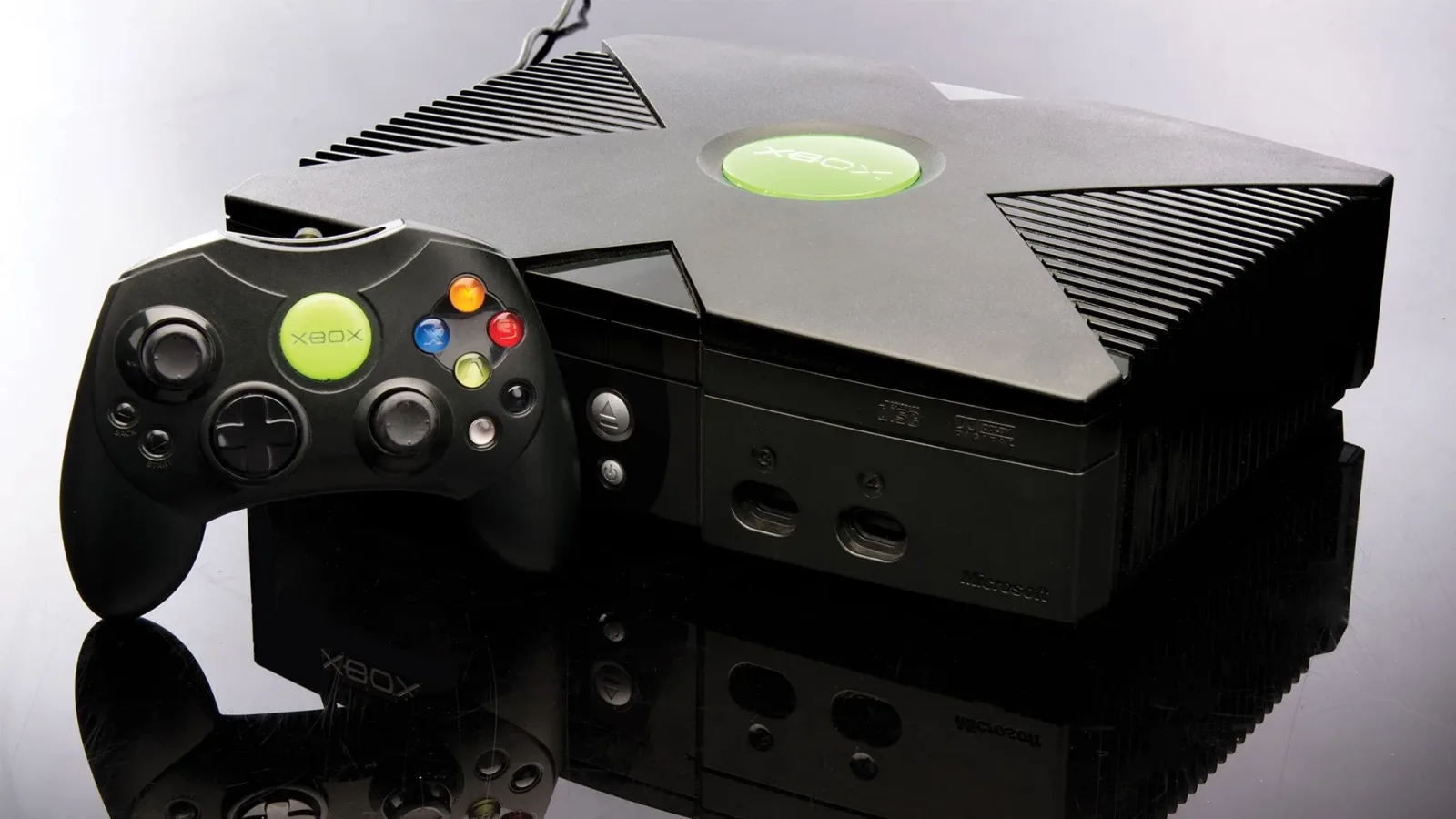
Ken Kutaragi, the engineer and executive widely regarded as the architect of PlayStation's early identity, has offered a striking account of a meeting with Microsoft that he believes helped set the stage for Xbox. Looking back on Sony's formative console years, Kutaragi said he rejected an offer involving Microsoft hard disk drives and licensing rights--not simply because he disliked the terms, but because he hoped Microsoft would respond by pursuing a gaming platform of its own.
His recollection frames one of gaming's most consequential rivalries in unusually personal terms. The original Xbox arrived in 2001 as a direct competitor to Sony's enormously successful PlayStation 2, establishing a contest that would shape console hardware, online services, software publishing, and player expectations for decades. Kutaragi now says that Microsoft entering the field was, at least in part, an outcome he wanted to provoke.
"If I say 'no,' they will get started on bringing in another platform after PC," Kutaragi said. "That was my secret intention."
The exact circumstances remain somewhat unclear. Kutaragi did not identify the Microsoft executive he met, and he did not precisely establish whether the demonstration involved technology intended for the original PlayStation or the PlayStation 2. That missing detail matters, since Sony's first two consoles arrived in very different market environments. Still, the broad timeline points toward the period before Microsoft launched Xbox, when the company was considering how it might expand beyond its dominant position in personal-computer software.
For useful background on this topic, read GTA 6 Animation Lead Explains Why Every Item Interaction Needed Three Versions.
A Meeting Between Two Emerging Hardware Strategies
In Kutaragi's telling, he met privately with Microsoft's leader at the time, though he did not name the individual. Bill Gates headed Microsoft during the period in question, but Kutaragi did not specifically confirm that Gates was the person across the table. He described the executive as "so arrogant," a characterization that underscores how differently the two companies may have viewed Sony's prospects in game hardware.
Kutaragi said Microsoft offered to provide Sony with hard disk drives at no cost in exchange for certain licensing rights. The proposal, as he recalled it, was an attempt to persuade Sony to work more closely with Microsoft at a moment when internal storage was becoming an increasingly meaningful part of the technical conversation around consoles.
His response was short: no.
The refusal was not, by his account, merely a negotiation tactic intended to improve the deal. Kutaragi said he believed turning Microsoft away could motivate it to create a platform beyond PC. He presented that possibility as a deliberate strategic calculation: competition from a well-funded technology giant could expand the game business itself, even if it also created a major threat to PlayStation.
"We, together, opened up this field," Kutaragi said, describing the eventual PlayStation-Xbox confrontation as something that was intentional.
The Hard Drive Question and Xbox's Defining Feature
The hard-drive portion of the story is especially notable in hindsight. Microsoft's original Xbox launched with a built-in hard drive, an important point of difference from the PlayStation 2, Nintendo GameCube, and many earlier home consoles. The drive supported game saves without relying solely on memory cards, enabled downloadable content, and helped make the system's broader online ambitions more practical.
At the time, that inclusion was not just a technical specification. It was part of Microsoft's larger argument that a console could be built using ideas familiar from PCs while still serving a living-room audience. Xbox's architecture, broadband focus, internal storage, and later Xbox Live strategy all contributed to a model that placed greater emphasis on connected services and persistent digital data.
It is impossible to know how Sony's plans might have changed if it had accepted the proposed arrangement Kutaragi described. A hard-drive path for PlayStation 2 could have looked very different depending on cost, manufacturing, licensing terms, and the maturity of online infrastructure at the time. Sony ultimately offered an optional network adapter and hard disk drive solution for PS2 in some markets, rather than making a drive universal across the system's vast installed base.
What is clear is that Microsoft made the hard drive central to the original Xbox's design. Kutaragi's anecdote suggests that the technology was discussed in a competitive context before Xbox had taken its final public form, but it does not establish that the rejected proposal was the sole reason Microsoft made its console or chose its eventual hardware features. Microsoft's interest in gaming had broader roots, including its PC software business, its DirectX technology, and its existing position as a major force in entertainment software.
PlayStation 2 Had Little to Fear in Sales
Even with a new challenger entering the market, Sony was in an exceptionally strong position. PlayStation 2 became one of the defining consumer-electronics products of its generation and remains the best-selling home console in history. Its software library, DVD playback, global reach, and momentum from the first PlayStation gave Sony advantages that no debut platform could easily overcome.
The original Xbox was commercially significant and built a passionate audience, but it did not approach PlayStation 2's worldwide sales. Sony outsold Microsoft by a vast margin during that generation. From a narrow sales perspective, Kutaragi's decision to reject Microsoft's proposal did not prevent PlayStation 2 from dominating the market.
But market leadership was only one part of the story. Xbox's arrival forced another major platform holder into direct competition with Sony, while Nintendo continued to pursue its own hardware and software strategy. That three-company structure became a defining feature of the modern console business. Each manufacturer had different priorities, and those differences gave players distinct choices around exclusives, controllers, online play, multimedia features, hardware power, and pricing.
For Sony, Microsoft's willingness to spend heavily on Xbox meant the PlayStation business would no longer compete only against established game companies. It would also face one Of the World's largest technology corporations, a company able to absorb significant early losses while building a brand in the living room.
A Rivalry That Changed the Industry
The PlayStation-Xbox rivalry went far beyond the original hardware generation. Xbox Live became a landmark service for console online gaming, helping normalize unified accounts, friends lists, voice chat, downloadable content, and recurring memberships. Sony responded over time with its own network strategy, while the industry broadly shifted toward digital storefronts, connected ecosystems, regular system updates, and games designed to grow after launch.
Hardware competition also accelerated technical expectations. Successive PlayStation and Xbox machines competed over graphical capabilities, storage, media support, backwards compatibility, subscription offerings, and development tools. Their rivalry influenced publisher relationships and studio acquisitions as well, particularly as exclusive content became a central way to distinguish one ecosystem from another.
Kutaragi's comments give that history an ironic new angle. Rather than treating Xbox exclusively as an unwelcome intrusion into Sony's territory, he portrayed Microsoft's arrival as part of the wider expansion of the medium. The implication is not that Sony wanted to surrender its advantage, but that a serious competitor could validate console gaming as a major global technology category.
That perspective fits Kutaragi's long-standing reputation as a figure who pushed PlayStation toward ambitious hardware goals. From the first PlayStation's leap into 3D gaming to PlayStation 2's positioning as a powerful entertainment device, Sony's early strategy often aimed beyond the boundaries of what a conventional game machine was expected to be.
Questions That the Story Does Not Answer
The anecdote is memorable, but several questions cannot be resolved from Kutaragi's account alone. The identity of the Microsoft executive is unspecified, as is the precise date of the meeting. It is also uncertain which PlayStation hardware project was shown, what licensing rights Microsoft sought, and how formal or developed the offer actually was.
There is also no reason to reduce Xbox's creation to a single rejected conversation. Microsoft's decision to enter the console market was shaped by multiple commercial and technological pressures, including concern over the role of Windows in home entertainment and the growing importance of games as a mainstream business. Kutaragi's recollection instead adds a revealing personal chapter to that larger history.
Its value lies in how it captures the competitive thinking of the era. Sony had become powerful through PlayStation, Microsoft had the resources to challenge it, and both companies saw gaming as a strategic space that could not be ignored. Whether Kutaragi's refusal directly changed Microsoft's timetable or simply reinforced an existing direction, Xbox did arrive--and it became a permanent force in the industry.
From Console Wars to an Uncertain Future
Kutaragi has also recently questioned whether the traditional console model can remain unchanged forever. He has pointed to rising hardware costs and the growing role of artificial intelligence as reasons the industry may be approaching a time when dedicated consoles are less essential. In his view, the current situation is not necessarily healthy if the expense of advanced machines continues to climb.
That possibility makes his reflection on Xbox's birth especially interesting. The rivalry he says he helped encourage defined the last quarter-century of games, yet the next major transformation may challenge the very hardware categories that rivalry was built upon. Cloud technology, PCs, mobile devices, subscriptions, AI-assisted development, and cross-platform releases have already blurred some of the boundaries between ecosystems.
For now, however, PlayStation and Xbox remain among the industry's most recognizable brands, and their history is inseparable from the competition Kutaragi described. A meeting about hard drives and licensing may not tell the entire story of Xbox's origin, but it offers a vivid reminder that the future of gaming is often shaped by decisions whose consequences are not obvious until years later.
Community
Discussion
Start the conversation.
No comments have been posted yet.