

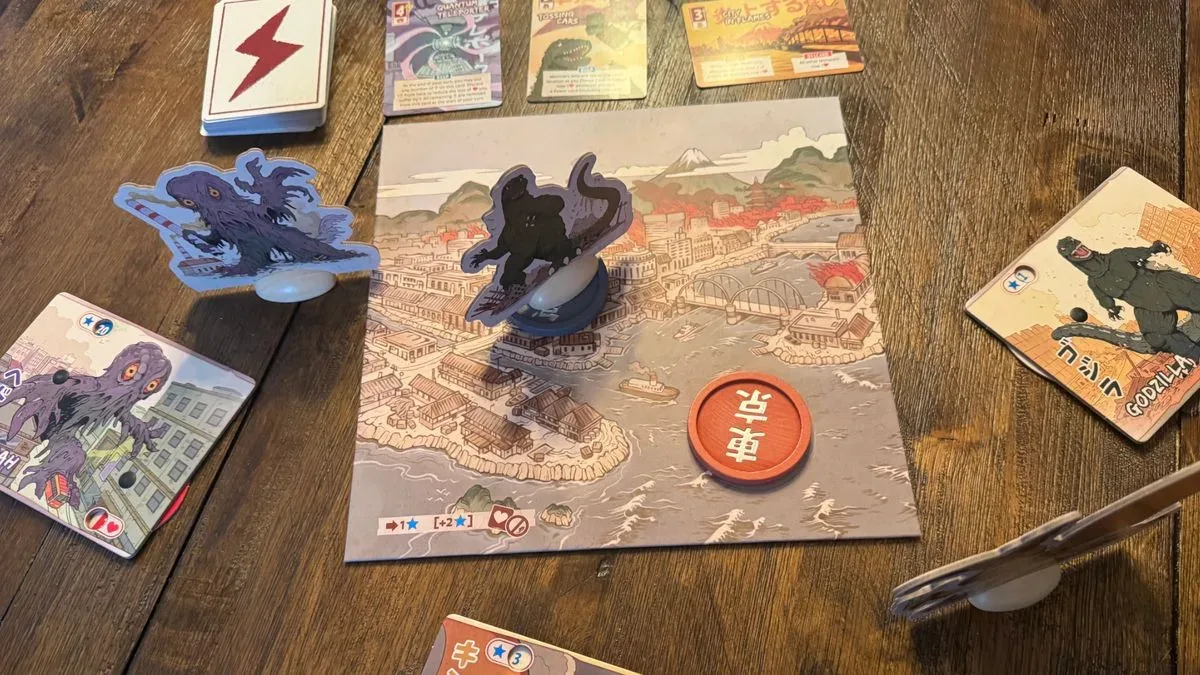
King of Tokyo: Godzilla finally makes explicit the connection that has always been at the heart of Iello's monster-brawling board game. Richard Garfield's original King of Tokyo, released in 2011, was built around the thrill of enormous creatures fighting over a devastated city while rolling dice for attacks, energy, healing, and points. Its visual language and premise were clearly indebted to kaiju cinema. Now, 15 years later, Godzilla and five other monsters from the long-running franchise have arrived as the game's actual stars.
According to a GamesRadar+ review, the result is less a radical reinvention than a polished, affectionate version of an already proven tabletop favorite. King of Tokyo: Godzilla retains the quick turns, push-your-luck dice rolling, and high-energy player interaction that made the original such a durable gateway game. Its major changes are an Event-card system, dedicated evolution decks for each monster, and notably upgraded physical components. For newcomers who love Godzilla, that combination appears to make a strong first entry point. For longtime King of Tokyo players, the appeal is more dependent on how much the licensed presentation and component quality matter.
A Familiar Battle for Tokyo
The central structure remains immediately recognizable. Designed for two to six players aged eight and up, King of Tokyo: Godzilla is a low-complexity strategy and dice-rolling game that typically lasts around 30 minutes. Each participant takes control of one monster and attempts to win either by reaching 20 victory points or by becoming the final creature left standing.
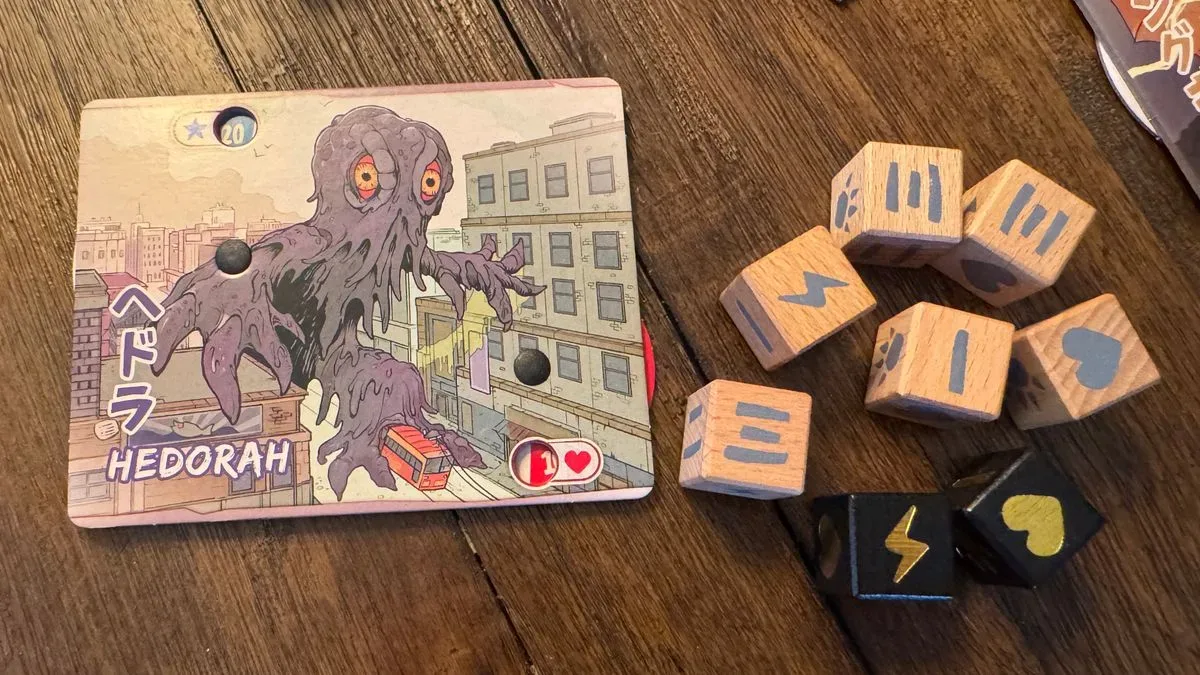
Turns revolve around a pool of six dice and a system reminiscent of Yahtzee. Players roll, hold the outcomes they want, and may usually reroll the remaining dice up to two times. The symbols determine the actions available that turn. Monster footprints inflict damage, hearts restore health, energy icons provide the resource used for purchasing cards, and numbered faces can generate victory points when a player collects three matching values.
That straightforward loop is a major reason the game has endured. Players can understand what they are trying to do almost immediately: hit rivals, stay alive, buy useful powers, and decide whether scoring points is worth more than hurting someone. But the decision to keep or reroll any given die still creates tension. A player holding two attack results may be tempted to chase a third, while another low-health monster might need to prioritize healing. The luck remains prominent, but each roll gives players a modest and accessible set of choices.
The fight for Tokyo provides the game's defining risk-reward dilemma. Entering the city grants victory points, and controlling it at the start of a turn earns additional points. A monster in Tokyo also attacks every opponent at once, making it a powerful offensive position. The drawback is severe: every other monster can target the creature in Tokyo, and that monster cannot heal during its own turn.
Leaving Tokyo is always possible when the position becomes too dangerous, yet doing so does not simply remove a player from harm. The next player in turn order immediately takes control of the city. That detail means a retreat can produce a new problem, particularly if the former controller is still vulnerable and about to endure attacks from the newly empowered monster. Even within a light, chaotic game, timing that exchange matters.
Godzilla Takes Center Stage
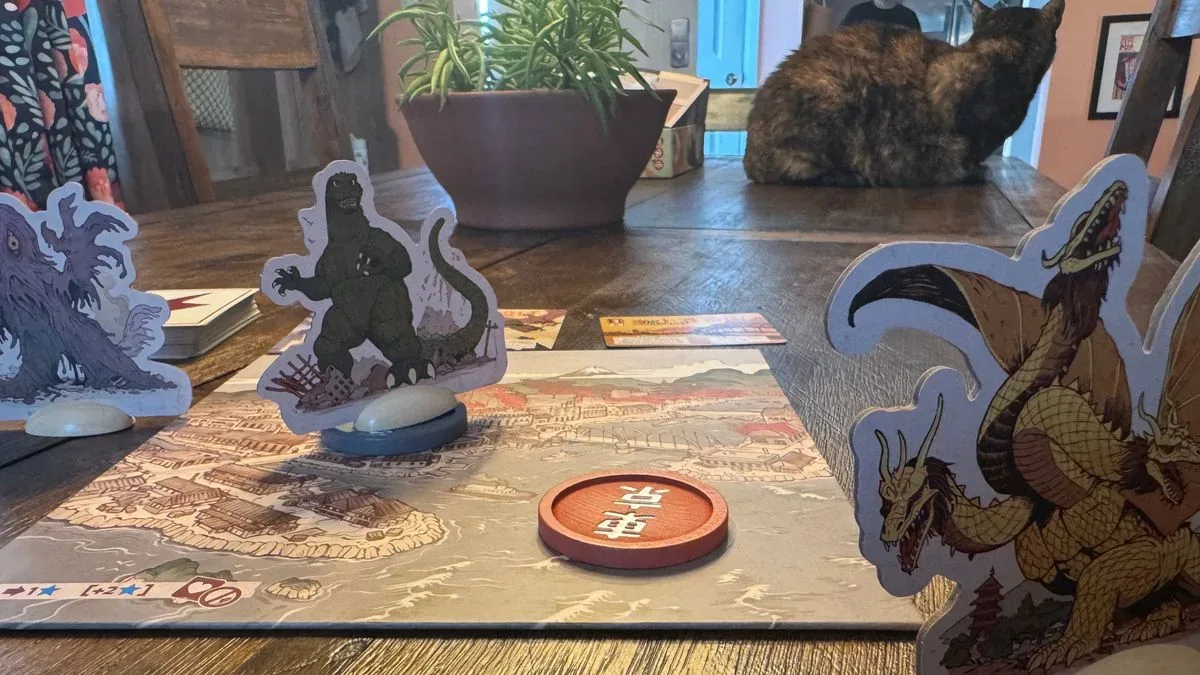
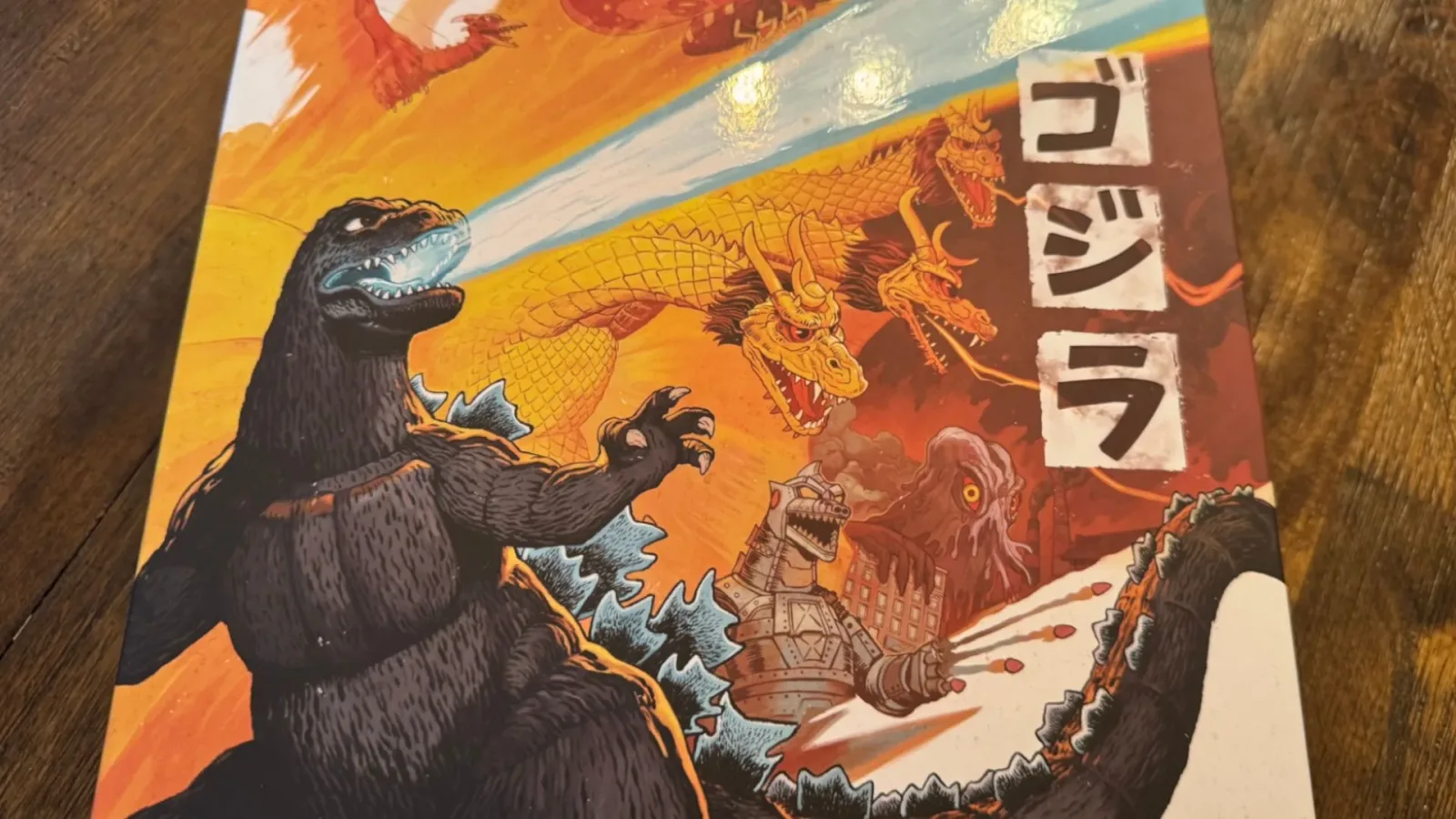
While the underlying rules are the same as the base game, the Godzilla license changes the atmosphere substantially. The edition includes six monsters from the Godzilla series rather than the original game's broadly inspired creature designs. The review describes the art, created across dozens of pieces by Markus Erdt, as a major strength. Recognizable kaiju give the game a more direct sense of identity, turning a general monster mash into a specific tribute to one of pop culture's most influential giant-monster franchises.
Each monster comes with its own player board and evolution deck. Player boards track health and victory points, while evolution cards provide upgrades unique to the creature being played. These can range from one-shot effects to ongoing benefits. Rolling three hearts creates a choice: players can use the result to heal, or forgo that healing to gain an evolution instead.
That decision gives low-health players a particularly meaningful gamble. Healing is often the safe route, especially outside Tokyo where it can keep a monster in the game. An evolution may offer a powerful new tool, however, and can be attractive when an immediate advantage is worth the added danger. The individual evolution decks also help differentiate the monsters beyond their art and standees, even though the game's essential shared systems remain easy to learn.
Energy continues to fuel the common power-card market. Any monster can spend enough energy to buy these effects, which include both single-use tricks and lasting upgrades. This shared deck is where players can find situational answers, unexpected offensive options, and effects that reshape their approach for the rest of the match. It also creates a visible marketplace that can encourage players to grab a useful card before an opponent does.
Event Cards Add a Shared Complication
The primary gameplay addition in King of Tokyo: Godzilla is the Event-card mechanic. Events enter play when they appear in the power-card marketplace. Each one has an ongoing effect that applies to all monsters while it remains active, adding a temporary global condition to the battle. Players can also purchase an Event with energy and discard it in exchange for its listed benefit.
That produces an extra layer of tension in the market. An Event is not just another power to evaluate for one player's personal engine; it is a rule-altering presence that affects the whole table. Players may want to remove an Event because its ongoing effect is troublesome, because they need its discard reward, or because they do not want a rival to claim that reward first.
For experienced players, the Events are likely the most visible new mechanical wrinkle. The review notes that the edition otherwise draws on ideas that may already be familiar from prior expansions. As a result, it should not be treated as an entirely new King of Tokyo experience. It is a refined standalone version built for the Godzilla theme, rather than a sequel that substantially changes the series' formula.
Premium Materials Make the Difference
One of the most compelling distinctions is not a rule at all. This edition uses wooden dice and energy markers, while its cardboard standees are described as sturdier than those used in other entries. It is not formally marketed as a premium edition, but GamesRadar+ found that the quality of the components creates that impression.
That tactile upgrade matters for a game centered on rolling dice, collecting resources, and placing an oversized monster in the middle of a lively table. The physical pieces are handled constantly, so a more substantial feel can have a meaningful effect on the experience. Paired with the Godzilla artwork, the upgraded production values may make this version feel more special when brought out for a family gathering or board-game night.
The presentation also helps explain why it could draw in people already familiar with the original. A group may know exactly how King of Tokyo plays, but the sight of official Godzilla monsters and more deluxe-feeling pieces still provides a strong table presence. That is an aesthetic argument rather than a systems argument, but tabletop games often succeed because they make players want to sit down and start a session.
Embrace the Luck and the Chaos
Potential buyers should be clear-eyed about what kind of game this is. King of Tokyo: Godzilla has tactical decisions, from managing Tokyo control to spending energy and choosing evolutions. Yet dice outcomes play a very large role, and there are few ways to protect against a bad sequence of rolls or incoming damage. The review's conclusion is that the game works best when players accept that volatility rather than expecting a tightly controlled strategic contest.
That makes it especially suitable for bigger groups. With more monsters around the table, Tokyo becomes a flashpoint, attacks affect more players, and the game's shifting alliances and sudden reversals become more entertaining. It is not technically a party game, but it shares some of the same social appeal: loud reactions, immediate consequences, and stories about the unlikely roll that either saved a monster or ended its rampage.
Although the rules permit a 20-point victory, the review says games are more commonly decided through elimination. In practice, the race for points can turn into an all-out brawl as health totals fall and one player after another becomes a target. That outcome fits the kaiju premise well. Players looking for a measured, low-randomness economic strategy game should look elsewhere; those seeking a brisk monster movie in board-game form may find that volatility is precisely the point.
Who Should Choose This Edition?
King of Tokyo: Godzilla appears best suited to Godzilla fans who have not spent much time with the King of Tokyo line, as well as players who want the most lavish-looking version of the classic formula. It keeps the original's strengths: easy rules, fast pacing, meaningful bursts of tension, and a theme that works naturally with its mechanics. The official kaiju, Event cards, individual evolutions, and better components give it a distinct package without making it difficult to teach.
It is less essential for players who already own a base version and want a major mechanical departure. The new content is real, but the review stresses that the game does not add a large amount of fresh gameplay for franchise veterans. Those who dislike luck-driven games should also take note. Decisions can improve a player's position, but no clever plan can fully overcome poor dice results at the wrong moment.
Iello has released several other versions and related games over the years, including the two-player King of Tokyo Duel and cooperative alternative King of Monster Island. Against that broader lineup, King of Tokyo: Godzilla stands as a premium-leaning celebration of the core competitive game. It is not trying to replace every previous release or rebuild the system from the ground up. Instead, it gives the long-running design the official monster icons that inspired it, and presents them in a handsome, accessible package built for dice-fueled destruction.
Community
Discussion
Start the conversation.
No comments have been posted yet.