

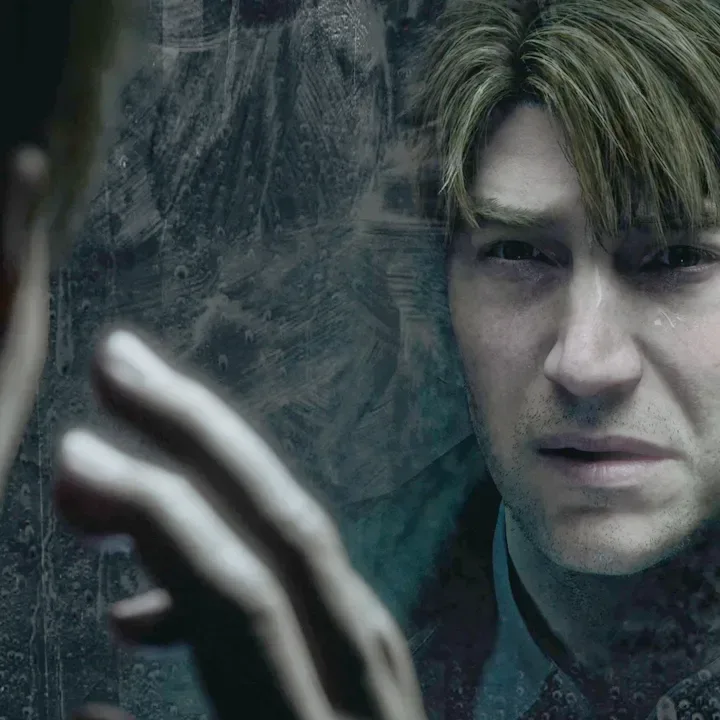
Konami's Silent Hill revival is not expected to end with its first group of newly released projects. Producer Motoi Okamoto has said the company is looking ahead to a potential "second" and "third" wave of Silent Hill games, following a run that brought the long-dormant psychological horror series back into active development and release.
Okamoto discussed the franchise's direction in an interview published in Famitsu Issue 1965. While he did not identify the projects currently being considered, he indicated that Konami is examining multiple possibilities after the successful launch of the initial slate. It is an important signal for a series whose future once appeared extremely uncertain after years without a major new installment.
The producer described the first wave as a meaningful milestone. Konami had announced three prominent Silent Hill projects, and all of them have now been released: the Silent Hill 2 remake, Silent Hill f, and Silent Hill: Townfall. Okamoto said the team was relieved to see that initial plan reach completion and was satisfied by the positive response those games received.
But that apparent completion should not be read as a finish line. In Okamoto's view, getting the first group of titles out successfully creates the need to consider what comes next. Specific announcements are not ready to share, but the producer said a number of possible projects are being evaluated.
For useful background on this topic, read Magic: The Gathering Reveals Marvel Crossover Darkhold Destiny for 2027.
A Revival Built on More Than One Approach
What stands out about Konami's recent Silent Hill strategy is that it has not relied on a single format or a single development partner. The return has included a remake of one of the series' most revered entries, an entirely new mainline-style experience in Silent Hill f, and the more distinct perspective offered by Silent Hill: Townfall. Rather than trying to make every release look and play the same, the publisher has allowed the brand to explore different settings, eras, and interpretations of psychological horror.
That variety may also explain why Okamoto refers to waves rather than simply discussing one follow-up game. A wave suggests a broader pipeline: several titles with separate identities that can collectively sustain interest in Silent Hill over time. It does not confirm how many games will be made, who will develop them, or which concepts will ultimately advance. Still, it makes clear that Konami is thinking beyond an isolated remake or a one-off return.
Silent Hill: Townfall is the most recent installment mentioned in the discussion. Released last month, it places players in the role of protagonist Simon Ordell in a 1990s Scottish setting. The game received generally favorable reviews, adding to the sense that Silent Hill's comeback has found an audience across more than one type of project.
The new releases have also helped the series escape the difficult position it occupied for much of the previous decade. Silent Hill remained a hugely recognizable name in horror games, but recognition alone did not guarantee a future. For years, fans had little certainty about whether Konami would commit to an ongoing development plan.
Why the First Wave Mattered So Much
Okamoto's comments underline how fragile the franchise's path back was. He said that, following the failure of Hideo Kojima's Silent Hills to materialize, persuading company leadership that Silent Hill should receive more games was not easy. The cancellation became one of the most prominent disappointments in modern horror gaming, leaving the brand in an uncomfortable state: it was still culturally important, but it had no clear route forward.
For Okamoto, one remake would not have been sufficient to demonstrate a genuine return. He explained that he did not want the franchise to stop there, and that a lone release could lead players to believe development might be abandoned once again. That concern helps put the multi-game launch plan in context. It was not just an attempt to capitalize on nostalgia around Silent Hill 2; it was a way of showing that Konami intended to rebuild confidence in the series as an active property.
The approach appears to have delivered the result the producer hoped for. The first wave has established that Silent Hill can support both remakes and fresh ideas, while also giving Konami a clearer foundation for future decisions. Positive critical reception does not guarantee that every proposed project will proceed, but it gives the publisher a stronger case for continued investment than the series had during its long absence.
There is a practical lesson in the way this revival has unfolded. A legacy horror franchise can struggle when it is treated only as a museum piece, especially when its best-known games have such devoted followings. Konami's output has instead balanced familiarity with experimentation. The Silent Hill 2 remake speaks directly to fans of the classic, while the newer games demonstrate that Silent Hill can move outside its most famous story and location without abandoning the themes that define it.
The Original Silent Hill Remake Remains a Key Part of the Future
Even before Okamoto's new comments, there was already one major indication that more Silent Hill was on the way. Bloober Team, the studio behind the Silent Hill 2 remake, confirmed last year that it is working on a remake of the original Silent Hill.
That project is especially notable because the 1999 original established the series' identity. Its fog-shrouded town, unsettling radio static, fractured reality, and emphasis on personal trauma laid the groundwork for the games that followed. A modern remake has the opportunity to introduce that foundation to a new audience while inviting longtime fans to revisit Harry Mason's search for his daughter through contemporary technology and design.
However, the confirmed remake should not be assumed to represent the full extent of Konami's second wave. Okamoto's wording points to several projects being considered, and the original Silent Hill remake was confirmed separately by Bloober Team. Until Konami provides formal announcements, it remains unknown whether the next wave will include additional remakes, new numbered entries, smaller experimental games, or some combination of all three.
It is also unknown when any new announcements might arrive. Okamoto made no commitments about timing, development studios, game names, platforms, or release windows. Fans should therefore view the remarks as a statement of intent rather than a detailed roadmap.
What Fans Can Reasonably Expect--and What Remains Unknown
The strongest takeaway is that Silent Hill now has a future beyond the titles already released. Konami's leadership appears to see value in maintaining momentum rather than allowing the series to fade back into another extended hiatus. That is a substantial shift from the uncertainty that followed the loss of Silent Hills.
At the same time, there are still many unanswered questions. There is no announced second-wave lineup. There is no confirmation that every project being reviewed will enter full production. There are no details on whether future games will share creative talent with the first revival wave or move to entirely new teams. And while Silent Hill's history includes very different styles of horror, there is no indication yet of the exact gameplay direction that future releases will take.
- Konami has completed its initial set of announced Silent Hill revival releases.
- The publisher is considering further projects described as possible second and third waves.
- Details on those projects have not been revealed.
- Bloober Team's remake of the original Silent Hill remains a confirmed future project.
- No new release dates, platforms, or game titles were provided alongside Okamoto's comments.
For players, the news is encouraging precisely because it is broader than a single sequel confirmation. Silent Hill has traditionally been at its best when creators use its horror framework to tell unusual, uncomfortable, and highly personal stories. A pipeline that accommodates multiple projects could give Konami room to revisit classics while also allowing new creative teams to take risks.
Whether that ambition becomes a sustained renaissance will depend on the projects eventually chosen, their quality, and how well Konami supports them after announcement. For now, though, the fog is clearing just enough to reveal a direction: the recent Silent Hill releases were not designed as a final nostalgic farewell. They were intended as the opening stage of a larger return.
Community
Discussion
Start the conversation.
No comments have been posted yet.