

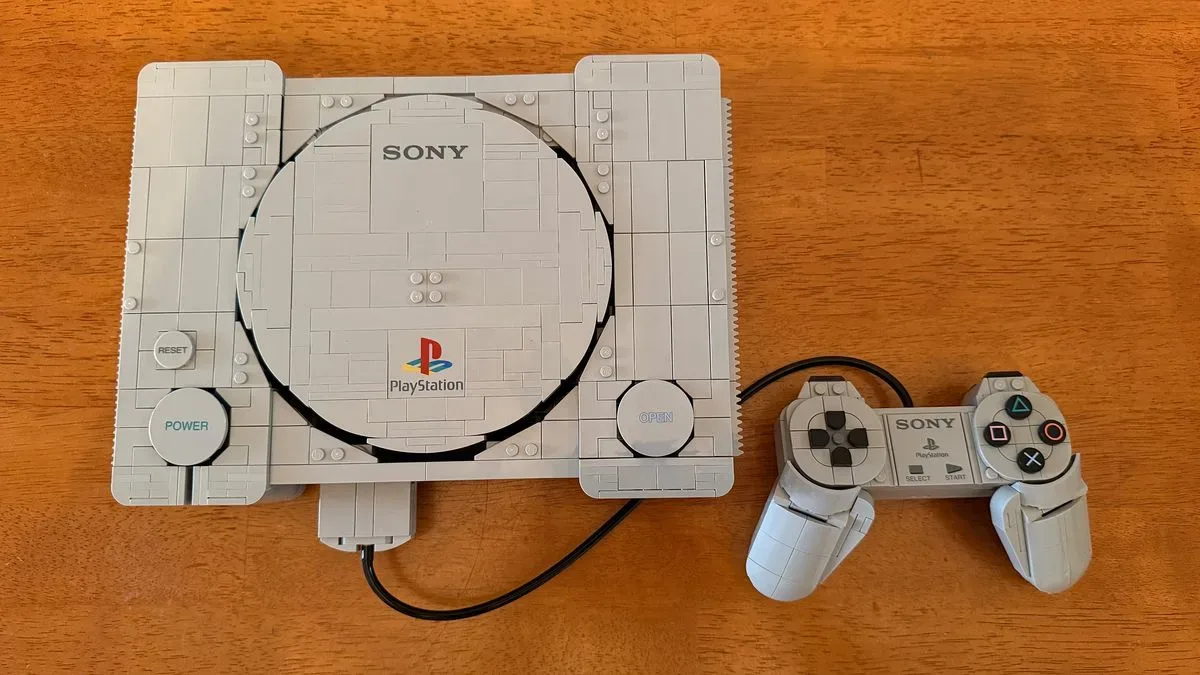
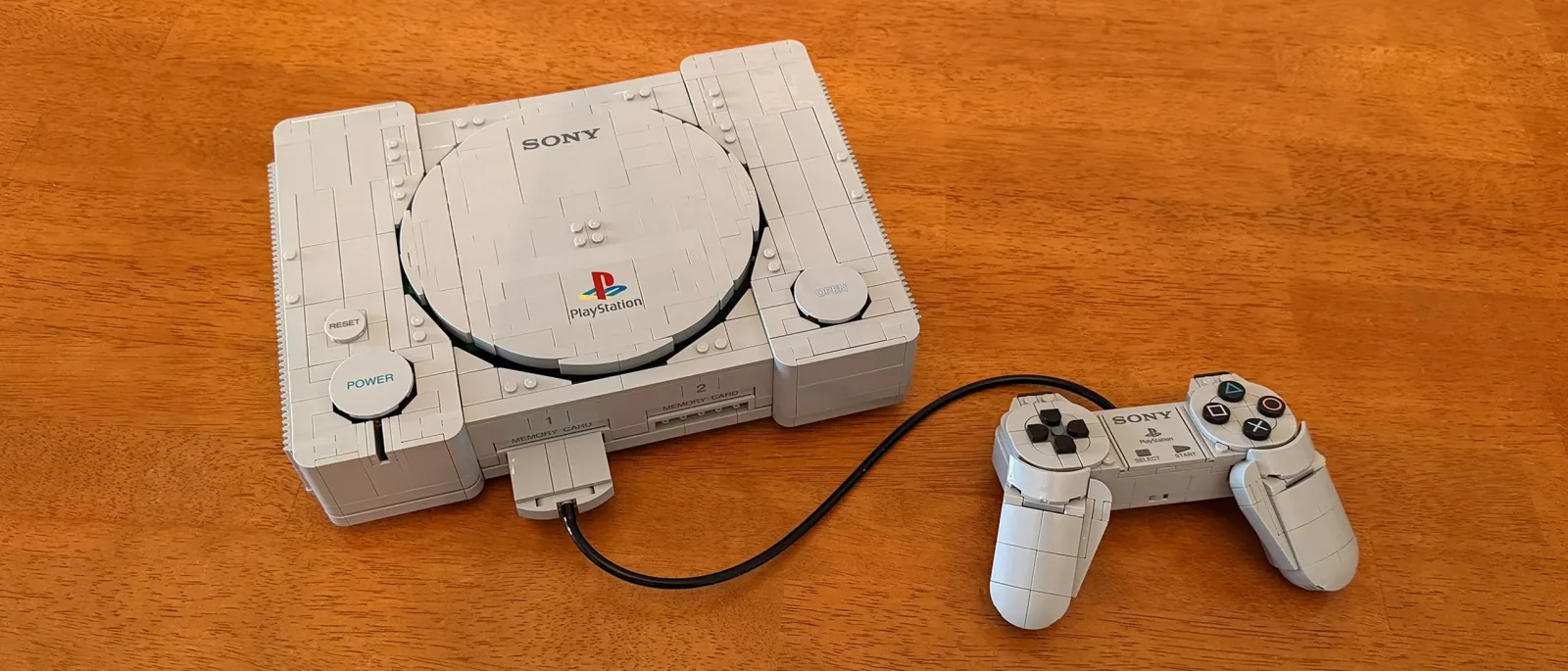
Lego is turning one of gaming's most recognizable pieces of hardware into a substantial display model with LEGO PlayStation 72306. The adult-oriented set recreates Sony's original PlayStation console at an almost life-size scale, pairing the familiar gray machine with a brick-built version of the first DualShock controller and several mechanisms designed to make the model more than a static replica.
With 1,911 pieces, an 18+ age recommendation, and a listed price of $179.99 / £139.99, this is firmly aimed at collectors, retro gaming fans, and builders who want a centerpiece rather than a quick afternoon project. The completed console measures approximately 2.5 inches high, 10.5 inches wide, and 7.5 inches deep (6cm by 26cm by 19cm), closely matching the proportions of the hardware that helped establish PlayStation as a major force in the game industry.
Its appeal is rooted in recognition. The original PlayStation's shape is unusually distinctive: a low, rounded gray box with a circular disc lid, stepped edges, front controller ports, and small but memorable physical buttons. Translating that design into Lego form requires far more than stacking gray bricks, particularly around its curved surfaces and the controller's angled grips. Set 72306 appears to put considerable emphasis on getting those details right, from the large exterior silhouette down to elements that will mostly be seen only by owners inspecting the build up close.
A console replica built for close inspection
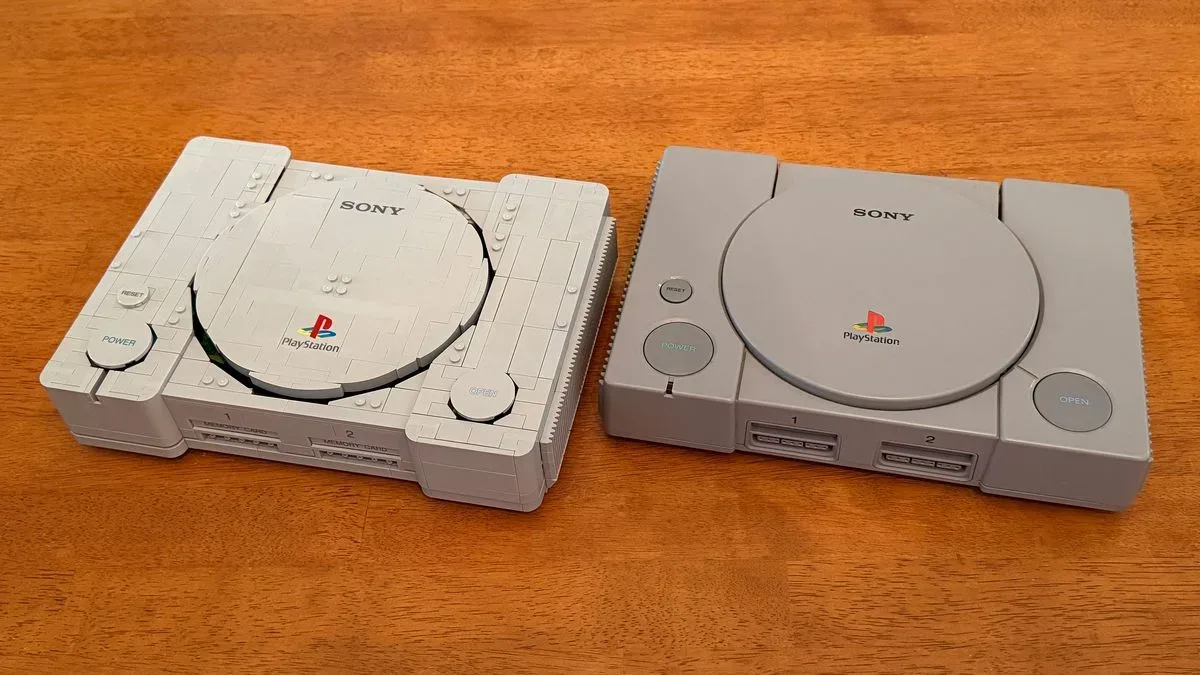
The main model is designed as a near 1:1 tribute to the original system rather than a reduced-scale interpretation. That decision distinguishes it from Lego's Sega Genesis Console set, which took a smaller approach to its hardware recreation. The PlayStation's larger format gives the model room for functional features and a densely detailed internal construction while preserving the physical presence of the real console.
For useful background on this topic, read The Witcher 3: Wild Hunt - Remastered Begins a Month-Long Community Playthrough.
On the outside, the set reproduces key details from every side. The rear panel includes the markings and arrangement for the AC In, AV Multi Out, and Serial I/O connections. The front features controller ports that can accept the included brick-built controller. Side ridges are represented, while the underside even includes four correctly positioned rubber-foot-style details. They are minor touches in practical terms, but they matter to a set whose purpose is to celebrate a piece of hardware remembered as much for its physical design as for its software library.
The DualShock controller is a major part of that presentation. Lego has recreated its unusual handgrip angles, face-button layout, and overall shape in a compact construction that is intended to connect to the console. The controller is not merely a separate accessory placed beside the model; its ability to plug into the front reinforces the impression that the set is a miniature mechanical object, not simply a logo-bearing display sculpture.
The visual accuracy also extends to decorated components. Most exterior logos, controls, and markings use printed pieces rather than stickers, helping the model retain a cleaner collector finish. There are 15 stickers in total, but they are largely reserved for the internal display sections instead of the console's most visible surfaces.
Working Power and Open controls are the standout feature
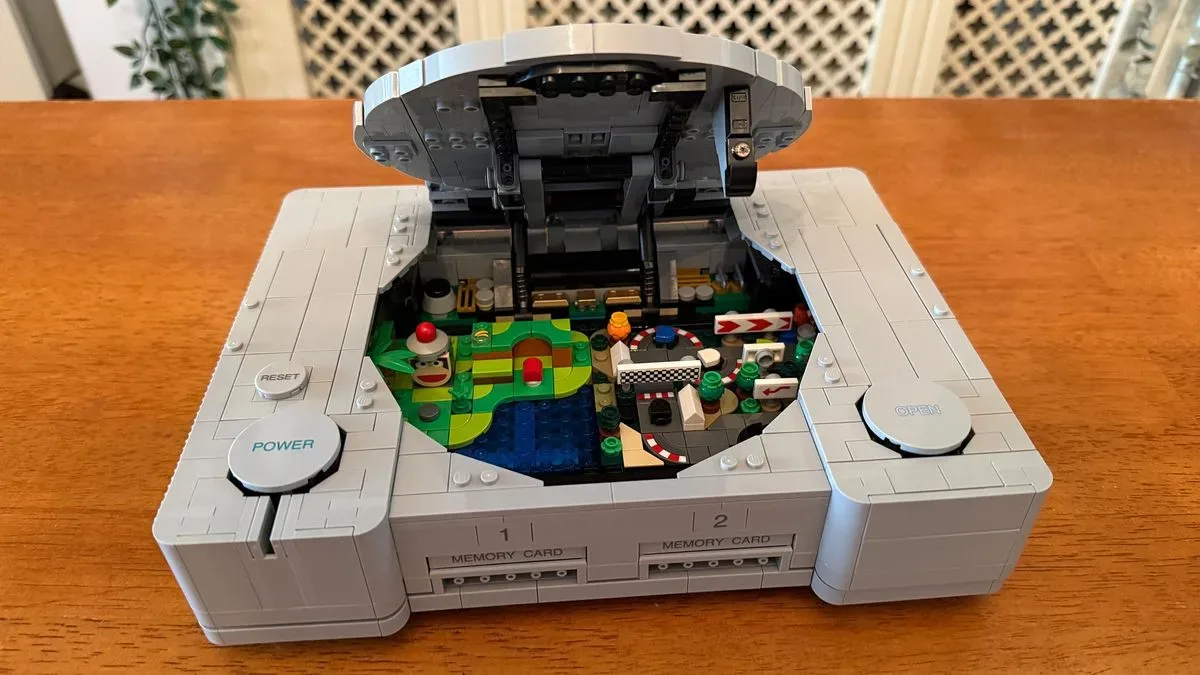
The strongest mechanical flourish is found on top of the console. Both the Power and Open buttons function through an internal arrangement of pivots and rubber cushioning. Pressing Power causes a luminous rod to rise through a slot in front of the button, creating the effect of the console's LED activating. Pressing Open raises the disc lid, which swings upward in a way meant to evoke opening the original machine's tray cover.
When the lid is pushed back into place, it locks down with a click. That moving disc compartment gives the model an interactive element that fits the nostalgia of the subject particularly well. For many players, loading a disc and closing the PlayStation lid was part of the tactile ritual of using the system. Recreating even a small version of that experience makes the set more engaging than a purely decorative console shell.
Builders will need to operate those controls carefully. Excess force can cause either top button to stick inside its housing, though the issue is reportedly straightforward to correct. It is not a reason to avoid the mechanism, but it does underline that this is a collectible display build with moving features rather than a toy designed for rough handling.
Gran Turismo and Ape Escape hide inside the case
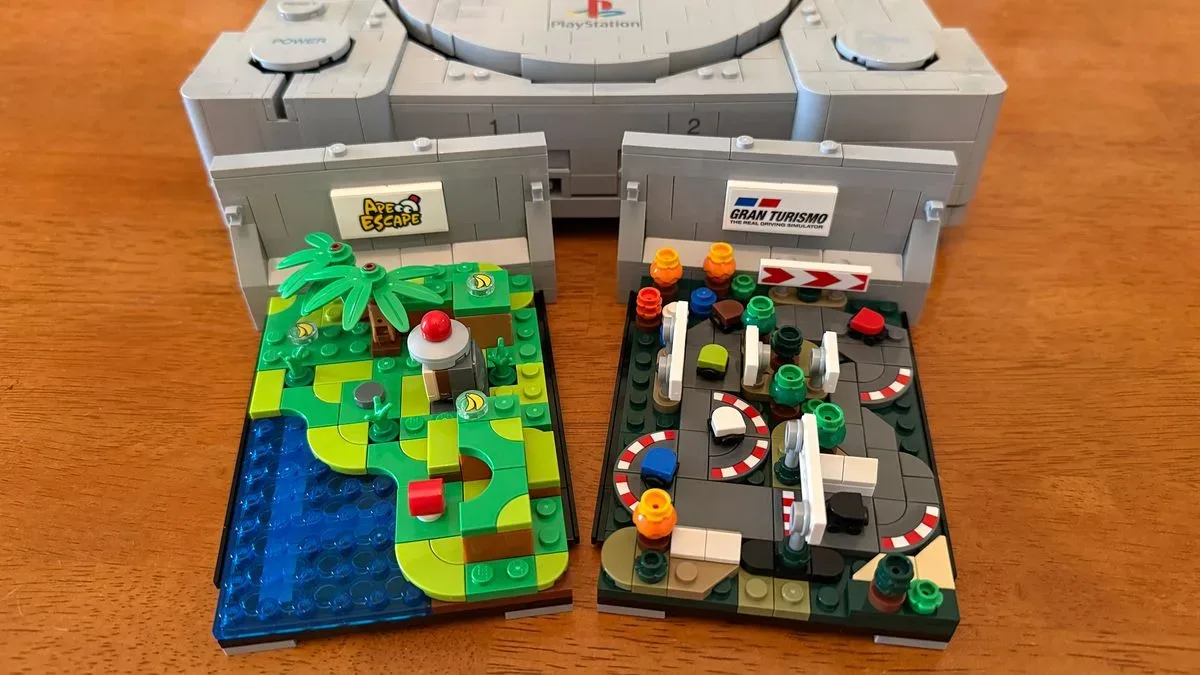
Set 72306 is not all exterior nostalgia. Its construction includes two removable internal dioramas based on classic PlayStation games: Gran Turismo and Ape Escape. They sit inside the console but can be accessed by pulling the sides outward and sliding the modules from the body for a better look or separate display.
The Gran Turismo scene uses a clever small-scale solution for its cars: minifigure roller skates provide their underlying forms, with colored tiles completing the vehicles. It is the kind of unconventional parts use that longtime Lego builders often enjoy discovering. The Ape Escape section includes the series' protagonist with a swappable red or blue helmet, plus a small storage space integrated into the scene for the unused helmet.
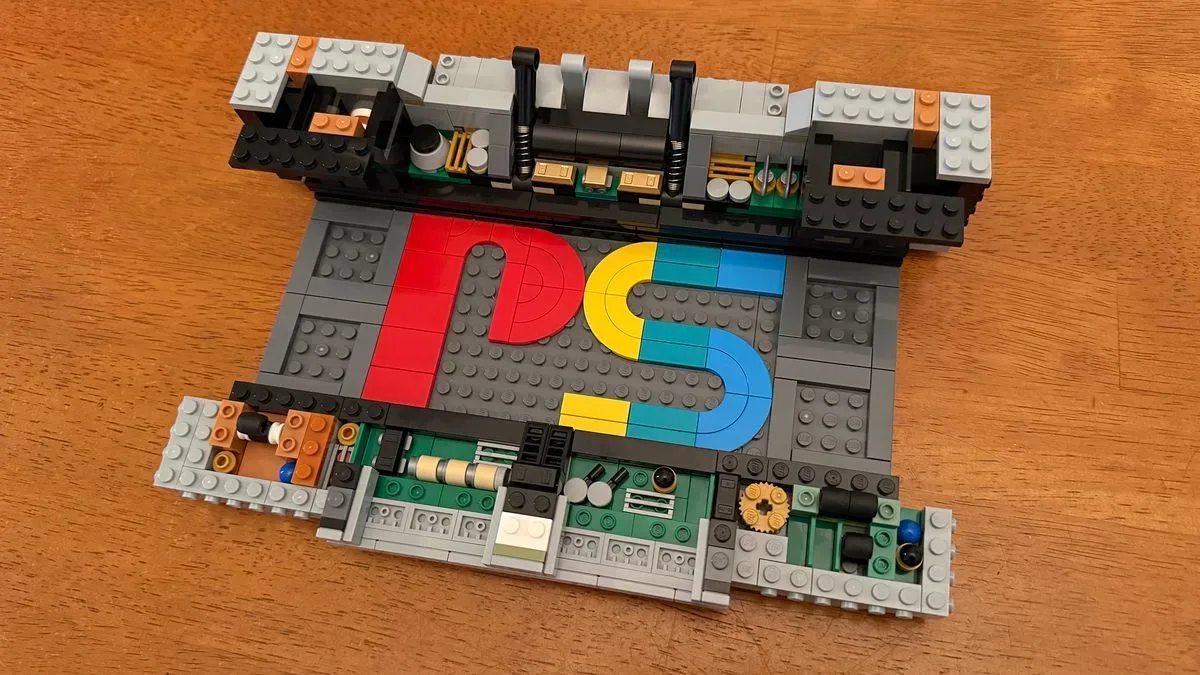
These hidden sections serve two purposes. First, they break up an otherwise very gray build with bright colors and references to PlayStation history. Second, they make the assembly process feel more layered than simply constructing an outer case. Early in the build, the base incorporates a large PlayStation symbol with colors matching the classic logo. It is surrounded by green elements with gold and silver pieces that suggest a circuit-board-like interior, giving the impression of peering into electronic hardware beneath the casing.
The dioramas do introduce some of the build's more delicate work. Their small parts and detailed construction can be fiddly, as can the mechanisms for the top controls. Still, the set's instructions are described as clear throughout, including extra top-down views at important stages to help confirm part placement in complicated areas.
A long build with sensible session breaks
This is not intended as a fast, uncomplicated project. Completing the main console takes roughly eight hours, with the controller adding around another hour, putting the total expected building time in the region of nine to 10 hours. The 1,911-piece count is divided across 14 bags, however, which creates natural stopping points for anyone who prefers to spread the project across multiple evenings.
Much of the exterior inevitably uses gray parts, but the internal structure, logo construction, electronic-style detailing, removable scenes, and mechanical systems should provide variety. That matters for a set based on a mostly monochrome object: the challenge is not only making a convincing finished replica, but making the route to that replica enjoyable.
In practical terms, Lego PlayStation 72306 seems best suited to builders who value both the process and the final presentation. Its price places it well above casual impulse-buy territory, and the intricate sections mean it is less appropriate for someone specifically seeking an easy build. But the feature set is unusually extensive for a console model, with a functional lid, power-light effect, attachable controller, hidden scenes, and accurate surface details all packed into a form factor that remains faithful to the original hardware.
A premium tribute to an era-defining machine
The original PlayStation was a defining console for a generation of players, and its industrial design remains immediately recognizable decades later. Lego PlayStation 72306 leans fully into that legacy. Rather than relying only on a branded facade, it attempts to capture the machine's ports, controls, proportions, disc lid, controller connection, and even the little details beneath the unit.
For collectors with room in the budget, that approach makes it a compelling retro-gaming display piece. The $179.99 / £139.99 price is substantial, especially alongside smaller gaming-themed Lego alternatives such as the Lego Game Boy or Sega Genesis Console. Yet the PlayStation model's size, close resemblance to the original system, and working features help explain its premium positioning.
Most importantly, it treats the console as more than a recognizable silhouette. The moving lid, simulated power indicator, removable game tributes, and internal circuit-inspired design turn the build into an object meant to be explored. For fans who remember the original hardware on a TV stand, Lego's recreation offers a detailed brick-built reminder of the moment PlayStation arrived and changed gaming's landscape.
Community
Discussion
Start the conversation.
No comments have been posted yet.