

Grand Theft Auto 6 is the game currently consuming an enormous amount of attention. Its scale, long development history and cultural profile make it difficult to ignore, and for plenty of players, that level of excitement is entirely justified. But gaming is far larger than one blockbuster release, even one as prominent as GTA 6.
Not everyone has the platform needed to play it. Not everyone has the budget for it. And, perhaps most importantly, not everyone wants to spend their free time in Rockstar's latest open world. A recent wave of player responses makes that especially clear: while GTA 6 sits at the center of the industry conversation, people are happily exploring strange caverns, tackling old dungeon puzzles, sewing virtual outfits, commanding miniature-inspired armies and working through enormous role-playing campaigns.
The result is a useful reminder that a major launch does not erase the rest of the medium. Players have different tastes, different backlogs and different definitions of what makes a satisfying evening with a game. For some, the perfect alternative to a massive crime epic is another large adventure. For others, it is a cozy independent game, a persistent online world, or a strategy match built around moving units across a battlefield.
Queen's Domain and the appeal of unanswered questions
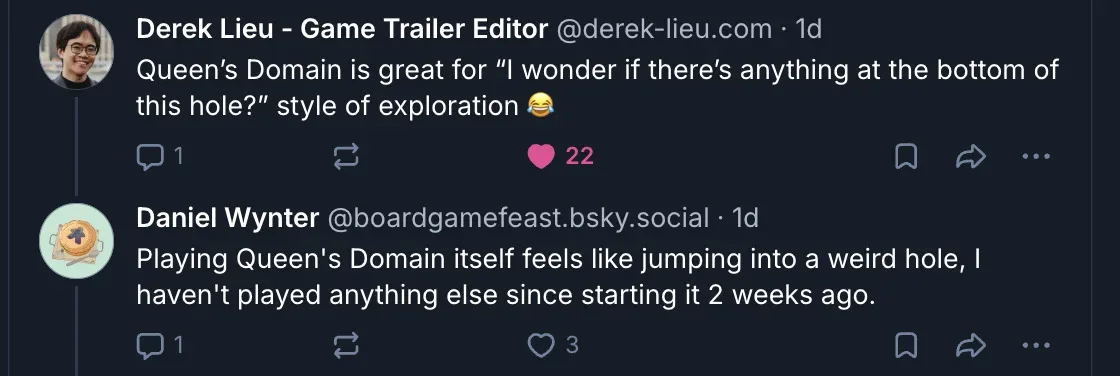
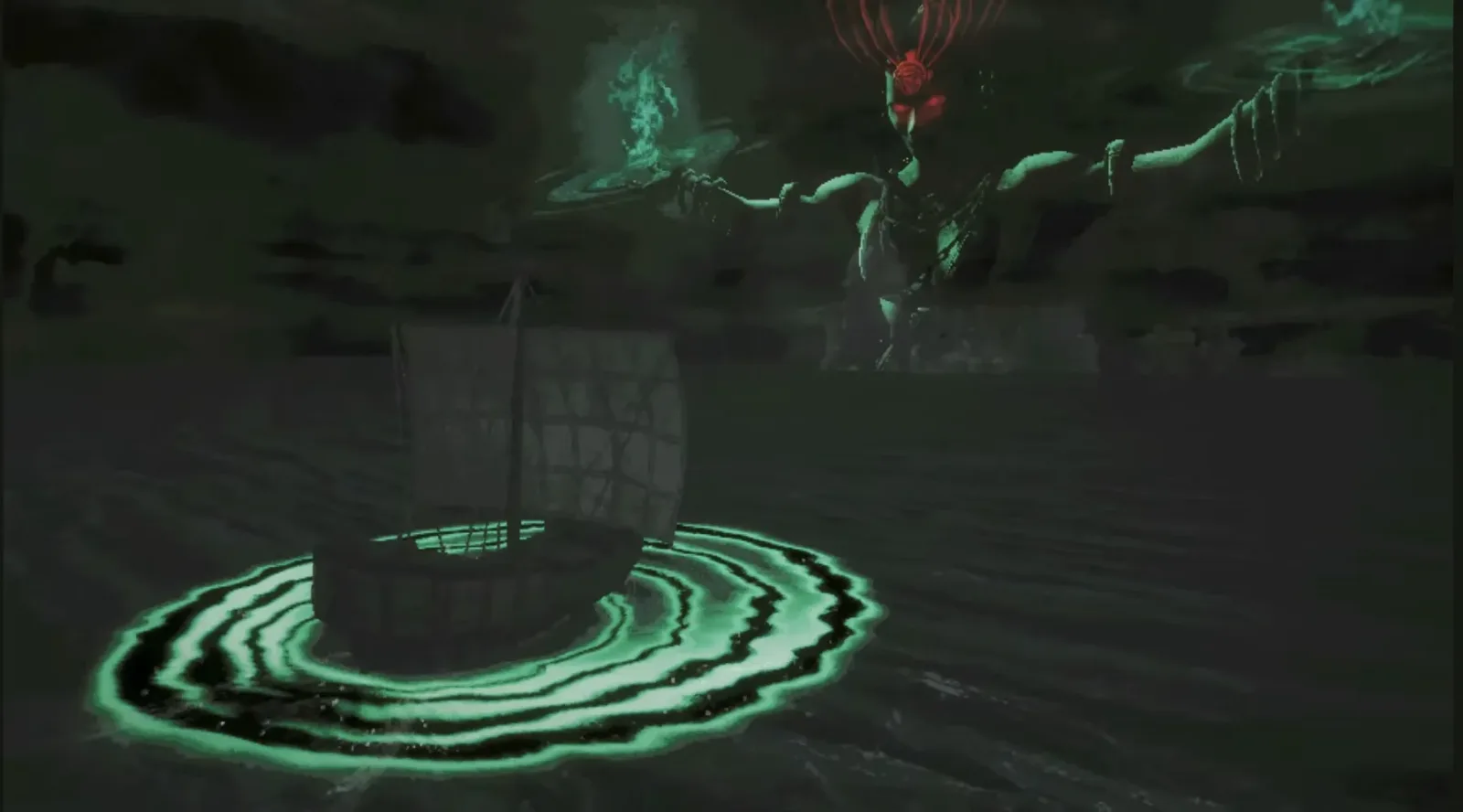
Among the games repeatedly mentioned, Queen's Domain stood out as a particularly popular choice. The details that drew players in were not about cinematic spectacle or a giant promotional campaign. Instead, the appeal seems to be rooted in a specific kind of exploratory curiosity: the urge to spot an opening in the ground and wonder what might be hidden beneath it.
For useful background on this topic, read Steam Machine 512GB Model Now Available Without Reservations, While 2TB Supply Stays Tight.
That may sound simple, but it reflects one of gaming's most enduring pleasures. Exploration works best when the world gives players questions before it offers answers. A hole, a passage, a distant landmark or an obscured route can become a promise that there is something unexpected to find. One player described Queen's Domain as being ideal for the kind of exploration driven by the thought, "I wonder if there's anything at the bottom of this hole?"
It is a sharply different fantasy from GTA 6's sprawling urban sandbox, but it speaks to a similar desire for player-led discovery. The difference is one of scale and tone. Where a blockbuster open world can offer a dense simulation of a city, a smaller and stranger adventure can make every opening, path and underground space feel personally significant. For players looking for mystery rather than media saturation, that can be exactly the right fit.
Old quests and long campaigns are still holding attention
There is also no shortage of players spending their time in familiar worlds. WoW Forever emerged as another frequently cited game, showing the staying power of games built around long-term communities, character progression and shared routines. Even when the wider gaming conversation moves toward a single new release, an online world can remain a destination because it is not merely a game to finish. It is a place where players maintain friendships, pursue goals over time and return to established characters.
For another perspective on this story, read Not Playing GTA 6? Players Are Still Exploring Holes, Water Temples and Warhammer Battlefields.
Meanwhile, the Ocarina of Time remake remains part of players' rotation, including for those once again caught by the Water Temple. The Water Temple has persisted as one of the best-known frustration points in adventure-game history, and its presence in current player discussion is a testament to both the endurance of the game's design and the staying power of shared gaming memories.
Even with reported adjustments intended to make that section less punishing than its original version, navigating the temple can still prove difficult. That is not necessarily a failure. A hard dungeon often becomes memorable precisely because it asks players to slow down, reconsider the space around them and revisit assumptions. Modern games frequently prioritize forward momentum, but revisiting an old-style puzzle dungeon can be a refreshing reminder that confusion, persistence and eventual understanding are valuable parts of an adventure.
Fire Emblem: Fortune's Weave is another game benefiting from that commitment to a long journey. Players still working through its first part have found solidarity in the fact that the campaign is simply huge. The shared feeling is less about being behind and more about recognizing the scale of the undertaking. A long RPG can become a companion over weeks or months, something players return to between other games rather than rush through in a single burst.
In an era when attention often shifts immediately to the newest release, there is something reassuring about players openly saying that they are still early in a campaign. There is no expiration date on a story-driven game, and no requirement to keep pace with the release calendar.
Warhammer offers an entire range of alternatives
The Warhammer audience has also been busy across multiple genres. That is one of the setting's greatest strengths as a gaming property: it can support radically different experiences while retaining its distinctive worlds, factions and atmosphere. Players mentioned games including Warhammer Survivors, Warhammer 40,000: Rogue Trader and Warhammer 40,000: Space Marine 2, each representing a different way to engage with the broader universe.
Survivors-style action emphasizes immediate pressure and escalating enemy swarms. Rogue Trader brings a more deliberate role-playing approach, where choices, party management and narrative progression can take center stage. Space Marine 2 offers the direct, forceful appeal of action combat and large-scale encounters. Together, they illustrate why Warhammer remains such a flexible destination for players whose tastes do not fit neatly into one genre.
For strategy fans, there is another imminent reason to pay attention. Dawn of War IV is scheduled to arrive on November 30. Its upcoming launch has generated particular enthusiasm among players who see the act of positioning troops and managing a map as one of gaming's purest forms. That sentiment captures why real-time strategy remains compelling: the drama comes not only from what an army is, but from where it is, when it moves and how players react under pressure.
Warhammer's spread across action, RPG and strategy games means that it can fill different needs at different times. A player can want fast combat one night, a dense tactical decision the next, and a sweeping campaign after that. It is an especially useful counterpoint to the idea that there is only one major game worth discussing at any given moment.
Cozy indies make room for a different pace
Several cozy independent games also earned attention, including Milki Delivery, Tanuki: Pon's Summer and Dressmaker. Their presence in the conversation highlights a major divide in what players seek from games. A huge open-world release can be exciting, demanding and all-consuming. Cozy games often offer a more contained experience: smaller goals, tactile routines, charming presentation and a lower-pressure rhythm.
That does not make them lesser experiences. In many cases, a focused independent game can be precisely what a player needs after a loud and demanding workday. Deliveries, seasonal activities, crafting and customization can create a sense of progress without asking the player to master a massive system or follow an epic plot.
Dressmaker also has an unusual milestone ahead: it is set to be featured during AGDQ 2027. Speedrunning a dressmaking game may sound like a contradiction at first, since fashion and creative design imply a slower process. Yet that is exactly why the event could be so interesting. Speedrunning has repeatedly revealed unexpected layers in games of every type, from routing and resource management to unusual movement techniques and hidden shortcuts. Seeing how players turn dressmaking into a speedrun should offer a fascinating demonstration of that inventive community spirit.
There is room outside the biggest release
GTA 6 will continue to dominate discussion for the near future. That is the natural result of a landmark release with enormous interest behind it, and there is nothing unusual about people wanting to talk about a game of that magnitude. Still, the conversation around what people are playing instead is important because it makes the broader gaming landscape visible again.
There are players descending into holes in Queen's Domain, returning to Azeroth in WoW Forever, struggling through the Water Temple, slowly advancing through Fortune's Weave and preparing for Dawn of War IV. Others are building quieter routines around Milki Delivery, Tanuki: Pon's Summer and Dressmaker. None of those choices need to compete with GTA 6 to matter.
Gaming's healthiest quality may be its variety. The same week can contain a generation-defining blockbuster, a decades-old adventure revisited through a remake, a deep tactical RPG, a tabletop-inspired strategy battle and a small game about making clothing. Players do not need to choose a single cultural moment and stay there. The best thing to play instead of GTA 6, as ever, is simply the game that fits what you want right now.
Community
Discussion
Start the conversation.
No comments have been posted yet.