

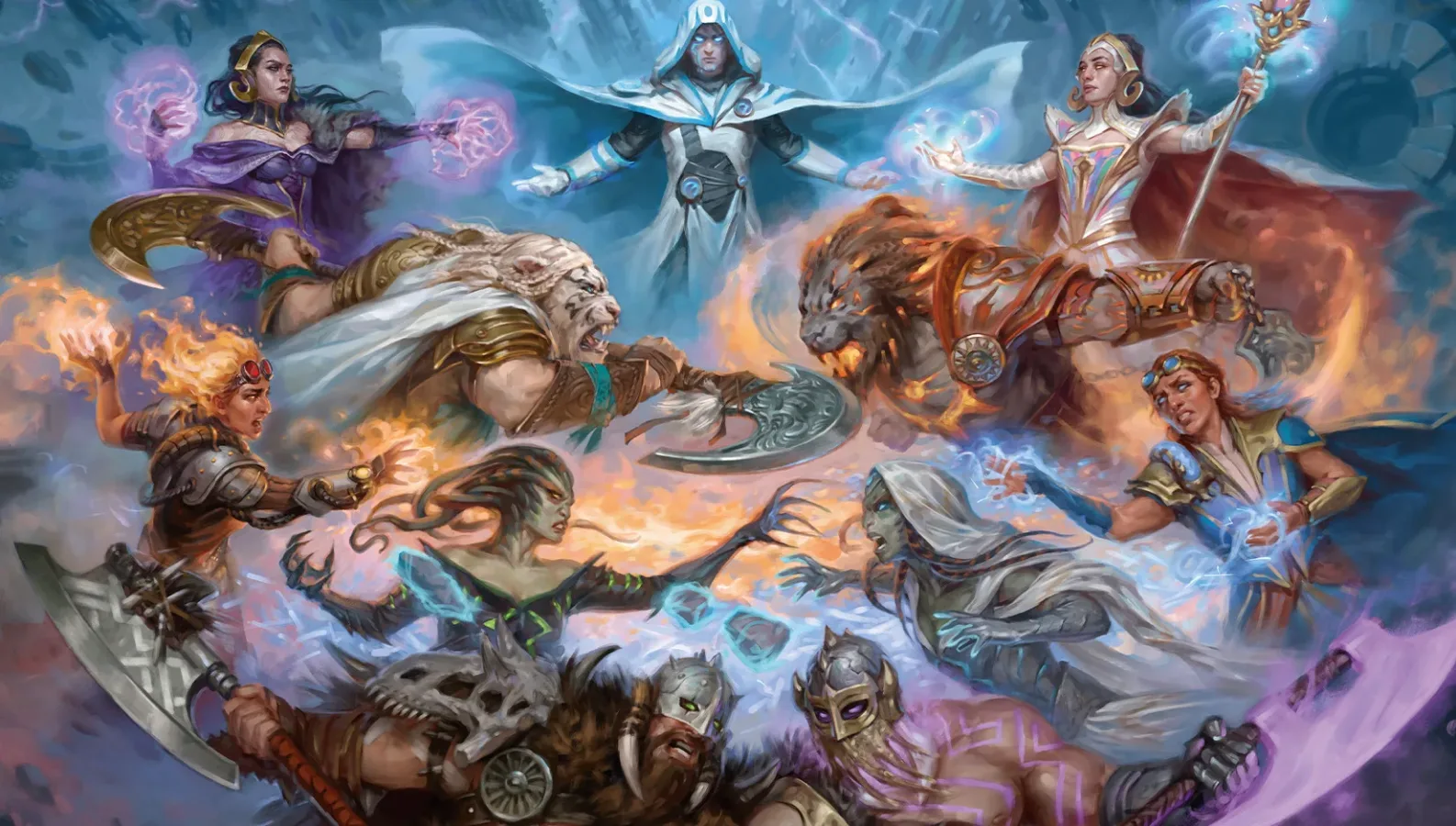
Magic: The Gathering remains Hasbro's most powerful business engine. The collectible card game and its publisher, Wizards of the Coast, delivered another enormous financial quarter, with Hasbro reporting 15 percent year-over-year revenue growth and Wizards contributing $367 million in operating income during the period.
That figure is especially significant in the context of Hasbro's wider portfolio. Wizards of the Coast, driven primarily by Magic, accounted for more than 66 percent of Hasbro's total operating income in the latest quarter. Across the first nine months of the year, its share rises to roughly 90 percent. For a company with toy, entertainment, and licensed brands ranging from Transformers and Play-Doh to Peppa Pig, the numbers make one thing clear: Magic is now central to Hasbro's financial performance.
The latest results follow a period in which Magic has continued to grow through a combination of original expansions, premium products, and high-profile licensed releases. Sets including The Hobbit and Reality Fracture helped make the quarter a strong one, while Universes Beyond collaborations remain a major part of the game's forward strategy.
The commercial success does not erase the debate surrounding the speed of Magic's release calendar. Longtime players have repeatedly raised concerns about frequent new sets, expanding crossover plans, and the possibility that constant product releases could weaken the game's identity or make it harder to keep up. Yet the financial results suggest that Hasbro and Wizards have not seen a meaningful slowdown in demand.
For useful background on this topic, read Steam Next Fest's 7,100 Demos Spark Fresh Concern Over Discoverability and AI Content.
Wizards of the Coast Dominates Hasbro's Profits
Operating income is not the same as revenue, but it is a crucial measure of how much profit a business generates from its core operations after its operating expenses are taken into account. Wizards of the Coast's reported $367 million in operating income therefore represents more than a healthy sales period for Magic. It shows that the division is carrying a remarkable portion of the parent company's profitability.
More than two-thirds of Hasbro's operating income in a single quarter coming from Wizards is a striking concentration. The approximately 90 percent contribution across nine months makes the pattern even more pronounced. Hasbro still owns a vast catalog of recognizable properties and product lines, but Magic's ongoing performance has put the game in a category of its own within the company.
That position has been building for years, though the scale of Magic's current momentum is notable. Collectible card games can produce recurring engagement in ways many traditional toy lines cannot. Players buy products for constructed decks, limited formats such as Draft and Sealed, Commander collections, local events, gifts, and simple collecting. A new release can serve several of those audiences at once, especially when it includes desirable cards across multiple rarities and product tiers.
For another perspective on this story, read Magic: The Gathering Drives More Than Two-Thirds of Hasbro's Quarterly Operating Income.
Magic also benefits from being a game rather than solely a collectible. Individual cards have value, and some sealed products appeal to collectors, but the core reason many customers return is to play. Weekly store gatherings, kitchen-table games, competitive events, Commander nights, and Draft sessions create a social rhythm that gives new releases a direct use beyond display or resale.
Crossovers Continue to Be a Major Growth Tool
Licensed sets have become one of the most visible parts of Magic's modern era. Last year's Final Fantasy crossover set was a record-setting release, but the latest quarter indicates that demand did not simply crest after that event. The performance of sets such as The Hobbit and Reality Fracture suggests the game's broader release strategy is still working commercially.
Wizards also has further licensed products in the pipeline. A Marvel's Avengers release has helped strengthen the year's overall earnings, while a Star Trek Universes Beyond set is scheduled for November. Those projects give Magic access to audiences that may not have followed its original fantasy setting, while also offering established players new themes for decks and collections.
The appeal of these collaborations is easy to understand. Magic's card-by-card format can translate recognizable characters, locations, artifacts, and story moments into game mechanics. For someone who already plays, a crossover can be a compelling reason to build a fresh deck or upgrade an existing Commander list. For someone who loves a featured franchise but has never played Magic, it can be an accessible entry point into the hobby.
There is also a practical business benefit. A crossover set creates a major marketing moment without requiring Wizards to establish a wholly new world from scratch. That does not mean the original Magic setting has ceased to matter; original releases remain an important piece of the product slate. But the financial logic behind using globally recognized licenses is increasingly difficult to dispute when such releases keep attracting attention and sales.
Success Has Not Ended Concerns About Set Volume
Magic's financial strength has arrived alongside persistent criticism from parts of its community. Some fans worry that the company is releasing too many expansions in a year. Others feel that a growing number of external franchises could dilute the tone and legacy of Magic's own worlds. Reprints, premium versions, special treatments, and multiple booster or bundle configurations can further contribute to a sense that the game is constantly asking players to make another purchasing decision.
Those concerns do not necessarily mean players reject the individual products. In fact, the current year's expansions have generally been well received. The tension is often about pace rather than quality. A player may enjoy a new set, appreciate a beloved crossover, and still feel that there is too little breathing room before the next release arrives.
That problem looks different depending on how someone participates in Magic. Competitive players may feel pressure to track changing formats and obtain newly relevant cards. Commander players can face a near-endless stream of tempting upgrades and themed deck-building possibilities. Collectors may struggle to follow variant printings, limited treatments, and premium releases. Meanwhile, casual players who only meet friends for a Draft or occasional Commander game may be happy to ignore most releases altogether.
From Hasbro's perspective, however, frequent releases and broad product variety have clearly supported growth. The latest operating-income results reinforce why the company is likely to continue investing heavily in Magic, including major licensing agreements and regular expansion launches. Shareholders and executives tend to evaluate sustained performance, and the game is currently delivering it at a scale few other Hasbro properties can match.
Magic and Pokémon Illustrate Different Card-Game Pressures
Magic's current boom is particularly interesting beside the speculative atmosphere surrounding the Pokémon Trading Card Game. Both are giant tabletop card brands, both feature rare cards that can command substantial prices, and both draw collectors as well as players. Their present pressures, however, are not identical.
Pokémon's current energy is heavily tied to the pursuit of valuable chase cards and the potential financial upside of sealed products and graded singles. That environment has encouraged speculative buying, reselling, and scalping, creating frustration for people who simply want to find packs and enjoy the cards. When demand focuses intensely on rarity and investment value, ordinary hobby participation can become harder and more expensive.
Magic has its own secondary-market history and its own expensive cards, but much of its continuing demand is rooted in active play. Draft nights need packs to open. Commander games inspire players to search for particular cards that fit their decks. New mechanics and themes can encourage experimentation. This does not make Magic immune to collector behavior or price debates, but it does give the game a different center of gravity.
Indeed, Magic players often voice an almost opposite complaint: that frequent reprints and rapid set churn can reduce the value of cards. For players focused on game nights rather than investment portfolios, lower prices can be beneficial. Reprints can make formats and deck archetypes more accessible. The same market behavior that frustrates a collector hoping a card will hold value may help someone who wants to buy a playable copy for a Commander deck.
That divide has always existed to some degree in trading card games, but Magic's release volume makes it more visible. A healthy game ecosystem needs cards to be obtainable enough for people to play, while collectors still want special versions and scarce pieces that feel meaningful. Wizards is trying to serve both groups while also appealing to fans arriving through major entertainment franchises.
No Immediate Sign of a Slowdown
The latest quarter offers little evidence that Magic's momentum is fading. Hasbro's 15 percent year-over-year revenue growth, combined with Wizards of the Coast's $367 million in operating income, demonstrates that the game remains a formidable commercial force. Its contribution of more than two-thirds of quarterly operating income--and about 90 percent over nine months--places Magic at the heart of Hasbro's business.
Whether players welcome that reality depends on what they want from the game. More releases can mean more formats, more reprints, more crossover worlds, and more opportunities to find a set that speaks to a particular group. It can also mean more fatigue, more pressure to pay attention, and more questions about what Magic should be in the long term.
For now, Hasbro has every reason to stay the course. Magic's financial machine is not merely running; it is doing much of the heavy lifting for the company. With Avengers material already contributing to the year and Star Trek set for November, the next question is not whether Wizards will keep pursuing large releases. It is how long players' appetite can continue to match the pace.
Community
Discussion
Start the conversation.
No comments have been posted yet.