

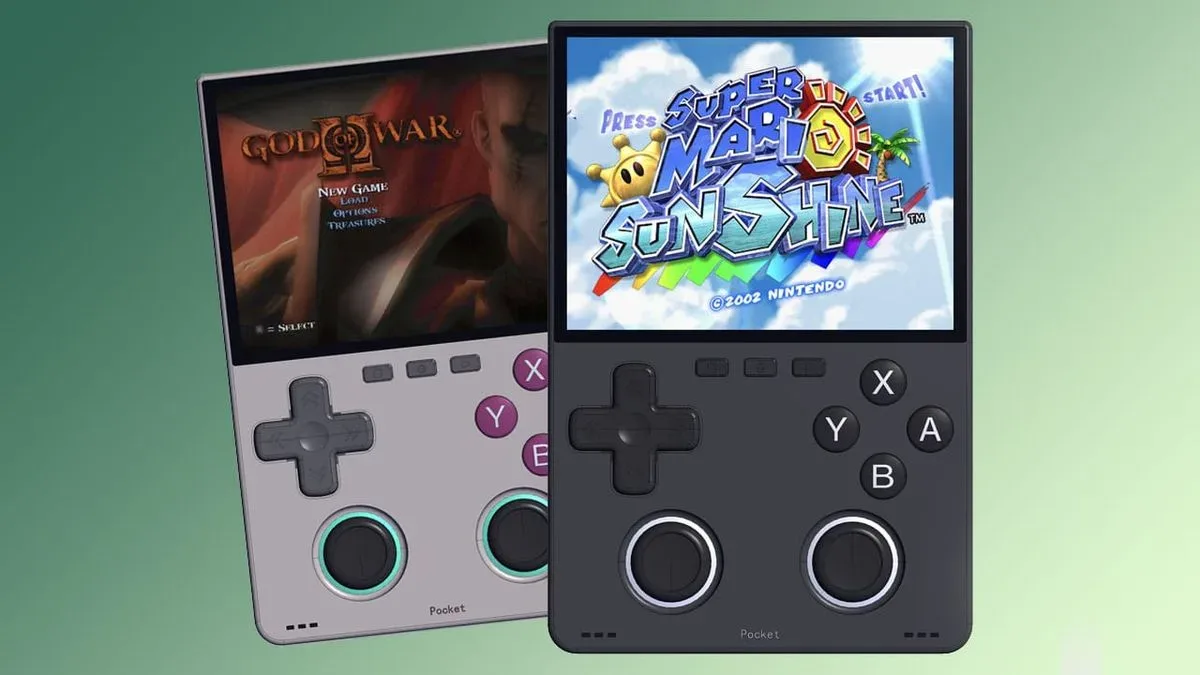
MagicX is continuing its rapid push into the affordable retro-handheld market with the Pocket Dream, an early vertical portable concept designed around quick play sessions, commuting, and one-handed use. The device is still in the design phase, meaning its appearance, control layout, specifications and eventual performance claims should all be treated as provisional. Even so, the initial details point to an unusually ambitious little system: a 3.3-inch OLED screen, a compact vertical body, multiple planned chipset configurations, and promotional imagery that suggests GameCube and PlayStation 2 emulation may be part of the target.
The Pocket Dream follows other recent MagicX hardware, including its single-screen DS-style handheld and the One 35, a device notable for using two D-pads. Rather than aiming for a luxury build or a single premium flagship, MagicX appears to be pursuing lower-cost options for people who want a dedicated handheld without a major financial commitment. Pocket Dream fits that approach on paper, although there is no confirmed price, release date, or final retail configuration yet.
A vertical design inspired by classic portables
MagicX has framed Pocket Dream as an evolution of the previously announced Mini Dream, which is still said to be in development. The company's stated goal is a vertical handheld that recalls machines such as Nintendo's Game Boy and Bandai's WonderSwan. Its dimensions are currently listed as 107 × 72 × 22 mm, putting it firmly in the compact category rather than the larger, horizontal style common among many higher-powered emulation handhelds.
That size could be central to the product's appeal. A vertical system can be easy to slip into a jacket pocket or bag, while the shorter body may make it more approachable for five- or ten-minute sessions than a wide device with full controller-style grips. MagicX specifically describes the concept as better suited to one-handed play, commuting and quick pick-up-and-play use. In practice, that will depend heavily on final button placement, weight distribution and the reach required for the analogue controls.
For useful background on this topic, read Onyx: The Dark Grip Announced for Switch 2 With a Handheld-Only Horror Twist.
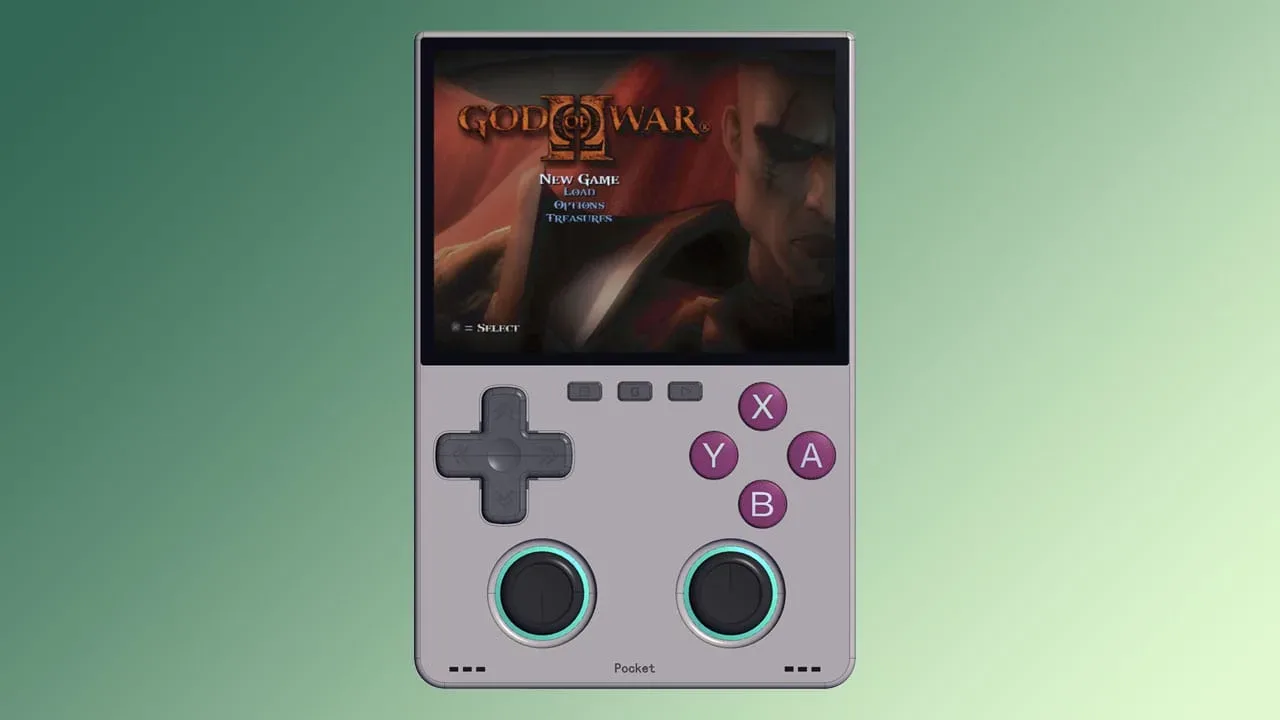
Early renders show a shape with clear echoes of modern retro devices as well as older vertical consoles. The front is dominated by the display, with conventional face buttons and a D-pad beneath it. The first version also placed two analogue sticks directly below the screen. That arrangement gives the handheld a distinctive silhouette, but it raises an important ergonomic question: analogue sticks at the lower edge of a narrow vertical device may be less comfortable for extended use than a more traditional horizontal layout.
Community feedback has already changed the controls
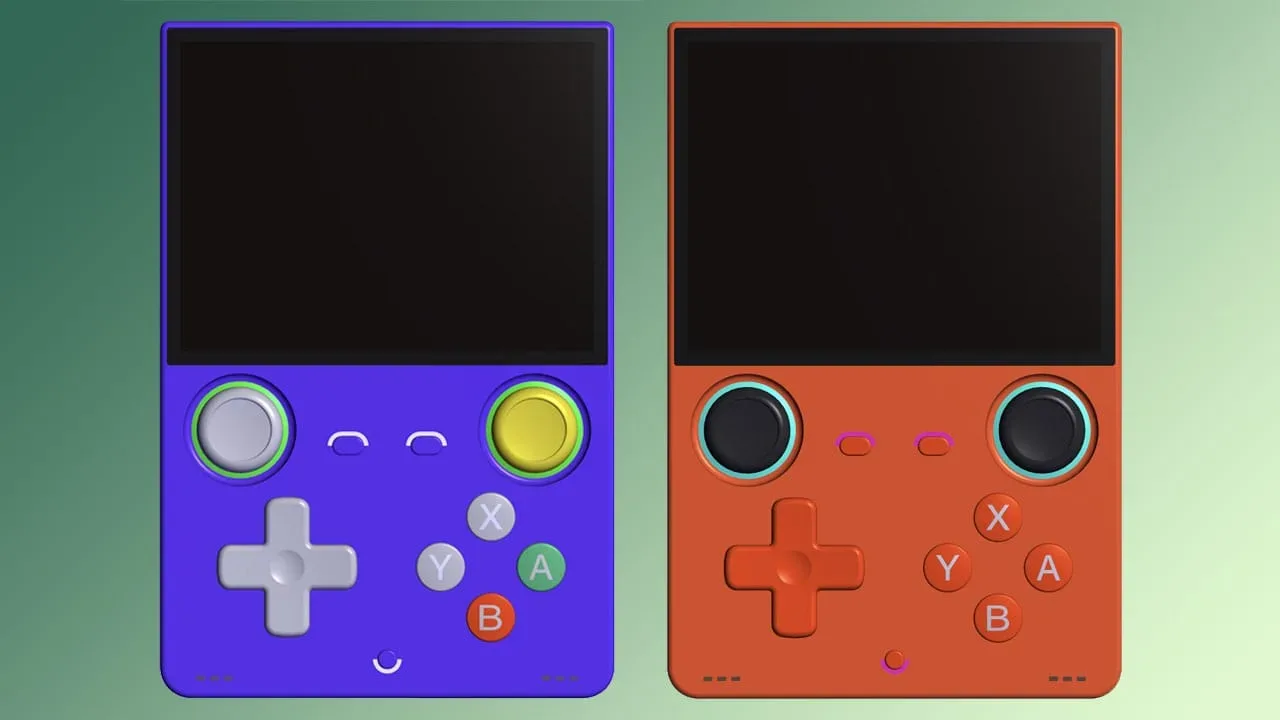
MagicX has not treated the first Pocket Dream mock-up as final. Following feedback from its community, the company revealed a revised layout that switches the position of the D-pad and analogue-stick area. The lower circular design accent from the original concept has also moved upward in the newer render, giving the face a cleaner and more conventional appearance.
The change is significant because control placement can make or break a compact handheld. Players who primarily revisit 8-bit, 16-bit and arcade libraries may value the D-pad most, while those interested in 3D systems will likely care far more about the placement and quality of the sticks. A vertical chassis imposes compromises whichever direction MagicX chooses. Keeping the sticks low may preserve a familiar D-pad position, but it could force players to hold the device differently during 3D games. Moving the D-pad may improve stick access while altering the feel of classic 2D play.
Neither design can be properly judged without hands-on testing. Rendered devices often look more comfortable than they feel, particularly when a small shell has to accommodate shoulders, sticks, face buttons and a battery. Still, the fact that MagicX has already iterated on the design is encouraging. Pocket Dream is clearly not being presented as locked hardware, and there is time for the manufacturer to refine the layout before production.
OLED display and Mini Dream specifications
The most concrete screen detail is a 3.3-inch OLED display, matching the planned Mini Dream. OLED panels can provide deep blacks, high contrast and vivid colour, attributes that are especially attractive for pixel art, handheld games and arcade titles. The 3.3-inch size is modest by contemporary smartphone standards, but it makes sense for a device focused on portability. Its usefulness will ultimately come down to resolution, brightness, scaling options and whether the screen's aspect ratio suits the systems MagicX intends to support.
For its Linux-based version, Pocket Dream is expected to use the Rockchip RK3566 and a 3,500mAh battery, the same core specifications cited for Mini Dream. The RK3566 has appeared in a range of budget retro handhelds and is generally associated with strong performance for older systems, although performance varies substantially with operating system builds, emulator settings, thermal design and individual game demands. A chip on its own does not guarantee a particular emulation result.
MagicX also lists "the same four SoC variants" as Mini Dream, covering both Linux and Android. That wording indicates the Pocket Dream family may not be a single fixed model. Different processors could create different price points and substantially different capabilities. As a result, shoppers should be careful not to assume that every Pocket Dream configuration will have the same operating system, battery behavior, software support or high-end emulation performance.
There is no final pricing information. The combination of RK3566 hardware and a 3,500mAh battery has led to speculation that a Linux-oriented version could land near or below the $100 range, but MagicX has not confirmed a cost. Display choice, storage, memory, controls and any Android-capable configuration could all affect the final figure.
GameCube and PS2 imagery sets a high bar
The newest promotional images go beyond the traditional retro focus by depicting Super Mario Sunshine and God of War II, suggesting that GameCube and PlayStation 2 games are part of MagicX's aspirations for Pocket Dream. Those platforms remain a meaningful test for inexpensive portable hardware because their libraries include games with vastly different technical requirements. Some titles can run acceptably on modest equipment with careful settings, while others need far more processing power or suffer from graphical and compatibility problems.
That makes the images an intriguing statement of intent rather than proof of universal GameCube or PS2 support. The stated RK3566 Linux specification especially deserves a cautious reading; it should not automatically be taken as confirmation that demanding sixth-generation games will run smoothly across the catalog. The planned Android variants may have different hardware, but MagicX has not identified their chips or detailed their expected performance levels.
Low-cost Android handhelds have demonstrated that some PS2 emulation can be possible below the $100 mark with the right hardware and software combination. However, results depend on the title, settings, emulator development and the processor inside the device. Until MagicX publishes final specifications and real gameplay footage, prospective buyers should view the GameCube and PS2 examples as targets rather than established guarantees.
Colours, personality and the budget-handheld question
The Pocket Dream's early renders also showcase several colour treatments, including a particularly eye-catching palette inspired by Nintendo GameCube-era controller colours. The varied finishes lend the small handheld more personality than a standard black plastic shell, and they could help distinguish it in a crowded market where many devices share similar rectangular designs.
MagicX has not formally detailed every colour option, though the images may correspond to four variants previously teased by the company. It is also unclear whether all finishes will be available at launch or whether colour selection will vary by chipset configuration. These details may seem minor beside screen and performance discussions, but colourways often matter in the retro scene, where handhelds are as much personal accessories as they are gaming hardware.
The bigger unanswered issue is build quality. Affordable devices always involve trade-offs, and compact vertical systems can expose them quickly through stiff buttons, noisy sticks, weak shoulder controls, uneven D-pads or poor shell tolerances. MagicX's recent hardware has established the company as a fast-moving participant in the space, but Pocket Dream will need more than an appealing render to stand out. It must offer dependable controls, sensible software and battery life that matches its portable promise.
What to watch for next
Pocket Dream is an appealing concept precisely because it is trying to combine traits that do not always coexist: a genuinely pocketable vertical body, OLED display technology, dual analogue inputs, multiple operating-system routes and aspirations beyond the older consoles normally associated with budget emulation devices. The challenge will be balancing each of those elements without making the device awkward to hold or too expensive.
For now, the key facts are straightforward. MagicX is exploring a 107 × 72 × 22 mm vertical handheld with a 3.3-inch OLED screen. A Linux version is expected to use Rockchip RK3566 hardware and a 3,500mAh battery, while a broader set of four Mini Dream-related SoC variants is planned across Linux and Android. The control layout has already been revised after early feedback, and the company's marketing imagery hints at GameCube and PlayStation 2 ambitions.
Final hardware, pricing, release timing and actual emulation results remain unconfirmed. If MagicX can turn the Pocket Dream's small, colourful concept into a comfortable and capable budget machine, it could become a compelling option for players who want retro gaming in a form factor that is easy to carry every day.
Community
Discussion
Start the conversation.
No comments have been posted yet.