

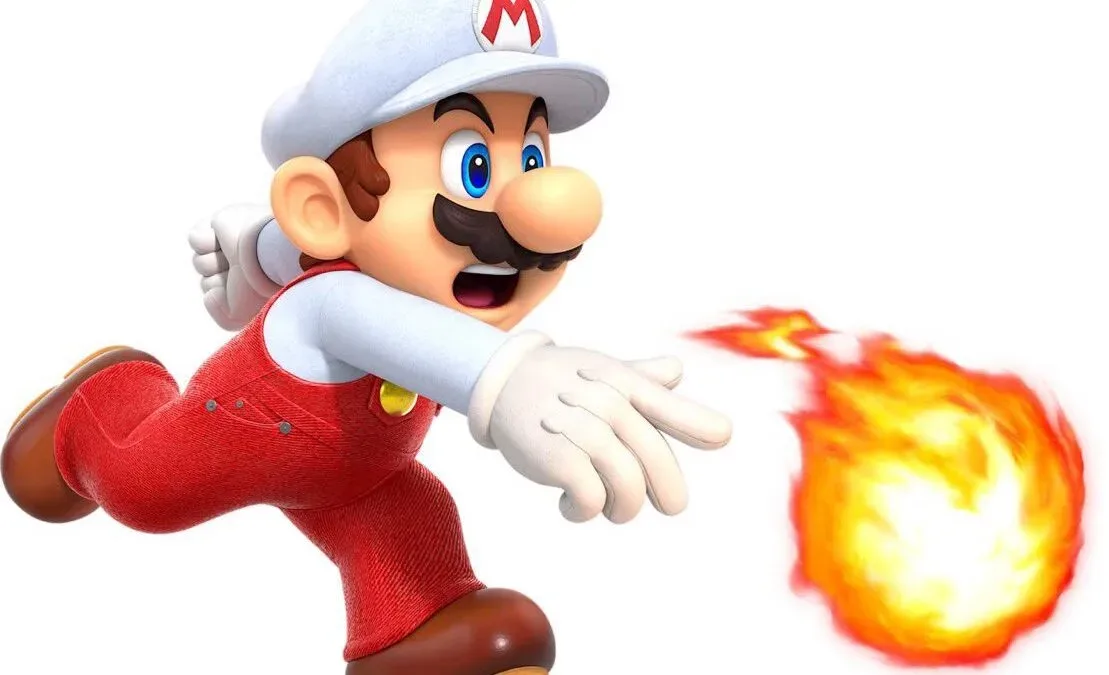
Mario's look has changed countless times across more than four decades of games, cartoons, toys, manuals, advertisements, and official character art. His cap has gained texture, his gloves have become more detailed, and his famously round proportions have been interpreted through everything from simple sprites to high-definition 3D models. Yet a newly noticed alteration in refreshed Nintendo artwork is drawing attention for an especially small reason: Mario's overalls now appear to have more clearly defined little coin pockets.
Following Nintendo's September Direct presentations, fans began comparing newer character renders with earlier official images hosted across Nintendo's online presence. The changes are subtle rather than a full visual redesign. Mario is still unmistakably Mario: red cap, blue overalls, white gloves, broad mustache, sturdy shoes, and the same cheerful, confident expression. But close observers noticed that the upper area of his overalls appears to have received extra dimensional detail, including pockets with more visible shape and depth.
It is the kind of update that can be missed entirely at first glance. Once seen, however, it is difficult not to notice. The revised pocket detail gives the fabric around Mario's torso a slightly more tangible quality, as though the overalls are designed to be worn rather than simply painted onto the character model. For a mascot whose visual identity has been refined repeatedly over the years, even a tiny clothing adjustment becomes a point of fascination.
Embedded X/Twitter post
A familiar character gets a minute wardrobe refinement
Mario's outfit has always communicated his original working-class inspiration. He is a plumber by trade, and his overalls, gloves, boots, and cap create one of the most immediately readable silhouettes in games. The design was also practical in the medium's early days. Brightly contrasting colors helped separate his arms, body, and face on limited arcade hardware, while the hat and mustache made facial features easier to identify at a small size.
For useful background on this topic, read Typhoon Dujuan Cuts Tokyo Game Show 2026 Short as Final Day Is Canceled.
As gaming hardware improved, that simple silhouette had to make the transition from pixel art into a fully modeled character. Each generation brought a slightly different approach to materials, folds, stitching, facial animation, and proportions. Mario's overalls in particular have often sat at the center of that balancing act. They need to look like denim clothing, but not so realistic that they clash with his smooth face, cartoon hands, and exaggerated body shape.
The newly noticed pocket detail sits squarely in that long-running design conversation. Rather than changing Mario's basic wardrobe, Nintendo appears to have made a modest adjustment that helps his clothing read more like fabric with construction and volume. The pockets still fit the stylized character design, but they seem less flat than versions fans may remember from older renders.
That distinction matters because Mario is not just a character who appears in one ongoing game series. He is a global mascot represented in every imaginable format, from game boxes and digital storefronts to social posts, theme-park branding, and promotional materials. Official renders must work at a wide variety of sizes and in many contexts. A minor adjustment can therefore become widely visible very quickly.
The timing follows a busy month of Nintendo announcements
The refreshed Mario artwork was spotted after September's Nintendo Direct broadcasts, which put major attention on characters including Kirby, Samus, and Zelda. Mario himself did not take center stage in a newly announced 3D adventure during those presentations, despite continued interest in what might come next for the company's biggest star.
He was not entirely absent from the month's news, however. Mario Kart World received an update, keeping Nintendo's most recognizable racer in the conversation even without a major standalone Mario platformer reveal. The render changes did not receive a dedicated announcement or a highlight reel of their own. That low-key rollout is part of why the discovery has become an appealing bit of fan discussion: it seems to be a quiet maintenance update that nevertheless says something about how carefully Nintendo manages its most enduring character.
There is also a humorous contrast between the scale of Mario's adventures and the modesty of the change. This is a hero who has crossed galaxies, explored haunted mansions, traveled through kingdoms, competed in sports, and repeatedly saved the Mushroom Kingdom. The latest talking point is whether his overalls now offer a more convincing place for a few coins, receipts, or other tiny items. For a character associated with collecting vast amounts of currency, a more functional-looking pocket is an especially fitting detail.
Why fans care about such a small alteration
Video game character models are often revised in ways that do not immediately register with casual players. A slightly altered eye shape, new shoe texture, adjusted logo, brighter material, or changed pose might only become obvious when side-by-side comparisons begin circulating. Mario is unusual because so many people know his appearance instinctively. His design is simple enough to draw from memory, which makes even small deviations stand out.
The reaction to the pockets also reflects the enduring appeal of closely examining character art. Fans enjoy tracing the gradual evolution of a mascot, whether that means comparing Mario's different eyebrow styles, the texture of his gloves, the size of his buttons, or the changing treatment of his denim. These observations can be playful, but they are also evidence of how deeply familiar the character remains after decades in popular culture.
In Mario's case, clothing detail has occasionally produced an odd effect as the series has pursued richer 3D visuals. More realistic fabric can create a contrast with his deliberately simplified anatomy. He has a near-toy-like roundness, clean skin, and broad facial features; highly specific seams or textured cloth can make the overall result feel unexpectedly realistic. The new pocket treatment seems to aim for a middle ground, adding depth without abandoning the friendly animated quality that defines the character.
Mario's overall design works because it can absorb small refinements while remaining instantly recognizable from almost any angle.
That adaptability has been essential. A character who began life in arcade games has needed to function in modern high-resolution environments without losing the visual shorthand that made him iconic. His outfit cannot become too complicated, but it also cannot remain entirely frozen in the visual logic of early hardware. Updates like these more pronounced pockets are a reminder that Mario's appearance is maintained through continual, careful adjustment.
More than a pocket, less than a redesign
It would be easy to overstate the significance of the refreshed renders. Mario has not adopted a radically different costume, and there is no indication that the pocket update represents a new gameplay mechanic, a new game announcement, or a broader reinvention of the character. It is cosmetic work on official art.
Still, cosmetic work matters for a figure as visible as Mario. His official renders establish a baseline for how he appears across Nintendo's ecosystem. When the company polishes the Super Mario logo, revises materials, or adds more convincing clothing features, those choices help define the current version of the character for audiences who may encounter him outside a specific game.
The logo itself also appears to have received a touch-up, with a shinier beveled finish in the updated presentation. Combined with the more dimensional overalls, the changes suggest an effort to give familiar Mario branding a lightly refreshed sheen while preserving the classic color, energy, and readability associated with the series.
For now, the pocket discovery stands as a fun example of the attention paid to Nintendo's character imagery--and of the attention fans bring in return. Mario has spent roughly 45 years evolving from a handful of pixels into one of entertainment's most extensively recognized faces. Even after all that time, a small change to his overalls can still prompt comparisons, jokes, and affectionate scrutiny.
And perhaps that is the clearest sign that the design is working. Mario's identity is so stable that Nintendo can give his overalls a bit more texture and a more convincing pocket shape without anyone confusing him for someone else. He remains the same hero players know, only now he looks a little better equipped to carry some loose coins on the next trip through the Mushroom Kingdom.
Community
Discussion
Start the conversation.
No comments have been posted yet.