

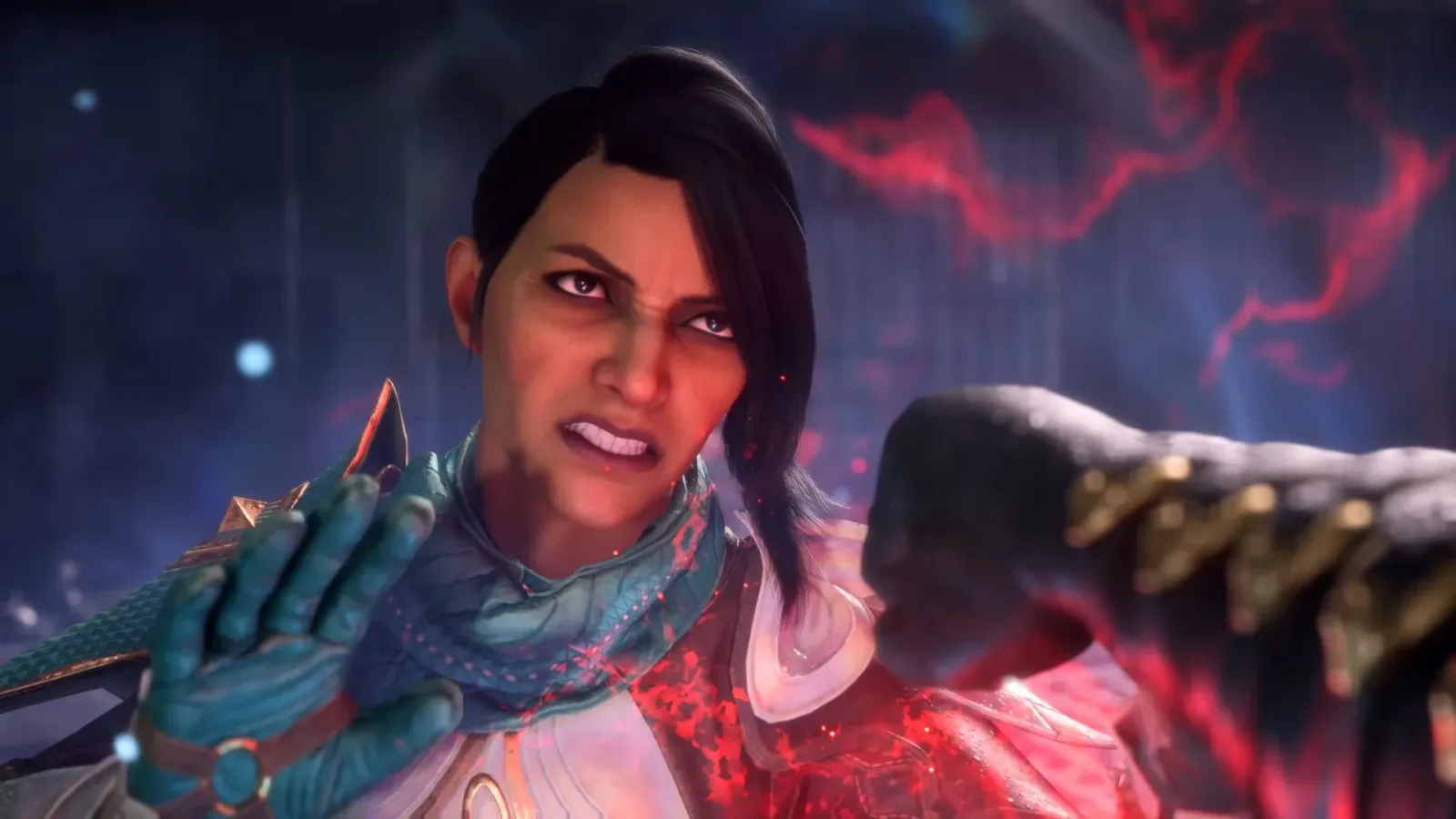
Former Dragon Age series leader Mark Darrah has offered a candid account of his late-stage work as a freelance consultant on Dragon Age: The Veilguard, saying that many suggestions he made during development were ultimately not adopted. Darrah, who departed BioWare in 2021, was not one of the game's project leads by the time he returned to advise on the RPG's final stretch. That distinction, he says, meant his guidance could be heard but was never binding.
In a recent interview, Darrah said there were "lots" of recommendations he made that did not make their way into the project. He described the experience as particularly frustrating in instances where an idea was initially passed over, only for a separate outside group assisting on the game to offer a similar recommendation that was then accepted.
"There were lots of things that I made recommendations on that were not listened to," Darrah said. "And in fact, in some cases, I would make a recommendation, it was ignored, and then a different group that was also helping would make the same recommendation, and then it was listened to. So it was definitely a frustrating experience for me."
His comments add another layer to the ongoing discussion around Dragon Age: The Veilguard, one of the franchise's most debated entries. The game received broadly positive critical notices, but it has generated a much more divided reaction among players, with story direction, dialogue, role-playing depth, and characterization repeatedly emerging as central topics of conversation.
For useful background on this topic, read A 29-Year-Old Battlespire Easter egg Has Finally Been Solved.
A consultant's influence has limits
Darrah's remarks are notable because of his lengthy association with the franchise. He was a major creative and production figure across BioWare's fantasy RPG series and had a deep familiarity with its setting, systems, audience expectations, and long-running narrative threads. Still, returning as a consultant is fundamentally different from directing a project from within its core leadership structure.
A consultant can identify risks, offer alternatives, flag continuity concerns, or make a case for a particular feature or narrative choice. The active development team, however, is responsible for balancing that feedback against production schedules, staffing realities, technical limitations, budgets, and its own creative priorities. Darrah acknowledged that the developers had every right not to follow his recommendations because he was no longer a project lead.
That context matters when interpreting his criticism. He is not claiming that he had final authority over the game, nor is he presenting every rejected suggestion as proof that a different decision would have guaranteed a better result. Instead, he is describing the disconnect that can arise when an experienced former leader is asked for advice but lacks the ability to carry that advice through the decision-making process.
For a series with the history of Dragon Age, that can be especially difficult. Each installment has had its own structure and tone, from the more tactical, origin-driven approach of Dragon Age: Origins to the faster combat and narrower scope of Dragon Age II, followed by the expansive regions and political conflicts of Dragon Age: Inquisition. Every new direction attracts supporters and critics, but it also leaves BioWare trying to serve multiple audiences with very different ideas of what the series should be.
Why The Veilguard remains so contentious
Dragon Age: The Veilguard arrived carrying years of expectations. Fans had waited a long time to return to Thedas, and the game inherited unresolved questions from earlier entries alongside the burden of introducing new protagonists, companions, conflicts, and gameplay priorities. The result was a release that earned praise for elements including its presentation and character-focused moments, while also becoming a focal point for sharp criticism from parts of the fan community.
Writing and narrative were among the most frequently contested areas. Some players embraced the game's cast and its emphasis on companion relationships. Others wanted more of the political tension, branching consequence, darker ambiguity, and role-playing friction they associate with earlier Dragon Age games. Those disagreements are not simply about whether the game is good or bad; they reflect different expectations built across a franchise that has changed dramatically from installment to installment.
Darrah's new comments do not reveal the specific recommendations that were rejected. As a result, it is impossible to connect his concerns to any individual scene, quest, character arc, combat system, or broader design decision in the final game. It would be a mistake to assume that every point of contention among fans corresponds to advice he gave, or that his proposed changes would necessarily have resolved the arguments surrounding the release.
What the comments do make clear is that significant creative debate occurred during the game's development, including during its later stages. That is normal for a large RPG, where story, progression, combat, accessibility, cinematic presentation, and player choice all compete for time and resources. But Darrah's description suggests that the feedback process was, from his perspective, uneven and sometimes difficult to navigate.
Darrah's concerns about accessibility and RPG identity
This is not the first time Darrah has voiced concerns about the direction of the franchise. He has previously argued that BioWare's pursuit of games that are simpler and more accessible weakened Dragon Age's ability to stand out as a major role-playing series. In that view, reducing complexity can broaden the potential audience, but it can also risk diluting the identity that made a dedicated RPG fanbase invest in a series in the first place.
Darrah has connected that concern to the success of Baldur's Gate 3, which demonstrated that a dense, choice-driven, systems-heavy fantasy RPG can reach a huge audience. The comparison does not mean every RPG needs to imitate Larian Studios' approach. Dragon Age has always had its own voice, setting, combat history, and storytelling style. Yet the comparison has intensified questions over whether modern AAA development too often treats depth and accessibility as opposing goals.
For many players, accessibility can mean clear onboarding, flexible difficulty, useful interface options, and an approachable path into complicated systems. Those are valuable features and do not inherently require less meaningful role-playing. The harder design question is whether a game can lower unnecessary barriers while retaining the choices, consequences, strategic demands, and distinct character builds that genre fans expect.
That balance sits at the heart of the debate surrounding The Veilguard. Its defenders and detractors may disagree on the details, but both sides are often talking about the same underlying issue: what should a contemporary Dragon Age game prioritize?
BioWare's future now faces larger uncertainty
Darrah's reflections arrive during a period of major uncertainty for BioWare and its best-known franchises. EA has abruptly closed the studio and canceled Mass Effect 5, putting the future of both Dragon Age and Mass Effect into a far more precarious position. The news has prompted renewed scrutiny of recent BioWare projects, internal decision-making, and the pressures facing large-scale single-player RPG production.
Still, assigning the outcome to one game, one team, or one development decision would overlook the broader corporate circumstances surrounding EA. The company's recently completed $55 billion leveraged buyout involved Saudi Arabia's Public Investment Fund, private equity firm Silver Lake, and Jared Kushner's Affinity Partners. That larger financial backdrop is crucial when assessing a studio closure and canceled project, particularly in an industry where business strategy, ownership changes, and restructuring can have consequences far beyond a single title's reception.
The people who built The Veilguard should not be treated as a single, interchangeable decision-making body. As one veteran of the franchise has stressed in response to hostility directed at the game, the majority of a team of that size has little or no say over the specific aspects that critics may dislike. Hundreds of developers contribute to a modern RPG, but leadership decisions and overall creative priorities are not shared equally across every discipline or role.
An unresolved chapter for Dragon Age
Darrah's account will likely fuel further discussion among fans who already view Dragon Age: The Veilguard as a turning point for the series. It offers no simple answer for why the game became so divisive, and it does not identify a hidden set of changes that could have settled the debate. What it does provide is a direct perspective from a former franchise leader who felt that his experience was not always given the weight he believed it deserved.
For now, the legacy of The Veilguard remains unsettled. It is a game that won strong reviews, found passionate supporters, and also prompted unusually intense arguments over what Dragon Age should be. With BioWare closed and Mass Effect 5 canceled, those arguments now carry an added sense of finality. Darrah's frustration is not merely about a rejected recommendation; it is part of a larger story about a beloved RPG series, competing visions of accessibility and depth, and a studio whose future has been cut short.
Community
Discussion
Start the conversation.
No comments have been posted yet.