

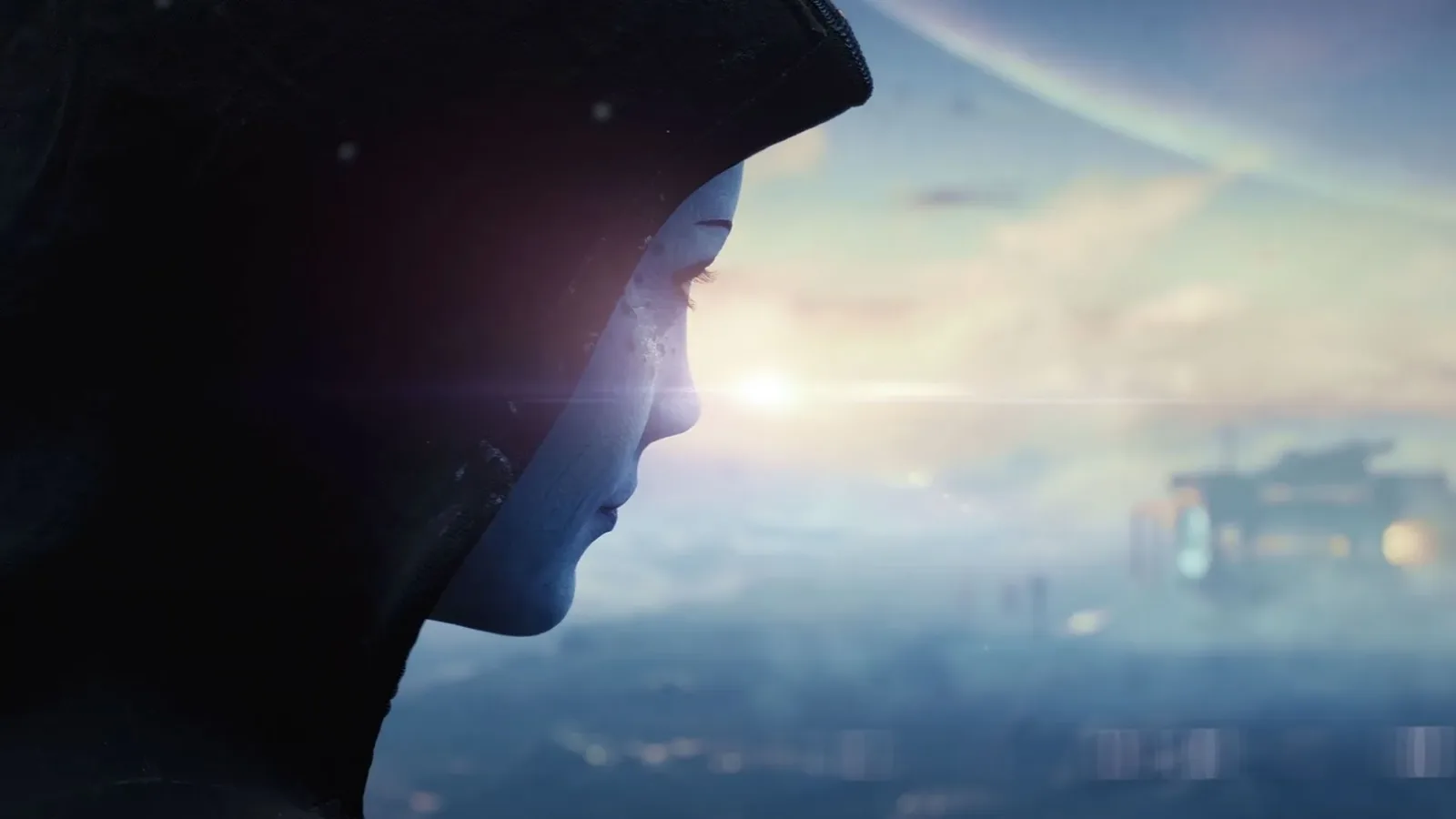
Mass Effect Universe, the uncompleted next entry in BioWare's sci-fi role-playing series that was widely viewed as Mass Effect 5, was designed to complement Amazon's planned television adaptation. The detail comes from former BioWare project director and executive producer Michael Gamble, whose brief response to a fan has opened an intriguing window into how the game and show may have been intended to coexist.
BioWare has since closed amid difficult conditions across the games industry, bringing work on the project to an end. That means fans may never receive a full accounting of its story, systems, characters, or place in the broader Mass Effect timeline. Still, Gamble's comment indicates that the game was not being developed entirely in isolation. At minimum, the teams behind the interactive sequel and the screen adaptation appear to have been working with an awareness of each other's narrative direction.
Asked whether the plot of Mass Effect Universe would be used for the television series, Gamble replied that the two were "meant to compliment each other." The wording leaves substantial room for interpretation. It does not confirm that the show was a direct adaptation of the game, that either project shared protagonists, or that one would be required viewing or playing to understand the other. It does, however, point to some form of planned creative connection.
Embedded X/Twitter post
A larger Mass Effect plan may have been taking shape
Cross-media coordination is not unusual for a property with Mass Effect's scale, but it is significant in this case because the franchise has spent years in a comparatively quiet period. The original trilogy established an enormous fictional setting: humanity's entry into galactic politics, ancient Reaper technology, the Citadel Council, the relay network, alien civilizations, corporate power, military conflict, and questions of synthetic life all give the universe plenty of material to explore beyond Commander Shepard's central arc.
For useful background on this topic, read GTA 6 Store Data Sparks Fresh Speculation About Online Multiplayer Plans.
A new game and a television production could have approached that material from different angles. One might have focused on player choice and a fresh crew of characters, while the other could have told a more fixed story elsewhere in the timeline. They might also have shared themes, historical context, locations, or background events without forcing viewers to chase a specific canon route through a role-playing game.
That distinction matters especially for Mass Effect. Choice has always been one of the series' defining features, with decisions affecting romances, squadmates, political outcomes, and the survival of major characters. Any attempt to establish a single screen continuity has the potential to prompt debate from players whose personal version of the story looks different.
Gamble's phrasing suggests "complement" rather than "adapt," which could have been a useful way to handle that challenge. Rather than retelling a player-driven campaign beat for beat, a show could widen the franchise's perspective while a game preserved the agency expected of the series. The approach could also have allowed both projects to add to the same fictional world without declaring that one set of player decisions was the only valid version.
The multiverse reports add another layer
Earlier details associated with Mass Effect Universe suggested the game may have involved a multiverse element, with players potentially moving between timelines. Precise mechanics were not made public, and it remains unclear how far that concept had progressed before BioWare's closure. Even so, the possibility is especially notable because it could provide a narrative framework for acknowledging the franchise's many divergent choices.
Mass Effect 3's conclusion has long been a particularly sensitive point in community discussion. The game's ending leaves players with consequential outcomes that can reshape the fate of galactic civilization. Choosing one definitive future as the basis for a sequel or a television series could inevitably leave some fans feeling that their path had been set aside.
A timeline-spanning structure could have eased some of that pressure. If Mass Effect Universe had allowed travel or contact across alternate realities, multiple outcomes from the original trilogy could potentially exist within the broader fiction. That would not automatically solve every continuity question, but it would give writers room to engage with the series' branching legacy rather than simply selecting a single preferred ending.
It is not known whether the planned television adaptation would have used any multiverse concept itself. Gamble's statement does not establish that. It only suggests a relationship between the projects, and the reported game concept remains incomplete and unreleased. Fans should therefore be cautious about treating any of these fragments as a final blueprint for what either production would have delivered.
What is known about the Amazon adaptation
Amazon and MGM announced the Mass Effect television production in 2024. Public information since then has been limited, and no release window has been announced. Reports indicate that the project remains in development, with Doug Jung and Daniel Casey attached as showrunners.
That apparent forward momentum is meaningful now that the game project has been lost. The television series is not a replacement for an RPG sequel, particularly for a community invested in the kind of character building, exploration, dialogue choices, and squad relationships that made the games distinctive. But it could become the next major opportunity for Mass Effect to return to public view.
The adaptation also arrives during an era when game-to-screen projects are no longer treated as automatic long shots. Television and film adaptations have repeatedly demonstrated that game worlds can find large audiences when the creative teams understand what makes the original works resonate. For Mass Effect, the challenge will be translating a setting that is both epic and intimate: giant political and existential stakes sit alongside conversations on a ship, loyalty between teammates, and decisions that often feel personal even when they affect entire species.
There are several possible formats for a Mass Effect show. It could follow familiar events and characters, introduce an original cast operating somewhere else in the galaxy, or situate itself in a period that avoids locking down the major choices of the games. Nothing confirmed so far identifies which of those routes it will take. Gamble's recent remark only reinforces the likelihood that its creators had at least considered how it might fit beside the next game rather than simply exist as a disconnected use of the brand.
The end of a game project, not necessarily the end of Mass Effect
BioWare's closure has understandably made Gamble's comments bittersweet. The prospect of a new Mass Effect that could acknowledge multiple timelines, while also contributing to a coordinated television expansion, now represents a path that may never be fully realized. Development changes constantly, and even active projects can be reshaped dramatically before release. There is no way to know how much of the reported design would have survived to launch.
Nevertheless, the comments provide a clearer sense of ambition behind Mass Effect Universe. This was seemingly envisioned as more than a straightforward sequel. It may have been positioned as part of a broader return for the franchise, one that could have linked an interactive story with a high-profile streaming series while confronting the thorny continuity issues left by the original trilogy.
For now, the Amazon adaptation is the visible piece of that larger picture still moving forward. Its eventual premiere date remains unknown, as do its setting, cast, story, and relationship to the established games. The status of Mass Effect Universe is far less encouraging, with BioWare's closure ending development before those answers could reach players.
Even so, the franchise's universe remains unusually well suited to expansion. Mass Effect began as a spacefaring RPG that invited players to inhabit a galaxy rather than merely visit it. Its appeal came not only from galaxy-ending threats, but from its sense of discovery: strange worlds, unfamiliar cultures, fragile alliances, and a crew that made a massive setting feel human. If the television series can capture that balance, it may offer the clearest next chapter for Mass Effect while fans wait to see whether the game series ever gets another chance to continue.
Community
Discussion
Start the conversation.
No comments have been posted yet.