

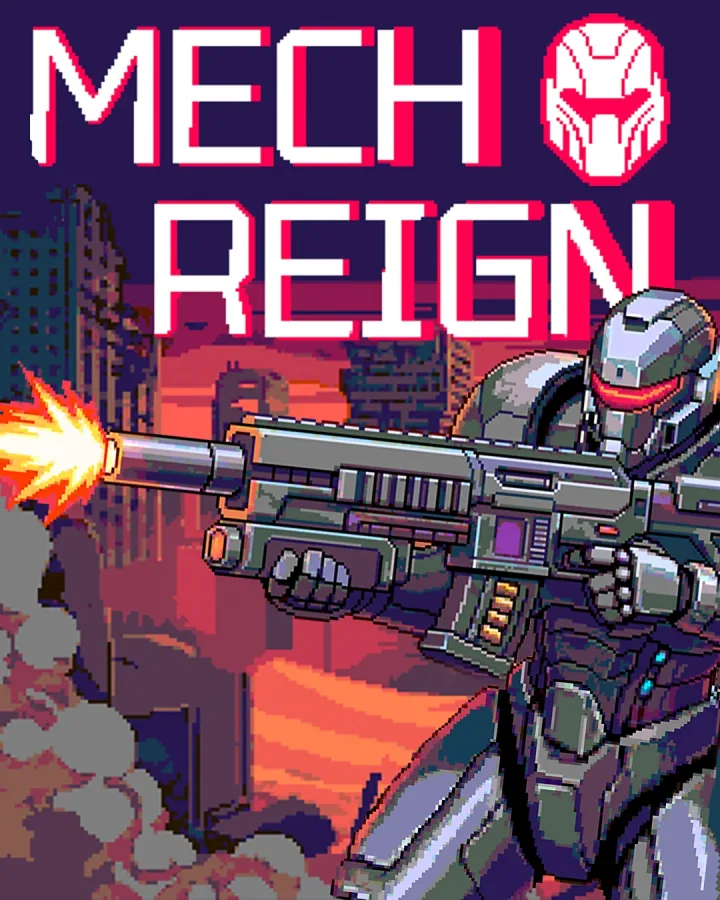
MECH REIGN, a new incremental autobattler from developer Dot Blood and publisher Targem Games, has opened its playtest on PC. The strategy-focused game puts players in command of a five-mech squad sent to reclaim a planet that has been overwhelmed by mutants, mixing automated battles with formation planning, equipment choices, technology upgrades and repeated progression runs.
The newly available test gives players an early chance to explore the game's central loop: build a team, place it on a tactical grid, advance through increasingly difficult sectors, and eventually retreat or reset when the opposition becomes too strong. That reset is not positioned as a simple failure state. Instead, MECH REIGN is built around an incremental structure where completed runs feed resources and permanent improvements into the next attempt.
Participants are also free to stream the playtest, publish gameplay videos and share reviews. There are no stated restrictions on creating content from the test, making the opening an opportunity for strategy-minded players and creators to show how the game's many possible mech configurations perform in practice.
A five-mech squad without fixed class rules
At the center of MECH REIGN is a squad of five customizable machines. Rather than locking each unit into a conventional tank, damage dealer or support class, the game allows each mech to be built around the gear and abilities assigned to it. This means a team can be organized around familiar battlefield roles, but players are equally encouraged to try less predictable loadouts and combinations.
For useful background on this topic, read Eternal Palace Sakura Launches on Steam and Nintendo Switch.
Each mech can be customized using armor, weapons, accessories and ultimate abilities. The stated number of available build options reaches into the hundreds of thousands, suggesting that squad construction will be a major part of the game's appeal. A defensive frame may be paired with equipment intended to absorb pressure at the front of the formation, while another mech can be tuned toward damage, utility or a specialized interaction with the rest of the team.
Because there are only five units in a squad, every selection has the potential to matter. A build that looks effective in isolation may be less useful if it does not fit the team's positioning plan or cannot address the particular mutant types waiting in later sectors. Conversely, an unusual item choice may become valuable when it supports a lineup built around a specific formation bonus or ability timing.
The lack of class restrictions gives MECH REIGN a flexible foundation. Players can build a balanced group with distinct duties, make several mechs serve similar functions, or search for equipment setups that challenge the expected division between offense, defense and support. That freedom is particularly important in an autobattler, where the preparation before combat can matter as much as the action that unfolds automatically once a fight begins.
For another perspective on this story, read MECH REIGN Opens Playtest for Five-Mech Incremental Battles.
Formation decisions begin on a 3×3 grid
Before a run starts, players arrange their five mechs across a 3×3 tactical grid. With nine positions available and five occupied by the squad, the layout creates room for deliberate placement rather than a single fixed line of battle. MECH REIGN uses defense, attack and support line bonuses, so choosing where each unit stands is intended to be a meaningful strategic decision.
A player may want tougher mechs positioned to benefit from defensive advantages while more fragile weapon platforms are placed where attack-oriented bonuses help them contribute safely. Support-focused builds can also be located to take advantage of their own line effects. Since there are empty spaces on the grid, formations are not limited to a fully packed front and back row; players can alter the shape of the squad to suit a particular roster or opponent.
This placement system gives the game a layer of tactical planning before the automatic battles take over. It also means that a team is more than a list of five strong individual builds. The same equipment set could produce different outcomes depending on its position, the line bonuses it receives and which allies are set beside it. Players testing the game will likely be looking at both gear efficiency and formation synergy as they move through the planet.
The design appears aimed at making preparation approachable while leaving room for experimentation. There is no need to execute real-time commands during the fight, but there is still a sequence of important choices beforehand: select equipment, assign abilities, decide each mech's battlefield role and settle on a formation that can survive the next group of enemies.
More than 200 sectors and 16 mutant enemy types
The campaign structure includes more than 200 sectors to clear. These areas are populated by 16 mutant types, each described as having its own strengths and weaknesses. That enemy variety should make adaptation necessary as a run continues, especially when a configuration that performs well against one target type runs into a counter later in the progression path.
The game's premise frames the campaign as a push to clear an overrun planet. Players advance through sectors, collecting resources while trying to get as far as their squad can manage. Eventually, mutant resistance is expected to stop the run. At that point, retreating and rebuilding is part of the intended rhythm rather than an abrupt end to progress.
This format places MECH REIGN within the incremental side of the autobattler genre. Progress is measured not only by how far a squad gets in its current attempt, but also by what that attempt contributes to the next one. The pressure from stronger mutant resistance provides a natural endpoint, while the rewards earned along the way provide a reason to return with revised tactics.
For players who enjoy testing systems, the sector count offers a large framework for gradual discovery. Early sectors can help establish which combinations are reliable, while later resistance may expose weaknesses in an otherwise successful team. A setup designed to burst down one kind of threat might need more durability, support or positional adjustment when it reaches a sector populated by a different mutant profile.
Permanent upgrades are designed around repeated runs
Defeat and resetting are core elements of MECH REIGN's progression model. When players choose or are forced to reset their current advancement, they receive permanent bonuses that strengthen future runs. This approach turns the setback into a source of long-term momentum: a squad that cannot break through a difficult stretch today can return with more resources, new upgrades and a different plan.
The game features a branching technology tree containing more than 140 technologies. Alongside the available equipment and ability combinations, this tree gives players another avenue for shaping their overall strategy. Branching upgrades can encourage different priorities between runs, whether that means emphasizing a preferred style of squad construction or pursuing improvements that address the problem which ended a previous attempt.
There are also more than 30 pieces of equipment to work with. While the number may be more compact than the total build count suggests, the interaction between armor, weapons, accessories, ultimate abilities, positioning and technologies is where the broader range of possibilities emerges. A single new piece of gear could alter a mech's role, and a permanent upgrade could make an older strategy viable deeper into the sector progression.
That combination of short-term risk and long-term advancement is likely to define the playtest experience. Players will not simply be seeking the one squad that clears every situation. They will be learning when to press on, when a formation needs rebuilding, which resources are worth prioritizing, and which permanent bonuses best support their preferred approach.
What the playtest means for prospective players
The PC playtest arrives as an opportunity to see how MECH REIGN balances its automation with player-driven decision-making. The game's announced systems point toward a loop where strategic control happens primarily between battles: in squad loadouts, grid placement, upgrade paths and the decision to continue a run or reset for durable gains.
For genre fans, the most notable feature may be the absence of rigid class assignments. The ability to shape all five mechs through equipment and abilities gives the game room for both straightforward team composition and experimentation. Pair that with line bonuses on the 3×3 grid, a large technology tree and mutant-specific strengths and weaknesses, and each run has several levers players can adjust before sending their machines into combat.
MECH REIGN is currently confirmed for PC through Steam. The playtest allows interested players to begin evaluating the game's mutant-clearing campaign, flexible mech builds and incremental progression firsthand, while also allowing public streams, videos and reviews without content restrictions. As testing gets underway, the key question will be how deeply the many build options, formations and permanent upgrades reward creative squad planning over repeated runs.


Community
Discussion
Start the conversation.
No comments have been posted yet.