

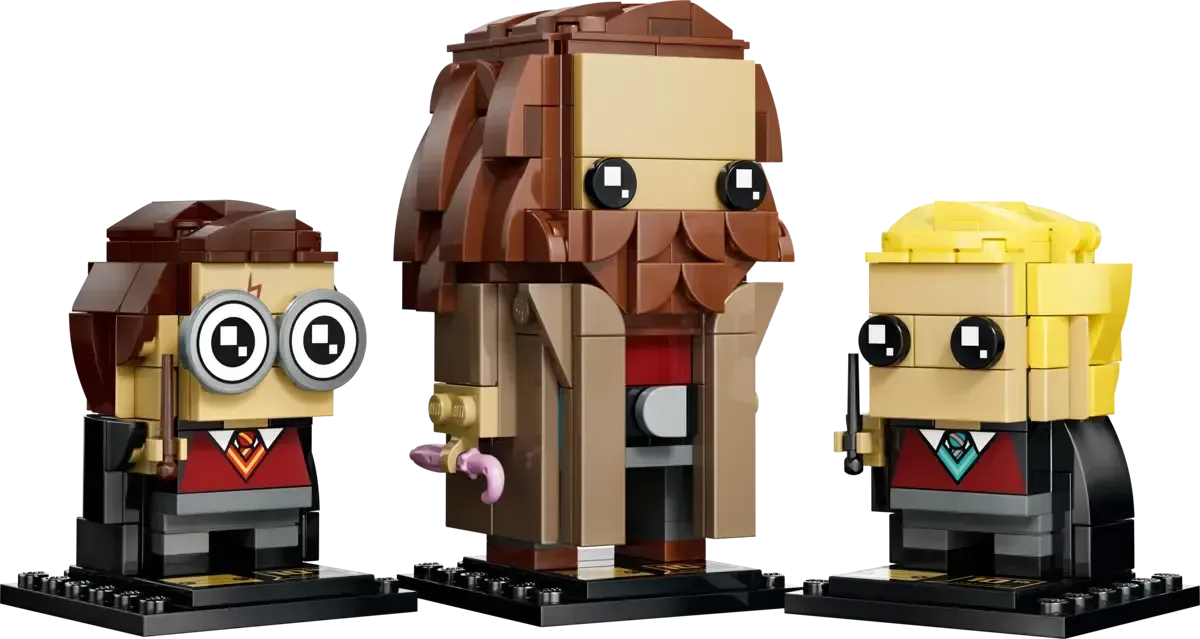
LEGO has revealed its first wave of Harry Potter sets connected to HBO's new television series, bringing several of the Wizarding World's most recognizable early-story locations back to brick form. The lineup includes the Gryffindor Common Room, 4 Privet Drive, the Hogwarts Express, and a BrickHeadz collection featuring Harry Potter, Draco Malfoy, and Rubeus Hagrid.
The announcement gives collectors an early look at how the toy line intends to distinguish the HBO-inspired range from the many LEGO Harry Potter sets based on the films. New minifigure designs and revised builds are part of the pitch, but the choice of locations has also made comparisons inevitable. Hogwarts Express and Privet Drive, in particular, have received multiple LEGO interpretations over the years, while Gryffindor spaces have long been a core part of Hogwarts-focused playsets.
That familiarity has become the central point of discussion among fans. Some collectors have welcomed the chance to see the forthcoming series reflected in LEGO form, and Privet Drive's altered architecture has drawn particular praise. Others feel that the first wave looks too close to models that came before it, with one highly rated reaction in an online discussion saying the builds resemble "bootlegs of the originals."
It is a split response rather than a simple rejection. The sets are drawing attention precisely because LEGO Harry Potter has such an extensive history, and every new revisit carries expectations about scale, accuracy, value, minifigures, and whether a redesigned location offers something genuinely different for people who already own earlier versions.
For useful background on this topic, read Walmart's Refurbished iPads Could Be the Smarter Black Friday Buy for Mobile Gaming.
A familiar start for the HBO-era collection
The new range begins with locations that are foundational to Harry Potter's introduction to the magical world. Privet Drive establishes Harry's life with the Dursleys, the Hogwarts Express marks the journey toward Hogwarts, and Gryffindor's common room is a recurring home base across the story. They are understandable choices for a line intended to introduce new viewers and younger builders to the setting.
At the same time, those choices place the HBO range directly beside a large back catalogue. LEGO has produced Hogwarts Express models in numerous formats, from play-scale train sets to substantial collector-oriented displays. Privet Drive has also appeared repeatedly, often focused on the Dursley family home, its suburban street setting, and the arrival of magical chaos in an otherwise ordinary environment.
The immediate challenge is not whether these places belong in a Harry Potter line. They plainly do. The question is whether their new versions can establish an identity that feels connected to the HBO adaptation rather than merely functioning as replacements for older film-era releases.
For collectors, that distinction may become clearer once the television series itself arrives and audiences can compare costume choices, set decoration, character appearances, and the show's visual interpretation of the wizarding world. For now, much of the reaction is based on the initial designs and on the unavoidable resemblance between iconic locations across different adaptations.
Gryffindor Common Room brings a dense interior build
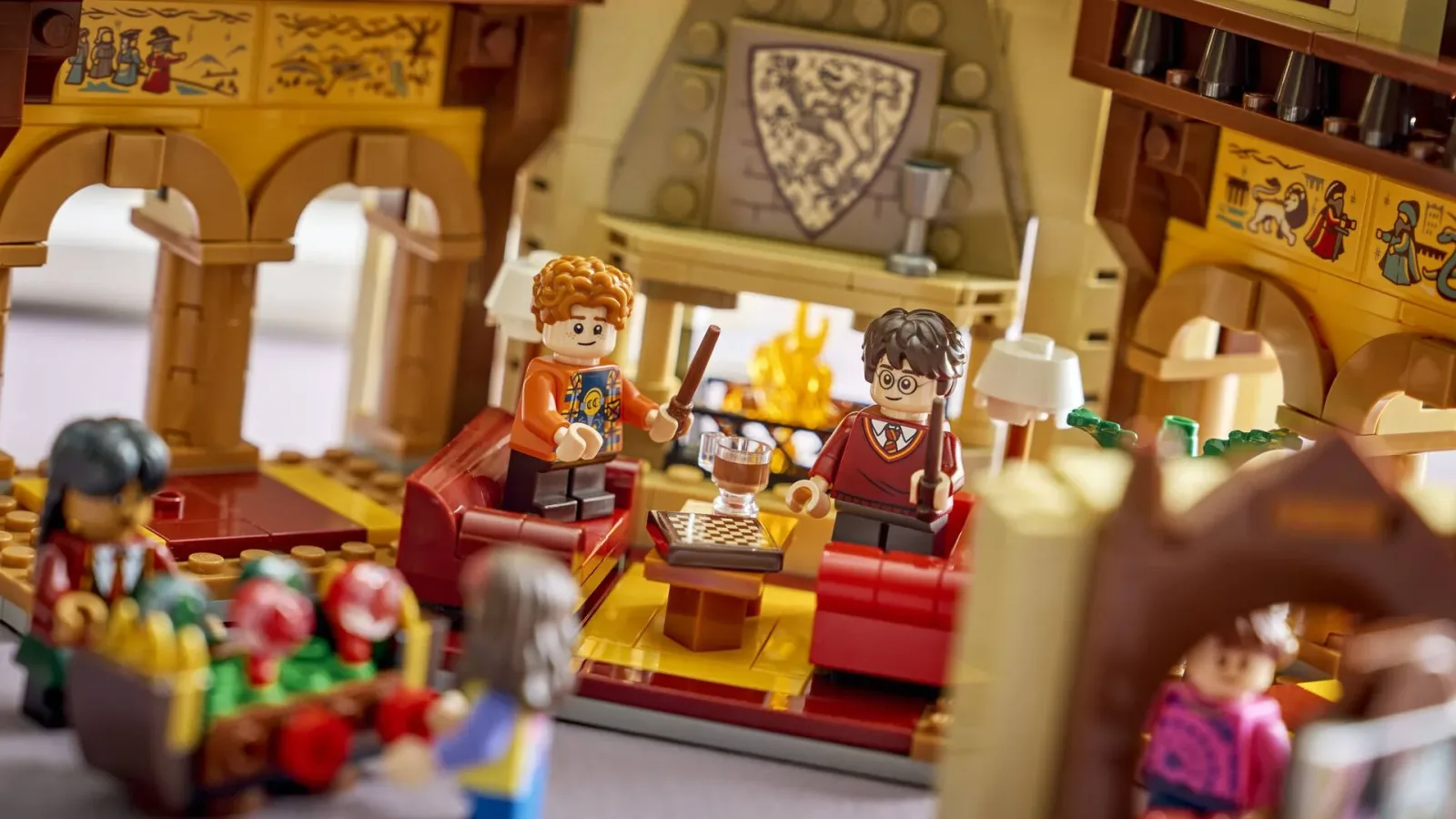
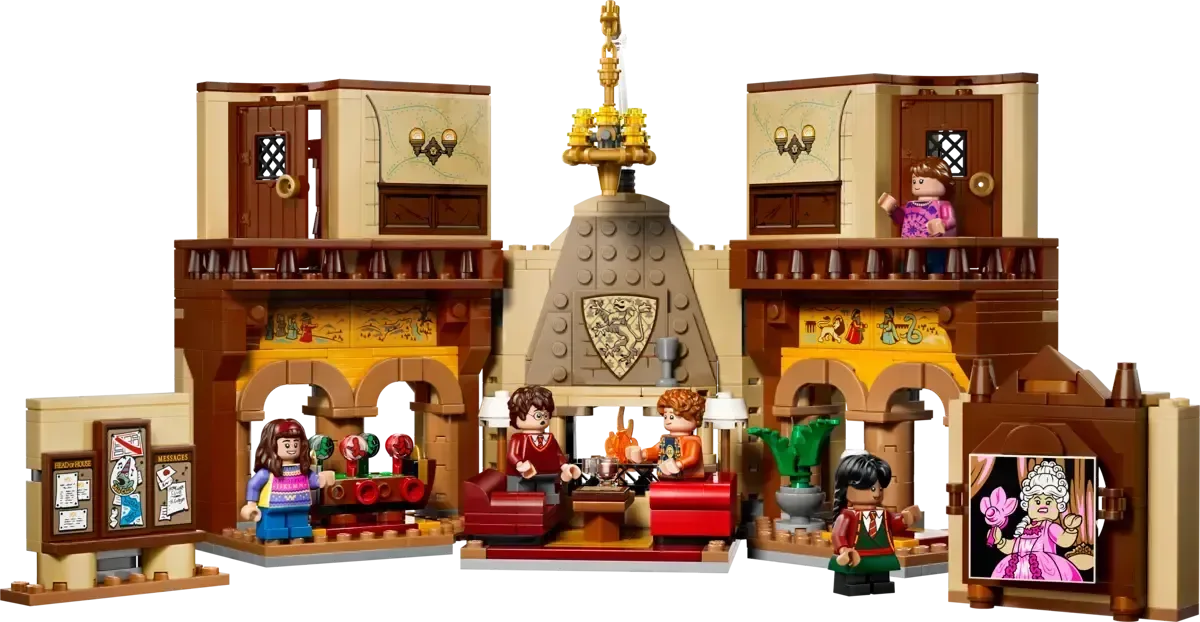
The Gryffindor Common Room set is the largest of the location-based reveals by piece count, containing 738 pieces. It includes five minifigures: Harry Potter, Ron Weasley, Hermione Granger, Parvati Patil, and Lavender Brown.
As an interior-heavy set, its appeal is likely to rest on the small details spread around the room. The common room is one of the settings where LEGO can add character through furniture, decorative elements, books, fireplace-adjacent details, and the lived-in visual clutter expected of a student space. It is also a flexible environment for play and display, since it brings together several students without requiring a large exterior Hogwarts structure.
Its selection makes sense from a story perspective. Gryffindor's common room appears regularly throughout the Potter narrative and offers a recognizable setting for scenes involving Harry, Ron, Hermione, and their classmates. The inclusion of Parvati and Lavender also gives the set a slightly broader student group than a release limited entirely to the three central friends.
Yet the room is another example of a concept that LEGO collectors know well. Past Hogwarts sets have included common-room spaces, dormitory-style rooms, and modular sections of the castle. The HBO set's success with longtime fans may therefore depend less on the mere existence of the room and more on its layout, its details, and how strongly the final minifigures evoke the series' versions of the characters.
Privet Drive stands out through its exterior
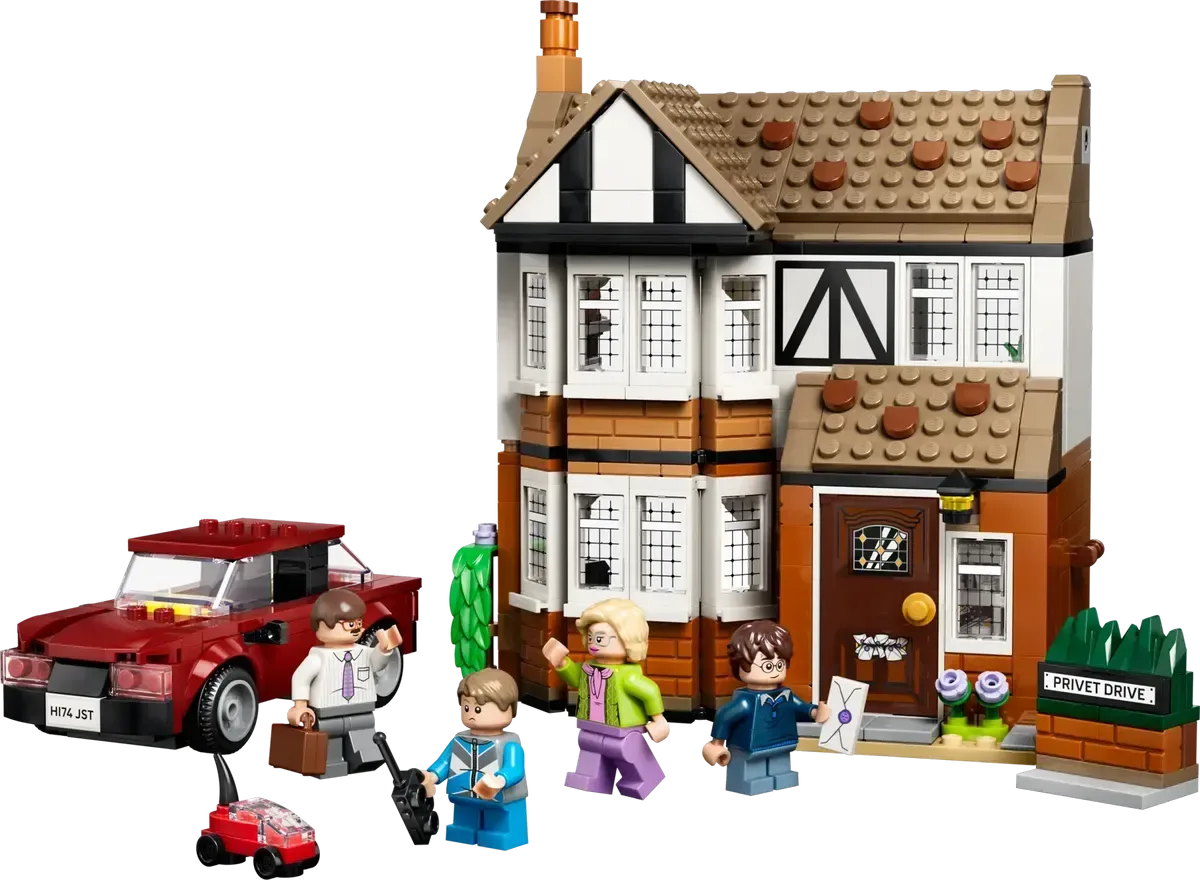
Of the revealed models, 4 Privet Drive appears to be the one receiving the most enthusiasm for visibly separating itself from prior movie-based designs. The set uses a faux-Tudor exterior that gives the Dursley house a different silhouette and surface treatment from older LEGO versions.
The build contains 545 pieces and comes with Harry, Uncle Vernon, Aunt Petunia, and Dudley minifigures. It also includes a brick-built car associated with the 1990s setting. That combination makes the model a compact representation of Harry's pre-Hogwarts life, centered on the family household rather than on the magical settings that tend to dominate the theme.
The new exterior is significant because it gives the set a clear visual hook even before viewers have seen the HBO series. A location such as Privet Drive is inherently constrained by its role as an unremarkable suburban home, so architectural changes can do much of the work when distinguishing one adaptation's version from another.
For fans who already have an older Privet Drive set, that may make this release easier to consider as a separate display rather than a near-duplicate. It also suggests a possible direction for the broader HBO range: familiar story locations may gain new life when the television production's design language creates obvious differences in shape, texture, or atmosphere.
Another Hogwarts Express enters a crowded station
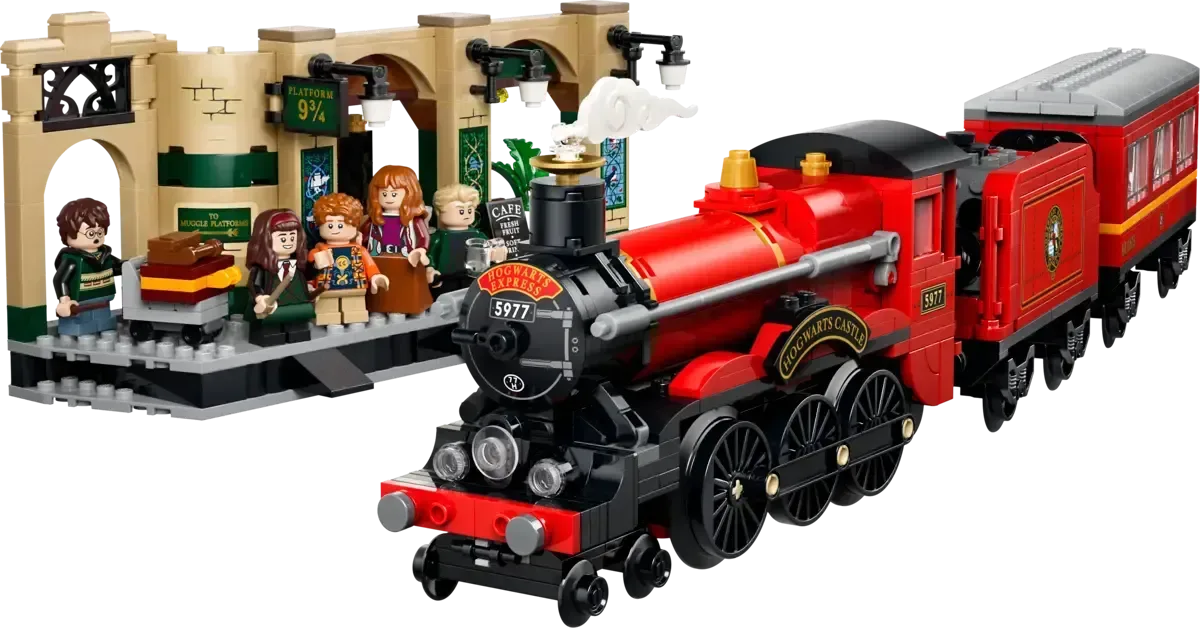
The new Hogwarts Express is perhaps the most scrutinized release in the wave, simply because the train is among LEGO Harry Potter's most revisited subjects. Harry's first journey to Hogwarts is one of the franchise's defining moments, so the train's return is unsurprising. It is also an object that works naturally as both a toy and a display centerpiece.
The newly revealed version is listed at £89.99 in the UK. Its locomotive has been noted as looking very similar to earlier versions, which is likely to fuel the debate over how much the HBO sets are changing. Still, the platform section appears to include a café-style waiting area not previously seen in the same form.
That station detail could be an important differentiator. LEGO train sets often gain personality from their accompanying scenery: benches, luggage, platform signs, food stalls, waiting rooms, and the small features that turn a vehicle into a scene. The Hogwarts Express is not only a locomotive; it is the entrance point to a wider magical journey. Expanding the platform environment may help the set feel more like a story location rather than another isolated train model.
Even so, this is a category where builders are likely to compare proportions, engine shaping, carriages, platform features, and included characters with every major Hogwarts Express that preceded it. That is the cost of revisiting an icon, but it also reflects the train's enduring popularity.
BrickHeadz offers a smaller character-focused option
The fourth revealed product is a 380-piece BrickHeadz set featuring Harry, Draco, and Hagrid. The trio is presented in connection with the Forbidden Forest, apparently referencing the detention sequence in which the students venture into the woods with Hagrid.
BrickHeadz releases occupy a different niche from location builds. They are stylized, larger-scale character collectibles rather than traditional minifigure-scale play environments. That makes them a straightforward option for fans who want a small display item tied to the HBO series without committing to one of the larger sets.
The choice of Harry, Draco, and Hagrid also points toward a story moment that brings unlikely characters together. It is a useful contrast to the more predictable school and home settings elsewhere in the opening wave, even if the BrickHeadz format is inherently more simplified than a full diorama or playset.
Why the reaction is divided
The mixed reception says as much about the LEGO Harry Potter audience as it does about these individual products. This is a theme with years of releases behind it, which means many buyers are not encountering Hogwarts, the Dursleys, or the Hogwarts Express for the first time. They are evaluating whether the new line deserves room beside collections built over multiple eras.
There is also a natural tension between accessibility and novelty. A first wave needs instantly recognizable entry points for new fans of the HBO series. Beginning with obscure locations or later-story material would make less commercial sense. But the safer the choices become, the more they risk looking repetitive to experienced collectors.
New minifigure designs may ultimately be one of the strongest reasons for the line to exist. Characters based on a new production can have distinct faces, hair, costumes, and proportions, giving collectors versions that are not simply reruns of film-inspired figures. The revealed sets also show that LEGO is making at least some effort to revise settings, most obviously in Privet Drive's exterior and the Hogwarts Express platform area.
For now, the HBO LEGO Harry Potter collection is off to a recognizable, cautious beginning. The initial selection revisits major locations rather than radically expanding the range, and that has left the community divided. Still, the television series has the potential to give these builds more context, while future waves could explore settings and characters that more sharply demonstrate what makes this adaptation's version of the wizarding world its own.
Community
Discussion
Start the conversation.
No comments have been posted yet.