

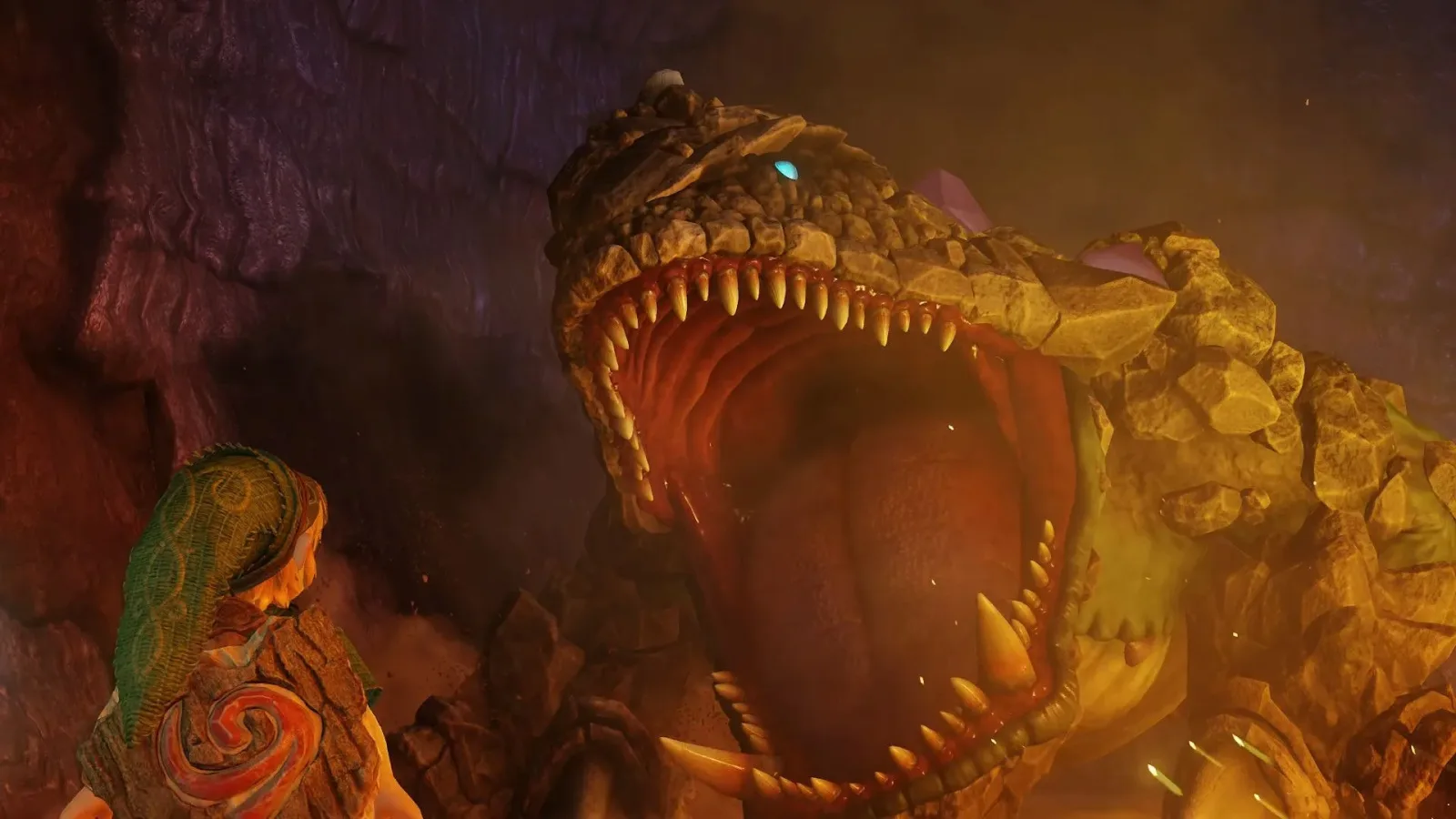
Nintendo believes the momentum behind Switch 2 remains intact following its hardware price increase, with company president Shuntaro Furukawa pointing to a promising start for The Legend of Zelda: Ocarina of Time remake and strong demand for the Zelda 40th Anniversary Edition Switch 2 console.
During Nintendo's latest financial briefing, Furukawa addressed investor concerns that the revised $500 price of Switch 2 could be slowing the platform down. His message was notably confident: the company still expects to pursue its financial targets, adoption has continued smoothly, and recent Zelda-related releases have given the business another meaningful lift heading into the all-important holiday period.
While Nintendo did not share concrete sales totals for the Ocarina of Time remake, Furukawa described the game as being "off to a great start." He also said the special Switch 2 model released for The Legend of Zelda's 40th anniversary had received a "very positive" response and contributed to strong sales across multiple regions.
Switch 2 installed base has passed 25 million
Furukawa said Switch 2 adoption had progressed smoothly in approximately the year and a half since the system launched in June of the previous year. Its installed base has now moved beyond 25 million units, a sizable figure that gives Nintendo a growing audience for first-party games, hardware bundles, accessories, and limited-edition systems.
For useful background on this topic, read Phantom Blade Zero Crimson Manor Guide: How to Find the Puppet's Tongue.
The president acknowledged that Nintendo's performance had not been uniform everywhere at the end of the prior holiday season. Regional results differed from the company's expectations. However, he identified March's Pokémon Pokopia as a major catalyst for worldwide hardware sales, saying it helped Nintendo enter the new fiscal year with favorable momentum.
That context matters for understanding the company's stance on the newer price point. A console price revision is rarely an uncomplicated move, especially during a generation when consumers have more choices than ever about where and how to play. Nintendo's position is that the change has not had an outsized negative effect so far, in part because customers were notified well ahead of time and because bundles containing hardware and software have provided alternatives for buyers considering the system.
That does not mean Nintendo is dismissing the importance of the next few weeks. Furukawa made clear that the holiday season remains central to the company's annual platform business. The period will be especially significant as Nintendo measures whether demand can remain healthy under the new hardware pricing structure.
"Holiday season sales significantly impact the number of units shipped annually for our dedicated video game platform business," Furukawa said, adding that sales trends in the weeks ahead would be important to reaching Nintendo's shipment guidance.
Zelda is doing double duty for Nintendo
The current Zelda push gives Nintendo two different ways to keep the Switch 2 conversation active. First, there is the Ocarina of Time remake itself: a modern return to one of the best-known games in Nintendo's catalog. Second, there is the 40th Anniversary Edition Switch 2, a collector-focused system designed around the series milestone.
Both products are important, but they appeal to somewhat different audiences. A major remake can bring in returning fans, players encountering Ocarina of Time for the first time, and households looking for a recognizable holiday release. A limited or themed console, meanwhile, can encourage hardware purchases from collectors and from consumers who may have been waiting for a more distinctive version of Switch 2 before committing.
Furukawa's remarks suggest the anniversary hardware has been particularly effective in several territories. Market data from Circana has also indicated that the Zelda 40th Anniversary Switch 2 drove record sales for Nintendo in the United States. Nintendo had previously indicated that demand exceeded its expectations, underscoring how effectively Zelda branding can still move hardware even after four decades.
The downside of that interest has been availability. Stock has reportedly been difficult to find at times, although it is the type of problem companies generally prefer to weak demand. The challenge for Nintendo will be translating initial collector enthusiasm into continued sales across the wider holiday shopping period, particularly if restocks arrive when consumers are making their largest seasonal purchases.
The Ocarina of Time remake has an early UK physical milestone
Nintendo has been more reserved about the remake's specific performance. Furukawa said it was too soon to provide a deeper breakdown of the game's numbers, so there is no official worldwide sales figure at present. Still, the early indicators described around the release have been encouraging.
Analyst firms have characterized the N64 revival as the largest physical launch in the United Kingdom so far this year. Physical performance alone cannot provide the full picture in a market where digital purchases are increasingly significant, but it is a notable early benchmark. It also demonstrates the enduring commercial power of Ocarina of Time as a name, even among an audience separated by decades from the original Nintendo 64 release.
The remake arrives with enormous expectations attached to it. The original The Legend of Zelda: Ocarina of Time remains one of the medium's most celebrated works, remembered for its move into three-dimensional adventure design, its time-spanning structure, memorable dungeons, and the influential lock-on combat system that became synonymous with the series. Revisiting such a foundational title can be commercially attractive, but it also invites close scrutiny from longtime players.
For Nintendo, however, the project's early commercial showing appears to be more immediately relevant than any broader debate around its legacy. A successful Zelda release can help sell software directly, reinforce the value of the Switch 2 catalog, and provide a compelling reason for prospective buyers to enter the hardware ecosystem. When paired with a special-edition console, it can create a coordinated retail moment rather than relying on a single product to carry attention.
Price pressure remains a factor to watch
Nintendo's confidence does not erase the questions surrounding Switch 2 pricing. The move to $500 puts greater pressure on the company to demonstrate value through games, bundles, and hardware differentiation. Furukawa's comments indicate Nintendo believes its advance communication and bundle options have softened that impact to date, but the company is also watching the holiday sales period closely for evidence of how consumers are responding.
Manufacturing expenses are another part of the equation. Nintendo has said it has been bearing Switch 2 production costs in an effort to avoid further price increases, while acknowledging that the situation could change if those costs cannot be absorbed through its own efforts. That leaves Nintendo balancing multiple priorities: preserving hardware momentum, maintaining margins, managing supply, and keeping its pricing competitive enough for a broad audience.
The success of the Zelda anniversary products may offer some useful breathing room. High-demand first-party games and premium hardware editions can strengthen revenue while also giving retailers clear products to feature during the busiest buying season of the year. They do not remove the wider cost challenge, but they can make it easier for Nintendo to sustain consumer interest while it assesses the market.
A key holiday test for Nintendo's strategy
Furukawa's comments paint a picture of a company that sees the Switch 2 as healthy rather than stalled. The installed base has crossed 25 million, Pokémon Pokopia provided earlier momentum, the Zelda anniversary console has sold well, and the Ocarina of Time remake has opened strongly. Those are meaningful positives as Nintendo heads into a period that can heavily shape annual shipment totals.
Yet the coming holiday season will still serve as a major test. Nintendo needs to show that demand is not limited to early adopters, collectors, or fans responding to a handful of marquee releases. It must keep attracting new buyers at the revised price point, replenish popular hardware where necessary, and maintain a software lineup capable of making Switch 2 feel like an essential purchase.
For now, Nintendo is leaning on one of its most durable franchises to help make that case. The combination of a celebrated remake and a heavily sought-after anniversary console has given Switch 2 a high-profile moment. If that momentum carries through the holidays, Furukawa's confidence that the company can meet its guidance will look considerably more convincing.
Community
Discussion
Start the conversation.
No comments have been posted yet.