

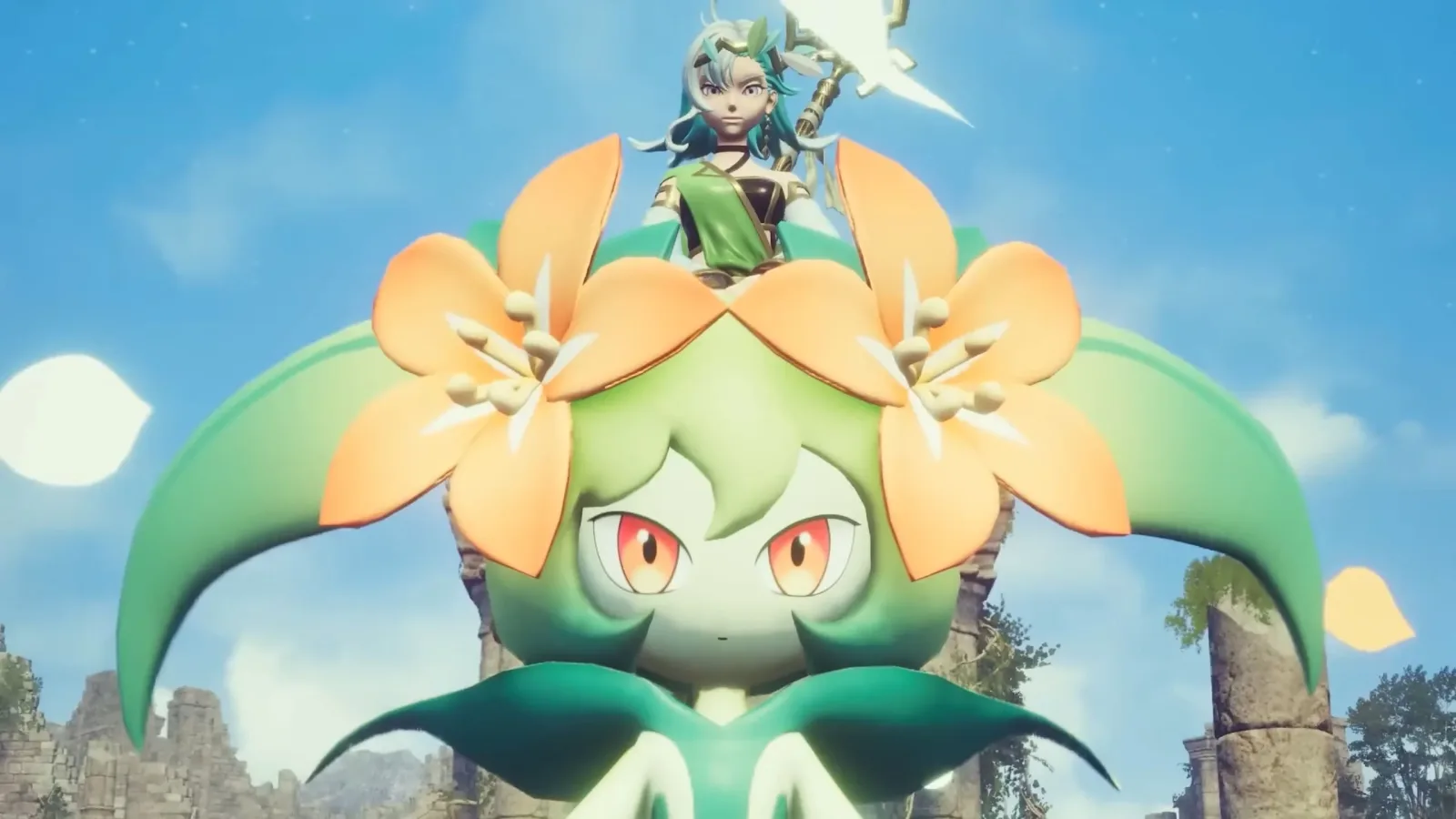
Steam Early Access remains one of PC gaming's most influential development models, giving studios a way to sell unfinished games while building them in public alongside a community. But Pocketpair communications and publishing lead John Buckley believes the shared understanding that once supported that model has changed considerably.
Speaking during Palworld's move toward its 1.0 release, Buckley said Pocketpair still has confidence in early access and would likely use it again for another major project. At the same time, he described a tougher environment on Steam, where a growing number of players appear to buy early-access games with the expectations they would bring to a fully launched title.
For a game such as Palworld, which drew an enormous audience while still in development, that disconnect can make the period between substantial updates especially difficult. Players may spend dozens of hours with a new release in its first week or two, Buckley said, then conclude that the game has been abandoned when the next major piece of content does not immediately arrive. The reality, from the developer's side, is that producing meaningful new material takes time.
From collaborative development to launch-day expectations
Buckley looked back to the period following Steam Greenlight's transition into Early Access as a particularly successful era for the program. In his view, customers then broadly understood that they were purchasing a work in progress rather than a finished product. They were interested in joining the journey, talking with developers, submitting feedback, and accepting the fact that the experience would evolve over time.
For useful background on this topic, read Cut Resident Evil Voice Lines Reveal More Leon Kennedy One-Liners.
That relationship created a useful exchange. Studios received practical information from invested players, including bug reports, balance opinions, and broader feedback about a game's direction. In return, players had the chance to see development happen in real time and, in some cases, influence priorities before a full release.
Buckley's concern is not that modern audiences are wrong to simply want an entertaining game. He specifically acknowledged that not every player wants to learn about production schedules, technical limitations, or the difficult work behind making an update. Wanting to buy a game and enjoy it without becoming involved in its creation is entirely reasonable.
His point instead is that Early Access depends on clear expectations. When a customer approaches an unfinished game as if it were a standard completed release, the label no longer provides much useful context. Players can reasonably judge the build in front of them, but they may also expect a cadence of additions that is not feasible for a development team working on a major update.
Buckley connected this shift to the growing influence of hyper-casual mobile games, broader casual gaming habits, and live-service expectations. Those spaces often train players to anticipate steady events, rapid refreshes, battle passes, rotating content, and continual engagement. That culture is increasingly visible on Steam, he argued, and it can clash with a traditional early-access project where the next large milestone may take months.
Why update gaps can create friction
The challenge is particularly clear with a breakout hit. Palworld arrived with intense interest, and large communities naturally create equally large expectations. A game can be played heavily soon after launch, producing a wave of requests for more creatures, new areas, systems, progression, fixes, and quality-of-life improvements.
Yet development does not operate at the speed of that initial burst of play. A studio may need months to design, test, optimize, localize, and stabilize new features. Even patches that appear modest externally can require substantial internal work, especially when changes affect an interconnected survival game with multiplayer elements and numerous systems.
Buckley used the familiar complaint that a game is "dead" because developers have not released new content immediately after launch as an example of the disconnect. From his perspective, a period of silence or fewer visible additions does not mean the team has stopped working. It may mean the opposite: the team is focused on building the next version instead of issuing a stream of small but less consequential releases.
That does not remove the importance of communication. In fact, Buckley said Pocketpair attempts to be transparent about its plans and the nature of upcoming patches. If an update is expected to focus more on quality-of-life improvements than major new content, the studio tries to set that expectation in advance. The goal is to strike a balance between keeping players informed and avoiding promises that development cannot reliably keep.
Console audiences present a separate challenge
While Buckley sees the pressure increasing on Steam, he suggested the early-access concept can be even more difficult for console audiences. Console players have historically encountered fewer unfinished commercial games than PC players, making the distinctions between an in-progress build and a final release less familiar.
He also noted that PC communities tend to provide more direct development feedback, sometimes in overwhelming quantities. Bug reports and detailed technical observations can be valuable resources for studios, particularly during active development. A console audience may be less likely to participate in that process at the same level, even when its feedback is still important.
The broader issue is not a question of one platform community being better than another. It is about the expectations attached to the purchase. On PC, Early Access has existed long enough that many players understand its conventions. On consoles, the model can feel more unusual, and a player may naturally expect a more traditionally polished experience from the moment they buy a game.
That makes plain communication essential wherever early-access projects are offered. Developers need to explain what is available now, which features remain under construction, what kind of updates are planned, and how long those updates might take. Players, meanwhile, need enough information to decide whether they want the current build or would rather wait for a fuller version.
Pocketpair still sees value in Early Access
Despite Buckley's criticism of how the program is sometimes perceived and used, Pocketpair remains strongly supportive of early access as a development option. The studio has used the approach more than once, and its earlier survival game Craftopia is also nearing a 1.0 update.
That history helps explain why Pocketpair does not treat the model as merely a way to put a game on sale early. Used well, early access can provide a real partnership between creators and players. It can help a small or mid-sized studio test ideas at scale, discover unexpected problems, understand what its audience values, and turn an ambitious prototype into a stronger finished release.
Buckley also made clear that it is not suitable for every game. Some projects can be harmed by entering Early Access too soon. A build that lacks a strong foundation may struggle to recover from a poor first impression, while public feedback can become difficult to manage if the developers do not have a clear vision or the capacity to respond to major issues.
There are, in his assessment, genuine examples where early access has been a disaster. The format asks studios to develop a game while also operating a community-facing product. That requires careful planning, regular communication, technical support, moderation, and a willingness to receive criticism without allowing every individual request to dictate the project's direction.
The funding problem behind Early Access
Buckley identified another concern: Early Access can be used primarily as a route around traditional financing. In that scenario, a developer releases an early build because it needs immediate money, rather than because public development is the best fit for the game.
He compared that use of Early Access to a newer form of Kickstarter. The basic concern is not that developers need funding--securing investment has become increasingly difficult across the games industry--but that players can be placed in the position of financing a project before there is enough evidence that it can be completed to a satisfying standard.
That reality makes transparency even more important. A studio using Early Access responsibly should have a convincing playable foundation, a realistic sense of its remaining work, and a candid explanation of what players are buying. There will always be uncertainty in game development, particularly for small teams, but ambiguity should not become a substitute for a plan.
Pocketpair has expanded into publishing in the wake of Palworld's success, seeking out promising projects at a time when developers face harsh investment conditions. That position gives the company a direct view of how difficult funding can be, while also reinforcing Buckley's argument that the best early-access projects need more than a quick injection of cash. They need sustained development, deliberate communication, and trust.
What Palworld players should expect next
Buckley has recently been managing expectations around Palworld update 1.1. The game will continue to receive support, but players should not anticipate another enormous reinvention with every update. That distinction matters as communities compare long-running games to exceptional cases that receive heavy support over a decade.
Earlier in the year, Buckley said he would not rule out a possible Palworld 2.0. However, he also cautioned fans not to assume a decade-long pattern of giant updates similar to the support model associated with No Man's Sky. Pocketpair's current message is more measured: development is continuing, but the scale and timing of future additions should be understood realistically.
The debate around Palworld ultimately reflects a larger question for Steam. Early Access can still be a powerful model, but only if developers and players agree on what it means. For Pocketpair, that means presenting unfinished games honestly, communicating update priorities, and welcoming feedback without promising instant content. For players, it means recognizing that a game still being built may need time between its biggest changes.
That balance may be harder to find than it was during Steam's earlier years, but Pocketpair's continued support for the model suggests the studio still believes it is worth pursuing when the project, team, and community are prepared for it.


Community
Discussion
Start the conversation.
No comments have been posted yet.