

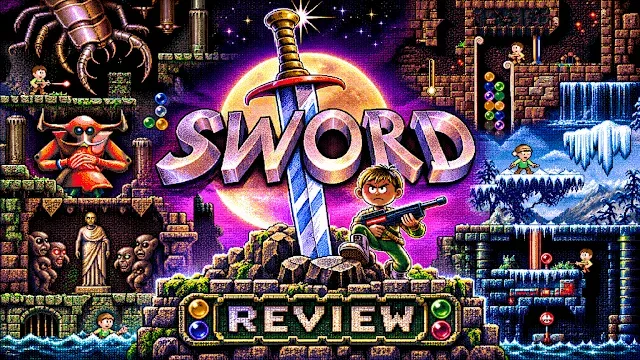
Sword is one of those late-era Amiga releases that feels like it arrived at precisely the wrong moment. Released in 1998 for the Amiga 500, the action-platformer came from Polish developer Serio Comic, following the team's earlier platform game Gate 2 Freedom. It demonstrated clear growth in visual consistency, level construction and technical confidence, but commercial circumstances meant it never secured the recognition its craft arguably warranted.
That is a familiar story for games released near the end of a platform's commercial life, but Sword is particularly interesting because it was built for modest classic Amiga hardware: an Amiga 500 with 1MB of RAM, distributed across four floppy disks. It is a game with scrolling landscapes, substantial bosses, music and effects working together, responsive movement and enough variety to avoid feeling like a single repeated idea. Its ambitions make its limited legacy all the more striking.
For retro players willing to look beyond its sometimes demanding combat and its strict clock, Sword remains an impressive platform shooter with a genuinely unusual approach to failure. The game asks the player to learn, retry and persist, but it does not simply reset all of their effort each time a life is lost. That distinction gives the experience a personality that still stands out decades later.
A platformer built around momentum and repeat attempts
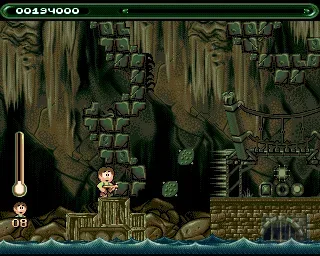
Sword is fundamentally a challenging action-platformer. The player works through stages packed with enemies, hazards, tricky jumps and occasional light puzzle elements, armed mainly with a gun that is not especially powerful. Combat can consequently become drawn out, particularly in longer levels where clearing hostile creatures and obstacles takes time. The weapon's sound is also memorable for an odd reason: it has a distinctly strange effect that may be jarring at first, even if it becomes easier to accept over repeated play.
For useful background on this topic, read 13-Year-Old Tekken Player Martinski Turns Heads After Upsetting Veteran Pro at Thaiger Uppercut.
The limited firepower is one of the game's more conspicuous frustrations. Weapon upgrades or more opportunities to expand health could have made the combat feel more rewarding and potentially reduced the amount of time spent wearing down foes. Yet the core controls and stage pacing give the action enough foundation to keep it playable. Sword's levels differ considerably in size and intensity, and they steadily introduce fresh situations rather than relying solely on a fixed set of platforms and enemies.
Small puzzle components appear throughout the adventure, though they do not overwhelm its action focus. That balance matters. Platform and shooting games can lose their urgency when puzzle design becomes overly intrusive, but Sword uses these moments sparingly enough that they act as variation rather than a roadblock. The emphasis remains on mastering the terrain, understanding threats and making cleaner runs through spaces that become increasingly familiar.
The timer is demanding, but death has an inventive safety net
A time limit runs through Sword, and its presence can initially feel punishing. Timed stages naturally create pressure, especially in a game where a weak weapon may delay progress and where each room can contain ambushes or awkward jumps. However, Sword softens the consequences of its system with an unusually considerate rule.
When the player dies, they return to the beginning of the current level. Normally, that would mean repeating every encounter and recollecting every item while a timer continues to loom overhead. Sword instead preserves enemies already defeated and items already collected. More importantly, the timer remains frozen until the player reaches the location where the previous life ended.
That design means a failed run still produces lasting progress. A dangerous enemy cleared on one attempt stays gone on the next. A collectible acquired remains collected. The return trip becomes a chance to practice movement and identify traps rather than a full repetition of earlier labour. By stopping the clock until the previous death point, the game also avoids turning retries into an inevitable race against time.
It is an elegant answer to a problem common in difficult games from the period. Sword still demands resilience, and restarting at the opening of a stage is not trivial, but it recognizes the player's prior work. The result is a retry structure that feels less hostile than the initial timer might suggest. It also helps explain the game's replay value: learning a level makes later attempts more controlled, and the persistent state turns incremental improvement into a tangible form of advancement.
A late technical showcase for the Amiga 500
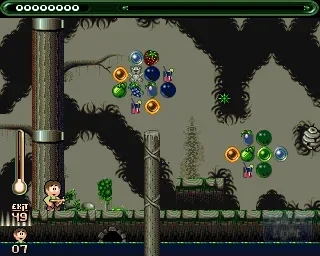
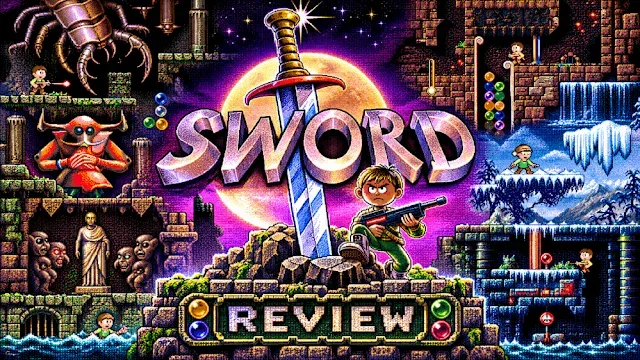
What makes Sword especially notable is how much it attempts within the constraints of its target machine. The Amiga 500 was already an aging platform by 1998, but Serio Comic delivered extensive parallax scrolling, large boss encounters, rich sound and music, and a wide range of environments. The hero sprite itself may not be the game's most visually exceptional component, yet the total presentation is far more important than one character design.
The cohesive art direction gives the game a consistent look from stage to stage while the locations themselves offer enough change to sustain the journey. Bosses provide scale, and the game's audiovisual package continues even during technically busy moments. That is a considerable accomplishment on a machine with only 1MB of RAM available.
One particularly unusual inclusion is an auto-scrolling snowboarding bonus stage. Such a sequence was rarely seen on the Amiga at the time, especially in a game made for the base Amiga 500 specification. It is the kind of feature that reflects a team willing to add a memorable detour rather than settle for a narrower platforming template.
In hindsight, Sword also benefits from being a polished 2D game released while much of the industry was focused on the promise of early 3D. During the original PlayStation era, many players wanted their older home-computer platforms to pursue polygonal experiences with the same urgency. At the time, a 2D title could be dismissed as visually simple regardless of its animation, design or technical execution. Decades later, pixel art and carefully constructed 2D visuals have often aged more gracefully than many early polygonal productions.
Sword's visual appeal has held up well for that reason. Its strengths sit in colour, scrolling, clear thematic presentation and classic sprite-based craft rather than in an attempt to imitate the newest hardware trend. It belongs comfortably beside other strong 2D releases of that broader era, including PlayStation titles such as The Misadventures of Lomax and Hercules, even though it was operating under dramatically different hardware constraints.
A swansong caught in a shrinking market
Sword also occupies an important place in the publishing history around the classic Amiga. It was the final title from Titan Computer published for Amiga OCS/ECS hardware. The company later handled ambitious PowerPC-era Amiga releases including Shogo and Heretic II, while other proposed projects, among them Evil's Doom and Alien Nations, failed to emerge from development.
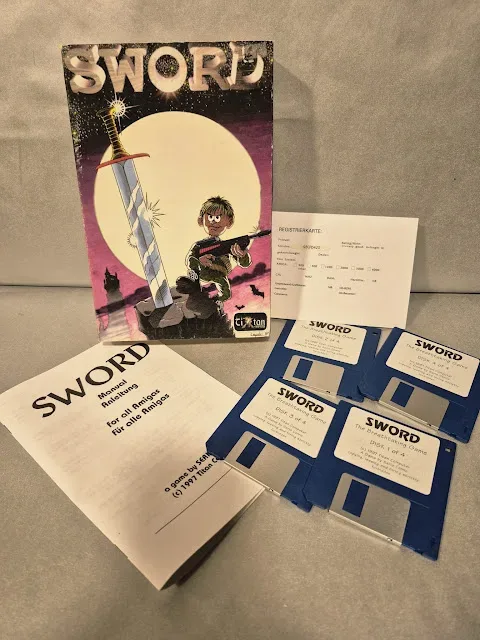
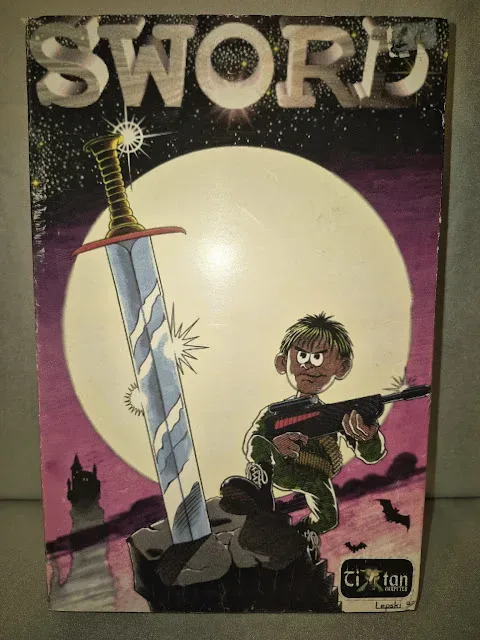
That context makes Sword feel like a closing chapter. It was not merely another platform game competing for attention; it was a commercial release arriving as the market for classic Amiga software was fading fast. Packaging reflects those conditions. The game's box art is distinctive and unusual, growing more appealing with time even if it was not universally loved at release. The reverse of the box is densely packed with information and colour. Inside, however, the manual is black and white, as are the floppy labels.
Those economical choices are understandable. Amiga software was increasingly difficult to sell in sufficient numbers, so elaborate extras and premium presentation carried real financial risk. Sword's limited print run compounded the problem, and its Polish origins may also have limited its reach in some markets. It reportedly sold poorly, despite the quality evident in the finished game.
Today, boxed copies are difficult to find and are regarded as rare, even where collection databases may not fully communicate that scarcity. The timing did Sword no favours either: 1998 was deep into the original PlayStation boom, when commercially dominant games were increasingly defined by flashy 3D presentation. A polished 2D Amiga release had little room to command the wider market's attention.
Why Sword is worth preserving and playing
Sword is not flawless. Its gun lacks satisfying power, some levels can run long, and its time limit will not appeal to everyone. But its shortcomings are part of a larger design that is more thoughtful than its reputation suggests. The persistent enemy and item state after death, coupled with the frozen timer, turns repetition into learning instead of simple punishment. Its stage variety, bosses, music, responsive controls and technical reach make it a far stronger late Amiga game than its profile implies.
Had it arrived around six years earlier, when the Amiga market was healthier and 2D software was not so readily treated as outdated, Sword may have become a far bigger success. Instead, it became an overlooked artifact from a transitional period: a game made with care for hardware that much of the market had already begun to leave behind.
For players interested in Amiga history, platform shooters or late releases that pushed older systems beyond expectations, Sword merits attention. Original boxed copies can be exceptionally difficult to locate, so preservation archives and other lawful preservation avenues may be the practical route for those exploring its legacy. However it is experienced, Sword remains evidence that the Amiga 500 still had surprises left in it near the end of its commercial run.
Community
Discussion
Start the conversation.
No comments have been posted yet.