

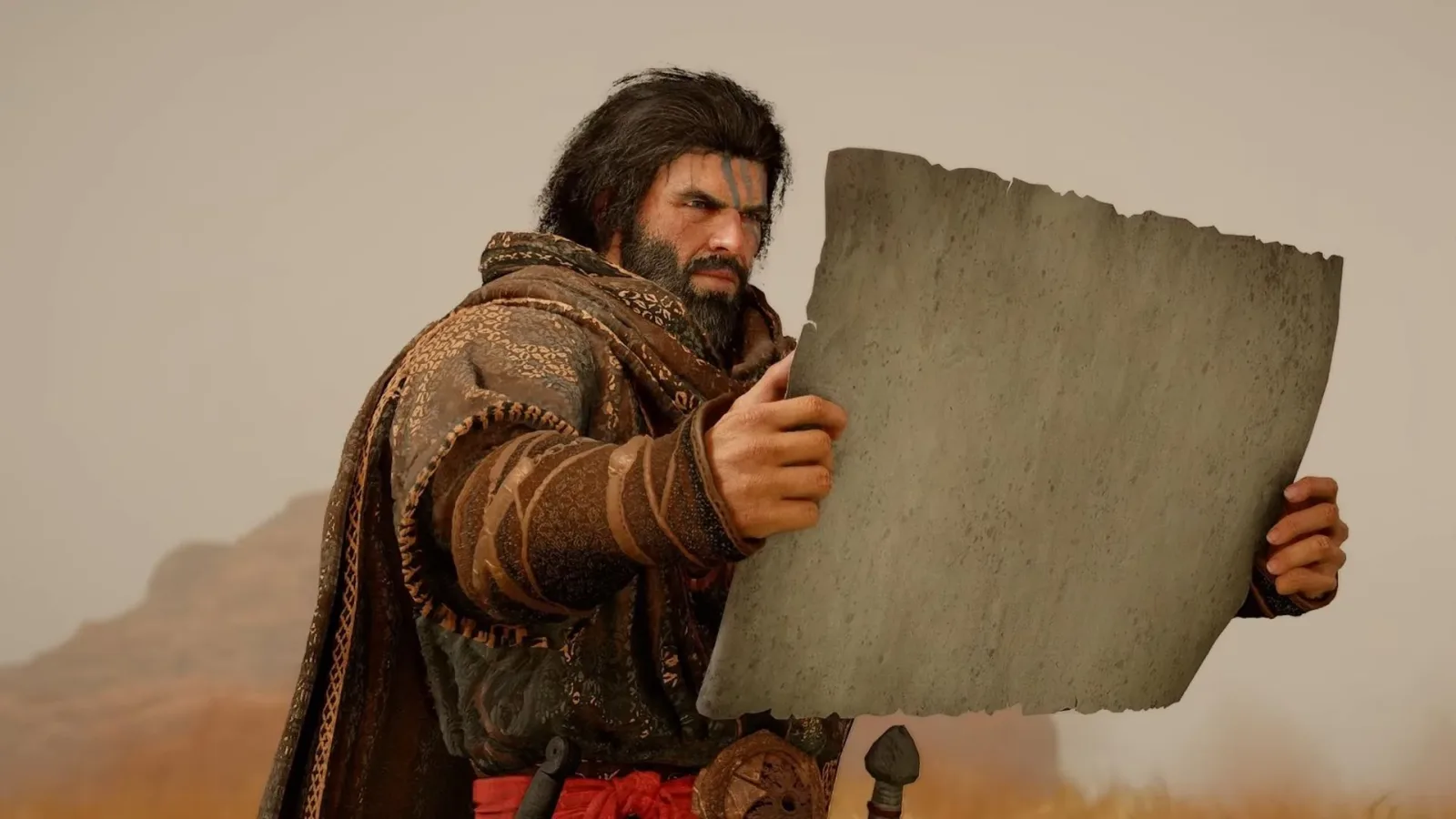
Crimson Desert's early critical reception has become part of a larger conversation about how open-world games are reviewed, updated, and experienced after launch. Lybee Park, CEO of Pearl Abyss' European branch, has suggested that the difference between the game's critic scores and its more enthusiastic player response may partly reflect the limited time reviewers had before publication deadlines. Her view is that Crimson Desert's most distinctive qualities are not always found along its central quest path, but in the discoveries, systems, and smaller details scattered throughout its world.
That explanation arrives after a notably unusual post-launch period for the game. Crimson Desert has received extensive updates since its initial release, including the arrival of Crimson Desert Enhanced, which replaced the previous version less than a year after launch. The Enhanced release did not merely focus on the conventional areas expected from patches, such as performance, bugs, interface changes, balance adjustments, or quality-of-life additions. Its central narrative was also directly addressed, an uncommon step for a game after release and a sign that Pearl Abyss considered the original story a significant area for improvement.
At the time discussed, Crimson Desert held a 77 critic average on Metacritic, alongside an 8.7 user score. On Steam, the Enhanced edition had 83% positive lifetime user reviews and 77% positive recent reviews. Those figures show a gap, although not one on the scale of the sharpest critic-versus-player disagreements seen in modern gaming. Still, they have offered Pearl Abyss an opportunity to discuss a question that matters for virtually every large game: what can a review reasonably capture when the game is huge and the reviewer has only a limited period in which to evaluate it?
Park's argument: the best parts lie beyond the direct route
Park acknowledged that critics had legitimate reasons for their reactions. In particular, she pointed to the fact that reviewers played an earlier build rather than the exact version players received at launch. She also highlighted the practical pressure of an embargo period, when reviewers may need to assess a large release quickly enough to publish on time.
For useful background on this topic, read Mafia III Receives Free PS5 and Xbox Series X/S Update With 60 FPS Support.
Her broader point was that many critics are likely to prioritize the main quest during that period. That is not an irrational choice. A game's story, pacing, progression, combat onboarding, technical state, and major systems all need to be evaluated, and a central campaign is usually the clearest framework for doing so. But Park argued that Crimson Desert's particular appeal is distributed through the wider game world: hidden details, emergent moments, unexpected activities, and freedom that may only reveal itself after a player strays from the expected route.
"Crimson Desert, our unique charm is spread all over our in-game world," Park said, describing its hidden details and the freedom to explore beyond common expectations.
It is an understandable defense of an open-world game built around optional discovery. Players who buy a game at launch have no embargo to meet. They can spend an evening wandering in the wrong direction, test a side system repeatedly, ignore the plot for a while, or return to an activity only after learning more about the game's rules. In a title designed to reward detours, that looser pace can substantially change the overall experience.
At the same time, the argument creates a difficult standard for developers. If a game's most compelling material is too distant from its most obvious path, that can be a design issue rather than simply a review-time issue. Open-world games must invite exploration, but they also need to communicate why players should explore and make the first hours rewarding enough that players feel motivated to do so. The main story is not an irrelevant slice of the experience; for many people, it is the structure that guides them toward everything else.
Reviewing a massive game under an embargo
There is no universal amount of time given to critics before a launch. Review access can arrive weeks ahead of an embargo, only days before it, or at some point in between. The difference is enormous for long games, especially sprawling open-world releases in which activities compete for a reviewer's attention. Even when a reviewer is willing to work exceptionally long sessions, there is only so much exploration that can fit around completing major content, checking technical performance, testing systems, comparing options, and writing a coherent assessment.
Reviewers also do not approach games exactly as ordinary buyers do. A player picking up one or two new releases in a year may comfortably devote dozens of extra hours to a favorite game. A critic covering many titles has to make decisions about breadth and depth: how much of the main campaign to complete, how many side activities to sample, whether optional content changes over time, and which technical conditions deserve mention. This does not mean critics cannot appreciate optional content. Most reviewers will deliberately investigate beyond the campaign, especially in a game whose marketing and genre promise a large world. But constrained access affects the kind of play possible.
That is especially true when a game's systems take time to become meaningful. Some titles reveal their strongest ideas after players unlock better traversal, understand resource economies, encounter advanced combat situations, or find optional chains with richer writing than the opening missions. In those cases, a rushed review period may not replicate the relaxed experience of a player who can take the game at their own pace.
However, critics can only evaluate the version and conditions they actually receive. A future patch, a better build, or a reworked story cannot erase the problems encountered during review. If a reviewer experiences technical bugs, confusing menus, uneven pacing, weak progression, or an unconvincing campaign, those observations remain valid even if later updates substantially improve the product. Reviews are records of the game as it existed at the time it was played, not promises about what it might become.
The significance of Crimson Desert Enhanced
The Enhanced edition complicates any straightforward comparison between launch reviews and current player sentiment. A game that changes considerably after release is, in a practical sense, not identical to the game critics first assessed. Post-launch support routinely targets problems that players and reviewers identify: stability, frame rate, balance, accessibility, economy tuning, navigation, and user-interface friction are all common patch priorities.
Story revisions are more unusual. Narrative content is deeply connected to mission design, character motivation, pacing, voice work, and the player's understanding of the world. Altering it after release is therefore a more substantial intervention than adjusting damage values or improving menu navigation. Pearl Abyss' decision to address Crimson Desert's central story with the Enhanced version suggests a willingness to respond to a weakness that had a meaningful effect on the original experience.
That response may help explain why the game's current Steam feedback has remained positive, but it does not make the earlier reception inherently mistaken. Both things can be true at once: Crimson Desert may be a better and more satisfying game now, and critics may have been justified in judging the launch-period build they were provided. This is one of the persistent tensions of games as living software. Players increasingly encounter releases after patches, seasons, expansions, balance passes, and revised onboarding, while reviews are often written at the moment when the product is least settled.
Score gaps need context, not simple conclusions
A difference between critic and user scores is not automatically evidence that either group misunderstood a game. Critic averages aggregate many individual perspectives, each shaped by different expectations and play styles. User scores can reflect passionate long-term audiences, players who arrived after improvements, or buyers who were specifically drawn to the game's strengths. Store reviews can also represent a different sample from the general audience, since they come from people who chose to purchase and play on that platform.
Crimson Desert's 77 critic average and 8.7 user score certainly indicate different levels of enthusiasm, but they are not an unusually extreme divide. Plenty of games receive stronger critical acclaim than user approval, while others develop dedicated player communities despite a more reserved critical response. The important question is what the numbers represent. In Crimson Desert's case, the timing of reviews, the state of the build, the scale of the updates, and the degree to which players value exploration all matter.
There is also a healthy reason to preserve room for disagreement. A player who finds joy in wandering through a dense world may fairly value Crimson Desert more highly than someone who places greater weight on narrative clarity or a polished opening path. Conversely, a reviewer who finds the main quest erratic or the early structure uninviting is not obligated to overlook those issues because better moments may exist deeper in the game. Different priorities produce different conclusions.
A case for longer access periods
The clearest lesson from Park's comments may be less about whether Crimson Desert was judged too harshly and more about the value of longer review windows. More time benefits nearly everyone. Reviewers can investigate a game without reducing every decision to a race toward completion. Developers have a better chance of seeing their systems tested in a way that resembles ordinary play. Players receive criticism based on broader experience and, ideally, have a clearer understanding of where a game excels and where it stumbles.
Longer access cannot guarantee a favorable reception, nor should it. A game may still have fundamental design problems, and reviewers should remain free to identify them. But time makes it easier to separate a weak first impression from a deeper structural issue, and it gives expansive games a fairer opportunity to demonstrate what lies beyond their critical path.
For Crimson Desert, the debate remains inseparable from its transformation after launch. Pearl Abyss believes the game's unusual strengths were easier for unhurried players to find, while its Enhanced version has also altered key aspects of the experience itself. The result is not a simple story of critics being wrong or players being right. It is a reminder that open-world games are difficult to assess in a narrow window--and that when developers continue revising a game after launch, the version being discussed can change faster than the conversation around it.
Community
Discussion
Start the conversation.
No comments have been posted yet.