

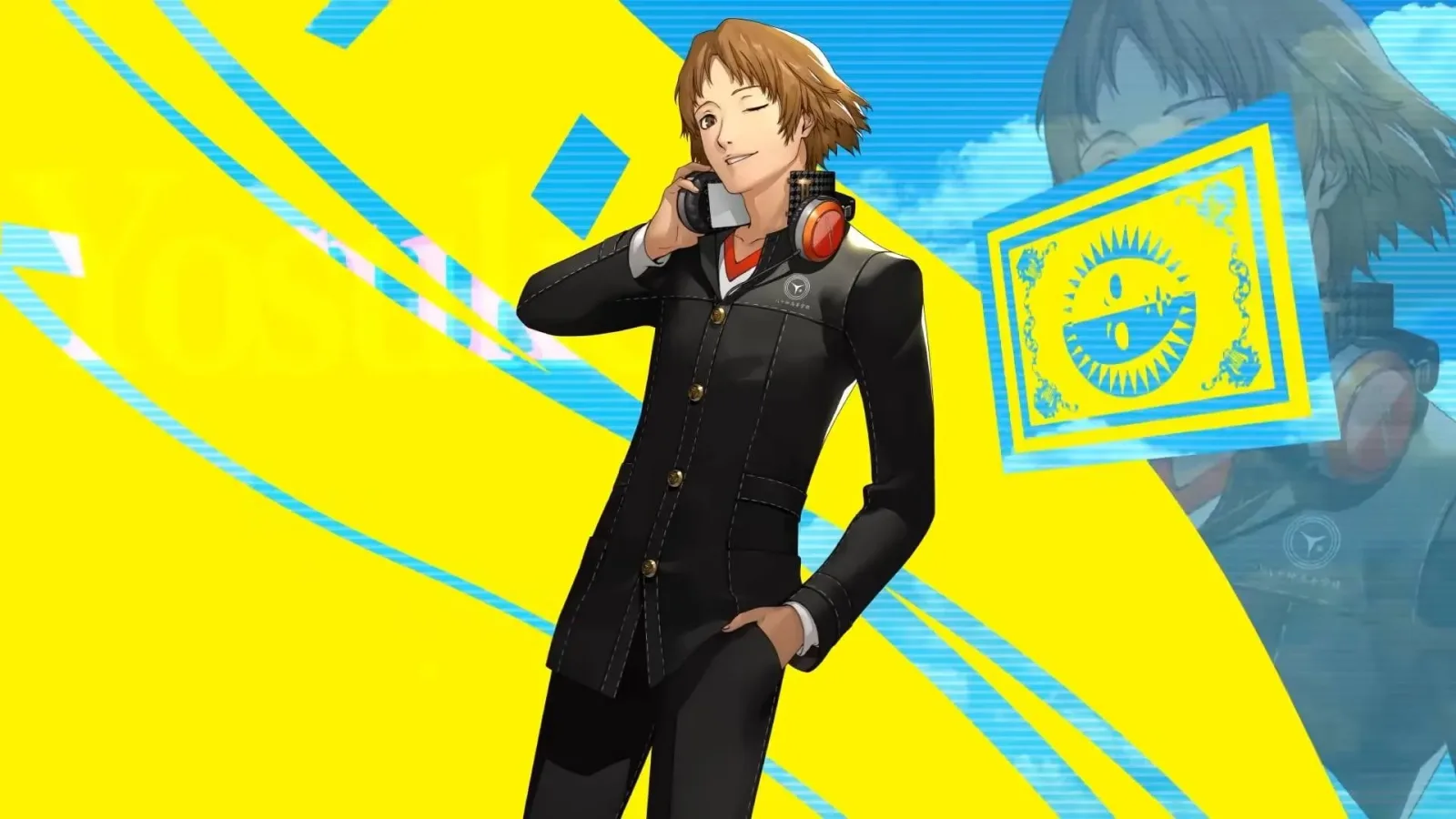
Persona 4 Revival is not positioning itself as a remake that replaces the personalities or core identities of its beloved cast. Instead, Atlus is aiming for a more selective kind of revision: updated dialogue, stronger storytelling, and extra detail informed by the many Persona 4 spin-offs released since the original role-playing game arrived.
Producer Kazuhisa Wada has said that every character offered room for deeper exploration when the development team returned to Inaba. Two characters, however, emerged as particular priorities for the remake team: Yosuke Hanamura and Kanji Tatsumi. Their added attention is especially notable given the conversations that have surrounded both characters for years, including Yosuke's dialogue toward Kanji in the original game.
The comments make clear that Persona 4 Revival intends to revisit the material with a modern perspective, but not through sweeping personality changes. That distinction will matter to longtime fans who are watching closely to see how Atlus handles some of the original game's more dated moments while preserving the relationships and emotional foundations that made Persona 4 endure.
A return to Inaba with more history to draw from
Persona 4 has had an unusually long life beyond its initial release. In addition to the expanded Persona 4 Golden edition, its cast has appeared in multiple follow-up games and other projects. Those stories gave Atlus more opportunities to portray the Investigation Team outside the original murder mystery, developing their traits, friendships, insecurities, and group dynamics over many years.
For useful background on this topic, read Nintendo Direct Roundup: Metroid Ravenous, Kirby and Major Switch 2 Ports Revealed.
Wada explained that this accumulated material became useful when the team began work on Revival. There was more to explore across the entire cast, he said, because the intervening spin-offs had already helped build out their personalities. Rather than treating those later appearances as separate from the remake process, the developers used aspects of that character work to inform additional texture and depth in Revival.
That does not necessarily mean Persona 4 Revival will turn into a radically different version of the story or import every development from later games into the remake. The stated approach sounds more measured. The original characters remain the same people, but their presentation can benefit from greater context, sharper writing, and a clearer sense of the nuances that the wider Persona 4 era established.
For a game so strongly driven by party chemistry, that can be as meaningful as adding entirely new story branches. Persona 4's central appeal has always rested heavily on the feeling of spending time with friends: solving a case together, navigating rural-town boredom, and confronting difficult parts of themselves. Even small adjustments in how the team members respond to one another could alter the emotional weight of familiar scenes.
Yosuke and Kanji are the key areas of focus
Wada specifically identified Yosuke and Kanji as the two characters the team most wanted to examine in greater depth. Both are major members of the Investigation Team, and both have long been subjects of discussion among players because their stories contain tensions that can be funny, uncomfortable, heartfelt, or all three depending on the scene.
Kanji's original arc centers on masculinity, social expectation, identity, and the pressure to conform to a narrow idea of what a young man is supposed to be. It is one of Persona 4's most remembered character stories, in part because it deals with subjects that many players found emotionally resonant. At the same time, it has generated years of debate over its framing and implications.
Yosuke, meanwhile, begins the story as the protagonist's closest friend in Inaba and often serves as the party's energetic, impulsive voice. He also has dialogue in the original Persona 4 and Persona 4 Golden that is openly homophobic, including remarks directed at Kanji. Those moments have not aged well, and they are a significant reason fans have wondered how a modern remake would approach Yosuke.
Earlier remarks from Wada offered an important outline of Atlus' plan. He said the characters themselves have not had their personalities changed, but dialogue has been adjusted to feel more modern and to tell the story more effectively. That language suggests the remake is not ignoring the issue, but neither is it rebuilding Yosuke into an entirely different character.
The challenge is substantial. Revising dialogue in an older game can be more complicated than simply cutting a line that no longer lands. Conversations are part of character arcs, social dynamics, comic timing, and the broader tone of a scene. Persona 4 Revival will need to determine how to remove or reshape harmful material while retaining the friction, growth, and believability of its teenage cast.
Wada's newest comments add another layer to that process. If Yosuke and Kanji are receiving more depth, their relationship and their individual development may be areas where the remake can make its revisions feel purposeful rather than purely cosmetic. The exact form those changes take remains unknown, but the developers' focus indicates that these characters are receiving more attention than a simple visual refresh would require.
The Yosuke romance question has an answer
One persistent fan theory proposed a more dramatic solution to Yosuke's characterization: a romance route with the male protagonist. Datamined voice lines from the original Persona 4 have long suggested that this possibility was considered during the game's development. Because of those unused materials, some players hoped Revival might finally restore or rework that storyline.
Such a route could have potentially reframed parts of Yosuke's behavior, with some fans speculating about an interpretation involving internalized homophobia. But Wada has already addressed that expectation directly, and the answer is not likely to please everyone who wanted the option.
Atlus was aware of demand for a Yosuke romance, Wada said, but concluded that adding him as a romance option would raise a wider design question. If Yosuke were included, the team felt it would need to consider doing the same for the other male characters. The workload involved, along with time and scheduling concerns, ultimately led the developers to leave that idea behind.
That means Persona 4 Revival will not add a Yosuke romance route. It also means speculation that the remake will fundamentally reinterpret Yosuke through that particular plotline can now be set aside. The lack of a romance route, however, does not rule out more thoughtful characterization. Wada's remarks about expanding Yosuke and Kanji indicate that Atlus sees other ways to explore them within the remake's existing structure.
For some fans, that may be a disappointing limitation. Persona's Social Link and relationship systems are a major part of how players connect with the cast, and romance routes can carry special narrative significance. Still, the broader creative question is not limited to romance. Better scene construction, altered exchanges, more confident characterization, and a clearer emotional arc can all make a meaningful difference without adding a new relationship path.
Chie's role also stood out to the remake team
Art director Akane Kabayashi also reflected on returning to Persona 4 and highlighted Chie Satonaka's place in the story. Kabayashi noted that Chie is asked to take on many different functions throughout the game. Although Chie and Yukiko Amagi can be viewed as the story's two heroines, Chie frequently has more to do, a quality that earned Kabayashi's respect while revisiting the material.
It is an interesting observation because it points to the practical storytelling roles characters occupy beyond their headline arcs. Chie is a fighter, a friend, a source of humor, an emotional support, and an active presence in the group's investigation. Recognizing that range may help explain why revisiting Persona 4 has led the developers to think carefully about balance across the entire cast.
While Wada singled out Yosuke and Kanji as especially important targets for expanded depth, Kabayashi's comments suggest the team is paying close attention to the full ensemble. Persona 4 Revival has an opportunity to reinforce what individual characters contribute to Inaba and to the Investigation Team, whether that means refining dialogue, emphasizing overlooked moments, or better connecting their various roles.
What deeper characterization could mean for Revival
Atlus has not detailed precisely how the extra character depth will appear in Persona 4 Revival. Fans should therefore be cautious about assuming new Social Links, major plot revisions, or extensive added scenes. The developers have discussed a guiding philosophy rather than a list of confirmed features.
Even so, the philosophy is revealing. Revival is being built after more than a decade of Persona 4-related work, and the creative team now has the benefit of hindsight. They know which characters received further development in spin-offs, which aspects of the original have become points of discussion, and which scenes may need a more contemporary touch. That knowledge can shape a remake in subtle but valuable ways.
The key test will be whether those revisions feel integrated. Persona 4 is remembered not only for its mystery, but for a specific atmosphere: a small town, a close-knit group of teenagers, and a story that combines warmth with unease. Added depth should ideally make that atmosphere richer, not make the cast feel disconnected from the game players remember.
For Yosuke and Kanji in particular, the prospect is intriguing. Their stories already carry some of Persona 4's most charged material. A remake that handles them with more care, more detail, and more awareness of the years of conversation around them could strengthen the game without abandoning its original heart.
Persona 4 Revival is expected in February. Until Atlus provides a closer look at its revised scenes and character content, the extent of the changes remains uncertain. What is clear is that the remake team sees this return to Inaba as more than an opportunity to modernize the presentation. It is also a chance to revisit the people at the center of the story and give familiar characters more room to breathe.
Community
Discussion
Start the conversation.
No comments have been posted yet.