

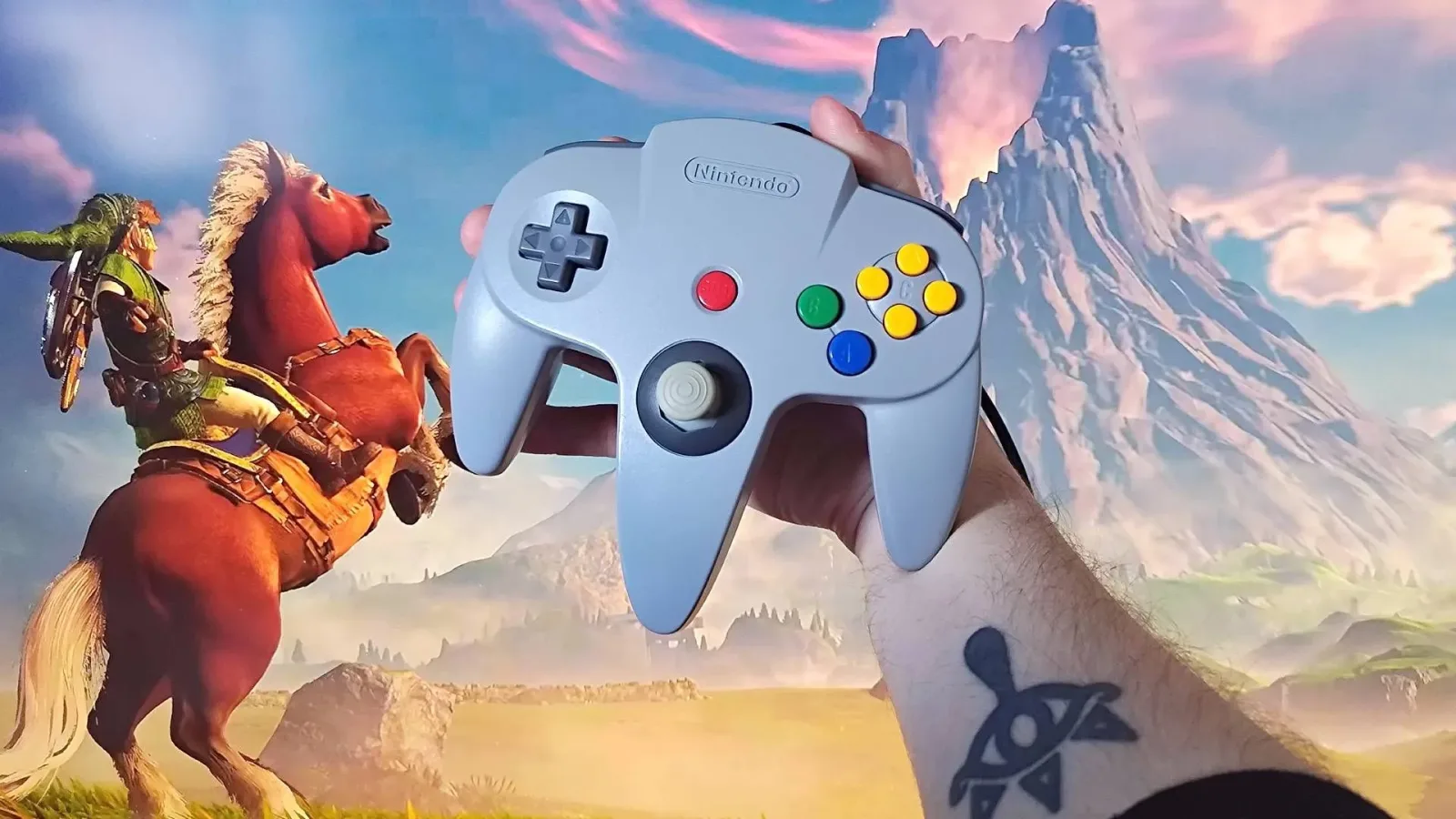
Nintendo's newly revealed The Legend of Zelda: Ocarina of Time remake appears determined to bring one of gaming's most important 3D adventures into a thoroughly modern control era. The remake has been shown with a freely controlled camera, plus dedicated inputs for jumping and sprinting--features that immediately separate it from the limitations and peculiar design language of the Nintendo 64 original.
That is almost certainly the right decision for a new release. Ocarina of Time first arrived in 1998, at a point when moving a character and controlling a 3D camera had not yet been standardized across the industry. Its original controller was memorable, versatile, and undeniably strange. Yet while a contemporary camera and expanded movement options promise a smoother experience, there is a strong case for Nintendo to retain an optional way to experience the remake through the old N64 layout.
Not because it would be the best or most practical way to play. In many situations, it absolutely would not be. But the original controller design and its Z-button camera behavior were more than awkward technical solutions. They helped define Ocarina of Time's rhythm, its atmosphere, and the way players learned to inhabit Hyrule.
A remake built around present-day expectations
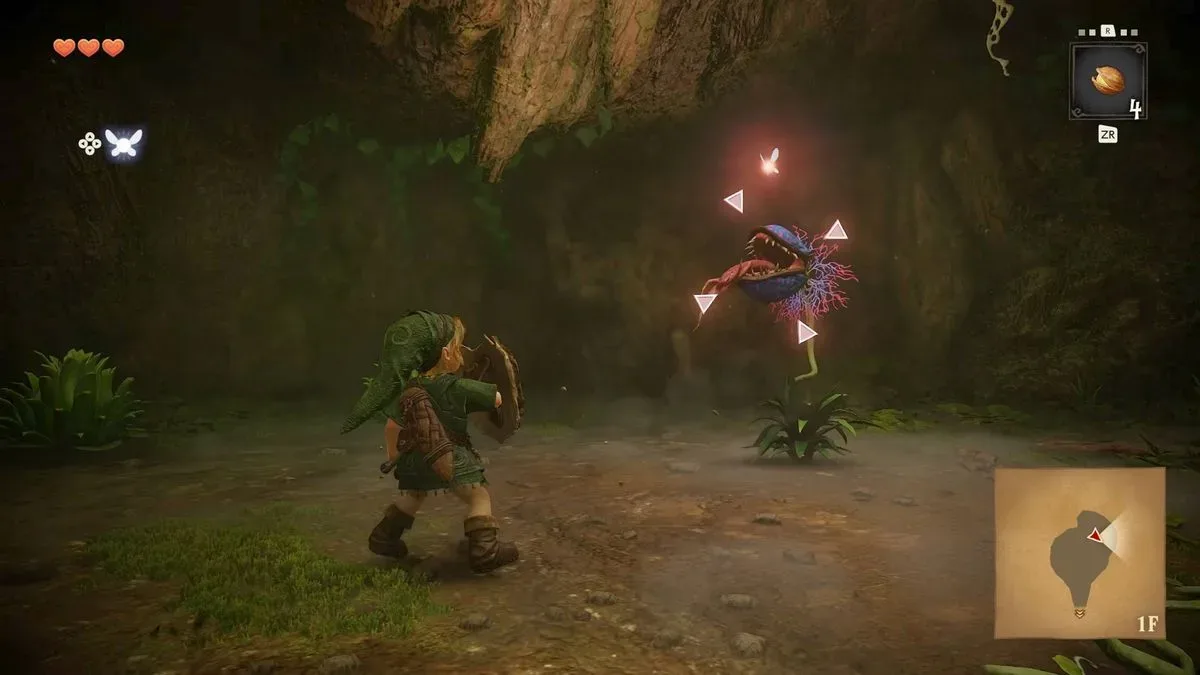
The upcoming remake uses the 1998 game as its foundation, but it is clearly not approaching that material as a museum piece. The visual overhaul gives Hyrule a far more detailed and realistic appearance, while the revised controls signal Nintendo's interest in making Link's adventure feel aligned with modern action games.
For useful background on this topic, read Mega Man: Dual Override Brings Proto Man Into a New Switch 2 Adventure.
A free camera is perhaps the most obvious change. In the original Ocarina of Time, the player did not simply rotate a right analog stick to look around, because the Nintendo 64 controller only had one analog stick. Camera adjustment instead depended on the C buttons and the Z button, with Z often snapping the view back behind Link. The system was ingenious for its moment, but it can be restrictive for anyone accustomed to contemporary dual-stick controls.
Adding separate buttons for jumping and sprinting likewise changes the game's relationship with movement. Original Ocarina of Time gave Link context-sensitive actions through its large A button, which was elegant but also tightly managed. A modernized layout can offer players more direct control, reduce friction, and make navigation more responsive. For newcomers, especially those who discovered Zelda through later open-world entries, those adjustments could be welcome.
Still, there is a difference between replacing an old limitation and removing everything that made the old approach expressive. The question is not whether the remake should force players back onto 1990s controls. It should not. The question is whether a carefully designed optional legacy control mode could preserve a distinct way of experiencing the game.
Z-targeting was more than a lock-on system
Ocarina of Time's Z-targeting is rightly remembered as a landmark idea. Locking the camera and Link's movement toward an enemy helped solve a fundamental problem in 3D action games: how to keep combat readable when players and opponents could move in every direction. It made sword fighting more deliberate, allowed Link to circle enemies, and created a clear visual relationship between the hero and a selected threat.
But Z-targeting also carried a mood that went beyond combat. Pressing the Z button could quickly reposition the camera behind Link even without a target. It became a habitual action while exploring fields, entering cramped interiors, scanning rooms, or preparing to move down an ominous dungeon corridor.
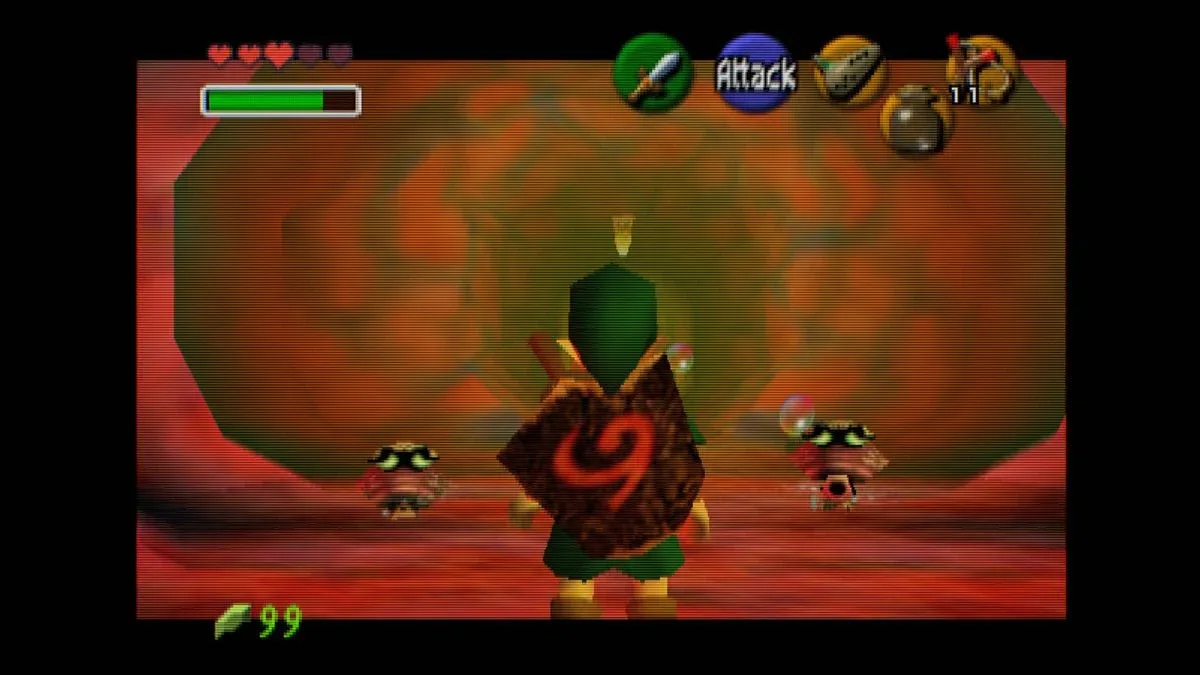
Those camera resets were tied to presentation details that helped distinguish locations. In dungeon spaces, the targeting view could introduce letterboxing, evoking a cinematic visual framing often associated with samurai films. That transition was joined by an echoing sound effect that gave the act of focusing the camera an uneasy, enclosed feeling. Even checking what was ahead could feel like a cautious action.
Outside, the effect had a lighter personality. The overworld used a brighter, playful pan-flute cue when the camera snapped into place. That sound fit the sense of discovery around Hyrule Field, Lon Lon Ranch, and the pathways between the kingdom's landmarks. A simple camera function therefore became part of the world's soundscape.
These might seem like small details, but they matter to the texture of a game remembered for its atmosphere. Ocarina of Time was built around deliberate transitions: stepping from sunlight into a dungeon, moving between childhood and adulthood, and pausing to assess a room before advancing. Its control scheme reinforced that pacing.
What appears to be changing in the remake
Gameplay shown by Eiji Aonuma indicates that Z-targeting itself remains part of the remake. Link can still lock onto enemies and interact with the system that was central to the original combat design. However, the presentation surrounding it appears to be different.
The visible remake footage does not show the same letterboxing effect during enemy targeting, and the location-specific camera sounds from the Nintendo 64 game may also be absent. Instead, targeting seems to emphasize a more conventional lock-on sound alongside Navi's familiar warnings.
That approach makes sense if the remake is designed around constant free-camera control. If players can smoothly rotate their view at any moment, a dramatic snap behind Link is no longer as important. The old audio stings and screen framing were tied to a specific control philosophy, one where camera orientation was a conscious button press rather than an always-available analog action.
Yet that is exactly why an optional N64-style mode would be compelling. It could be more than a novelty mapping of old buttons to new hardware. At its best, it could restore the original camera snap behavior and associated audiovisual cues for players who want the remake to echo the feel of the 1998 game.
An option, not an obstacle
No player should need to use the Nintendo 64's three-pronged controller to enjoy a major 2026 release. The design is famously divisive, and its single-stick arrangement is no longer the natural language of 3D games. The remake's default controls should remain modern, accessible, and built around the flexibility shown in its reveal.
But optional support would provide a meaningful choice. Nintendo has recently demonstrated a willingness to acknowledge legacy hardware in its releases, including N64 controller compatibility considerations around its Switch 2-era retro offerings. A dedicated setting for Ocarina of Time could let players choose a classic-oriented control profile without asking everyone else to sacrifice the refinements of the remake.
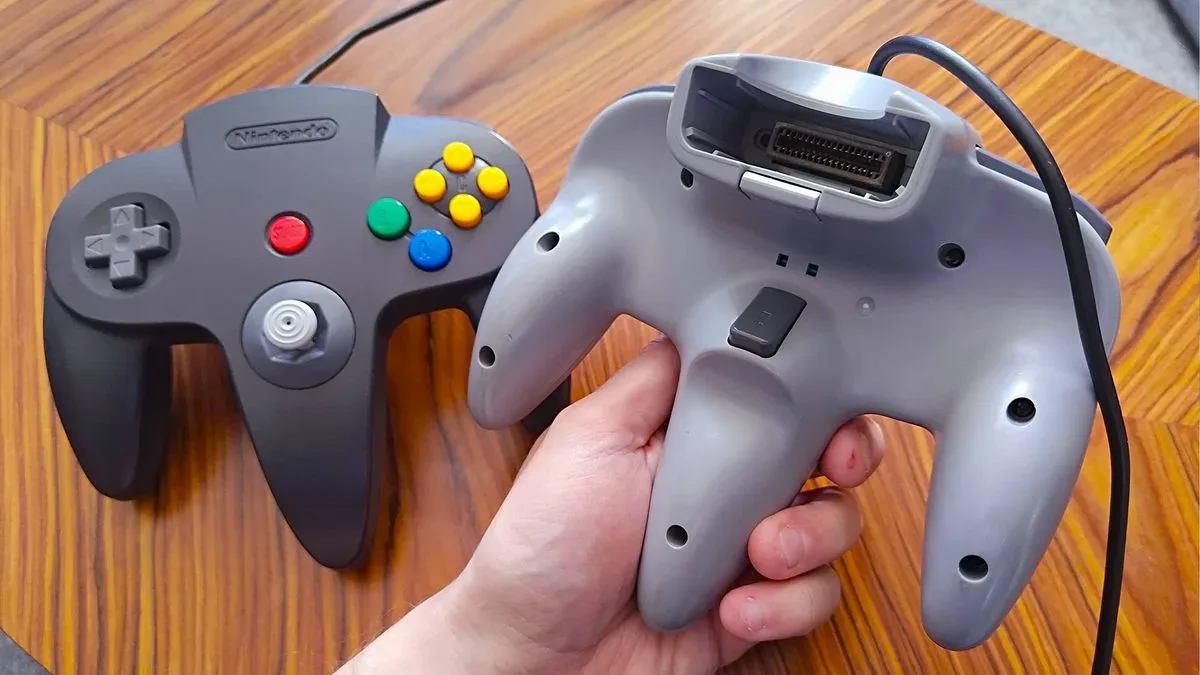
There is also value in letting a younger audience understand why the original layout mattered. An N64 controller is not merely an old peripheral with oddly placed buttons. Its center grip, trigger positioning, large A and B face buttons, and C-button cluster encouraged a particular physical relationship with games. Learning to use it is an encounter with a formative chapter of 3D design.
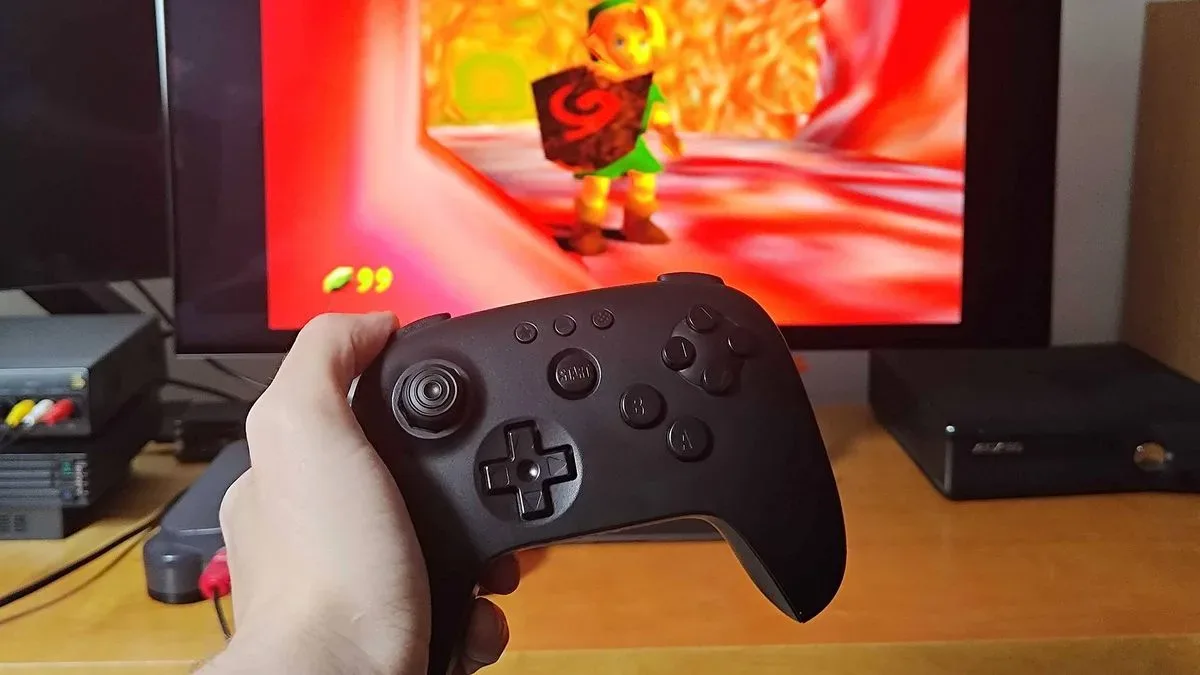
For players who do not own Nintendo's official Nintendo Switch Online N64 controller, 8BitDo's 64 Bluetooth controller offers another route. It uses the recognizable N64 button arrangement while placing it on a more contemporary controller body, and it is compatible with Switch 2. Whether either controller would feel workable with the remake will depend on how broadly the game allows Z-targeting to manage camera orientation.
The practical problem with playing the remake on N64 hardware
Simply connecting an N64-style controller would not automatically recreate the original experience. The remake's controls have been expanded, and a controller designed in the 1990s does not have the same breadth of inputs as a modern pad. Jumping, sprinting, camera movement, menus, and contextual actions all need to fit somewhere.
The key issue is how the remake handles the camera when no target is available. If Z-targeting only locks onto enemies, objects, and eligible non-player characters, an N64 controller could become cumbersome during regular exploration. Without a dependable way to rapidly align the view behind Link, players might struggle to move through the world naturally.
Even if the Z button can still snap the camera into position, the original's character may not fully return if its distinctive letterboxing and area-specific audio cues are gone. That would leave players with an old-shaped controller controlling a remake designed around a different visual and mechanical identity.
It may still be worth trying. Playing a rebuilt Ocarina of Time with an N64-style pad could offer a strange but memorable blend of eras: a glossy modern Hyrule seen through the physical language of the original console. But it should be approached as an experiment rather than the definitive control method.
Preservation can include feeling
Game preservation discussions often focus on code, image quality, frame rate, availability, and accurate emulation. All of those concerns matter. Yet the feeling of an older game can also live in its controls, sounds, button feedback, and visual responses to player input.
Ocarina of Time's Z-button camera behavior is a strong example. A free camera is objectively more flexible, but flexibility is not the only design goal. The original system made camera adjustment tactile and intentional. It turned an action that is now almost invisible in modern games into a little piece of performance, complete with its own sound and framing.
Nintendo's remake is scheduled to arrive on November 6. Its modern controls are likely to make the adventure easier to approach than ever, and that is a meaningful advantage for a game that continues to attract new players. Still, an N64 controller mode with classic camera behavior would give returning fans a reason to revisit Hyrule in a way that respects the original's peculiar strengths.
It would be impractical. It would be limiting. For some players, it would probably be frustrating. But for those who remember tapping Z to re-center the world around Link before venturing into the unknown, it could be exactly the kind of optional, atmospheric touch that makes a remake feel connected to its past.
Community
Discussion
Start the conversation.
No comments have been posted yet.