

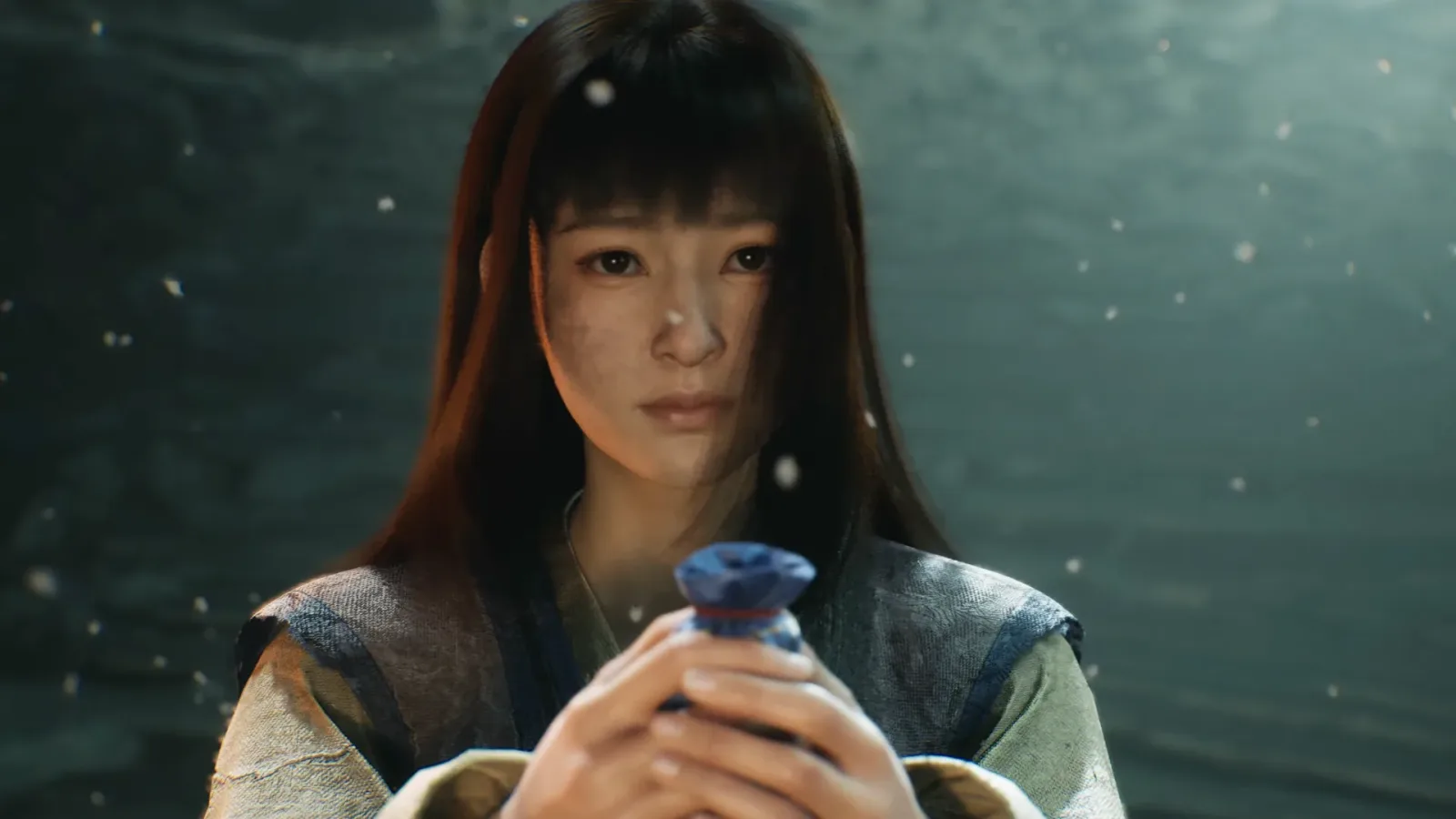
Phantom Blade Zero may be arriving with the profile of a major action release, but its origins are much smaller, stranger, and more personal than its current scale might suggest. Creative director and S-Game CEO "Soulframe" Liang has reflected on the two-decade path that led to the game, tracing its world and ideas back to Rainblood: Town of Death, an RPG Maker project he completed while he was a student.
That earlier title was not conceived as the first step in a long commercial plan. Liang describes it as a hobby project, made at a time when game development was a source of comfort while he studied abroad. Yet it established the fantasy setting that would eventually become central to S-Game's work: the Phantom World, a setting shaped by traditional Chinese wuxia storytelling while also incorporating body modification, parallel worlds, and other fantastical concepts.
The journey from a student-made indie project to Phantom Blade Zero is a reminder that some game worlds do not emerge fully formed from a large studio pitch. They grow over years through iterations, abandoned ideas, changing technology, and the continued interest of the people making them. In Liang's case, an early game built with limited experience and limited tools became the creative seed for a franchise that he says has reached around 20 million fans.
Embedded X/Twitter post
From Rainblood to the Phantom World
Liang says he finished Rainblood: Town of Death 20 years ago. The game was created in RPG Maker, a toolkit closely associated with small-scale independent development, experimentation, and personal projects. Although the software is capable of a wide range of work, it is often linked to comparatively modest role-playing games. Rainblood, however, stood apart from that broad stereotype through a distinctive visual identity with the feel of a lost anime production.
For useful background on this topic, read Alien: Isolation 2 Confirms Physical Release, Photo Mode, and Mic-Driven Scares.
Its scope was naturally far removed from what Phantom Blade Zero is attempting. Still, the connection is more than a matter of title or branding. Liang has previously called the newer game a "spiritual rebirth" of Rainblood. That description helps frame Phantom Blade Zero not simply as a new entry borrowing an old setting, but as a contemporary attempt to revisit the ideas that first mattered to its creator.
The original game remains available for $7 on GamersGate, offering an unusual opportunity for curious players to examine the earliest accessible form of this lineage. It will not provide a one-to-one preview of the new action RPG's production values or mechanics, but it can show where the Phantom World began: a personal fantasy setting assembled by a student who did not yet know that game development would define such a large part of his future.
Liang has said that, at the time, he had no clear picture of where his life or career would lead. Making games was something that helped him through uncertainty, rather than an assured route into the industry. That perspective makes the later evolution of the series especially notable. The work that began as an outlet during difficult student years eventually expanded into a broader franchise, even if a number of its games have not been released outside China.
A Global Stage for an Older Creative Vision
Phantom Blade Zero places that long-running creative history on a much wider international stage. The game has drawn attention as an ambitious action project, and its approach to combat has become a major focus of early discussion. One review has described it as a potential game-of-the-year contender, particularly praising combat that is said to look as strong in motion as it feels to play. Its early critical aggregate position has also placed it among the better-received action games of 2026 so far.
Those reactions are encouraging, but they are also only one part of the story. What makes Phantom Blade Zero unusual is the degree to which it has been presented as the product of a sustained, highly concentrated effort. Liang says S-Game canceled its other projects and continued increasing the production scale for this particular game. That is a consequential choice for any studio, especially when development ambitions rise alongside technical expectations.
The decision suggests that the team sees Phantom Blade Zero as more than an individual release. It is a chance to bring the Phantom World to audiences that may never have encountered the earlier Rainblood-related games. For international players, the new title could function as an entry point into a universe with roots that stretch much farther back than its polished modern presentation implies.
It also demonstrates how regional development histories can be far richer than their global visibility initially indicates. A franchise can cultivate a large following in one market while remaining relatively unfamiliar elsewhere, particularly when earlier releases do not receive broad international launches. In that context, Phantom Blade Zero is not starting from nothing. It is carrying a pre-existing creative tradition into a new audience and a new level of production.
Passion, Risk, and a "Little Madness"
Liang's comments are notably candid about the emotional logic behind making games. He acknowledges that game development is not always a rational pursuit, arguing that passion and "a little madness" can be what gives a game its strongest flavor. For an industry routinely measured through budgets, sales projections, launch schedules, and review averages, that is a revealing way to describe the process.
There is a practical reality behind the sentiment. Canceling other work to focus resources on one large title is a gamble, and continually expanding production carries obvious pressure. Yet the creative director's remarks suggest that a strictly cautious approach would not have delivered the game S-Game wanted to make. The studio's strategy appears to have been driven by confidence in the specific potential of Phantom Blade Zero and its underlying world.
That does not guarantee a lasting success, of course. Early reception and pre-launch enthusiasm can change once a game reaches a broader audience. Reports before launch suggested that analysts believed the game may already have surpassed 1 million copies sold, though that assessment should be treated as an estimate rather than a confirmed figure from S-Game. Even so, it points to substantial interest before the release window had fully arrived.
For Liang, the accomplishment seems to be measured in more than commercial terms. He has characterized Phantom Blade Zero as containing everything the team has been able to give, while also emphasizing its beginnings in an indie project created during a period of hardship and uncertainty. That framing connects the game's present scale to the vulnerable circumstances of its earliest conception.
Why the Origin Story Matters
There is a temptation to view high-profile action games only through the lens of their newest trailers, visual fidelity, demanding combat systems, and launch-week numbers. Those elements matter, especially for a game entering a crowded genre in a year full of notable action releases. But the story behind Phantom Blade Zero adds another layer: this is a project informed by an idea that survived for 20 years.
That longevity can give a fictional world a different kind of texture. Rather than being created solely to meet a current market trend, the Phantom World was built from Liang's early interests in wuxia, unusual fantasy concepts, and the kinds of stories he wanted to make with the skills available to him at the time. Modern development resources may have changed the scale of the expression, but the foundational impulse remains recognizable.
For players discovering the series through Phantom Blade Zero, the game's past may offer useful context for its identity. Its blend of martial-arts inspiration, dark fantasy, and high-intensity action did not appear overnight. It is the outcome of years of revisiting and expanding an original vision, moving from an RPG Maker hobby project to a release designed for a far larger audience.
Whether Phantom Blade Zero ultimately fulfills all of the expectations surrounding it will be decided by players over time. What is already clear is that its development story is not one of a studio suddenly arriving on the scene. It is the continuation of a long creative line--one that began with Rainblood: Town of Death, persisted through a franchise with millions of fans, and has now reached its most ambitious form yet.
Community
Discussion
Start the conversation.
No comments have been posted yet.