

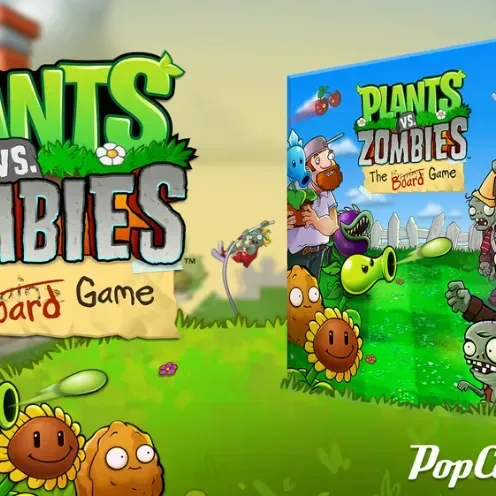
Plants vs. Zombies is preparing to trade touchscreens and digital lawns for a physical tabletop battlefield. Mantic Games is developing Plants vs. Zombies: The Board Game, a cooperative adaptation of the long-running PopCap series, and its Kickstarter campaign is scheduled to begin on October 14.
The project aims to translate the core appeal of the games into a card-based board game for one to four players. That means defending a home from advancing zombie hordes, arranging plant-based defenses across lanes, reacting to unusual threats, and trying to keep the escalating chaos under control before any undead invader makes it to the house.
Mantic has a substantial history of licensed tabletop adaptations behind it, having previously worked with properties including Worms, Halo, Hellboy, The Walking Dead, and Invincible. Its new project is described as a fast-moving cooperative experience built around the comedy and disorder that have always been central to Plants vs. Zombies. The key question for fans will be whether the board game can retain the satisfying rhythm of planning a defense, watching a wave develop, and deploying the right answer just before a lane collapses.
A lawn-defense game built for the table
At its foundation, the original Plants vs. Zombies formula is remarkably well suited to a board game. Players are given limited space, a selection of defensive tools, and a growing line of enemies that each create different problems. Basic zombies may be manageable, but specialized threats force players to reconsider their layouts, preserve valuable resources, and make difficult decisions about which lane deserves immediate attention.
For useful background on this topic, read Kingdom Hearts Meets Fortnite in a Trailer Built on Kingdom Hearts 2 Nostalgia.
The tabletop version will preserve that lane-defense structure through its cards and level setups. Players will work together through a sequence of increasingly difficult levels, with each one featuring its own arrangement, goals, and zombie hordes. Rather than simply repeating a single battle framework, the game is intended to introduce new situations and challenges as players progress.
That approach matters because variety has always been a major part of the series' identity. A garden that works perfectly against one group of zombies can be a disaster against another. By giving levels distinct conditions and objectives, the adaptation appears positioned to make players adjust their tactics from game to game instead of relying on one unbeatable arrangement.
The loss condition is immediately familiar: if even one zombie reaches the house, the players lose. It is a simple rule, but one that turns every advance into a meaningful threat. In a cooperative game, that pressure should create constant table discussion over where to spend cards, when to use a powerful effect, and whether a player can afford to leave one lane vulnerable while reinforcing another.
Plant cards, tools, and simultaneous zombie problems
Cards will form the center of the experience. Plant cards represent the familiar botanical defenders, including examples such as Peashooters for ranged attacks and Cherry Bombs for explosive solutions. Those examples suggest that the game will lean into recognizable roles from the video game series: steady damage, urgent emergency buttons, careful positioning, and the challenge of deciding whether to use a valuable card now or hold it for a worse threat later.
Players will also have Tool cards that can alter the state of the board. A shovel can reorganize a garden's defenses, offering a way to correct an earlier placement decision or respond to a change in the action. A lawnmower can cut through a lane of zombies, providing another familiar last-resort safeguard from the games.
These tools could be crucial to making the tabletop format feel flexible rather than rigid. In a digital Plants vs. Zombies level, a player is constantly responding to changing information. A board game needs similar opportunities for recovery and improvisation, especially when a difficult sequence of draws or a bad early decision puts a lane in jeopardy. The shovel and lawnmower mechanics indicate that players will have ways to alter the defense after it has been established, rather than merely hoping their first plan was correct.
The zombie system is where much of the game's tension may come from. Zombie cards move enemies closer to the house while also showing the routes those zombies will take. That gives players information to work with: they can see where a danger is moving and prepare their plants around those paths. But there is an important complication. All Zombie cards must be played simultaneously.
That requirement should make each round more unpredictable. Players may know the possible paths, but revealing and resolving multiple advancing threats together can turn what looked like a manageable defense into a sudden crisis. It also fits the series' tone. Plants vs. Zombies has never been only about slow, methodical optimization; it is also about the absurdity of a seemingly controlled lawn becoming overrun by increasingly strange enemies.
For solo players, the one-to-four-player format means the game will not require a full group to get onto the table. For groups, the cooperative structure should make it accessible to players with different levels of tabletop experience. Everyone is defending the same house, and the game's basic visual language--plants protect lanes, zombies advance, do not let them cross the yard--is easy to understand even before the more specialized cards and scenarios enter the picture.
Unlocks and escalating levels
Mantic's adaptation will include new Plants, Zombies, and challenges to unlock during play. Each new level will put the group up against a fresh zombie horde, creating a sense of progression beyond individual matches. Details on the precise structure of those unlocks have not yet been outlined, so it remains unclear whether they will be part of a linked campaign, a progression track, or another format designed to expand the available content over time.
Still, unlockable additions are a natural fit for the property. The games have often introduced new plants and zombies gradually, allowing players to learn an option before a new enemy or complication asks them to rethink its use. A board game that follows a similar curve could begin with straightforward lane defense and gradually add stranger threats, more demanding objectives, and plant combinations that create deeper tactical choices.
It also offers a reason to revisit the game after an initial session. Cooperative board games often depend on scenario variety to remain compelling, particularly when their premise is built around solving a common problem. New enemies, plants, and challenges can help ensure that a winning strategy from an earlier level does not automatically carry into the next one.
Deluxe Edition and Night Edition plans
In addition to the standard game, Mantic is preparing a Deluxe Edition. That version will include pre-assembled miniatures representing fan-favorite Plants and Zombies. The use of pre-assembled figures is notable for players who enjoy miniatures on the table but do not want a separate building or hobby project before their first session.
The publisher is also planning a Night Edition, described as a standalone expansion with more Plants, Zombies, and additional content. As a standalone product, it appears intended to offer its own entry point rather than functioning only as an add-on for owners of the main box. Further specifics on what distinguishes its night-themed content, or exactly how it may connect with the core game, have not been detailed yet.
Both editions point to a broader ambition than a single small licensed release. The Deluxe Edition gives collectors and miniature fans a premium route, while the Night Edition signals that Mantic intends to explore more of the franchise's settings and character roster. Kickstarter campaigns often provide a venue for publishers to reveal additional components, tiers, stretch goals, and gameplay explanations, so October 14 should provide a clearer picture of the project's full scope.
A familiar franchise in a changing era
The board game arrives after a period in which the franchise has continued to revisit both its past and its mobile roots. The most recent release was last year's Plants vs. Zombies Replanted, a remake of the original game. The last entirely new entry was 2024's free-to-play mobile title Plants vs. Zombies 3, which has been relaunched multiple times.
That background makes a tabletop adaptation especially interesting. The original game's design remains instantly recognizable because its rules are clear, its characters are memorable, and its strategic ideas are readable at a glance. A Peashooter fires down a lane. A Cherry Bomb solves a dangerous cluster. A lawnmower is there when everything has gone wrong. Those are concepts that can survive a change of format without losing their identity.
Whether this version becomes a regular fixture for tabletop groups will depend on the depth of its scenarios, how sharply its zombie-card tension lands, and how satisfying its plant combinations are in practice. But the announced structure has a strong thematic foundation: friends collaborating to build a defense, discovering that the wave is more complicated than expected, and desperately trying to keep one final zombie from stumbling through the front door.
Plants vs. Zombies: The Board Game is set to launch on Kickstarter on October 14. More details on its final campaign options, funding goals, and the full contents of its different editions are expected when the campaign goes live.
Community
Discussion
Start the conversation.
No comments have been posted yet.