

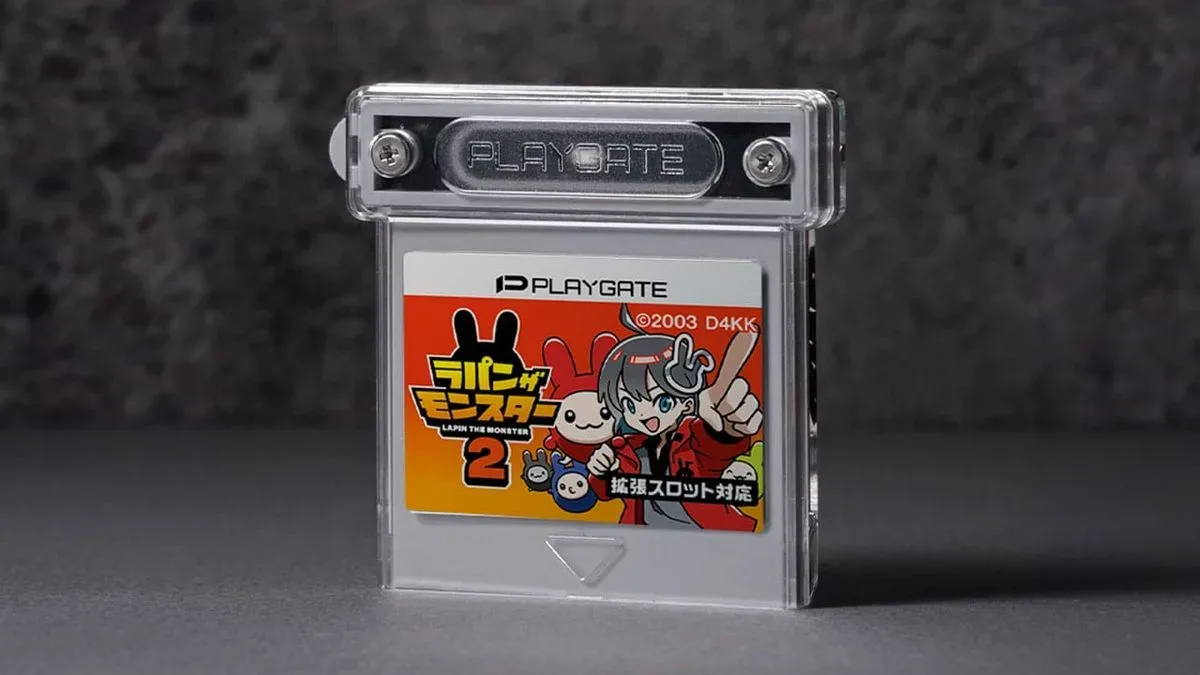
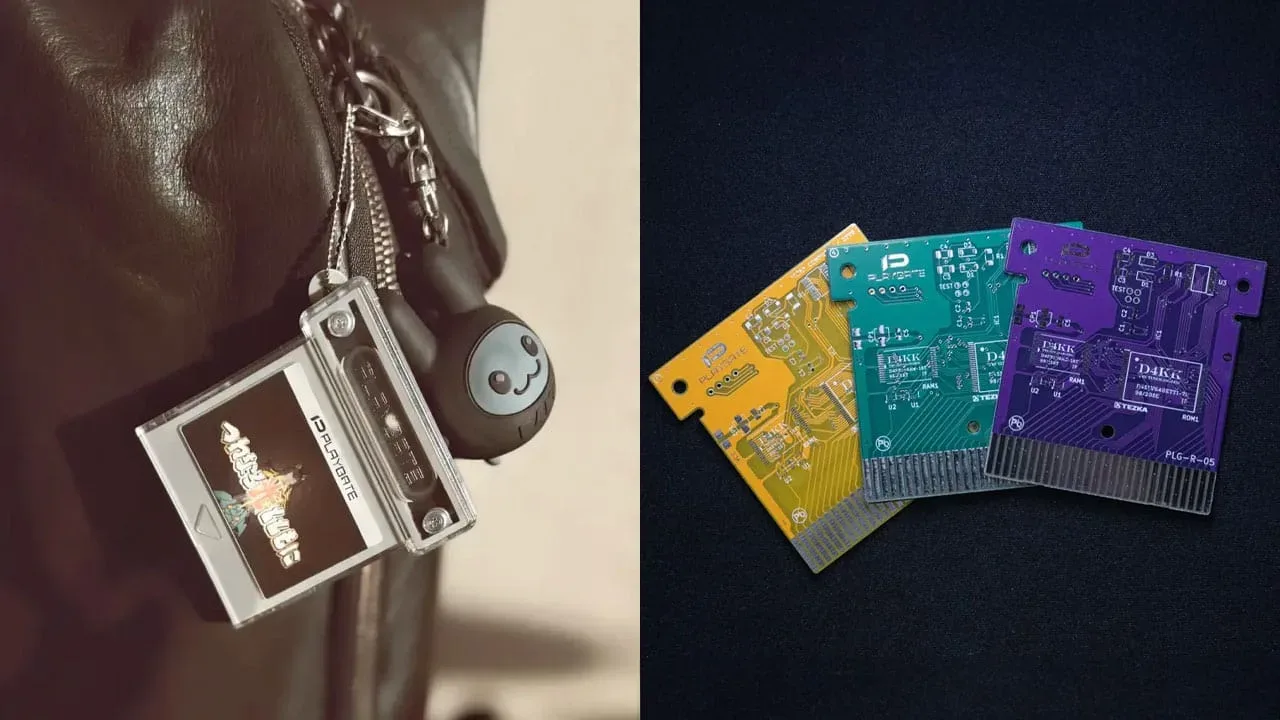
A new craft kit from Japanese company Daiyonkyokai is giving retro-gaming fans an unusually tactile way to celebrate cartridge culture. Built around the fictional PlayGate handheld, the set enables buyers to assemble small replica game cartridges, decorate them with their own label art, and use colored circuit-board-style inserts containing NFC chips.
At a glance, it is a collector-focused art project: a chance to make a one-of-one miniature cartridge for a desk display, keyring, necklace, or other accessory. But the inclusion of NFC technology gives the kit a more intriguing angle. The replicas are described as being capable, at least in theory, of holding actual game-related data, raising questions about where a playful piece of physical media art ends and practical game sharing begins.
A cartridge for a console that does not exist
The PlayGate is not a retail handheld system with a library of commercially released games. Instead, it is a fictional device that Daiyonkyokai has previously used as part of an augmented-reality game concept. That imaginary status is central to the appeal. The project treats the absent machine much like a piece of lost hardware from an alternate timeline: familiar enough to evoke the cartridge handheld era, but strange enough to invite fans to fill in its history themselves.
Its cartridges appear to draw on the visual language of older portable systems, including the chunky, compact look associated with Game Gear-era media. For enthusiasts who enjoy the physical design of vintage games as much as the software itself, that makes the craft kit more than a novelty. It is a way to create a convincing artifact from a console mythos that has deliberately been left open-ended.
For useful background on this topic, read ROG Xbox Ally X20 review: A Brilliant OLED Handheld With a Price Problem.
That approach also separates the kit from ordinary reproduction cartridges. Rather than being built around a specific established platform, PlayGate replicas are intended to belong to Daiyonkyokai's fictional ecosystem. A creator can make a cartridge that looks like a lost action game, a made-up puzzle title, a mock role-playing adventure, or even a personal tribute to a favorite classic without needing the item to pass as an official product.
Custom labels and colored boards are part of the appeal
The kit includes the materials needed to produce the cartridge artwork and assemble the physical replica, along with colored boards fitted with NFC chips. The ability to create labels is likely to be the most immediately attractive feature for collectors. Cartridge labels have always been a significant part of retro-game identity, whether they feature bright illustrated heroes, dense Japanese typography, barcode-heavy regional packaging, or the slightly worn look of a well-loved childhood game.
Giving people the ability to make their own miniature labels opens up plenty of harmless creative uses. A fan could produce a fake title screen for an imaginary PlayGate launch game, turn a family in-joke into a cartridge-shaped keepsake, or build a display set themed around a fictional publisher. Others may be tempted to make visual homages to beloved Game Boy, Game Gear, or other handheld releases.
There is also an attraction in the object itself. Digital libraries, emulation handhelds, and flash cartridges have made it easier than ever to access older games, but they do not replace the ritual of holding a piece of physical media. Tiny carts and their labels communicate genre, era, and personality before a game is even launched. A handmade replica does not need to run anything to serve as a meaningful collectible.
NFC adds a more complicated possibility
The NFC chips included in the PlayGate craft kit are what make it stand out from a conventional model-making set. NFC, or near-field communication, is the short-range wireless technology used in many contactless devices and collectibles. In a playful context, an NFC tag can trigger a digital experience, open a file or webpage, identify an item, or store small pieces of information for compatible hardware or software.
For a project built around an augmented-reality fictional handheld, NFC is a natural fit. A replica cartridge could potentially be scanned to activate PlayGate-related content, identify a custom creation, or serve as a physical key to a digital experience. It can make a display object feel closer to an actual game cartridge even if there is no conventional console slot involved.
However, the idea that these replicas could store and share games "in theory" also introduces an important caveat. NFC capability alone does not clarify what data can be used, how it is meant to be accessed, or whether any specific game files are supported. The available details do not establish that the kit is intended for copying, distributing, or playing copyrighted games.
That distinction matters. Retro game preservation, personal backups, homebrew software, and unauthorized distribution are often discussed together, yet they are not interchangeable. Rules concerning ROM files and game sharing vary by jurisdiction and can depend on factors including ownership, copying methods, rights holders, and the kind of material being transferred. Anyone considering using NFC-enabled craft media for game data should understand the laws that apply where they live and respect the rights attached to commercial software.
For many buyers, the most compelling use may remain the least contentious one: original projects. Homebrew developers, artists, and hobbyists can use a format like this to package their own tiny experiments, AR experiences, digital artwork, or collectible metadata. The PlayGate concept seems especially suited to that kind of creative ambiguity, where the cartridge is both an object and an invitation to imagine the platform around it.
A limited pop-up release makes it harder to find
The cassette craft kit was reportedly sold during a pop-up event at ZAspace Daikanyama in Japan on November 21. As a limited event item, it may already be difficult for interested buyers outside Japan to obtain through normal retail channels.
That scarcity is likely to intensify its appeal among niche collectors. Pop-up exclusives often become difficult to track down once an event ends, particularly when they are attached to a small creative company and a project that is not part of a major global retail rollout. Anyone seeking one now may need to monitor second-hand marketplaces, though availability and resale pricing can vary considerably.
There is no confirmed information here on a wider release, a restock, an international storefront, or a future PlayGate product line. Until Daiyonkyokai provides further details, collectors should treat the kit as a limited event item rather than assume that it will become broadly available.
Why fictional hardware resonates with retro fans
The PlayGate craft kit taps into a fascination that runs deep in gaming culture: the affection for hardware that feels half-remembered, rumored, cancelled, or otherwise just out of reach. Real retro history is full of prototypes, regional variants, unreleased peripherals, odd accessories, and systems that never found a mass audience. Fictional hardware can capture the same feeling without being constrained by what actually shipped decades ago.
That makes a project like PlayGate particularly flexible. It can borrow the material cues people love about older handhelds--plastic shells, label art, colored boards, and cartridges--while encouraging new stories rather than simply recreating old ones. A fan is not just purchasing a replica; they are participating in the invention of a platform history.
In that sense, the kit feels like a miniature extension of the broader retro-gaming maker scene. Enthusiasts already design replacement shells, print custom cases, write homebrew games, restore damaged labels, and create hardware mods. Daiyonkyokai's set channels that same impulse into a deliberately fictional format, with NFC giving the finished creations the potential for an interactive component.
A small object with big imaginative potential
Whether it ultimately becomes a prized display piece, a wearable accessory, or a canvas for original NFC experiments, the PlayGate cassette craft kit is an inventive celebration of physical game media. Its central appeal is not that it recreates a real cartridge from a real library. It is that it gives creators the tools to make something that looks like it could have belonged to a handheld world that never existed.
For retro enthusiasts, that may be enough. The charm of a cartridge has always involved more than what is stored inside it. It is the promise of a game, the identity created by a label, and the sense that a small plastic object can contain an entire adventure. With PlayGate, Daiyonkyokai has turned that feeling into a hands-on craft project--one that is likely to become even more sought after now that its initial pop-up appearance has passed.
Community
Discussion
Start the conversation.
No comments have been posted yet.