

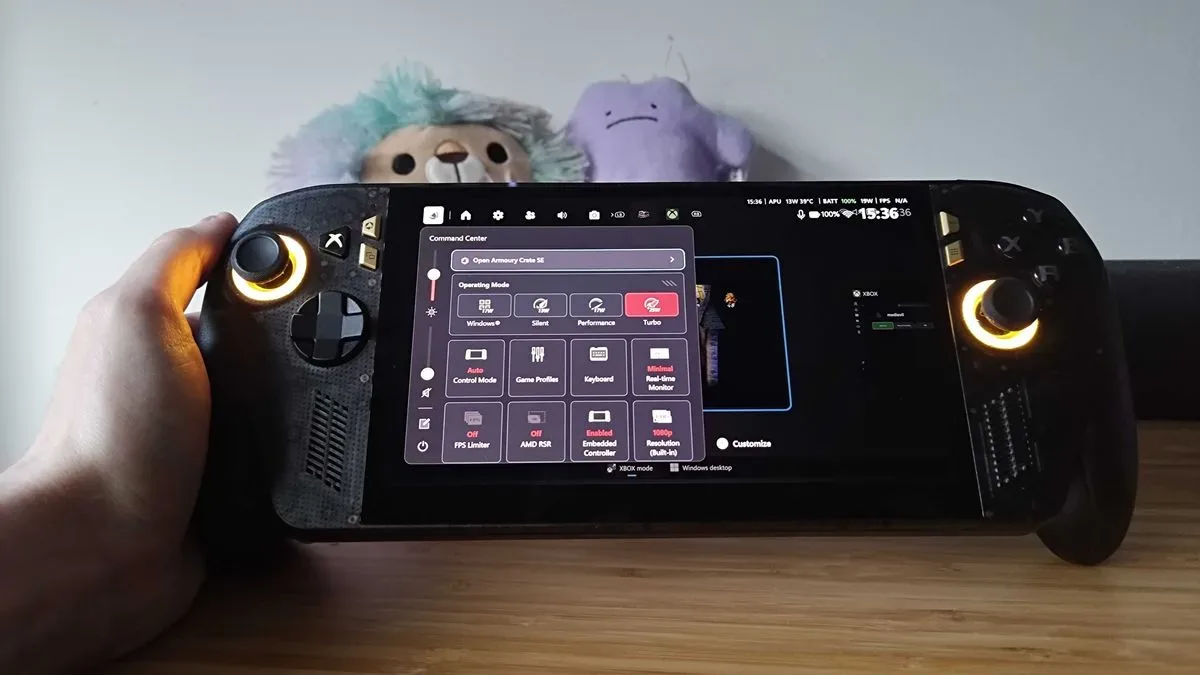
The ROG Xbox Ally X20 is an unusually easy handheld gaming PC to admire and an equally difficult one to recommend without qualification. Asus and Microsoft have taken the already capable ROG Xbox Ally X, kept its Ryzen Z2 Extreme hardware, and focused their attention on the parts that players touch and see every second: the screen, grips, triggers, D-pad, thumbsticks, and presentation. The resulting machine looks fantastic in motion, feels closer to an Xbox controller than its predecessor, and offers a genuinely premium portable PC experience.
It also costs $1,299.99 / £1,399.99. That is $300 more than the previous ROG Xbox Ally X, despite performance remaining fundamentally unchanged. The X20 is therefore not a straightforward successor built around faster silicon. It is an OLED-focused premium revision for buyers who want the best visual experience available in this particular Xbox-branded handheld form factor and are prepared to pay heavily for it.
For those players, there is a lot to love. For everyone else, the existing LCD model and other handheld PC options remain very relevant.
An understated revision with a more luxurious feel
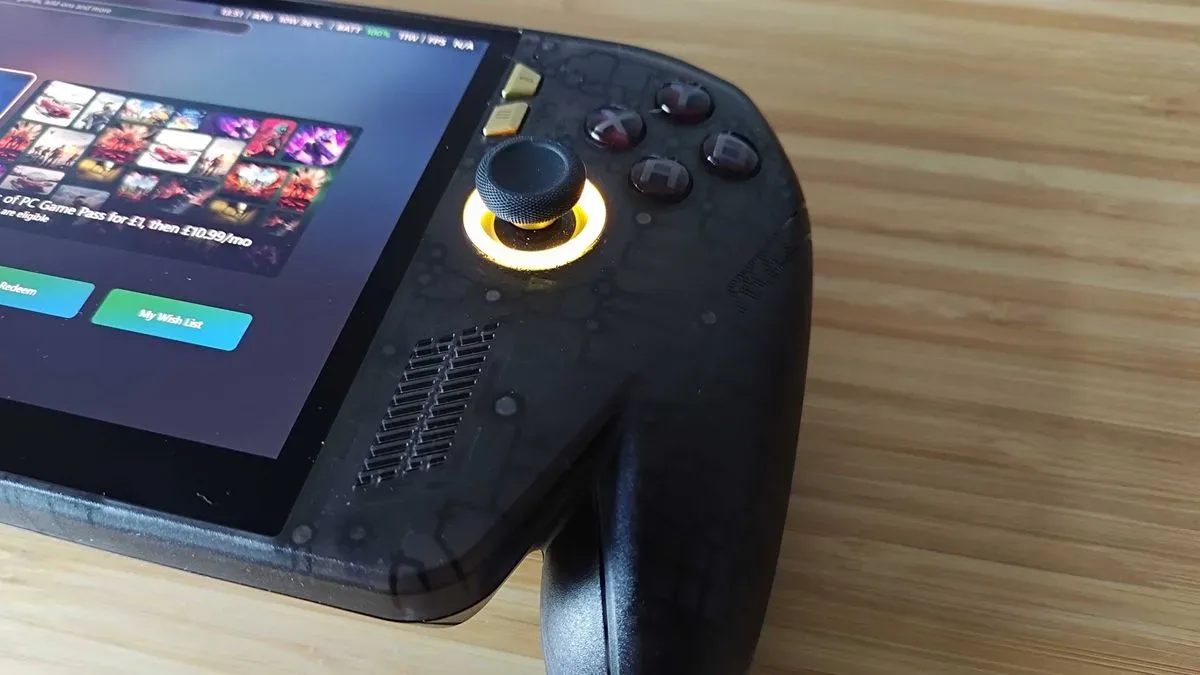
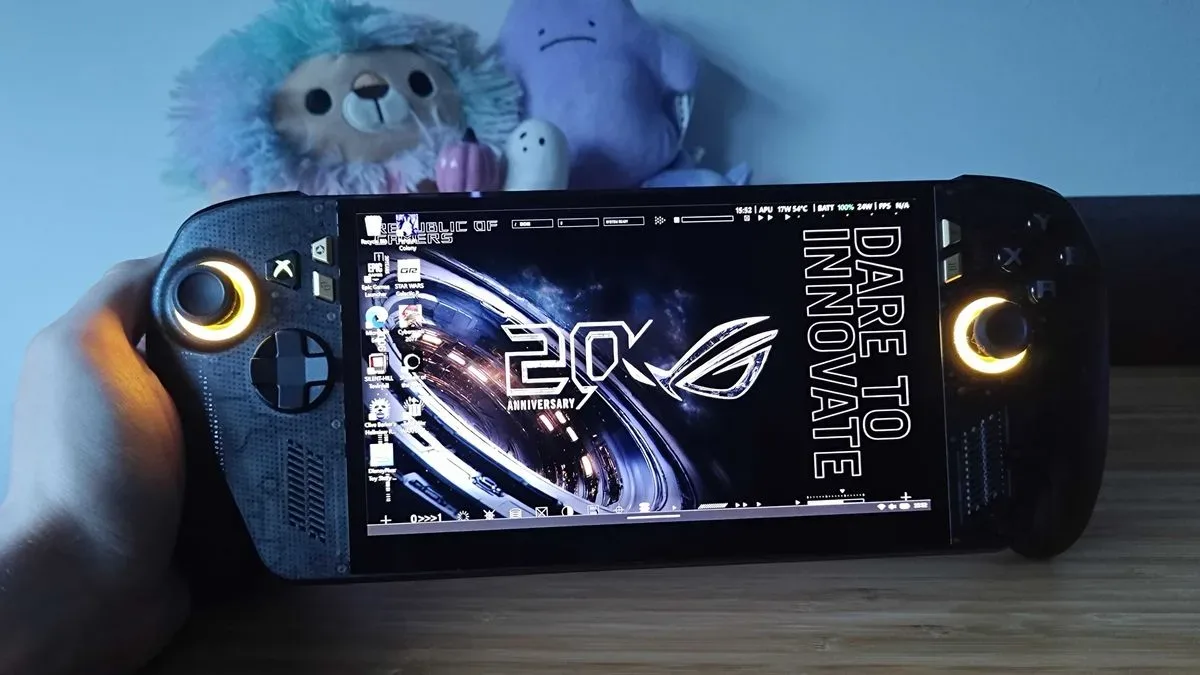
At first glance, the ROG Xbox Ally X20 can look like a new color option rather than a substantially revised device. Its smoked transparent shell and gold accents separate it from the standard unit, but the core silhouette is familiar. Asus and Microsoft have retained the controller-inspired grips, asymmetric stick arrangement, and console-adjacent styling that helped the earlier model stand apart from more traditionally PC-like portables.
For useful background on this topic, read Xbox Project Helix Reportedly Began as a Steam-Ready Console With Free Online Multiplayer.
That continuity is largely welcome. The Ally X design is already built to sit naturally in the hands, and the X20 keeps its most successful ergonomic decisions intact. The newer model weighs 756g, up from 715g, and that increase is noticeable during extended sessions. Players may find themselves resting their elbows more often than with the original device. Still, the rubberized rear grips add useful stability and give the handheld a slightly more upscale, secure feel.
The translucent casing is attractive, particularly for anyone fond of retro-inspired transparent hardware, though the internal components are only subtly visible in the right lighting. The gold trim avoids becoming overly flashy, but it is not likely to be the deciding factor for most buyers. The X20 name celebrates the 20th anniversary of Asus' Republic of Gamers brand rather than Xbox itself, which helps explain why this edition does not lean harder into original Xbox nostalgia.
More important than the finish is the control work. The face buttons retain their responsive membrane feel, but Asus and Microsoft have made the D-pad, triggers, bumpers, and sticks much more convincingly Xbox-like.
Controls that better sell the Xbox identity
The X20 uses TMR, or Tunnel Magnetoresistance, thumbsticks. Beyond improved precision, this technology is designed to avoid the drift concerns associated with conventional stick mechanisms. That is a meaningful upgrade for an expensive handheld expected to endure years of use, even if the sticks themselves do not radically change the familiar layout.
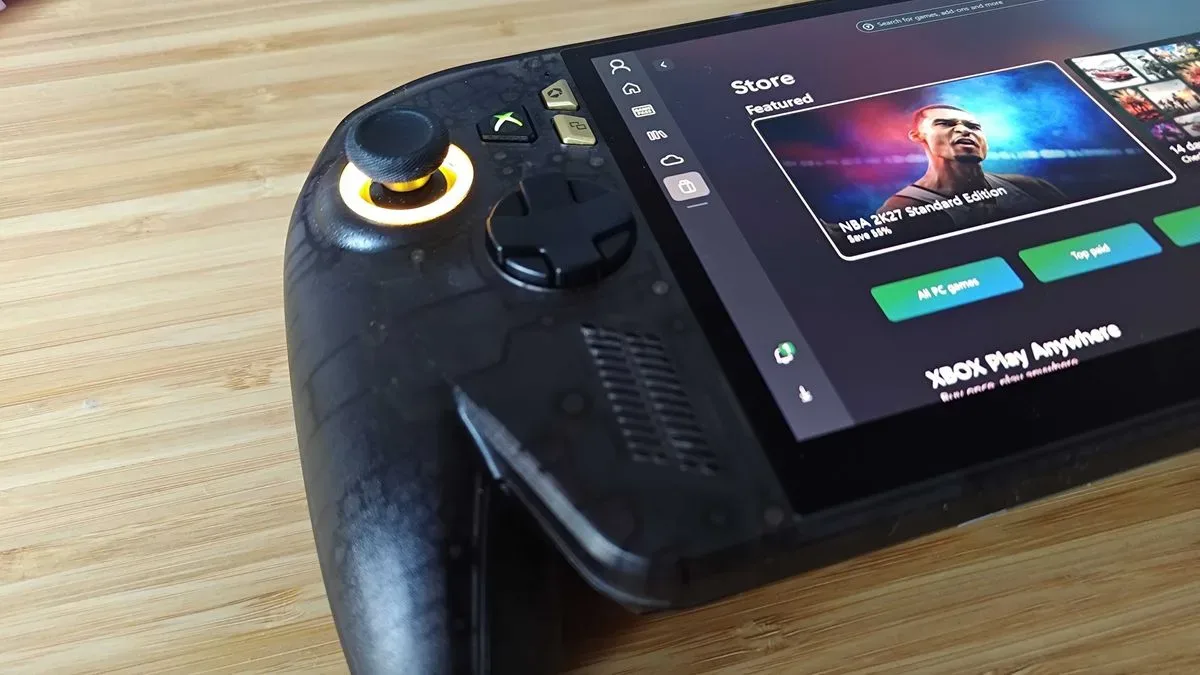
The standout changes are elsewhere. The new concave D-pad uses clicky dome contacts and feels far closer to the D-pad on an Xbox Wireless Controller. That is especially valuable for fighters, platformers, side-scrollers, menus, and any game that benefits from quick, confident directional input. Even in titles that use the D-pad only for shortcuts or toggles, the added tactility makes the interface more pleasant to use.
The revised triggers and bumpers also better reproduce the dampened, less plasticky response associated with Microsoft's controller design. It may sound like a small detail on a spec sheet, but handheld comfort is built from these repeated interactions. Every acceleration press, weapon pull, menu input, and directional tap contributes to the illusion that the player is holding a portable Xbox console rather than a Windows PC shaped like one.
That illusion matters because the Ally X20 is plainly aimed at console players who want access to their libraries away from the television. The new hardware does not eliminate the compromises of Windows, but the physical controls do a better job of supporting the pitch.
The OLED display is the reason this model exists
The defining feature of the ROG Xbox Ally X20 is its OLED display. Asus has replaced the prior 1080p 120Hz IPS panel with a 7.4-inch, 1080p, 120Hz OLED screen rated for 297 pixels per inch, up to 1,400 nits of HDR brightness, and 600 nits in SDR. It also supports FreeSync Premium Pro.
On paper, those specifications explain much of the extra cost. In use, the improvement is more immediate than any number. OLED's deep blacks, higher contrast, and richer colors transform both demanding modern games and older projects. Bright logos and effects can appear against truly dark backgrounds rather than the grayish black associated with many LCD panels. HDR games such as Cyberpunk 2077 benefit from the screen's range, while stylized or older-looking titles can gain surprising atmosphere from the panel's contrast and color reproduction.
The display is also bright enough to contend with daylight and brightly lit rooms. Its glossy finish can catch reflections, but high brightness substantially limits how disruptive glare becomes during normal play. The combination of 1080p resolution, 120Hz refresh rate, and OLED vibrancy puts the X20 in a strong position against other high-end handheld displays.
For players who have been underwhelmed by the standard Ally X's IPS screen, the change may feel decisive. It is the kind of upgrade that makes a familiar game library feel fresh. But it is also important to be clear about what it does not do: it does not provide higher gaming performance than the cheaper model.
Ryzen Z2 Extreme remains capable, not newly faster
The X20 uses the same AMD Ryzen Z2 Extreme platform as the prior ROG Xbox Ally X. That chip is still among the more sensible high-performance options in the handheld PC market, but this is not a generational leap. Anyone hoping that the new display revision also delivers dramatically stronger frame rates should adjust expectations.
Testing at 1080p with low settings and no upscaling produced an average of 52fps in Cyberpunk 2077. That is essentially in line with the previous model's results, where the same workload reached 54fps. Total War: Warhammer 3 still reached 60fps, while Shadow of the Tomb Raider averaged 62fps, compared with 64fps previously.
Those minor differences should not be treated as evidence that the X20 is meaningfully slower. Windows updates, game patches, drivers, background behavior, and configuration variations can all influence a handheld benchmark by a few frames. The broader point is simple: buyers are paying for display and control improvements, not extra GPU muscle.
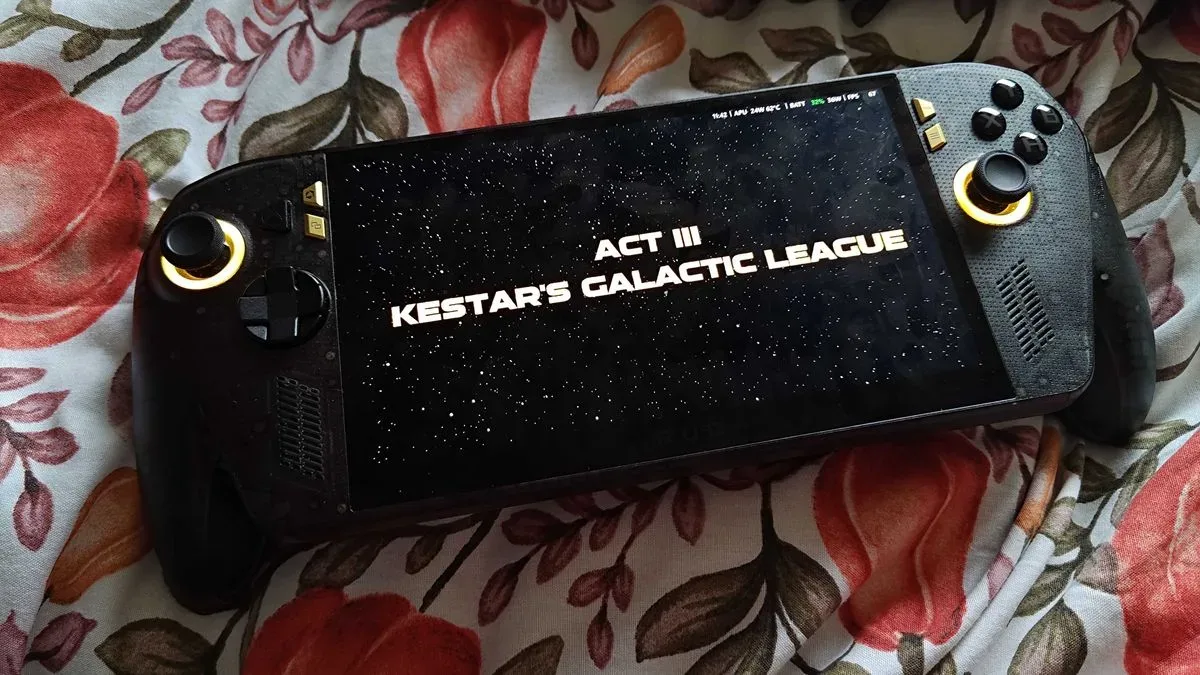
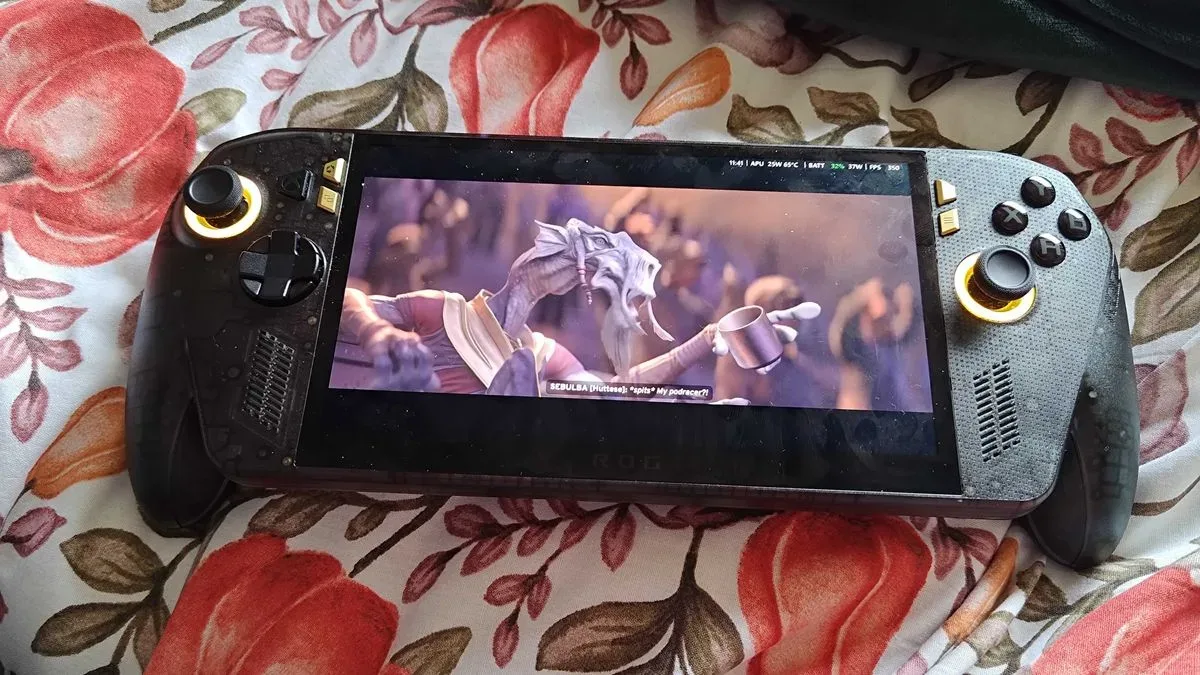
Star Wars Galactic Racer shows the hardware at its best. At 1080p and low settings, the game averaged 115fps during testing on Jakku. A more balanced configuration using medium settings and AMD FSR produced around 70fps while retaining a console-like look on the compact OLED screen. Frame interpolation artifacts can still appear, but the 120Hz panel and improved image quality help make the overall experience compelling.
Xbox Big Screen Experience helps, but Windows remains Windows
Microsoft's Xbox Big Screen Experience continues to be the software layer intended to make Windows 11 feel less like a desktop operating system on a handheld. It gathers libraries from multiple storefronts into a controller-friendly interface and is preferable to spending time at the conventional Windows desktop.
There have been incremental improvements, including a more developed Game Bar, better performance optimization, and broader portable compatibility. Yet the central frustrations have not disappeared. Application switching can be inconsistent, games may occasionally launch more than once, controls can fail to register as expected, and certain storefronts remain awkward within the interface. The Epic Games Store can be particularly temperamental, while desktop scaling may need adjustment when a library does not appear properly in Xbox Mode.
None of that makes Xbox Big Screen Experience useless. On the contrary, it is a meaningful quality-of-life layer and generally the best way to operate the X20. It simply remains an imperfect bridge between the console simplicity Microsoft wants to offer and the Windows foundation underneath it.
Battery life is respectable, not liberating
Asus includes an 80Whr battery, and that remains a sizeable cell by handheld PC standards. In demanding games, however, the familiar limitations of portable PC gaming remain. Playing Star Wars Galactic Racer in 30W Turbo Mode resulted in roughly two hours of use. Expected endurance in demanding games sits around the three-to-four-hour range when settings are managed more carefully.
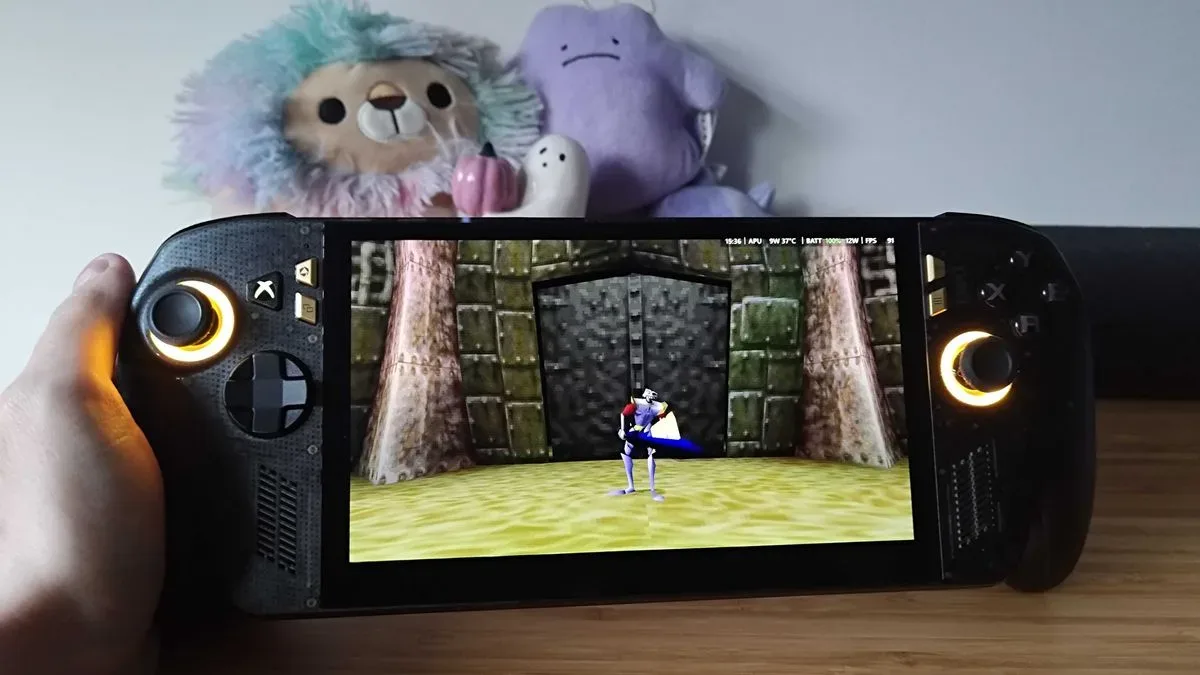
Lighter workloads can extend that substantially. MediEvil Recomp ran for around five hours before a recharge was needed, showing that the Z2 Extreme can offer solid efficiency when the game does not demand maximum power. Players willing to lower brightness, reduce wattage, cap frame rates, or accept fewer than 60fps can improve endurance further.
Should you buy the ROG Xbox Ally X20?
The ROG Xbox Ally X20 is among the best handheld gaming PCs available in 2026, provided price is not the overriding concern. Its OLED screen is excellent, its updated controls are thoughtful, its ergonomics are strong, and Ryzen Z2 Extreme performance remains capable of handling modern games with sensible settings.
But the value proposition is difficult. At $1,299.99 / £1,399.99, the X20 asks buyers to spend substantially more for a better panel and better-feeling inputs while accepting effectively the same performance as the prior model. That will be worthwhile for OLED enthusiasts and players who specifically want this refined Xbox-style portable experience.
For others, the standard ROG Xbox Ally X may represent the more rational purchase. The X20 is a superb luxury revision rather than a must-have leap forward: a handheld that comes tantalizingly close to portable perfection, then reminds players exactly how expensive that perfection can be.
Community
Discussion
Start the conversation.
No comments have been posted yet.