

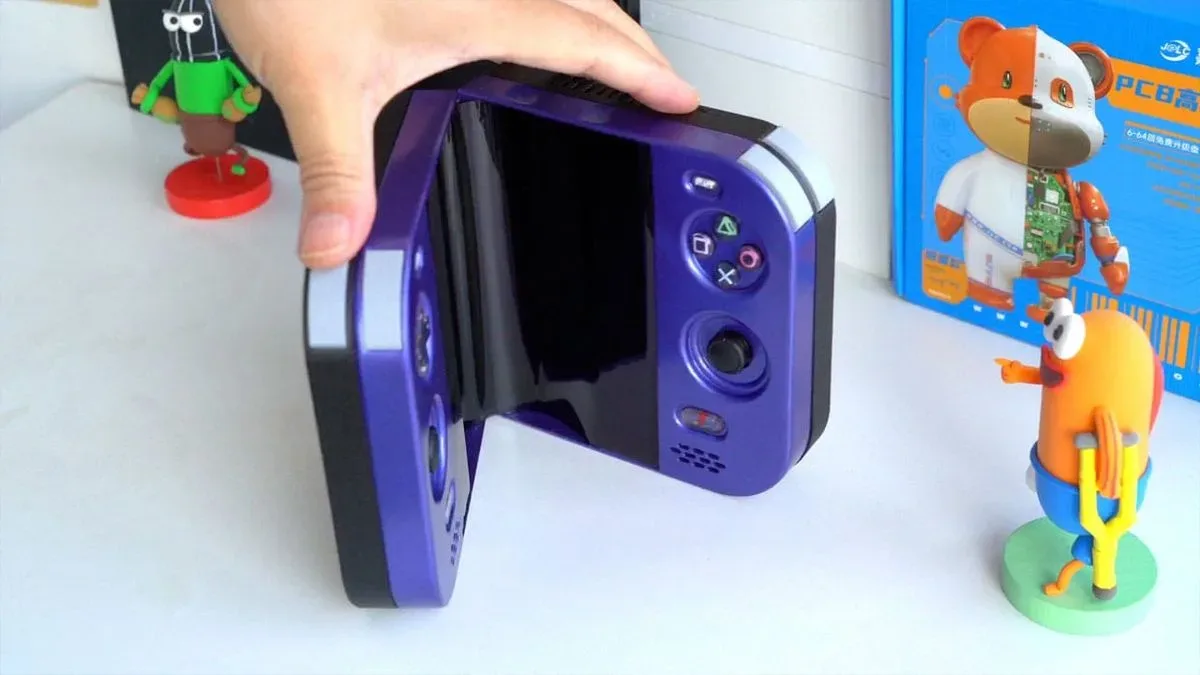
More than two decades after its original debut, the PlayStation 2 remains one of gaming's most enduring pieces of hardware. Its enormous library, distinctive controller design and role in defining the sixth console generation have kept it at the centre of a thriving enthusiast scene. Now, one ambitious hardware project has taken that affection in a particularly unusual direction: a foldable portable PlayStation 2 called the PlayStation 2 Duo.
Created by hardware builder LCLDIY, the machine is not simply a handheld computer running emulated PS2 games. It is a custom portable system built around original PlayStation 2 components, reworked into a clamshell device with a folding LCD display, integrated controls and a 3D-printed shell. A video walkthrough of the build shows the considerable amount of board work, case design and electronics required to make Sony's once-living-room-bound console fit into a device that can close up and travel.
The result looks like the kind of alternate-history machine that might have existed if the PlayStation 2 era had embraced a folding handheld format. It is also a reminder that, for console-modification communities, old hardware is not merely a collectible. It is a platform for experiments that commercial manufacturers would rarely attempt.
From broken consoles to one portable system
The PlayStation 2 Duo began with a low-cost but challenging source of parts. LCLDIY reportedly bought three non-working PS2 consoles at a flea market for $20, then used their hardware as the basis for the project. Turning that collection of damaged systems into a usable portable required far more than transferring a motherboard into a smaller case.
For useful background on this topic, read New York Comic Con 2026 cosplay Highlights Span Games, Anime, Comics and Kaiju.
Original console boards are designed around the assumptions of a home setup: a fixed enclosure, mains power, cooling space, external video output, memory-card access and a separate controller. A portable build has to rethink nearly every one of those assumptions. Space becomes tightly controlled, power delivery has to be managed for battery use, inputs must be integrated into the body, and the screen must be mounted in a durable position that can survive being opened and closed.
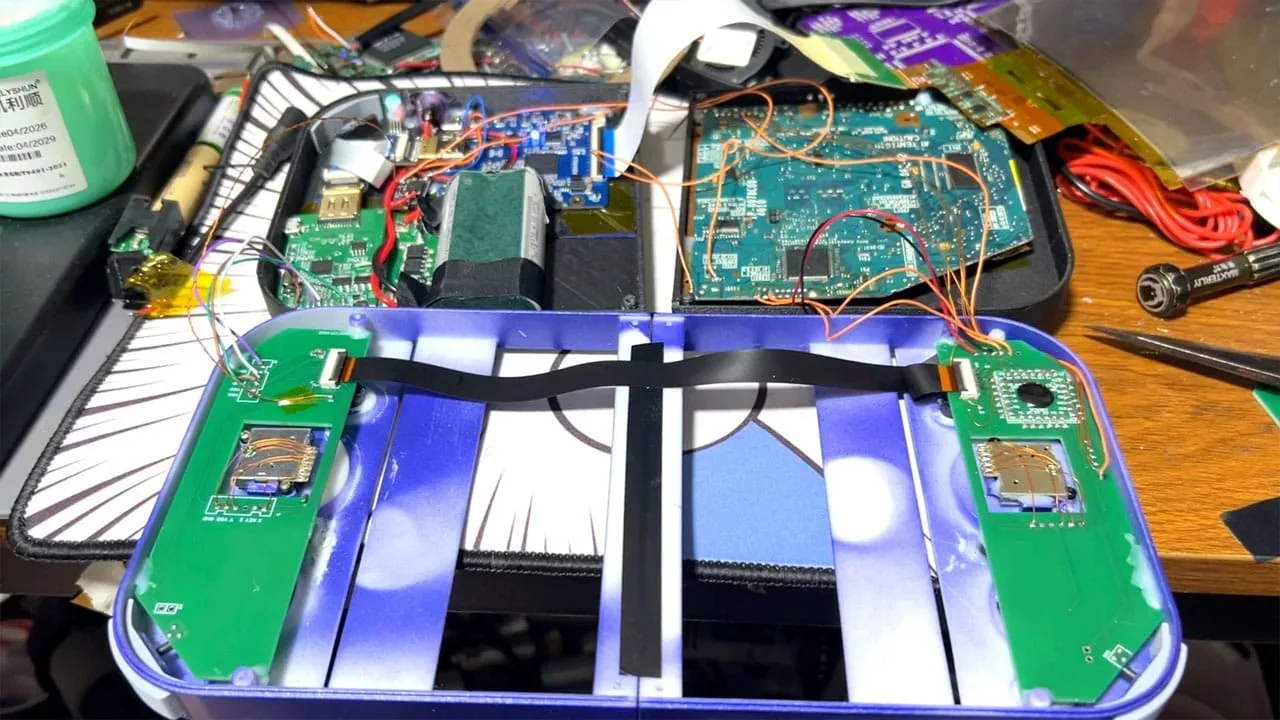
For this project, LCLDIY cut down the PS2 motherboards to create a configuration suitable for handheld use. Board trimming is among the most technically demanding elements of a console portablization project, since it requires a detailed understanding of which traces, components and sections of the original board are necessary for reliable operation. The work is inherently unforgiving: remove or damage the wrong section and the system may no longer function.
That makes the completed device more than a novelty case mod. It represents a substantial hardware conversion, preserving the console's basic function while dramatically changing how and where it can be used.
A clamshell design built around a folding LCD
The defining feature of the PlayStation 2 Duo is its folding form factor. When open, it presents a screen in the upper half and the game controls in the lower half, following a familiar portable clamshell arrangement. When closed, the screen and controls are protected, making the system easier to carry than a conventional open-faced portable build.
Achieving that design meant solving a problem that is easy to overlook in a finished prototype: the display cannot just be placed on a hinge and left there. Video, power and other connections need to reach the upper half safely, while the hinge has to keep the screen secure through repeated movement. LCLDIY's build process includes work on special hinge components intended to hold the LCD in position as the device opens and folds shut.
The enclosure itself was designed using 3D modelling software and produced with a 3D printer. This allowed the creator to shape the case around the unconventional arrangement of the internal electronics rather than trying to force the project into an existing shell. Custom fabrication is especially important for a device such as this, where the screen, trimmed console board, controls, wiring and power components all require precise placement.
The video walkthrough also gives a look inside the open system, revealing the dense collection of boards, cables and components hidden by the finished casing. That internal view is a useful illustration of why portable console projects can take so long. The final machine may resemble a single consumer device, but it is effectively a carefully coordinated assembly of custom-made and repurposed parts.
Custom controls aim to retain the PS2 feel
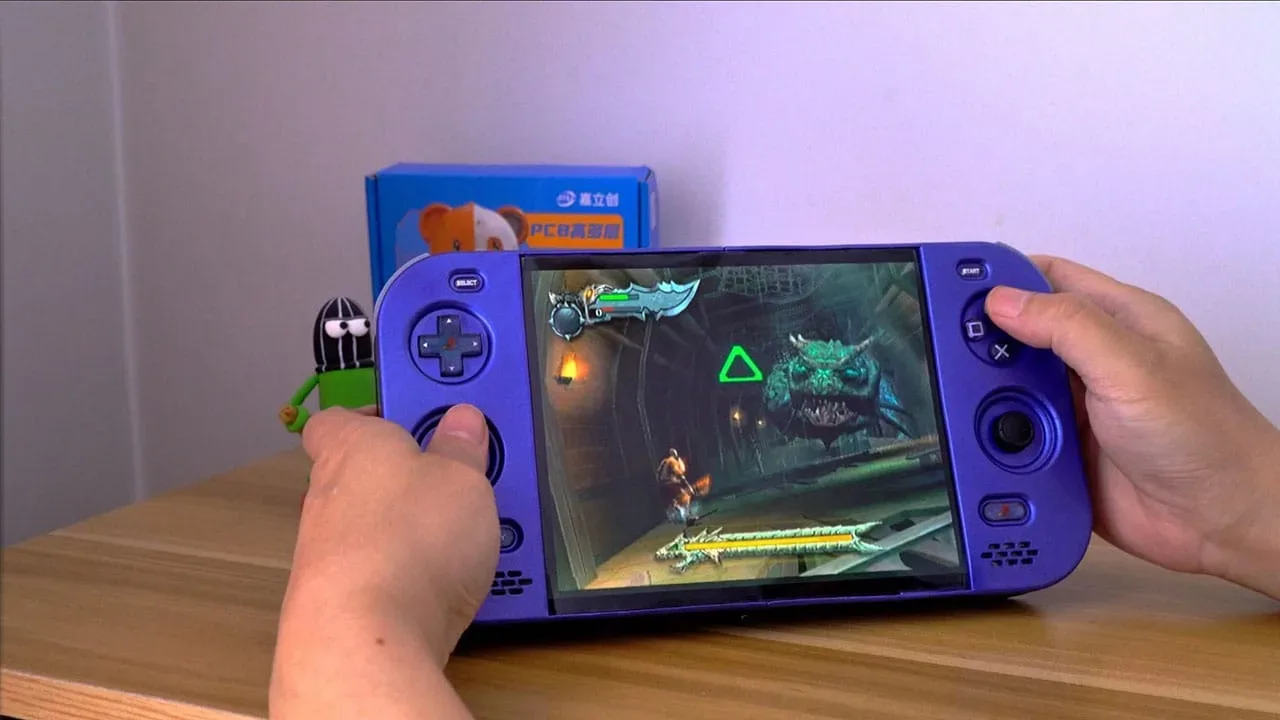
Physical controls are another key part of making a console conversion feel convincing. A machine capable of booting PS2 software is one thing; a machine that can comfortably handle the fast camera movement, face-button combinations and analogue inputs expected by PS2 games is another.
LCLDIY created a dedicated circuit board for the control sections and made custom buttons that fit into the enclosure. The goal appears to have been not only functional input, but also a control layout with the tactile character players associate with Sony's hardware. That attention matters for a platform whose best-known games were designed around the DualShock family's buttons, directional pad and analogue sticks.
Footage of the system in use shows it running games including Grand Theft Auto: Vice City, God of War and Shinobi. Those titles offer a useful cross-section of the PlayStation 2 library: an open-world action game, a large-scale character-action adventure and a demanding arcade-style experience. Running them on a compact folding machine helps demonstrate that the project is intended to be a practical gaming device rather than solely a display piece.
There is an important distinction here. The PlayStation 2 Duo is a personal enthusiast project, not an officially licensed product, a commercial handheld or a newly announced Sony device. Its appeal is precisely that it exists outside the normal product cycle, created through experimentation and specialist knowledge rather than through mass production.
Wireless controller support adds flexibility
Although the handheld has built-in controls, LCLDIY has also made it possible to connect a wireless controller. That feature broadens the ways the device can be used. A player could hold the portable as a compact all-in-one PS2 while travelling, then set it down and use a wireless pad when playing more comfortably at a table or at a friend's home.
It is a small addition with a large practical effect. Some PS2 games are best suited to the immediacy of integrated portable controls, while others can benefit from a full-size controller during longer sessions. Wireless support turns the device into something that can operate between those two roles rather than being locked into one style of play.
That versatility also reflects one of the broader attractions of retro hardware projects. They often blend the convenience expected from modern portable devices with the original operating behaviour of legacy systems. In this case, the PlayStation 2 Duo combines an original PS2-based setup with a foldable display, portable enclosure and wireless-controller option that were not part of the standard PS2 experience.
Files shared for other builders
Rather than keeping the work entirely private, LCLDIY has uploaded PCB-related materials and 3D-printing enclosure data through the project page on Hackaday.io. Sharing those assets gives other experienced builders a starting point if they want to study the design or attempt their own version.
That does not mean the PlayStation 2 Duo is likely to become an easy weekend project. The necessary work includes handling old console hardware, modifying motherboards, fabricating and assembling a case, producing custom electronics, managing a display mechanism and performing delicate soldering. Even with design files available, the build requires tools, patience and a willingness to troubleshoot.
The PlayStation 2 Duo shows how much engineering can be hidden behind a device that, at first glance, looks like a simple foldable handheld.
For people who do have those skills, however, the shared files make the project more valuable than a one-off showcase. They offer a glimpse into the methods behind the finished system and support the collaborative spirit that has long driven console-modding communities.
A striking new chapter for PS2 preservation
Console preservation is often discussed in terms of software compatibility, physical media, replacement parts and emulation. Builds like the PlayStation 2 Duo add another dimension: preserving the experience of original hardware while adapting it to new physical circumstances. The system is still recognizably tied to the PS2, but it is no longer confined to the television-centred setup that defined the machine in 2000.
Its existence also highlights the ongoing technical fascination surrounding the PlayStation 2. Despite the console's age, making it truly portable is not trivial. Its architecture, storage needs and power demands make a polished custom handheld an involved undertaking. That difficulty makes the project's folding screen, bespoke controls and compact layout all the more impressive.
The PlayStation 2 Duo may remain a specialist creation, but it captures a compelling idea: classic consoles do not have to stay frozen in their original form. With enough ingenuity, broken flea-market hardware can become a portable clamshell machine capable of taking beloved PS2 games far beyond the living room.
Community
Discussion
Start the conversation.
No comments have been posted yet.