

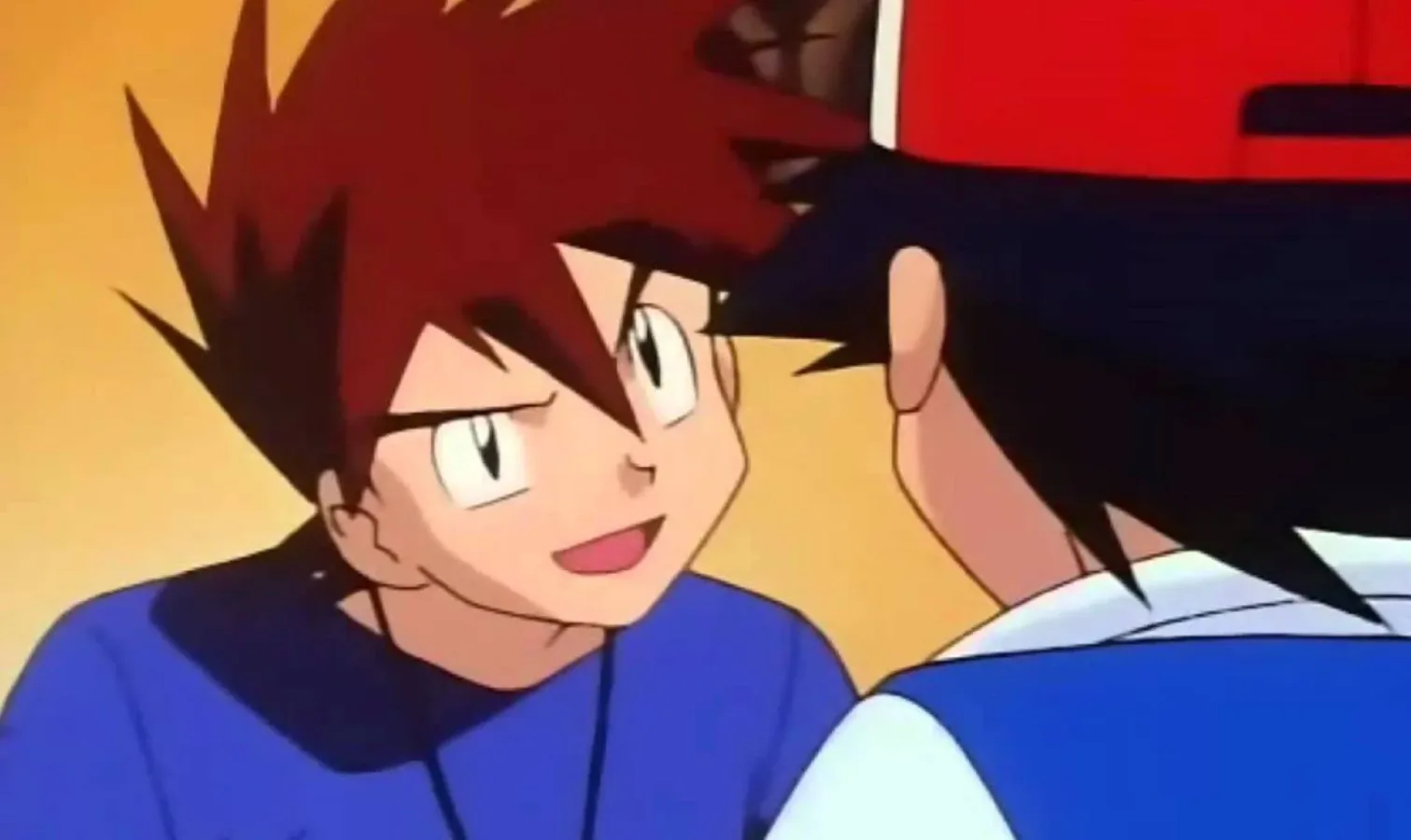
The developer behind Pokémon Arena 2D, an AI-assisted fan project described as a real-time arena battler, says Anthropic's Claude models are beginning to reject requests related to Pokémon fan games. The change follows updated rules intended to stop the company's AI tools from being used to reproduce or infringe existing game intellectual property.
Despite the reported friction, the project's creator, who develops under the name Big Kid Nation, says work on Pokémon Arena 2D is continuing and that the game is still planned for December. That target remains uncertain, particularly because the developer has characterized Claude as a major part of the production process.
Claude's updated restrictions affect fan-game work
Anthropic recently adjusted Claude's guidance to prevent intellectual-property infringement. One of the clearest boundaries in the revised approach is that users should not ask the model to build a recreation of a specific existing game. The policy shift puts renewed attention on a longstanding complication for fan projects: even when a game introduces a new format or original mechanics, using protected characters, terminology, art, or other recognizable material can still create legal and policy problems.
Big Kid Nation wrote on Twitter that Claude models had started refusing work connected to Pokémon fan projects, describing the development situation as an Anthropic crackdown. The developer also stressed that Pokémon Arena 2D has not been monetized, saying they had not taken money through platforms such as itch.io or Patreon.
For useful background on this topic, read Fields of Mistria Confirms Active Porting Work as Console Hopes Grow.
That distinction may matter to the developer personally, but it does not automatically resolve the intellectual-property question. Fan games frequently occupy a precarious position regardless of whether they are free. Rights holders can object to unauthorized uses of their characters, names, visual identities, music, and other protected material, while AI providers may independently choose not to assist with work that could facilitate infringement.
Anthropic developer Addy Osmani previously stated that using Claude to infringe intellectual property is against the company's usage policy. In practice, that can make the boundary difficult for developers to navigate. A general creature-battling game with original creatures and original worldbuilding is one thing; a project explicitly built around Pokémon is another, even if its gameplay does not closely duplicate a single official release.
An arena battler rather than a direct Pokémon remake
Pokémon Arena 2D is not presented as a one-to-one remake of a particular Pokémon game. Rather than centering on the familiar turn-based structure of the mainline RPGs, it is described as an arena-focused battler in which players choose actions for their creatures in real time. That premise separates it from a direct recreation of an existing title and suggests a different take on the broader monster-battling formula.
However, the project's connection to Pokémon is still central. Its visuals draw from a community-made Pokémon sprite library, and the recognizable creatures and move names are a major part of what identifies it as a fan game. Without those elements, the core structure could read more like an original entry in the wider creature-battling genre. With them, it remains tied to a major entertainment property whose rights are not owned by the project's creators.
This is the tension at the center of the Claude dispute. Anthropic's rule against rebuilding a specific game does not necessarily mean every non-identical fan game is permissible. A project can avoid copying a particular game's maps, systems, story, or progression while still relying on protected franchise material. AI companies are likely to take a cautious approach where prompts explicitly request copyrighted characters, branded assets, or franchise-specific content.
A costly and deeply personal development effort
Big Kid Nation has pushed back strongly against criticism that labels the project "AI slop." In posts about the game, the developer said the work has involved extensive time, learning, and personal expense. A month before discussing the Claude refusals, Big Kid Nation said costs had reached as much as $2,000 per month and described spending 10- to 14-hour days learning and building for much of the year.
The developer has also framed the project in highly personal terms, explaining that Pokémon was a defining part of their childhood and that the game has become an important goal during a difficult period in their life. They said they intend to keep working even under severe personal constraints. Those statements underline that the debate is not merely about tools or output quality; for independent creators, a project can represent months of labor, personal identity, and a hoped-for professional path.
At the same time, time spent and money invested do not change the underlying limits surrounding a fan work. This is an especially important reality for developers building around large franchises. A project may gather a community, receive praise for its technical progress, and still face policy blocks, takedowns, or legal challenges later in development. The more closely a game markets itself through a recognizable brand, the harder it can be to separate its creative ambition from the rights associated with that brand.
"Vibe coding" is central to the project's workflow
In the project's Discord community, Big Kid Nation said Pokémon Arena 2D is now "almost exclusively vibe coded." The term generally refers to a workflow in which a developer uses generative AI to rapidly create, revise, debug, or explain code through natural-language prompts rather than writing every implementation manually from the ground up.
Big Kid Nation said the team is openly supportive of AI in creative game development and argued that the approach is being used because it produces the best results in both quality and development time, rather than out of laziness. The developer also said a growing human team is involved with the project.
That approach illustrates both the appeal and the vulnerability of AI-heavy production. Generative systems can accelerate prototyping, help less-experienced creators understand technical problems, and reduce the time required to test concepts. But a workflow built around a third-party model is dependent on that model's rules. When a provider changes its safeguards or enforcement, the consequences can be immediate for a project whose prompts, code generation, design iteration, or asset planning have become closely tied to the service.
For a fan game, the risk is amplified. A developer may be able to ask for help with general programming tasks, such as interface behavior, networking concepts, performance optimization, or generic combat logic. Yet requests involving Pokémon-specific characters, attacks, systems, or assets can fall much closer to a provider's intellectual-property restrictions. The result may be an uneven workflow in which broad technical support remains available while franchise-specific development becomes harder to discuss with the AI.
What the situation means for the December target
Big Kid Nation has reassured followers that the game remains set for December. No additional details about the project's release plans, platforms, or how it will adapt to Claude's refusals were provided. As a result, it is unclear whether the team has alternative tools, whether the reported refusals affect only certain tasks, or whether the development schedule will need to change.
The project's future also hinges on more than AI access. Even if its creators find another way to complete the work, the use of Pokémon branding and assets means the game could still encounter intellectual-property enforcement. Free fan projects have historically had varying lifespans: some remain online for years, while others are removed after receiving complaints or formal takedown requests.
For now, Pokémon Arena 2D remains a useful example of a growing collision between fan creativity, generative-AI development, and corporate IP protections. AI tools can make ambitious game production more accessible, but they are not neutral or unlimited collaborators. Their policies can shape what creators are able to build, especially when a project is attached to one of gaming's most recognizable franchises.
Big Kid Nation's message is that development will continue. Whether the team can meet its December goal, and whether the project can ultimately remain available in its current Pokémon-focused form, remains to be seen.
Community
Discussion
Start the conversation.
No comments have been posted yet.