

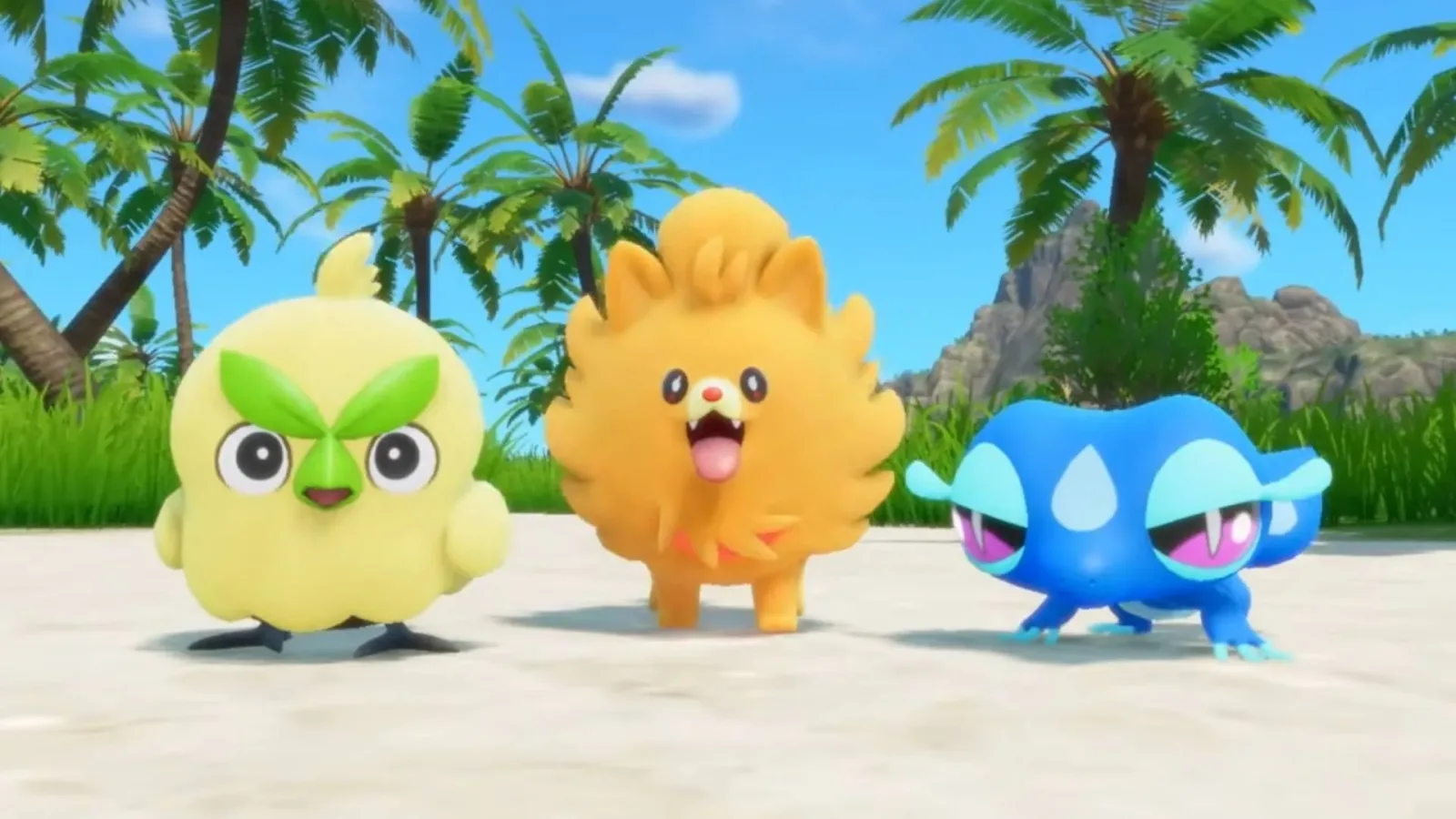
A wave of supposed Pokémon Winds and Waves leaks has been thrown into serious doubt after the person connected to one of the accounts behind them publicly acknowledged fabricating information. The admission follows online scrutiny of the account known as @kurwashibamaste and its apparent connection to another account, @Mootmonthly.
The episode is a useful, if messy, reminder of how quickly unverified details can become accepted as likely fact in a major game community. Rumors about prospective creatures, regional evolutions, release plans, and features can spread far beyond the account that first posts them--especially once larger fan accounts repeat them. In this instance, several claims that had circulated around Pokémon Winds and Waves now have no reliable basis.
Pokémon Winds and Waves has officially been given a 2027 release window by The Pokémon Company. Beyond that confirmed broad timing, players should be particularly careful when assessing social-media posts that present unannounced gameplay specifics as insider information.
Embedded X/Twitter post
Why the account connection raised questions
The controversy began after screenshots circulated that appeared to show @kurwashibamaste and @Mootmonthly among the same logged-in social-media accounts. That connection attracted attention because Kurwashibamaste had become associated with a string of Pokémon Winds and Waves rumors, some of which had subsequently been amplified by established rumor-tracking accounts and leakers.
For useful background on this topic, read GTA 6 camera controls: How to Change Views and Use First-Person Options.
Questions intensified when Mootmonthly shared a reaction image featuring Nanami from Jujutsu Kaisen, paired with text about the feeling of spreading misinformation and lies. In replies and later posts, the user did not attempt to distance themselves from the implication. Instead, they described the activity as a role-playing exercise and said the response had achieved a goal more quickly than expected.
The user said the community consequences were not particularly relevant to them, characterizing the deception as part of a broader effort to test the Pokémon leak ecosystem. They also suggested their perceived reliability had become restrictive, saying they would rather be regarded as a clown than as a trusted source whose every post carried weight.
That framing does not make it easy to separate fact from fiction. A rumor account that knowingly mixes genuine details, guesses, and fabricated claims creates an environment in which followers cannot reasonably tell which posts deserve attention. Even if an individual item later happens to prove accurate, that does not validate the method or establish a dependable record.
Claims about evolutions are now especially doubtful
The most immediate consequence is that fans should treat multiple highly specific Winds and Waves claims as discredited or, at minimum, entirely unverified. Rumors that Onix, Salandit, Zweilous, and Houndour would receive new regional evolutions were among the details associated with the account's output. Another circulating claim said there would be no new Eevee evolution.
None of those details has been confirmed by The Pokémon Company. Given the admission that information was fabricated, there is no sound reason to present any of them as credible evidence of the final game. This is particularly important for Pokémon speculation, where a convincing list of familiar species can feel plausible simply because it is built from characters fans already want to see revisited.
Regional forms and evolutions are perennial subjects for fan theories because they offer a natural way for a new Pokémon setting to reinterpret existing monsters. That makes them ideal material for false leaks: they are exciting, easy to imagine, and difficult to disprove before an official reveal. The same applies to Eevee, whose potential new evolutions have inspired speculation for years. Popularity is not confirmation.
Specificity can make a rumor more shareable, but it does not make it more trustworthy.
Until official footage, announcements, or materials identify Pokémon returning in Winds and Waves, fans should regard any species list, evolution chart, typing claim, or Pokédex detail as speculation. Reposts from high-follower accounts do not change that standard, particularly when the original chain of information is unclear.
The stated motive: testing the leak scene
Mootmonthly said they had been investigating how much supposed leakers actually knew and how they obtained their information. Their assessment of the results was negative. The user further claimed that not every post from the Kurwashibamaste account had been invented, arguing that mixing in real material was what allowed the account to gain traction.
That assertion itself should be handled cautiously. The user has openly acknowledged lying in this context, so claims about which information was real, how it was acquired, or what other accounts knew cannot be independently trusted simply because they are now presented as part of an "investigation." The user also said they would make up claims again because doing so gets them leaks, an explanation that further complicates any effort to regard the account as a good-faith evaluator of rumors.
There is an uncomfortable logic to the tactic. In online communities built around early information, perceived access is currency. If an account appears correct a few times--whether through informed guesses, selective reposting, genuine tips, or luck--its later posts can receive an assumption of credibility. Other accounts may then cite those claims, and the repetition can make the underlying information look more established than it ever was.
But an experiment conducted by deceiving a community has real effects. Fans can spend weeks discussing ideas that never existed. Artists and theory crafters may build work around false premises. People who want to avoid spoilers can become concerned about details that are not spoilers at all. And when real official news arrives, the atmosphere of distrust makes it harder for the community to enjoy it without immediately trying to decode a supposed hidden agenda behind every announcement.
A separate release-delay claim remains unverified
In addition to the material posted through Kurwashibamaste, Mootmonthly had recently claimed that Pokémon Winds and Waves was initially planned for 2026 before an internal delay moved it to 2027. The official information currently establishes 2027 as the game's announced release window, but it does not confirm an earlier 2026 target or an internal postponement.
As a result, that assertion should not be treated as a confirmed account of the game's development schedule. It may be tempting to view a final 2027 window as indirect proof that a delay happened, but games can be internally planned around many tentative dates before public announcements. Without a confirmation from The Pokémon Company or the development team, there is no basis for declaring that a 2026 launch was ever locked in.
This distinction matters because release-date rumors often acquire an undeserved sense of certainty. A claim can sound authoritative when it includes a prior year, an alleged internal decision, and an explanation for a change. Yet those details remain claims unless they can be corroborated. The confirmed fact is simpler: Pokémon Winds and Waves is planned for 2027.
What may happen next
Mootmonthly has indicated that a video may be released to explain the findings of the purported investigation into other leak accounts. If that happens, it could generate another cycle of accusations, counterclaims, and attempts to reconstruct who knew what. Fans should approach any such video with the same skepticism warranted by the admissions already made.
Evidence can be useful if it is concrete and independently verifiable, such as timestamps, unedited records, or details that can be checked without taking the presenter's word for them. Broad assertions about unnamed insiders, private motivations, or supposedly authentic information are much harder to evaluate--especially from someone who has described using falsehoods to gain attention and access.
For now, the practical takeaway is straightforward. Claims concerning Onix, Salandit, Zweilous, Houndour, Eevee, and other unannounced Winds and Waves content should be removed from any mental list of likely features. They may have been entertaining prompts for discussion, but they are not reliable reporting on the game.
How to handle Pokémon rumors responsibly
Leaks will continue to be a major part of the conversation around a new Pokémon game, and not every early report is necessarily false. Still, fans can avoid much of the confusion by applying a few basic checks before sharing a claim.
- Separate official information from speculation. A logo, trailer, press release, or direct statement carries a different weight than a social-media post.
- Look for an identifiable track record. Even then, a past correct claim is not a guarantee that every future post is accurate.
- Trace repeated claims back to their origin. Ten accounts repeating one unverified post are still relying on one unverified post.
- Be wary of perfect fan-service lists. Rumors that bundle several beloved Pokémon, long-requested evolutions, and headline-grabbing twists are designed to travel.
- Keep uncertainty attached to the claim. Calling something a rumor rather than a leak is not just semantics; it accurately reflects what is known.
Pokémon Winds and Waves remains an officially announced 2027 game, but much of the detail fans have discussed in recent months now needs to be reconsidered. Until the next formal reveal, the safest expectation is that the most exciting alleged specifics are simply not established--and some were deliberately made up.
Community
Discussion
Start the conversation.
No comments have been posted yet.