

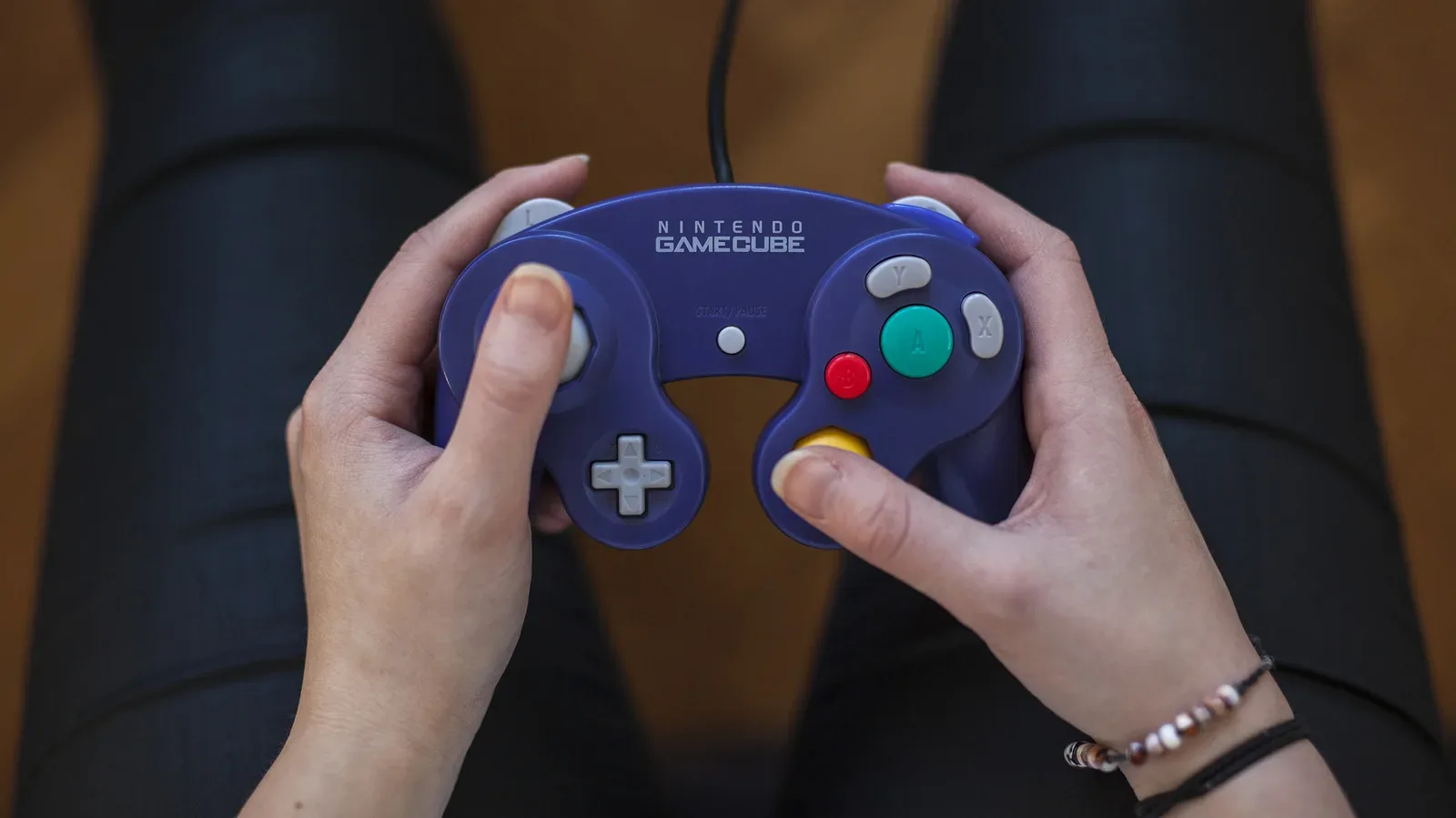
The PlayStation 2 and Nintendo GameCube are now firmly part of retro gaming history, an idea that may feel strange to anyone who remembers their original launches. Both systems arrived around a quarter-century ago and defined a major era for 3D games, with huge libraries spanning Nintendo exclusives, Sony platformers, RPGs, racers, fighting games and experimental titles that have not all received modern re-releases.
That history has made emulation an increasingly important option for players looking to revisit games on modern PCs. The good news is that both systems are in a very strong position. The leading GameCube emulator, Dolphin, and the most established PlayStation 2 emulator, PCSX2, can run a substantial portion of their respective libraries with visual upgrades that were impossible on the original hardware.
There is no universal answer to which platform is "better" to emulate, because game compatibility, individual settings and the computer being used all matter. Still, for players deciding where to begin, GameCube emulation usually has the easier path. Dolphin is generally considered a little less demanding and a little more straightforward than PCSX2, while maintaining excellent accuracy and a long list of quality-of-life options.
The short answer: GameCube has the easier emulation experience
If the question is simply whether PS2 or GameCube games tend to emulate more easily on a current PC, the GameCube has a narrow edge. Dolphin's performance requirements are comparatively forgiving, its setup is approachable, and the console itself is less complex to recreate in software than Sony's PlayStation 2.
For useful background on this topic, read The Blood of Dawnwalker: Every Sanzhana Location and Why Finding All Five Matters.
That does not mean PCSX2 is unreliable or difficult in every case. Far from it: PCSX2 has matured enormously since its early days, and it can deliver excellent results across an enormous PS2 catalog. The PS2's scale is a major advantage in its own right. It was one of the most successful consoles ever made, and its library includes countless games that remain meaningful to players today.
Compatibility figures also show how far both projects have come. A 2023 assessment by OC3D listed Dolphin as able to emulate 97 percent of GameCube games, while PCSX2 could play 99 percent of PlayStation 2 titles. Those percentages should not be read as a guarantee that every game will run perfectly with every enhancement enabled. "Playable" can still mean that a title needs specific settings, has a minor visual issue or performs differently on particular hardware. But they demonstrate that neither system is a fringe emulation target anymore.
For most users, the distinction comes down to friction. A GameCube title is more likely to reach a satisfying result with fewer compromises, while PS2 emulation can ask more of the computer and occasionally more of the player's patience.
Dolphin and PCSX2: the major options
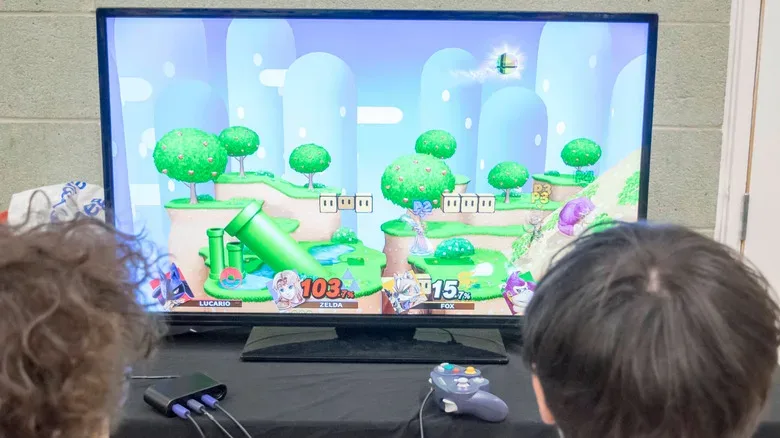
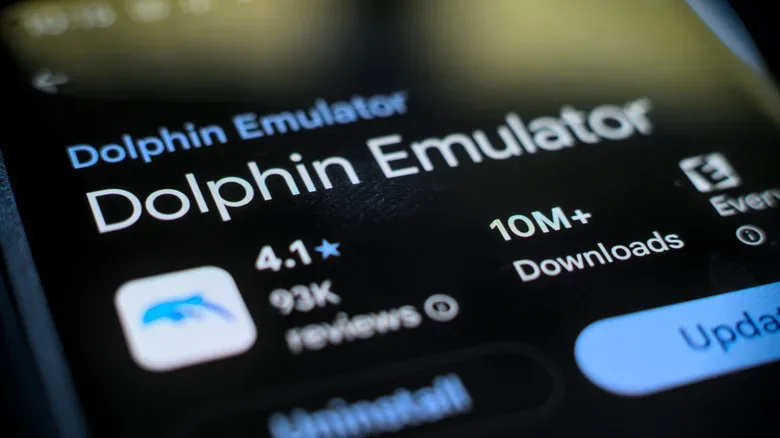
Dolphin is the best-known emulator for GameCube software and also supports Wii games. That dual purpose is possible because the GameCube and Wii share significant internal similarities. Dolphin is free and open source, and it is available for Windows, macOS and Linux. It also runs on Android, extending GameCube and Wii emulation beyond desktop PCs to compatible mobile hardware.
PCSX2 fills a similar role for PlayStation 2 games. It is likewise free, open source and available on Windows, macOS and Linux. The project has existed for decades and continues to benefit from years of compatibility work, performance improvements and interface refinements.
Both applications offer features that make older games more convenient on modern displays and controllers. Depending on the title and the system's capabilities, players can raise internal rendering resolution, adjust filtering, use contemporary gamepads and configure their experience beyond what the original consoles allowed. That does not change a game's original design, but it can make it more comfortable to play on a large monitor or television.
The main point is not that one emulator is good and the other is poor. Both are among the most developed projects in console emulation. Dolphin simply benefits from emulating a machine whose underlying design is somewhat easier for present-day systems to handle.
Why the PS2 is more complicated to emulate
The PlayStation 2's technical personality was one of its strengths in the early 2000s, but it also created challenges. Sony's custom Emotion Engine CPU, developed with Toshiba, was built around parallel processing. Developers who learned how to exploit its unusual capabilities could produce remarkable results, especially for the period. At the same time, the architecture earned a reputation for being difficult to program.
That difficulty carries into emulation. An emulator does not merely run a game as if it were a normal PC application. It has to reproduce the behavior of specialized console hardware closely enough that the game receives the results it expects. When a console uses an unconventional architecture, that task can involve considerably more overhead.
This is why a modern computer can need more power than the original machine despite being vastly faster in broad terms. The host CPU and GPU are not only drawing the game; they are also translating or simulating behavior designed for a completely different combination of processors and graphics hardware. Raising the internal resolution to improve image quality adds another performance demand on top of that work.
PCSX2 must account for the PS2's complicated components and the ways individual games use them. As a result, some games may be more sensitive to configuration choices or hardware limitations than their GameCube-era counterparts. It is not a reason to avoid PS2 emulation, but it is a reason to set expectations appropriately.
Why GameCube emulation is comparatively smooth
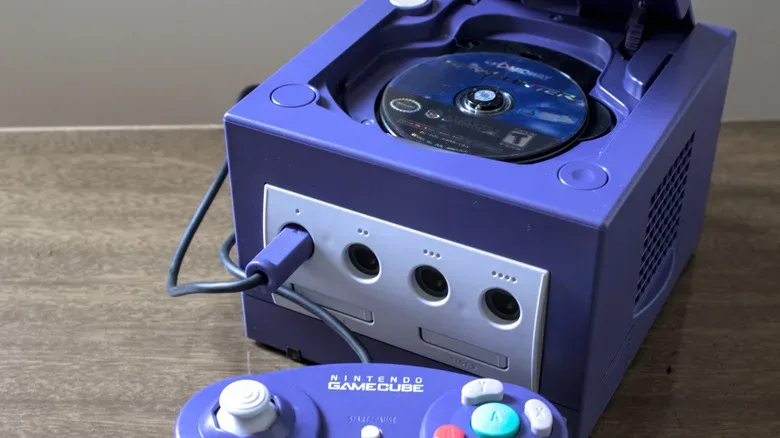
The GameCube was not a simple console in an absolute sense, but its core architecture is generally more direct than the PS2's. It uses IBM's Gekko processor, a PowerPC-based CPU, alongside ATI's Flipper graphics processor. That combination has proven more manageable for emulator development than the PlayStation 2's more unusual design.
Modern graphics APIs such as Direct3D and Vulkan also help emulators present these older games efficiently on current GPUs. In practice, Dolphin's lower barrier makes it an attractive starting point for someone with a modest gaming PC, a laptop or an Android device capable of handling the workload.
Dolphin's long development history is another key factor. The project first appeared in 2003, relatively soon after the GameCube's late-2001 launch. It became open source in 2008, allowing developers across the world to contribute fixes, improvements and new features. That collaborative work helped transform Dolphin from an early experimental project into a polished tool used by a large retro gaming community.
Over time, Dolphin added higher internal resolution support, broader controller compatibility, anisotropic filtering and options that can let suitable GameCube games display in 16:9 widescreen rather than their original 4:3 presentation. Not every game was designed for widescreen, so results can vary, but such options illustrate why emulation remains appealing even to people who still own original hardware.
Dolphin was at one point planned for a Steam release, but it ultimately did not arrive there despite the developers' efforts. The emulator remains available through its own established distribution channels rather than Steam.
What sort of PC is needed?
Neither emulator inherently requires a flagship graphics card. Players do not need hardware at the level of an Nvidia GeForce RTX 5090 simply to enjoy sixth-generation games. A balanced modern system is usually more important than pursuing the most expensive GPU available.
For Dolphin, hardware in the range of an Nvidia GeForce RTX 2060 or AMD Radeon RX 5600 XT can be sufficient for many games at 4K and 60 frames per second, where a title supports that performance target. Actual results will still depend on the game, CPU performance, emulator settings and the desired enhancements.
PCSX2 can benefit from more headroom. A card such as an RTX 3060 gives players additional room when using higher resolutions and dealing with PS2 games that place heavier demands on emulation. The GPU is not the only important part, however. CPU performance remains crucial, particularly because accurately reproducing the PS2's behavior can be computationally intensive.
Players should avoid treating these examples as strict minimum specifications. Someone who wants original-resolution output may need far less graphics power than someone targeting a high-resolution image on a 4K display. Conversely, a particularly challenging game can expose limits that are not obvious in easier titles.
Emulation itself and the legal question
Console emulators are not automatically illegal. The software that emulates a system is generally distinct from copyrighted games. However, the legality of actually playing a game through an emulator depends heavily on how the game files and any required system files were obtained.
For example, creating a personal backup from a game disc that someone owns, using the proper hardware and process, is commonly treated very differently from downloading a game file from an unauthorized website. Downloading ROM or disc-image files online without permission is copyright infringement in the vast majority of countries, including when a person also owns an original copy of the game.
Rules and exceptions can differ by jurisdiction, so players with concerns should check the law where they live. The safest general approach is to use legally acquired software and make personal backups only where permitted. Emulation can be an excellent preservation and accessibility tool, but it does not erase copyright restrictions around game distribution.
Which should retro players choose?
For a player who owns games from both platforms and wants the least demanding entry into sixth-generation emulation, GameCube is the sensible first stop. Dolphin's mature feature set, wide compatibility and relatively friendly hardware requirements give it a slight advantage.
But the PlayStation 2 should not be dismissed as a more troublesome alternative. PCSX2 supports an extraordinary library and can provide a superb experience when a game is configured well and the computer has enough performance available. The PS2's architecture makes the road a bit bumpier, not impassable.
Ultimately, the best choice is the console with the games a player most wants to revisit. Dolphin wins the technical convenience contest by a small margin. PCSX2 remains a powerful route back to one of gaming's largest and most influential catalogs.
Community
Discussion
Start the conversation.
No comments have been posted yet.