

Suikoden III occupies an unusual place in Konami's celebrated RPG series. The first two games are often the entries most readily discussed, especially Suikoden II and its reputation as one of the PlayStation's great JRPGs. Yet Suikoden III, released for PlayStation 2 in 2002, deserves recognition not merely as a sequel that made the jump from sprites to 3D environments, but as one of the medium's most thoughtful attempts at a branching war narrative.
Its biggest innovation is the Trinity Sight System. Rather than tell one hero's journey from beginning to end, the game divides its early story among three protagonists: Hugo, Chris Lightfellow, and Geddoe. Their routes overlap, revisit major incidents, and gradually expose the political pressures and hidden manipulations behind a conflict that initially looks simple. Each character possesses only fragments of the truth. The player earns a broader understanding by seeing how those fragments fit together.
That design makes Suikoden III more than an RPG about recruiting allies and defeating a central threat. It is a story about how history is made from limited information, trauma, propaganda, and choices that can look monstrous or necessary depending on where someone is standing.
A war with no easy viewpoint
The central conflict pits the Grasslands, a collection of six clans, against the Zexen Federation, a wealthy nation shaped by commerce and its knightly military structure. At a glance, the conflict appears to set up a familiar fantasy divide: rural outsiders fighting a more powerful and prejudiced state. But Suikoden III refuses to let that first impression settle into a complete explanation.
For useful background on this topic, read Final Fantasy 7 Revelation Gives Every Party Member Full FITS Job Access From the Start.
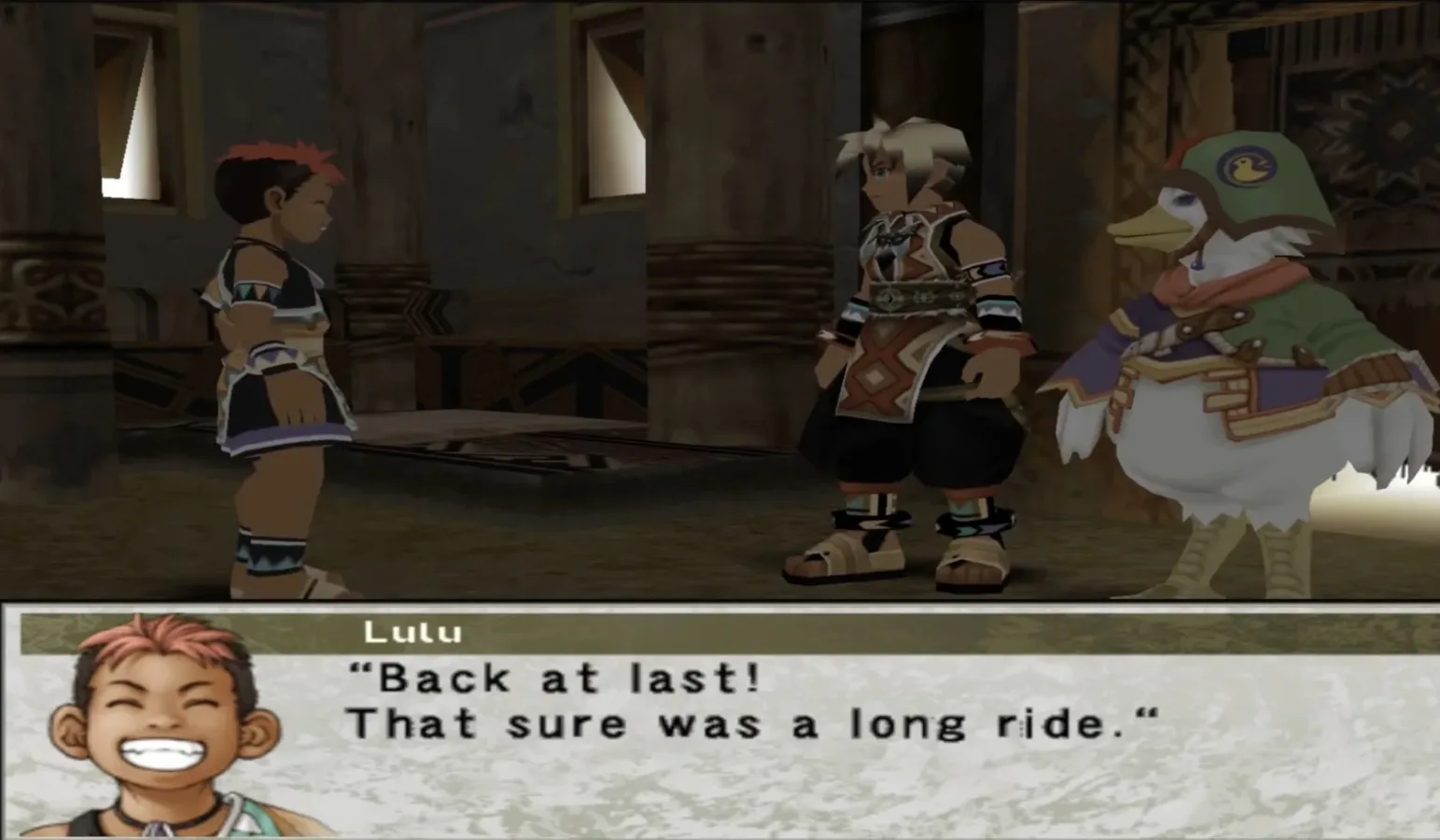
Hugo begins as the most traditional young RPG protagonist. He is the son of Grassland chief Lucia, a character known to series veterans from an earlier game, and he starts in the Karayan village among friends and family. His companions include the duck captain Sgt. Joe, the griffin Fubar, and his closest friend, Lulu. A peace mission to the Zexen capital should represent Hugo's first major step into a larger world. Instead, it becomes the starting point for a catastrophe.
Before leaving, Hugo receives several seemingly minor pieces of business that later take on enormous importance. Jimba, a villager with Zexen armor kept outside his home, asks Hugo to deliver a pentacle to the Lightfellow family. Jimba explains that the armor's iron scent brings painful memories to his mother. Such details are not merely background flavor. They are clues embedded in a story that asks players to revisit their assumptions.
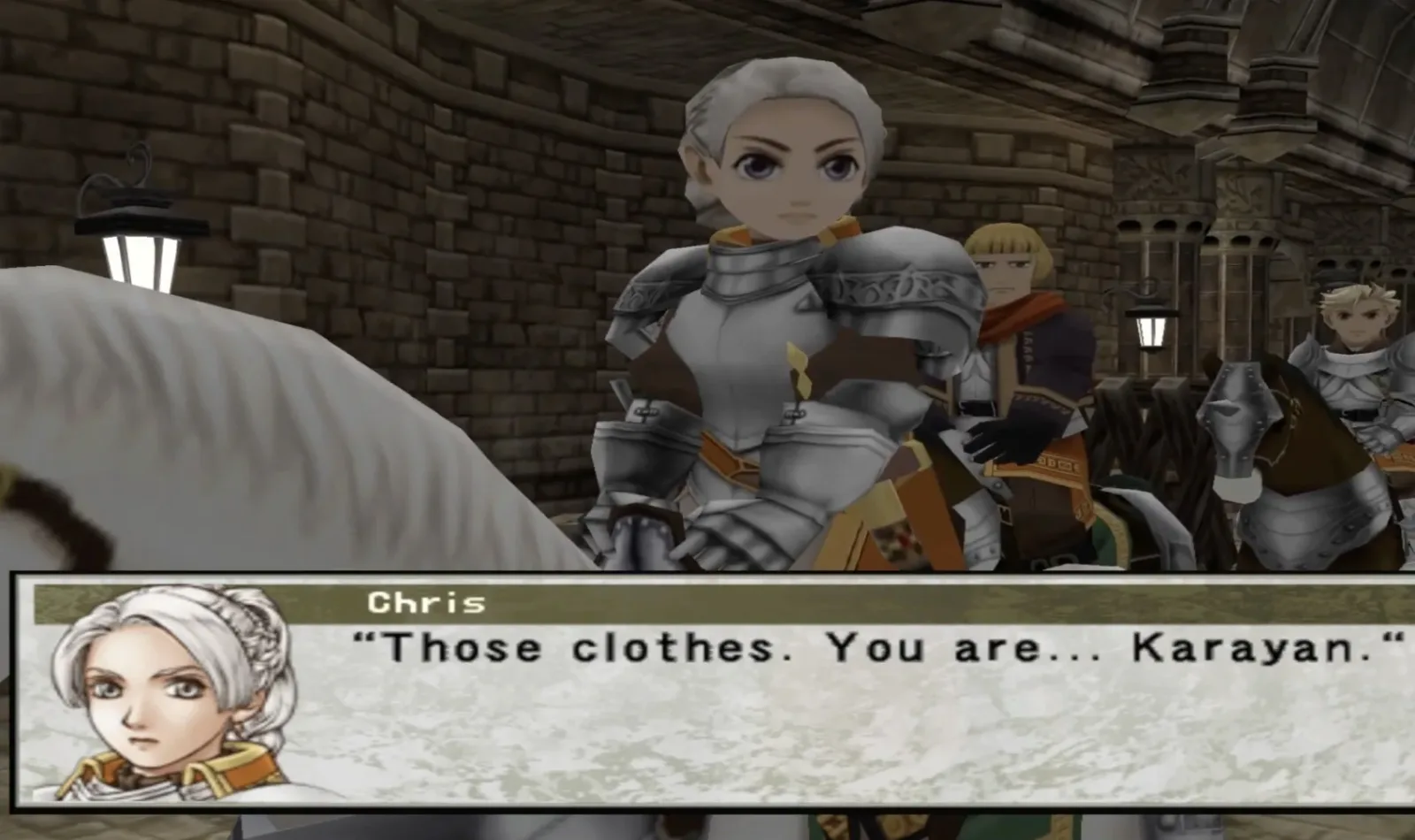
On the way to the capital, Hugo encounters Chris Lightfellow at Brass Castle. A tense exchange follows when Lulu is knocked down by a Zexen knight and reacts angrily to the "ironheads." Another knight, Roland, treats Hugo with open hostility, while Chris seems more restrained. From Hugo's position, the meeting confirms everything he expects about Zexen contempt for Grasslanders.
For another perspective on this story, read Why Suikoden III's Trinity Sight System Still Makes Its PS2 Story Stand Out.
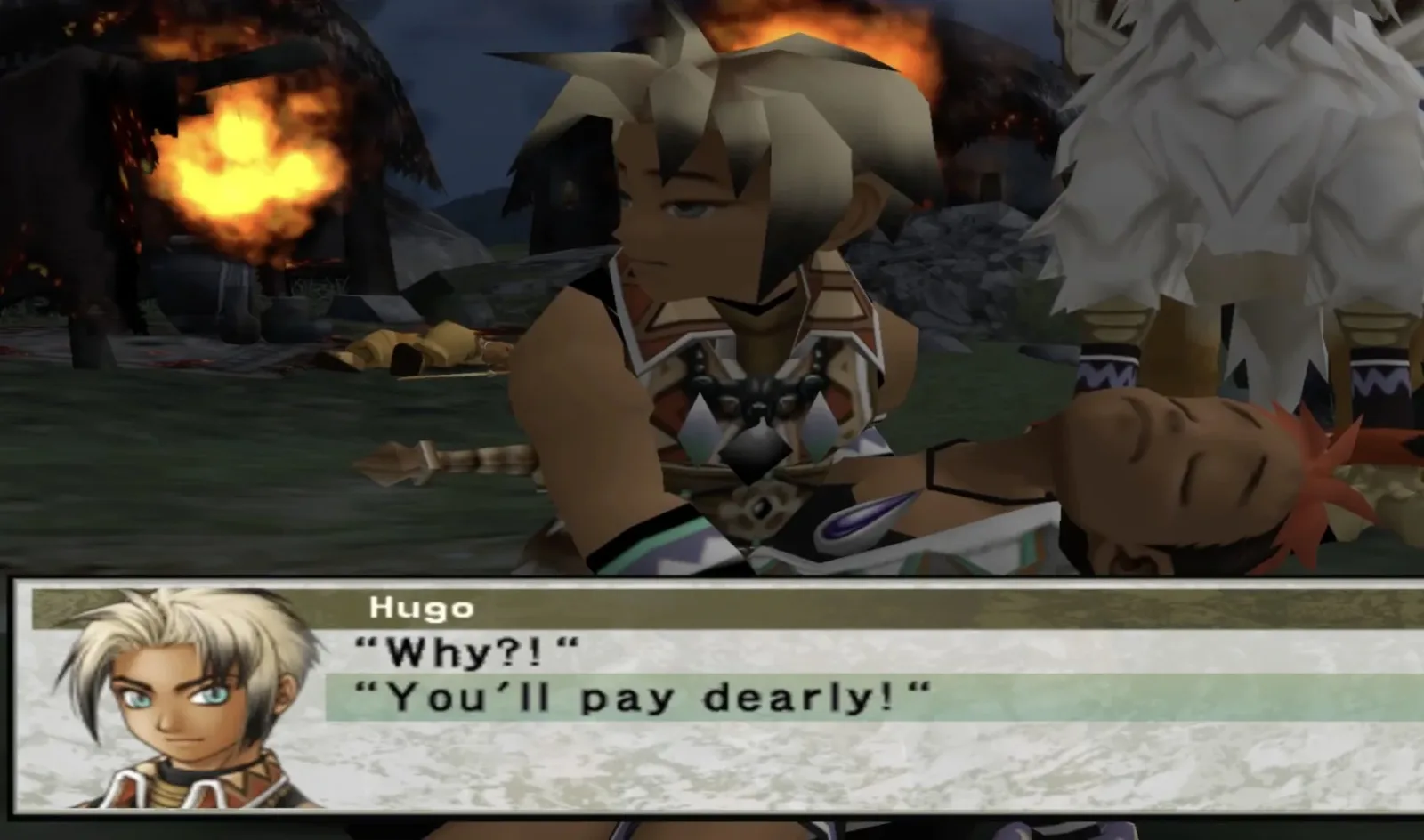
When Hugo reaches Vinay del Zexay, the peace mission is stalled by bureaucracy and hostility. He cannot even reach the actual council quickly, and the city's residents make their disdain for Grasslanders clear. Soon afterward, events spiral into violence: Zexen knights accuse the Grasslanders of launching an attack, while Hugo's group narrowly escapes the capital. Returning home, Hugo finds the Karayan village burning and its people slaughtered.
Then Lulu sees Chris and attacks her. Chris kills him while defending herself. For Hugo, the moment is devastating. His closest friend is dead, his home has been destroyed, and the apparent face of Zexen heroism has become inseparable from personal loss. The scene has weight precisely because Chris is not introduced as a distant villain. She is one of the game's protagonists.
Chris Lightfellow and the cost of being a symbol
Playing Chris's chapter changes the emotional equation without erasing the tragedy. In Zexen territory, Chris is celebrated as a military hero. Civilians treat her with reverence, in stark contrast to the suspicion Hugo experiences in the same nation. Yet she is uncomfortable with the praise. She is still grieving the loss of Zexen's former captain and resents being presented as a convenient legend for the council to use.
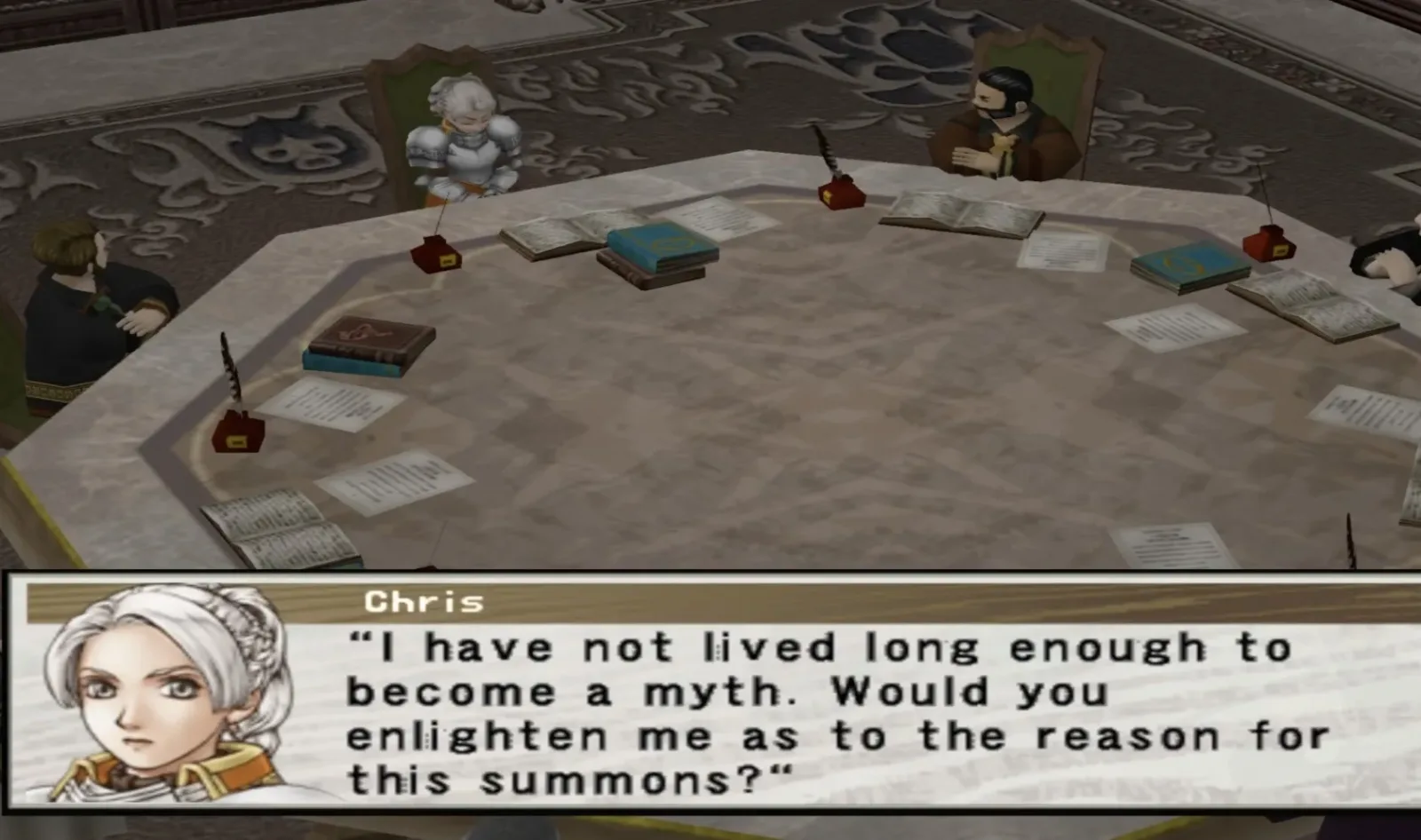
The council's interest in Chris is political. Her image can rally the public and reinforce its authority, regardless of her own doubts. Chris accepts that burden largely because she wants to protect the knights who serve beside her. That does not make every choice around her admirable, but it establishes that she is caught inside an institution whose priorities often differ from her own.
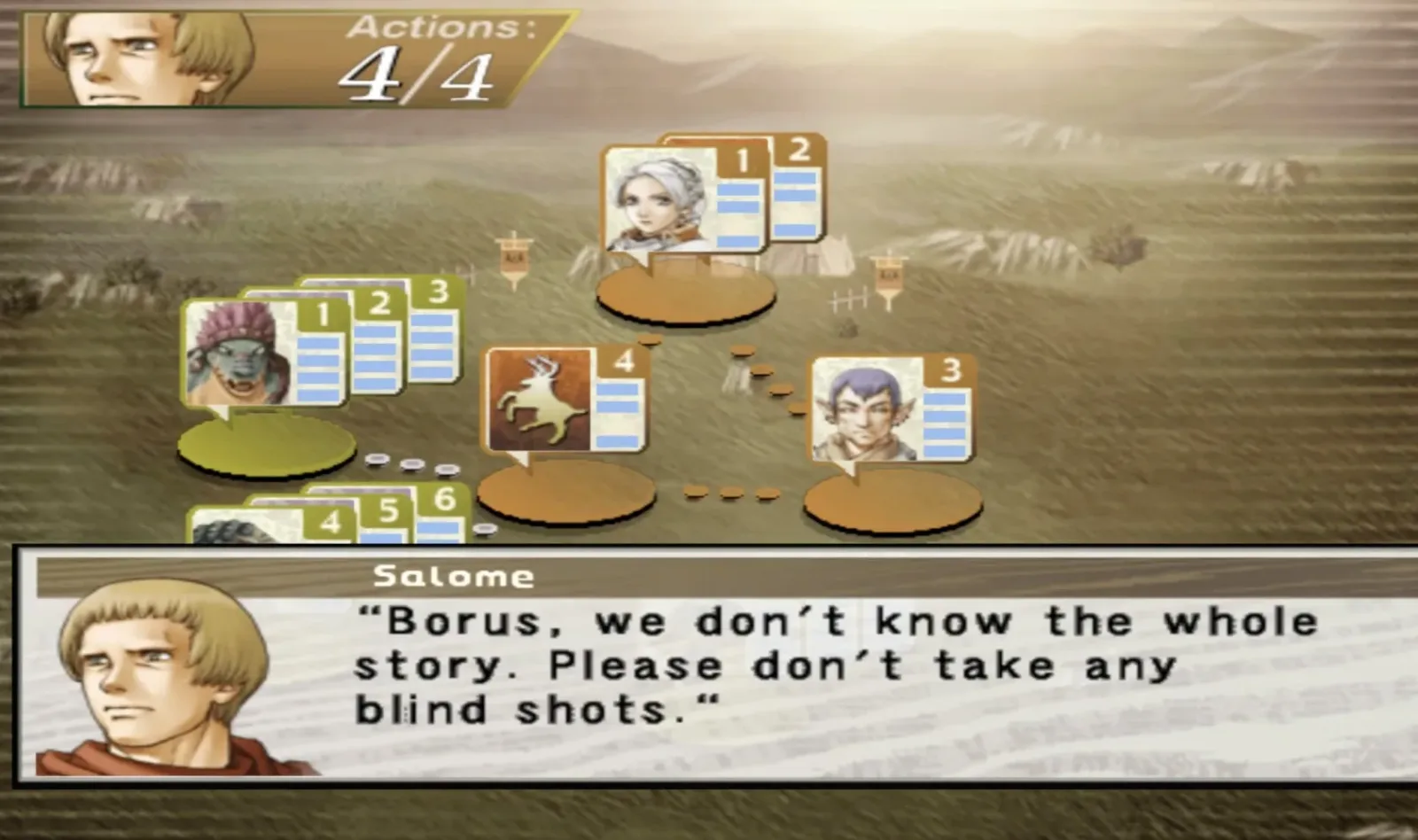
Her route also reveals a major missing event from Hugo's viewpoint: the ambush on the Amur Plains. Zexen forces arrive for negotiations and are attacked by Grasslander troops. Chris's side suffers losses, and the retreat leaves her forces vulnerable. Her adviser Salome proposes a tactical response: burn a Karayan village to force enemy troops to pull back, while avoiding harm to civilians. It is a cold military calculation, but not initially a plan for indiscriminate slaughter.
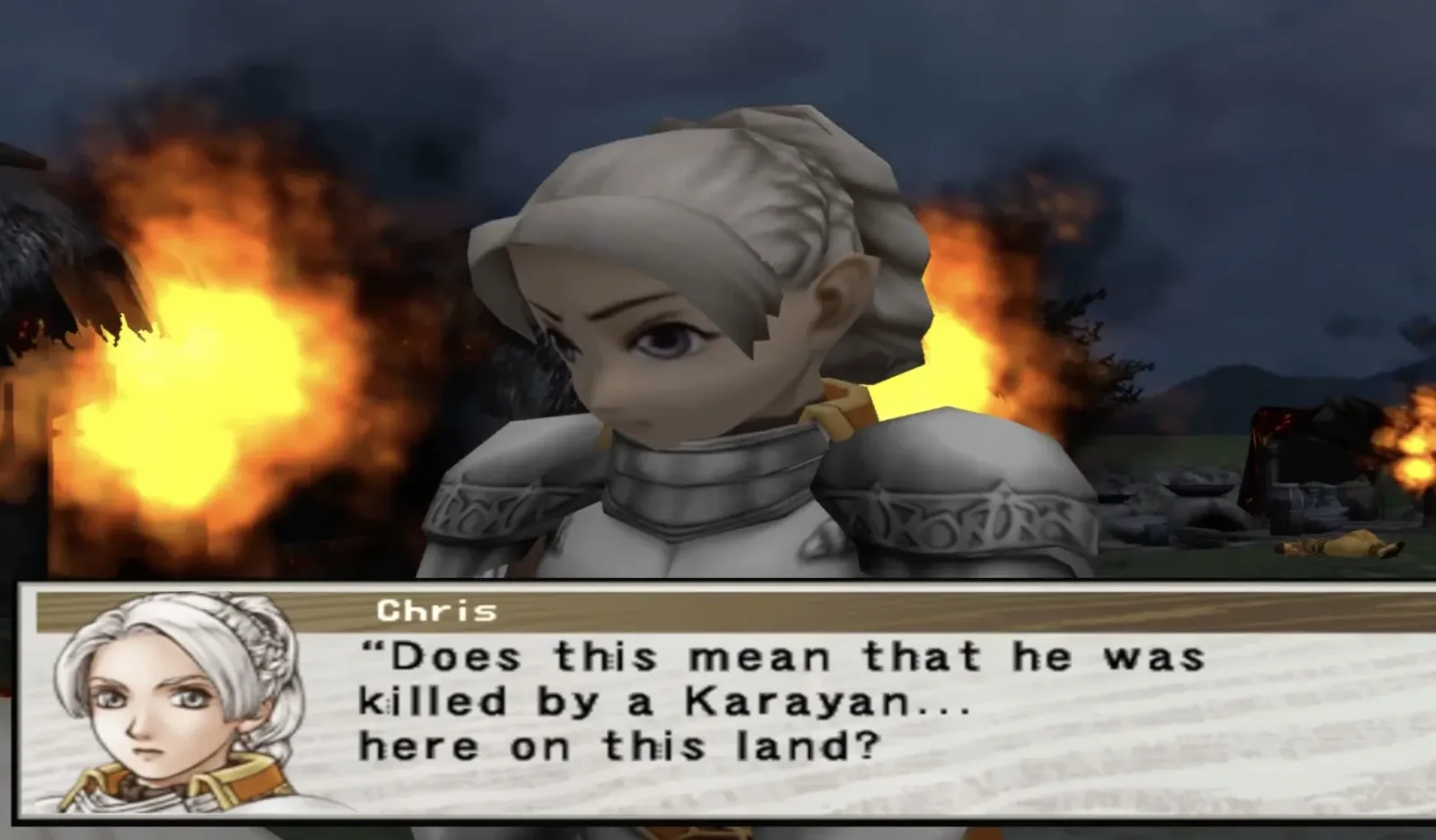
War does not obey the boundaries drawn in strategy rooms. Borus, one of Chris's knights, loses control and unleashes troops on villagers. Fire spreads through the settlement. When Chris arrives, she sees the aftermath of a massacre she did not intend, then discovers armor that appears connected to her long-missing father. The emotional shock leaves her raw just as Lulu attacks. Her response is immediate and fatal.
Chris is still responsible as the commander on the scene, and Hugo's grief remains justified. But the second perspective makes a crucial distinction: the event is not an uncomplicated act of evil by a villainous champion. It is a disaster made possible by fear, escalating reprisals, individual misconduct, and larger structures that put people in positions where violence seems inevitable.
That is the special strength of the Trinity Sight System. It does not simply retell the same moment with radically contradictory versions. Instead, it fills in missing context. The player can understand why Hugo hates Chris while also understanding why Chris is horrified by what happened.
Geddoe brings the hidden conflict into view
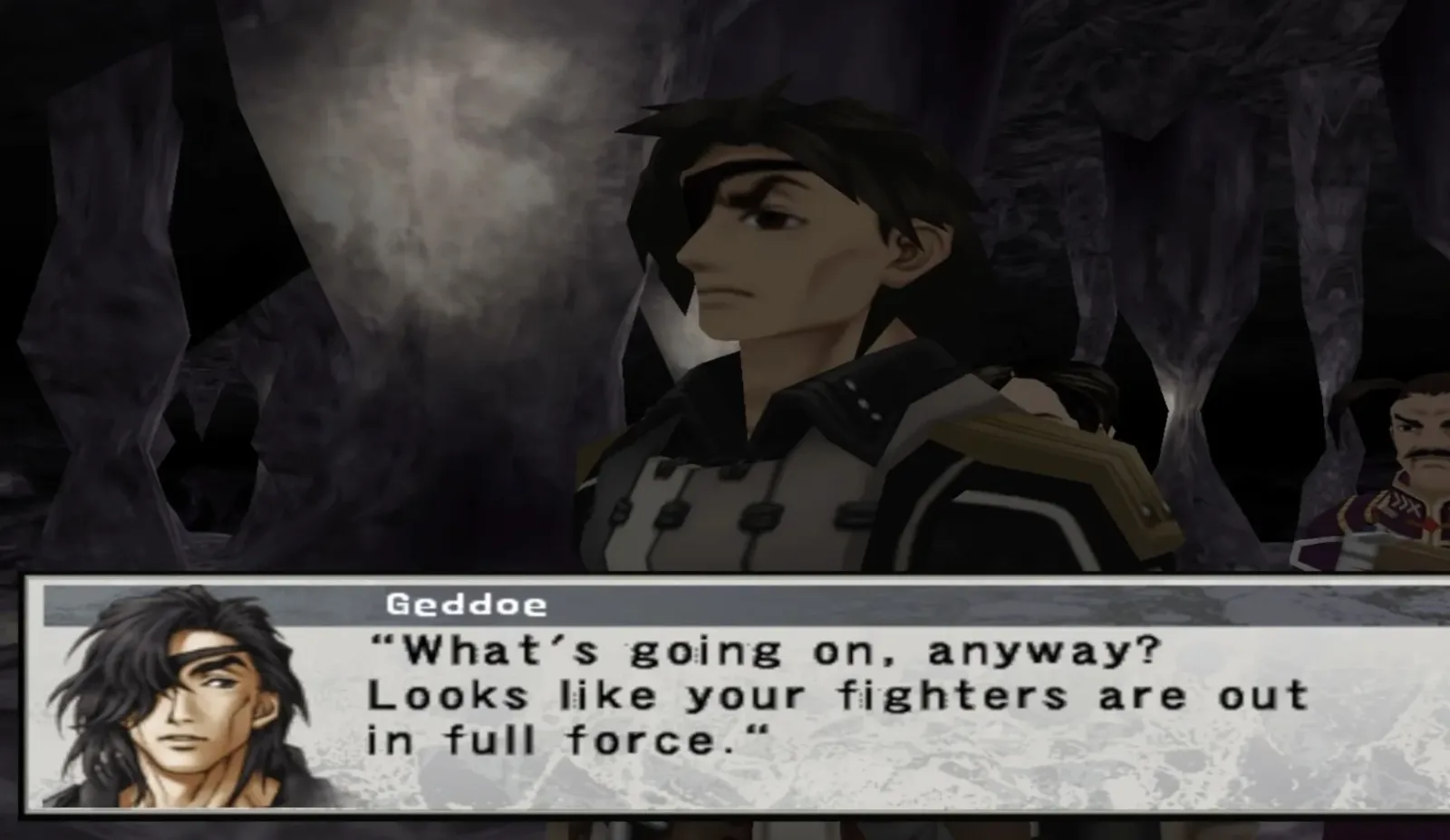
The third main route belongs to Geddoe, leader of the 12th branch of the Southern Frontier Defense Force. His perspective introduces the wider forces moving behind the Grasslander-Zexen war and connects the conflict to Harmonia, True Runes, and the legacy of the Flame Champion.
Geddoe is carrying a major secret: he is a True Rune bearer who fought with the original Flame Champion decades earlier. His group crosses paths with factions and events that help clarify why the war has intensified. He witnesses a seeming assassination of the Lizard Clan chief by Chris, raising an immediate question for players who have already seen Chris's route. If Chris was elsewhere, who committed the murder? The answer points toward the deliberate manipulation driving both sides toward bloodshed.
Geddoe's story makes the game's theme explicit: truth matters, but it is difficult to locate and even harder to act upon. The protagonists do not lack courage. They lack the information needed to see the machinery operating around them. By the time they begin to understand, ordinary people have already suffered the consequences.
Thomas proves heroism can be quiet
Suikoden III also makes room for an optional story that initially appears much smaller. Thomas, the illegitimate son of a Zexen council member and a Grasslander mother, inherits Budehuc Castle after being rejected by his father. He is not a powerful warrior or an obvious revolutionary. He is shy, uncertain, and far removed from the larger-than-life image usually associated with a Suikoden protagonist.
His chapters revolve around restoring a neglected castle, recruiting residents, navigating paperwork, and creating a free trading area where Grasslanders and Zexens can coexist. That modest premise becomes vital. Thomas's willingness to protect a space outside the Federation's commercial control draws scrutiny from the council, but his sincerity inspires those around him to stand together.
Thomas is the series' only Tenkai Star who is not the principal protagonist, and that distinction suits the game's worldview. Suikoden III argues that historical change is not created exclusively by generals, chosen heroes, and legendary rune bearers. A frightened young man deciding not to surrender his community can also shape events. Budehuc Castle eventually becomes essential to the larger resistance, but it starts with local solidarity rather than spectacle.
A flawed RPG with an unusually ambitious structure
For all of its narrative achievements, Suikoden III is not without mechanical frustrations. Travel can become tedious. Its world map uses connected locations, but players must often enter and walk through areas repeatedly rather than simply bypass cleared zones. Fast travel eventually becomes available through Viki and the Blinking Mirror, but the early backtracking can slow the game substantially.
Large-scale war battles are also less visually impressive than those in Suikoden II. The PS2 entry presents them through a simplified map-and-node format, and direct clashes transition into standard combat rather than conveying the sense of vast armies colliding. It is an odd limitation for a game centered on a regional war.
Its regular battle system changes the familiar six-person party format by pairing characters together, effectively leaving players with three controlled units and automated partners. The arrangement requires planning, particularly because certain pairs can perform special attacks. Hugo can fight while mounted on Fubar, while Futch battles alongside his dragon Bright. Skill training becomes especially important, with attributes such as Swing, Accuracy, and Heavy Damage helping parties survive a game that can be considerably tougher than its predecessors.
Recruitment remains a core pleasure. The game still asks players to gather 108 Stars of Destiny, with some characters joining naturally and others requiring unusual tasks. These range from horse-counting challenges to solving a strange duck murder. Returning characters and connected artifacts also reward long-time fans, including Edge's Celestial Sword, which has ties to Viktor and the earlier games.
The Flame Champion and competing ideas of fate
Eventually, the separate routes converge around the search for a new Flame Champion. The original hero is gone, and the player can choose Hugo, Chris, or Geddoe to inherit the role, though Hugo is the canonical selection. The choice gives the story additional perspective, including character-specific revelations such as the truth of Jimba's identity and his connection to Chris's father.
Luc, the game's central antagonist, brings the question of fate to its most disturbing conclusion. Familiar to players of the first two games as the magician who cared for the Tablet of Stars, he has seen a possible future: a desaturated world stalked by dangerous Guardian beings, where color, sound, and life appear to have drained away. He believes that gathering the True Runes and destroying his own True Wind Rune can alter that future.
To force the necessary conditions, Luc engineers the war itself, including the deception surrounding Chris's apparent attack on the Lizard Clan. He accepts immense loss of life as the price of resisting a fate he considers unbearable. Yet even Luc admits that his vision represents only one possible history. His certainty may be the very thing that helps create the future he fears.
Suikoden III does not end with a simplistic declaration that all is healed once Luc is defeated. The heroes have saved the present, but the possibility of that bleak future remains unresolved. Its final conflict is therefore not just between good and evil. It is between competing beliefs about truth, destiny, responsibility, and whether fear of tomorrow can justify cruelty today.
That unresolved tension is why Suikoden III remains so memorable. Its technology, travel design, and battle presentation may show their age, but its storytelling structure still feels bold. By forcing players to inhabit opposing sides of a war before revealing the hand behind it, the game turns perspective into gameplay. Few JRPGs have used a branching format so effectively to make empathy, uncertainty, and historical truth inseparable from the adventure itself.
Community
Discussion
Start the conversation.
No comments have been posted yet.