

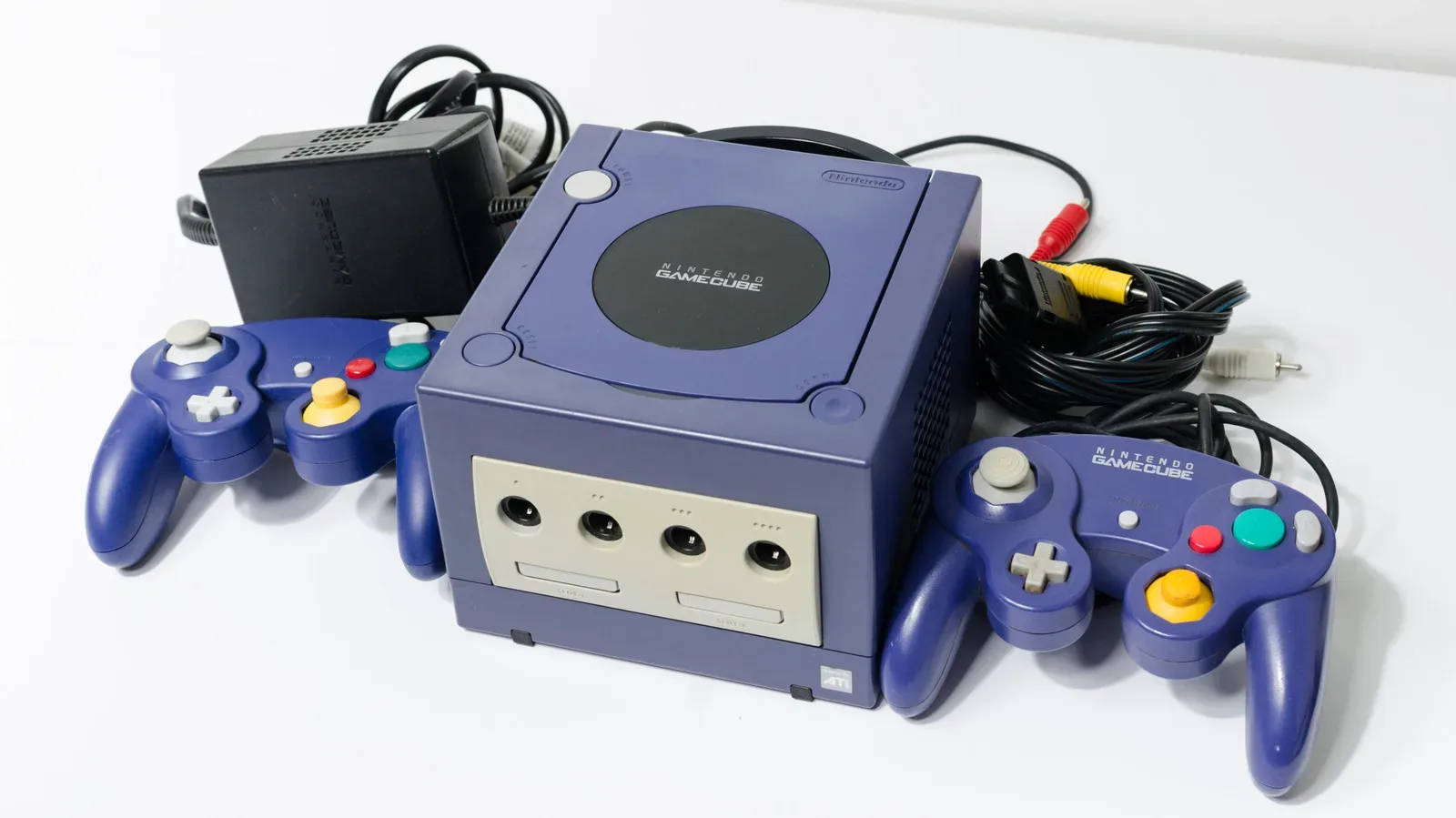
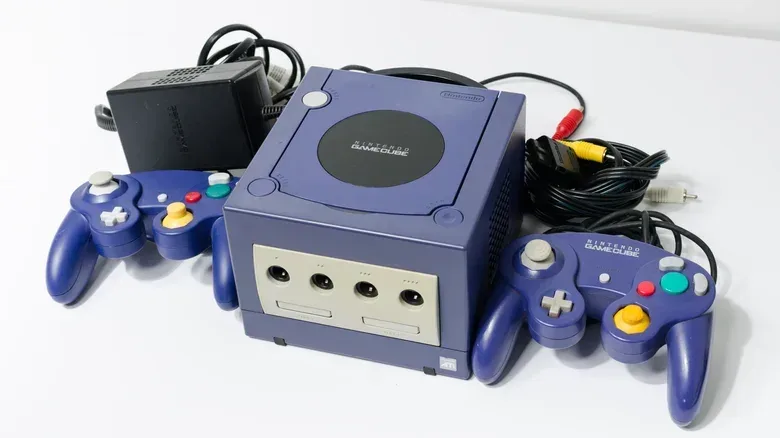
Most people thinking about buying a Nintendo GameCube today can still reasonably expect to find the familiar Indigo, Jet Black, Platinum, or Spice Orange hardware without entering auction-house territory. The console is a beloved retro system, certainly, but its ordinary models were made in sufficient numbers that collectors have plenty of routes into the library.
That changes dramatically once the search turns to promotional hardware, regional bundles, and sweepstakes prizes. Among the most sought-after examples is a Crystal White Final Fantasy Crystal Chronicles GameCube, a Japanese prize variant that has reportedly reached prices normally associated with far more exotic pieces of video game history.
Two sales during 2026 have pushed the system well beyond $5,000, with the newest reported transaction landing at $7,500. An earlier sale in May finished just below $7,000. Those results underline a familiar reality in the vintage-console world: condition, completeness, provenance, and a genuinely tiny production run can transform a sixth-generation Nintendo machine into a major collector investment.
A GameCube made for Final Fantasy Crystal Chronicles
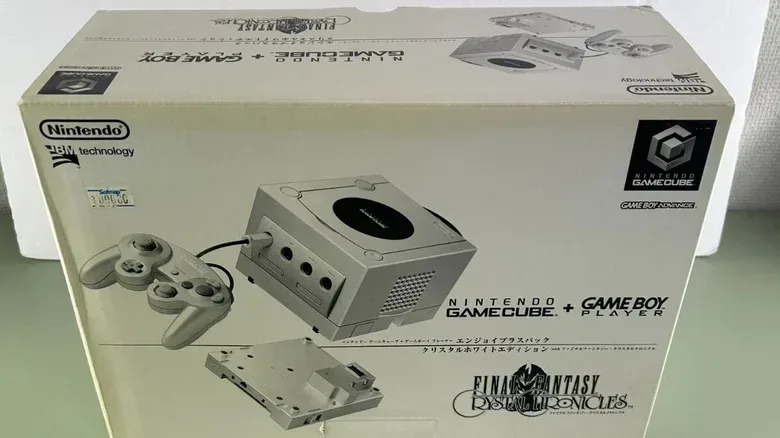
The rare hardware is associated with Final Fantasy Crystal Chronicles, Square Enix's multiplayer-focused action RPG for GameCube. Rather than using a simple branded front plate, Nintendo gave this particular system a distinct overall finish called Crystal White. It is a soft, cream-leaning shade and should not be confused with the more widely available Pearl White GameCube released in Europe.
For useful background on this topic, read Xbox Elite Series 2 Core Controller Drops to $110 With Adjustable Sticks and Hair Triggers.
That distinction is central to its appeal. Faceplates are interchangeable accessories, and special plates were used for several GameCube promotions and bundles. The Crystal Chronicles unit, however, is a full console color variation. Its visual identity is immediately different from the regular retail hardware, and its connection to a prominent Final Fantasy release gives it further significance for collectors interested in either Nintendo or Square Enix history.
Available information from sellers and console-variant cataloguers places the production total at only 150 units. The system was not a normal Japanese store release. Instead, it was distributed as a magazine sweepstakes prize, making survival rates and complete examples especially difficult to establish decades later. Prize items can be hard to document from the start, while original boxes, paperwork, and matching accessories are often separated from the hardware over time.
That scarcity helps explain why even the available lower-priced option is still far from inexpensive. One unboxed Crystal White unit with visible light scuffing has been listed at $3,750. It is said to include a Game Boy Player as well as a copy of Final Fantasy Crystal Chronicles. Whether an asking price becomes a completed sale is always important to remember, but the listing illustrates the premium attached to this colorway even when the original presentation is no longer intact.
The Game Boy Player adds another layer of rarity
The Game Boy Player is an important part of the story surrounding several special GameCube packages. This underside attachment lets the GameCube run Game Boy, Game Boy Color, and Game Boy Advance cartridges through a television. It remains a fascinating bridge between Nintendo's home and portable hardware lines, particularly because it can turn a GameCube into a convenient way to experience a substantial portion of Nintendo's handheld catalogue.
In North America, the accessory was sold only in Jet Black. Japan received additional color options, including Crystal White, and that matching hardware is considerably more difficult to locate. For a GameCube collector, a rare main console is valuable on its own; a color-matched Game Boy Player can make a package much more notable. For a buyer, though, it is also a reminder to inspect exactly what is included. A standard black Game Boy Player, for instance, does not carry the same rarity as a Crystal White Japanese unit.
The Game Boy Player's usefulness can also complicate the collector market. Some owners may have bought the attachment to actually play games, while others may have stored it as part of a prized bundle. As a result, there can be major differences in cosmetic wear, missing parts, documentation, and display value between examples that otherwise appear similar in photographs.
Other GameCube variants that command major premiums
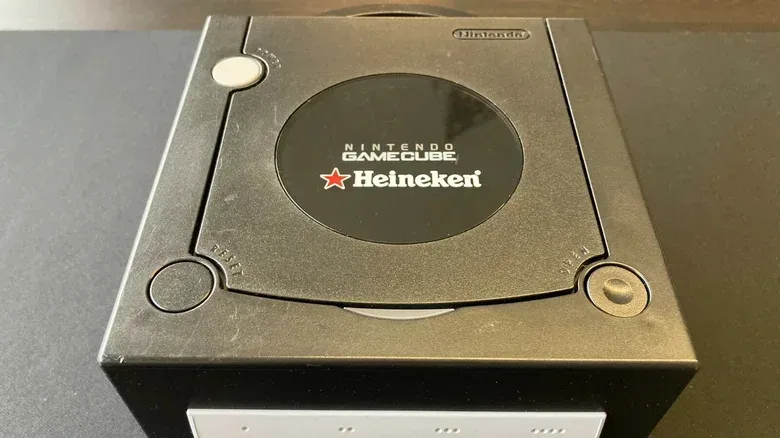
The Crystal Chronicles model is not the only GameCube that can cost thousands, although it stands near the top of the list. Another legendary promotional machine is the Heineken GameCube. The Dutch brewer held a 2002 website sweepstakes that was open to contestants aged 21 and older. Only 100 consoles were involved: 50 Indigo units and 50 Jet Black units.
Listings for the Heineken system can climb as high as $15,500. As with any rare-hardware listing, a high asking amount should not automatically be treated as the market value achieved by every unit. Still, it demonstrates how an exceptionally restricted promotion, a recognizable non-gaming brand, and a very unusual backstory can elevate an otherwise standard console shell into a trophy item.
Japan also received several memorable retail-adjacent GameCube variations that are easier to recognize visually. The Gundam Char edition is one of the most striking. Its red console and controller tie into Char Aznable's iconic color scheme, while the bundle also came with a Game Boy Player. It is not as scarce as the Crystal Chronicles sweepstakes prize, but its strong design and Gundam connection give it lasting collector appeal.
Another popular variation is the Tales of Symphonia bundle. Nintendo released this mint-green GameCube package in 2003, combining the console, a Game Boy Player, and the game. It was limited to Japan and France, with a run of roughly 10,000 units. That number makes it substantially more attainable than a 150-unit competition prize, but it remains a special edition with a distinctive appearance. Examples are generally described as reaching no more than about $1,500, depending on their condition and contents.
Not every special GameCube is out of reach
Collectors who want something more distinctive than the basic Indigo model do not necessarily need to spend four figures. The Pokémon XD: Gale of Darkness and Donkey Konga packages are examples of special GameCube releases that focused on custom faceplates rather than entirely new shell colors. The Pokémon bundle was released in the United States and featured Lugia branding, while the Donkey Konga version was exclusive to Japan and carried Donkey Kong imagery.
These bundles are useful examples of why prospective buyers should learn the difference between a special-edition console, an official accessory, and an aftermarket modification. A branded faceplate can be collectible and historically meaningful, but it is not the same thing as a rare production color. Likewise, an attractive custom shell may look convincing from a distance without being official Nintendo hardware at all.
There are even unusual unofficial GameCube pieces connected to movie promotions. Console-variant records identify airbrushed systems intended for sweepstakes tied to The Polar Express and The Incredibles. Their unusual nature makes authentication especially important, since unofficial promotional items can be harder to trace and may have less consistent documentation than regular retail editions.
What collectors should check before spending big
Rare GameCube sales make for attention-grabbing headlines, but completed prices should be approached carefully. A collector considering a high-value purchase should first compare completed listings rather than relying only on active auction or buy-it-now prices. An unsold item listed at an ambitious amount is not proof that buyers are willing to meet that figure.
- Confirm the exact variant: Crystal White and Pearl White are not interchangeable names, and a special faceplate is not evidence of a rare shell color.
- Examine the accessories: A matching Japanese Game Boy Player can be a major part of a bundle's value.
- Ask about condition: Sun fading, scratches, discoloration, missing controller parts, and damaged labels matter greatly at this price level.
- Look for original packaging: Boxes, inserts, contest material, manuals, and the included game can significantly affect desirability.
- Consider regional compatibility: Japanese GameCube hardware is region-locked for GameCube software, a practical detail for anyone who wants to play rather than display the system.
For most GameCube fans, the best news is that enjoying the platform does not require chasing its rarest variants. A standard console, a capable controller, and the right games remain a far more accessible path to Nintendo's 2001 system. But for dedicated collectors, the Crystal White Final Fantasy Crystal Chronicles model shows exactly why obscure prize hardware continues to inspire fierce interest: it combines an extremely low reported production run, a unique color, a famous RPG connection, and a piece of GameCube history that was never intended for ordinary store shelves.
Community
Discussion
Start the conversation.
No comments have been posted yet.