

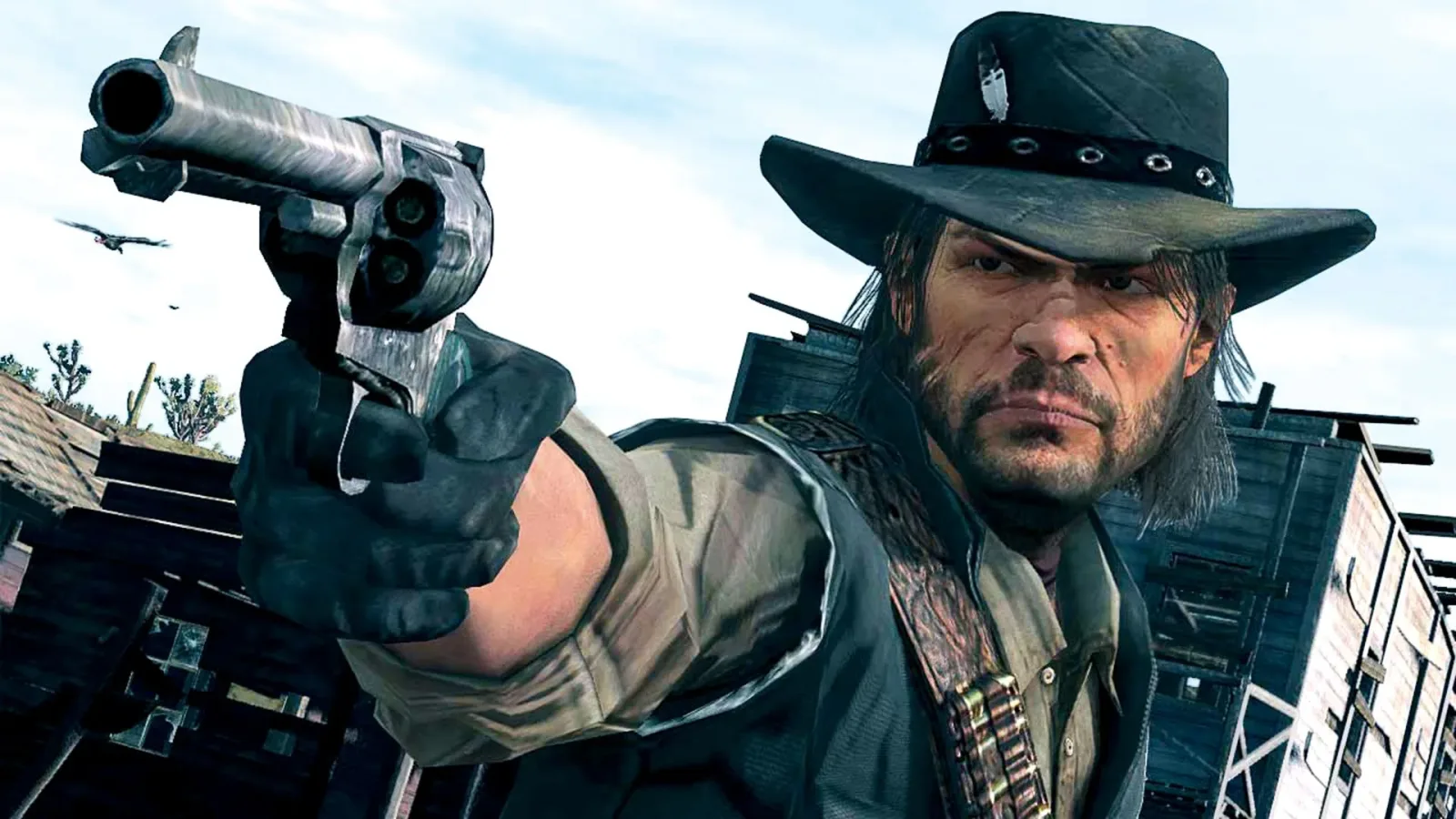
Rockstar Games is reportedly investigating the possibility of bringing Red Dead Redemption to live-action film or television. The claim has not been confirmed by Rockstar, and there is no announced studio, distributor, creative team, cast, format, or production schedule attached to the project. Still, the report suggests that one of gaming's most acclaimed western sagas could be the next major franchise considered for Hollywood treatment.
The Ankler reports that Rockstar has been discussing a licensing price of more than $100 million, at minimum, for the rights to make a Red Dead Redemption movie or television show. That is an enormous reported figure for an adaptation license, and it underscores the perceived value of the property. It also means that any eventual partner would likely need to see the franchise as a major, long-term entertainment brand rather than a single modestly budgeted western production.
For now, the important qualifier is that these discussions are reportedly exploratory. A rights price being discussed does not mean a deal has been completed, much less that cameras are about to roll. Video game adaptations can spend years moving between prospective buyers, writers, studios, and formats before becoming official. Some never progress beyond those early conversations at all.
Why Red Dead Redemption Is a Natural Adaptation Candidate
The first Red Dead Redemption arrived in 2010 and established itself as a dramatic open-world western built around former outlaw John Marston. Set in 1911, the game follows Marston after government agents use the safety of his wife and son as leverage, compelling him to hunt down figures from his criminal past. Its core story is concerned with loyalty, family, violence, regret, and the vanishing of the American frontier.
For useful background on this topic, read Steam Deck Black Friday accessory deals Focus on Protection, Docks and Storage-Ready Travel Gear.
That premise already contains the structure of a sweeping crime western. John is a protagonist with a clear objective, a complicated moral history, and personal stakes that remain present throughout his journey. The game's setting also gives an adaptation plenty of visual and thematic material to work with: remote settlements, desert borderlands, railways, political corruption, changing technology, and a country moving into the twentieth century while still reckoning with its violent past.
It is a story that has often been described by players in cinematic terms, but a live-action version would still face a difficult creative task. The appeal of Red Dead Redemption is not simply that it has cowboys, shootouts, and wide-open landscapes. Its impact depends heavily on its patient pacing, its melancholy atmosphere, and the player's relationship with John over a long adventure. A film would need to condense that experience, while a series would need to avoid stretching a focused revenge-and-redemption narrative into something less purposeful.
The original game also includes darker and stranger edges that could affect an adaptation's tone. While it is principally a grounded western drama, it has horror-adjacent material and occasional unsettling or unusual moments. Whether a film or show would embrace those elements, leave them out, or reserve them for a separate story is unknown. No creative direction has been announced.
The Prequel Creates Both Opportunity and a Challenge
Any discussion of a Red Dead Redemption adaptation also has to account for Red Dead Redemption 2, Rockstar's 2018 prequel. That game broadened the fictional world substantially and introduced Arthur Morgan, whose story takes place before John Marston's 1911 journey. It explores the decline of the Van der Linde gang and provides much of the emotional context behind John's later life.
The prequel's scale gives a prospective adaptation team several possible approaches. A production could start with John Marston and adapt the original game's storyline. It could begin chronologically with the gang in the earlier era of Red Dead Redemption 2. Or it could tell a fresh story in the same world, using the games as a foundation without directly recreating every major plot point.
Each route carries trade-offs. Starting with the first game would introduce audiences to John through the cleanest central premise: a man trying to reclaim his family and escape the consequences of his past. Beginning with the prequel would offer a larger ensemble and more room to build the gang's internal relationships, but it could also require viewers to wait longer for the connection to the original game's story. An original tale could preserve surprises from the games, yet it might disappoint fans hoping to see familiar characters and key scenes translated directly.
There is also a straightforward spoiler issue. The games were released in one order but are set in another. A live-action adaptation would have to decide whether release order, chronology, or a completely new structure best serves newcomers and longtime players alike.
Fans Have Wanted a John Marston Casting for Years
Interest in a live-action Red Dead Redemption project is far from new. Fans have imagined casting choices for John Marston since the original game's release, with Brad Pitt among the actors frequently suggested in early conversations around a hypothetical film. Those fan discussions were never evidence of an official project, but they demonstrate how readily audiences have viewed the series as material suited to a prestige western.
The franchise's reputation has only grown since then. Red Dead Redemption 2 became a major critical and commercial success, and its characters, performances, and narrative have kept the series in regular discussion well beyond launch. That combination of recognizable name, established drama, and broad setting is likely central to the reported interest in adapting it now.
Actor Jack Black has also publicly argued that Red Dead Redemption deserves live-action treatment, saying its story is stronger than that of The Last of Us. Whether viewers agree with that comparison is a matter of taste, but it reflects the growing perception that games with ambitious narrative work can be considered alongside major television and film properties.
Gaming Adaptations Are Competing for Major Creative Attention
The wider adaptation landscape helps explain why a company might consider Red Dead Redemption at this point. Video game projects are no longer treated as an unusual experiment by film and television companies. Multiple high-profile franchises are in various stages of adaptation, including Far Cry, God of War, and Assassin's Creed.
Meanwhile, The Last of Us demonstrated that a serious, character-led game adaptation can attract awards attention, including Emmy nominations. Its reception did not create the demand for game adaptations by itself, but it strengthened the case that studios can pursue this material with major talent and prestige-drama ambitions rather than treating it only as brand recognition.
Red Dead Redemption would arrive with a different set of expectations. Its western identity separates it from the post-apocalyptic, fantasy, and military-action genres associated with many other game adaptations. At the same time, westerns are a familiar film and television tradition, which could make the project easier to pitch creatively while making comparisons with classic genre work unavoidable.
A successful version would need to find its own voice. It would need to honor the games' sense of place and troubled characters without merely copying their missions, dialogue, or iconography scene by scene. The strongest adaptations typically understand what made the original work compelling while reshaping it for a different medium. For Red Dead Redemption, that likely means prioritizing John Marston's human conflict, the tension between an old outlaw life and a modernizing country, and the painful cost of trying to become a better man.
No Official Project Has Been Announced
At present, the reported licensing discussions are the only indication that a Red Dead Redemption screen adaptation may be in consideration. Rockstar has not announced a movie or series, and no buyer, platform, director, writer, producer, or actor has been attached publicly. The reported $100 million-plus minimum for licensing rights should therefore be viewed as part of an unconfirmed business discussion, not a completed deal.
Even so, the possibility is notable. Red Dead Redemption has spent more than a decade as one of the most frequently imagined video game movie and television candidates. If a deal does emerge, the central question will not be whether the games have enough story for the screen. It will be whether the eventual production can capture the mournful, character-driven western that made Rockstar's series endure in the first place.
Community
Discussion
Start the conversation.
No comments have been posted yet.