

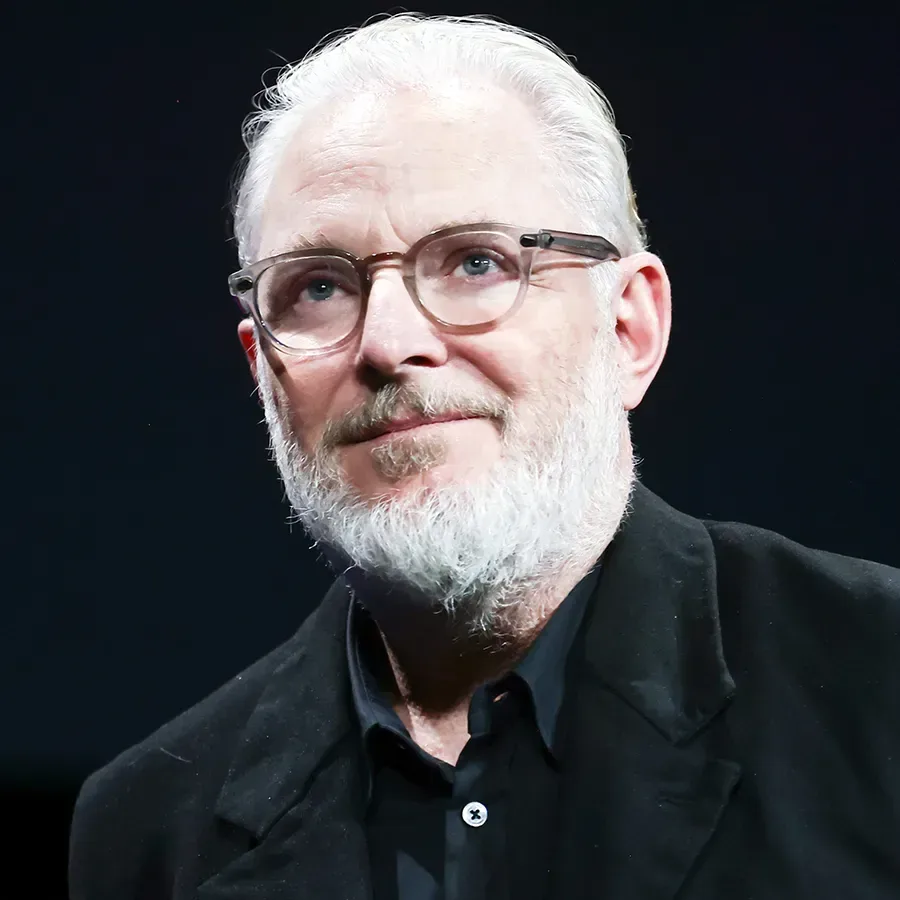
Red Rising is taking another major step toward the screen. Director Francis Lawrence has confirmed that the planned adaptation of Pierce Brown's science-fiction book series is now moving forward at Paramount as a feature film, and he says the project appears to be a priority for the studio.
The update is especially significant for readers who have watched the adaptation spend years in development. Lawrence has been attached to Red Rising for roughly eight years, during which time the project was once positioned as a streaming series before its rights ultimately returned to Brown. Now, with Paramount developing a theatrical version, the filmmaker believes the story has found a format better suited to its scale.
Lawrence said a writer the team likes has begun work on the screenplay. There is no release date, casting announcement, production start date, or other concrete timetable yet, but his comments suggest that the project has progressed beyond simply holding the rights to the material. For a property with an extensive world, a large ensemble, and a premise built around social warfare on a planetary scale, that forward motion is a meaningful development.
A long road from streaming plans to a feature film
Lawrence's involvement with Red Rising began through his producing partner, Cam MacConomy, who has worked with him since 2010 and is also producing the movie. MacConomy brought Brown's books to Lawrence, who said both producers quickly became passionate about the series. They met with Brown and took the adaptation to market, eventually landing at Netflix.
For useful background on this topic, read GTA 6 Release Date Drives Noticeable Rise in Time-Off Requests.
At that stage, the goal was not a movie. The team was planning a television series, and Lawrence said two pilot scripts had been written. However, the development process ran into repeated organizational changes at the streamer. As the company's internal focus shifted between large-scale tentpoles and young-adult material, Red Rising reportedly moved between different departments without receiving the final commitment needed to begin production.
That uncertainty was especially difficult for a project of this size. The first novel may begin with a focused revenge story, but it also introduces a future civilization with a rigid color-coded caste system, spaceships, elite academies, political intrigue, war, and enormous action set pieces. Delivering that world convincingly would require a substantial budget, and Lawrence indicated that the streaming plan never secured the confidence necessary to make the series at the desired level.
Eventually, the rights reverted to Brown. The author then took them to Paramount, opening the door for the current feature-film approach. Lawrence has welcomed that outcome, saying he prefers a theatrical presentation for Red Rising and sees it as a story worthy of the biggest possible screen, including IMAX.
Why the theatrical route fits Red Rising
A theatrical adaptation naturally raises questions about how much of Brown's story can fit into one film. The original Red Rising novel follows Darrow, a young man born into the low-status Red caste who learns that the society he believed he was serving is built on a much broader and harsher system of oppression. His path takes him into the orbit of the Golds, the ruling class, and toward an institutional contest where survival, ambition, loyalty, and manipulation collide.
It is an intensely personal setup, but it expands into a much wider conflict. That combination could give a first movie a clear emotional throughline while still establishing the scale that readers expect from the franchise. The challenge for the screenplay will be deciding which elements of the larger mythology are essential for a satisfying opening chapter and which ideas should be reserved for potential sequels.
Lawrence's enthusiasm for the theatrical model points to an adaptation designed around spectacle rather than a modestly scaled interpretation. The world of Red Rising is full of contrasts that could benefit from cinema: the oppressive life experienced by the lower Colors, the grandeur and cruelty of Gold society, and the transformation of its central character as he is pushed into a culture built on dominance. A strong big-screen version will need to make those visual differences feel dramatic without letting world-building overwhelm the human stakes.
There is also a practical reason a film could be an appealing way to restart the adaptation. A feature can give audiences an accessible entry point into the universe without asking them to commit immediately to a multi-season streaming production. If the first movie connects, Paramount could have room to build a larger franchise. That possibility remains speculative, however; for now, the immediate task is developing a script that works as a single theatrical experience.
Lawrence brings major YA adaptation experience
Lawrence is an understandable choice to lead the project. He is closely associated with large-scale young-adult book adaptations thanks to his work on most of the Hunger Games film series. Those films had to balance intimate character journeys against a highly stylized dystopian setting, escalating political conflict, and major action sequences. Red Rising occupies a different genre space, leaning much more heavily into science fiction, but its themes of class, propaganda, resistance, and institutional violence give the director relevant experience.
His recent and upcoming work also indicates that he remains active in the kind of adaptation-driven blockbuster space where Red Rising could thrive. Lawrence recently directed The Long Walk and is set to follow it with The Hunger Games: Sunrise on the Reaping, scheduled for November. That workload means the exact pace of Red Rising development remains uncertain, but the director's public commitment makes clear that the project has not been left behind.
For fans, the most encouraging part of his comments may be the length of that commitment. This is not a filmmaker describing a newly announced assignment or a title selected from a studio's existing catalog. Lawrence has lived with the material for years, has built a friendship with Brown, and has continued pursuing the adaptation through a failed television path and a transition to another studio.
Long development periods can be frustrating, but they can also give a creative team time to identify what an adaptation needs to be. The switch from Netflix to Paramount is not merely a change of corporate home; it represents a change in intended scale, release model, and possibly the overall creative framework for the story.
What remains unknown
The new progress should still be viewed with appropriate caution. A writer starting on a script is an important phase, but film development can change direction at any time. Paramount has not announced who is writing the movie, and there are no confirmed actors, producers beyond the names already connected to the project, or details about how closely the film will follow the first book.
There is also no confirmation that the movie will launch a complete adaptation of Brown's saga. The books broaden considerably after the first installment, and later stories introduce new conflicts and perspectives that would require significant long-term planning. Whether the filmmakers pursue a direct book-by-book path, compress elements, or make other changes will be among the biggest questions once more details emerge.
Still, the current status is more encouraging than the uncertainty that surrounded the previously planned series. The rights have found a new home, Lawrence remains attached, a screenplay is being developed, and the director says Paramount is treating the project as a priority. Those are the building blocks fans have been waiting to see after nearly a decade of stops and starts.
A new chance for a sprawling sci-fi world
Red Rising has the ingredients of a major screen event: a recognizable dystopian premise, a devoted readership, a hero with a dramatic personal mission, and a universe that can grow far beyond its initial conflict. But it also requires careful handling. Its social hierarchy and brutal contests cannot simply be reduced to familiar genre imagery if the film is to capture what distinguishes Brown's work.
Lawrence appears keenly aware of the project's scale and of the need to make it feel substantial. His preference for an IMAX-ready theatrical experience suggests an ambition to make the adaptation feel like an event rather than another streaming title competing for attention in a crowded catalog.
For now, there is no trailer, no cast, and no date to circle on the calendar. What there is, finally, is a clearer direction. After the planned series failed to move forward, the Red Rising movie has a studio, a filmmaker with years of investment in the material, and a script now entering development. The next major milestone will be learning who is writing the film and how Paramount plans to bring Darrow's world to theaters.
Community
Discussion
Start the conversation.
No comments have been posted yet.