

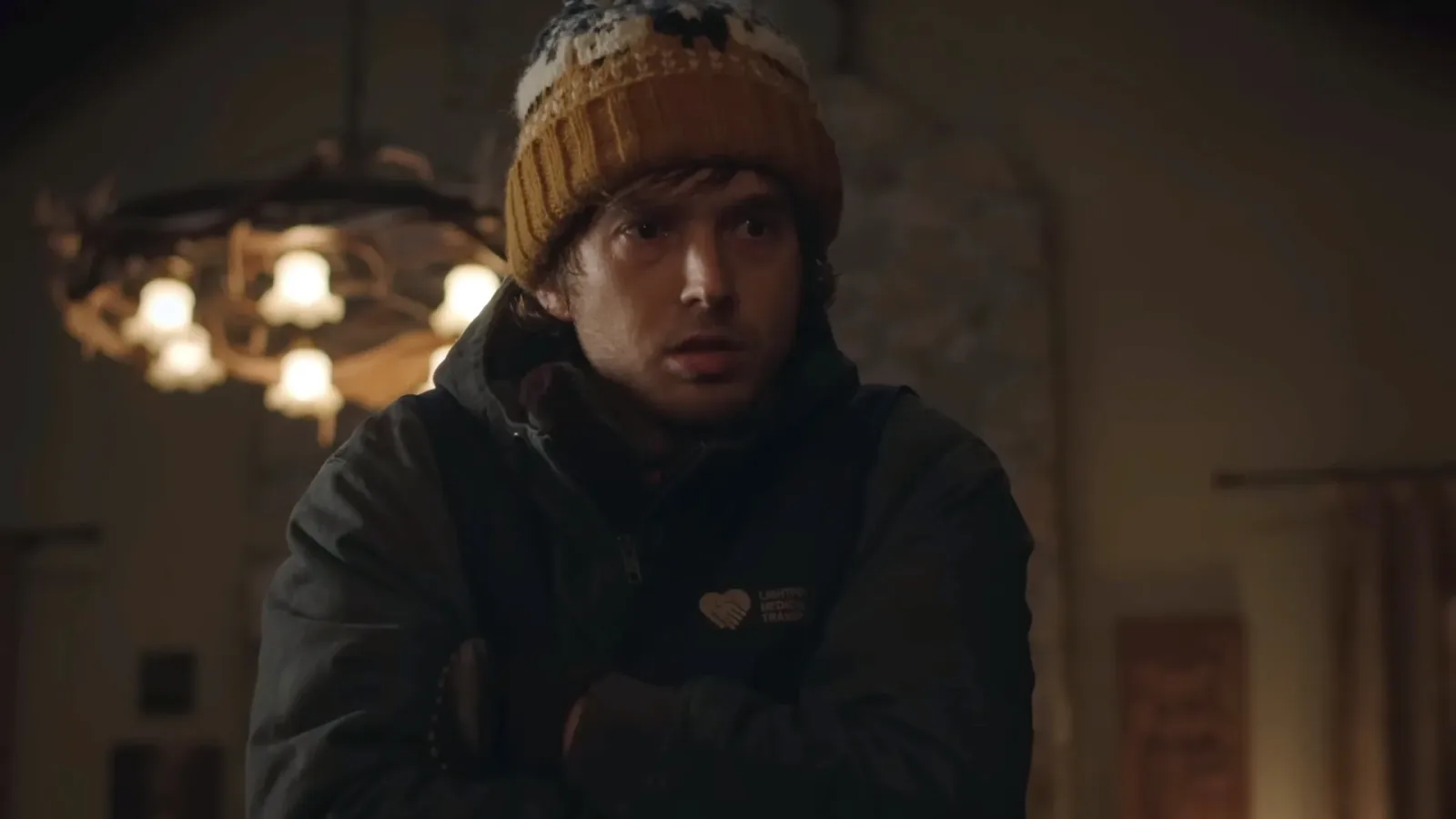
Zach Cregger's Resident Evil has arrived in theaters following months of skepticism from fans wondering how far the director's version would stray from Capcom's long-running survival-horror series. Early audience reaction suggests the film has found plenty of supporters, but its reception among dedicated players is more complicated. Many viewers praise its tense set pieces, vulnerable lead character, and ability to recreate the nervous feeling of playing a horror game. Others argue that its broad humor, limited lore connections, and controversial finale make it feel more like an unrelated creature feature wearing the Resident Evil name.
The divide is not necessarily over whether Cregger has made an entertaining horror film. For a sizable portion of the audience, he has. The more difficult question is whether entertainment alone is enough for a movie built around one of gaming's most recognizable horror franchises. As viewers debate the answer, the response has become a useful example of the challenge facing modern video-game adaptations: capturing a property's atmosphere without simply reenacting its plot.
Audience Scores Point to a Generally Positive Start
At the time of writing, the film has been trending positively across several audience-focused review platforms. It holds a 3.9 out of 5 average on Letterboxd, a 91 percent audience approval rating on Rotten Tomatoes, and an 83 user score on Metacritic. Those figures do not mean every fan is sold on the adaptation, but they indicate that the movie's unusual approach has connected with many people.
Embedded X/Twitter post
Rather than centering on an established series hero such as Leon Kennedy, Claire Redfield, Chris Redfield, or Jill Valentine, Cregger's movie follows Bryan, an ordinary medical courier headed into Raccoon City at the opening of the outbreak. He is carrying an important delivery, but he is not trained for bioterror incidents, zombie attacks, or the increasingly hostile infected creatures in his path. That premise is a major departure from the franchise's traditional action-ready protagonists.
For useful background on this topic, read Former PlayStation Leaders Revisit PS4's Disc-Sharing Joke as Physical Support Winds Down.
For supporters, Bryan's lack of expertise is the point. He does not glide through danger with stylish combat moves or effortlessly deliver a signature one-liner. He panics, makes mistakes, searches desperately for resources, and seems consistently overwhelmed by the disaster unfolding around him. Fans who enjoyed the movie have highlighted that perspective as one of its strongest ideas, because it makes each encounter feel dangerous even when the viewer knows the broad language of Resident Evil.
Several positive reactions have described the set pieces as feeling like distinct encounters from a game, while praising the point-of-view material and Bryan's performance as an everyday person trying to survive a sudden apocalypse.
Recreating the Feeling of Playing, Not a Specific Game Story
Cregger has previously explained that his interest lies more in translating the sensation of playing Resident Evil than in adapting one game's exact story or closely following the franchise's dense continuity. That philosophy is visible in the movie's smaller survival-horror details. Bryan overlooks locks and padlocks that need to be dealt with, fumbles while looking for ammunition as infected threats close in, and reacts to danger with the frightened, distracted energy players may recognize from their own first trips through Raccoon City.
There are also overt visual and structural nods that viewers have picked out, including key-related details, a typewriter, and a stalker-style enemy. One favorable fan reaction compared scenes involving an RV, a tunnel, and a house to the anxious dread of playing the Resident Evil remake and hearing Lisa Trevor nearby. That is telling: the strongest praise tends to focus not on canon accuracy, but on the movie's ability to build the familiar uncertainty of entering a room without knowing what may be waiting inside.
In that sense, Bryan can resemble a frightened player more than a classic franchise protagonist. The film reportedly finds tension in his hesitation and poor decision-making, using resource anxiety and claustrophobic scenarios to mirror the experience of trying to survive with too few bullets and too little information. Some viewers have even compared the effect to watching a nervous Let's Player stumble through a difficult horror section.
That approach gives the movie a distinct identity. It is not presenting Raccoon City as a playground for a seasoned special agent. It is presenting the city as an impossible nightmare for someone who should never have been there in the first place.
Comedy Is the Movie's Biggest Point of Friction
Yet the very quality that makes Bryan relatable has also become the chief complaint from detractors. Cregger leans heavily into the character's exasperation, disbelief, and inability to cope with the absurdity around him. The result has been described by some viewers as an almost Evil Dead-style mixture of horror and comedy, with much of the humor coming from Bryan's incompetence and mounting frustration.
Resident Evil has always had room for camp. The games can be knowingly silly, whether through melodramatic plotting, strange dialogue, or heroes such as Leon delivering action-movie quips in the middle of catastrophe. But viewers who dislike the film's jokes argue that this is a different kind of comic energy. Instead of occasional camp punctuating suspense, the humor is said to arrive frequently enough to soften scenes that might otherwise be frightening.
Cregger reportedly removed a substantial number of jokes after test audiences felt the movie was too funny. Even so, some fans believe the remaining material still undercuts the horror. One common criticism is that the characters can feel bland, irritating, or insufficiently developed, and that the forced comic beats make it harder to invest in the danger. Anecdotal theater reactions have similarly suggested that audiences may laugh more often than they jump.
That does not mean the movie is being dismissed as harmless comedy. Its defenders characterize it as gross, tense, and unsettling rather than conventionally terrifying. There is a meaningful difference. Plenty of Resident Evil games are not relentlessly scary either; they move between dread, action, body horror, puzzle-solving, and outrageous spectacle. The disagreement is over balance. Some viewers see Bryan's reactions as the human element that makes the horror work. Others see them as a constant release valve that keeps the film from achieving the oppressive mood they wanted.
Why Some Fans Say It Could Be Any Other Horror Movie
The more serious objection concerns the film's relationship to the broader series. Critics of Cregger's interpretation say that, aside from references to Raccoon City and Umbrella, the story could be renamed and marketed as a sequel to a different sci-fi or monster-horror property without losing much of its meaning.
This criticism is rooted in the movie's apparent lack of attention to recognizable franchise concepts. The infection is not explicitly explained as the T-Virus, Umbrella is viewed by some as a relatively minor presence rather than the all-encompassing corporate threat it is in the games, and the specific form of infection differs significantly from familiar Resident Evil outbreaks. There are still game-inspired ingredients, particularly the stalker enemy and survival-oriented scenarios, but opponents feel those pieces are too scattered to establish a convincing adaptation.
For these fans, the problem is not merely the absence of cameos from Leon or Claire. A faithful adaptation does not have to reproduce every character model, plot twist, or file entry from the games. Instead, they want the film to understand the franchise's identity: conspiratorial bio-weapons, corporate menace, specific forms of mutation, heightened melodrama, and the strange tension between B-movie absurdity and sincere survival horror.
That is why the phrase "good horror movie, but not a good Resident Evil movie" has become such a useful summary of the negative reaction. It acknowledges the craft that some viewers see in Cregger's set pieces while questioning why this particular story needed the franchise label.
Warning: Major Ending Spoilers Ahead
The film's ending has intensified the discussion because it turns Bryan's survival story into an especially bleak conclusion. Midway through the movie, Bryan is bitten by an infected child. He gradually begins succumbing to the same infection that has created the creatures pursuing him, while the package he has been transporting is revealed to contain the final component required for scientists to produce a cure.
When Bryan reaches the destination and the cure is nearly within reach, his transformation takes over. He kills the scientists who might have saved the world from the spreading virus, loses his remaining humanity, and is seemingly gunned down by helicopters on top of the hospital. It is a punishing final note for a character who has spent the movie slowly recognizing responsibility, contemplating fatherhood, and imagining a future with his pregnant girlfriend, Michelle.
Some viewers see that outcome as abrupt and disappointing. Bryan's growth as a survivor and his new desire to become a father make his death feel, to them, like a cruel interruption rather than a satisfying payoff. The conclusion is particularly stark compared with Resident Evil: Requiem, which took a sharply different direction to avoid ending on a similarly sad note.
Others read Bryan's fate as the movie's thematic conclusion. His fear of becoming a father is linked to a fear of change: he is comfortable with his life as it is and worries that a baby will force him to grow up. By the final act, he is still trying to prevent change through the antidote, but the bite has already set an unwanted transformation in motion. Under that interpretation, becoming a monster is not simply tragedy. It is a grotesque literalization of the growth he spent the story resisting.
The Debate Goes Beyond Easter Eggs
The disagreement around Resident Evil ultimately speaks to a broader anxiety surrounding game adaptations. Fans are often accused of demanding line-by-line recreations, but the response to Cregger's film shows that many are asking for something more difficult to define. They want creative work that understands why the original became beloved, even when it takes a new path.
That concern has become more pronounced as film and television companies pursue familiar game properties. Players worry that games can be treated as a source of brand recognition rather than as works with their own storytelling language, themes, and creative communities. If a movie borrows names and iconography without delivering the emotional or stylistic qualities associated with the games, audiences may feel the adaptation is using the brand instead of engaging with it.
Cregger's Resident Evil appears likely to remain divisive for exactly that reason. Fans who value atmosphere, vulnerability, and a director's willingness to make a strange horror movie may find much to enjoy. Those looking for a more direct encounter with the series' lore, villains, and established identity may leave frustrated. As more people see it, the lasting debate will not just be whether the movie is funny or whether its ending is too harsh. It will be whether capturing the anxiety of playing Resident Evil is enough to make something feel truly like Resident Evil.
Community
Discussion
Start the conversation.
No comments have been posted yet.