

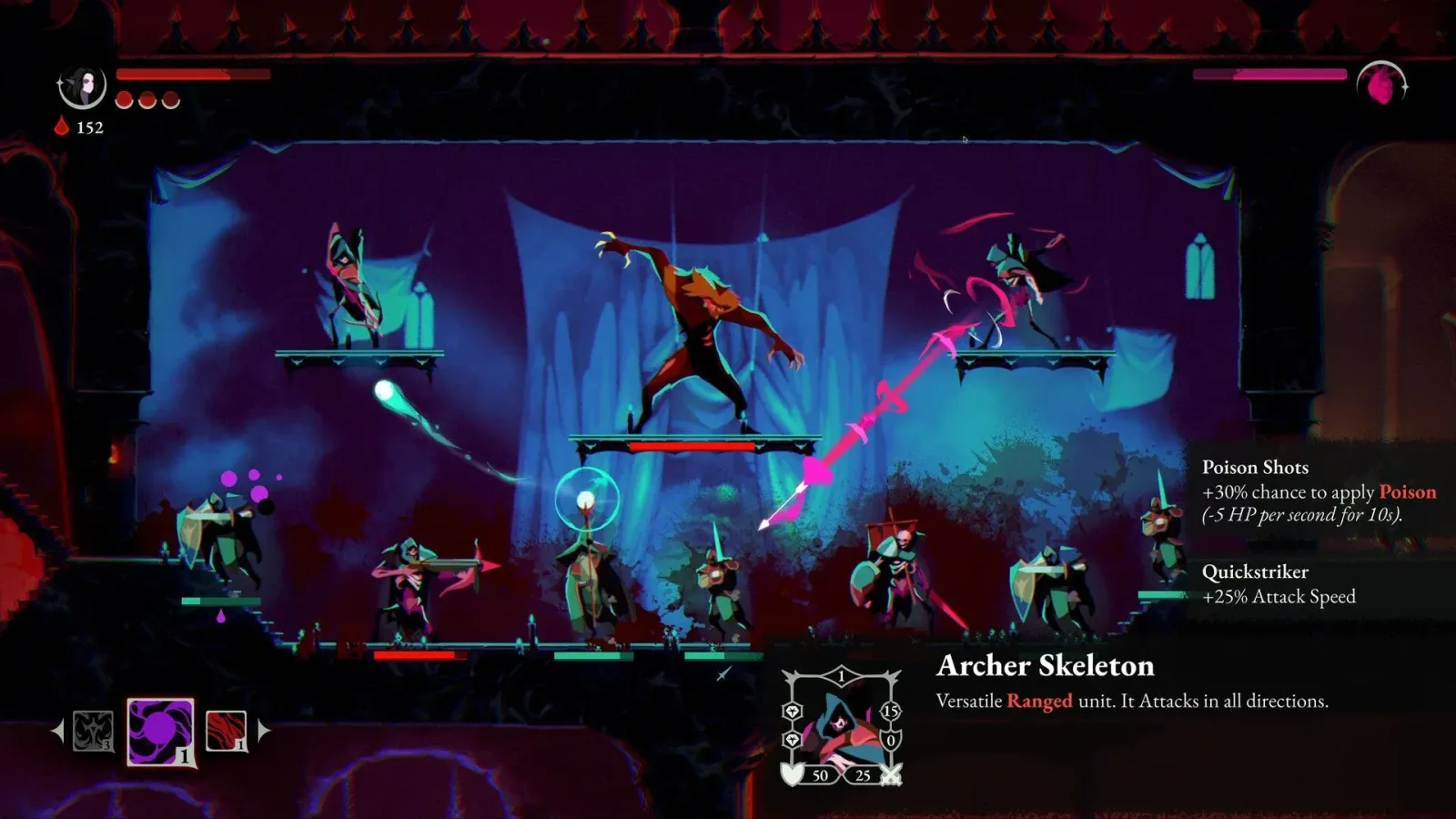
Digital Sun has changed course on plans for a broad public playtest of ReVamp, its upcoming Dracula-inspired "tower defensevania." The studio had invited players to register for an accessible test through Steam, but it now intends to start with a much more tightly controlled group on Discord instead.
The reason is not a balance issue, a technical delay, or a lack of interest. Digital Sun says it has become concerned that an early playable build could be reverse-engineered and cloned before the game reaches its intended launch. The studio pointed to recent developments involving Claude Opus 5.5 and fears that games can now be analyzed, reconstructed, and redistributed far more quickly than developers previously expected.
It is an unsettling development for a studio preparing an unreleased game, particularly one working in the independent space where demos, open betas, and festivals can be essential ways to find an audience. ReVamp is not currently due until March 2027, meaning Digital Sun is making a risk-management decision well ahead of release rather than after a leak or unauthorized copy appears.
Embedded X/Twitter post
A smaller first test for ReVamp
Digital Sun thanked the players who had signed up to take part in ReVamp's first Steam test, while apologizing for the change in approach. Rather than granting access through the larger Steam registration pool, the team will begin with a contained playtest organized through its Discord community.
For useful background on this topic, read Tim Sweeney and Kenney Vleugels Clash Over AI's Place in Game Development.
Players who registered via Steam have not necessarily lost their chance to try the game. Digital Sun said it hopes to hold the wider public playtest around January. However, the immediate test will be limited, and interested players can sign up for the Discord test ahead of October 29.
The distinction matters. A public Steam test can potentially place an in-development build into the hands of a very large number of people in a short period. A Discord-based test does not make copying impossible, but it gives a developer more control over who is included, how invitations are distributed, and how feedback is collected. It also lets the studio begin gathering hands-on impressions without exposing the project as broadly as it first planned.
For players, this means the wait for an open look at ReVamp may be longer than expected. For Digital Sun, it means trading some immediate visibility for a smaller testing environment while it assesses a threat that the studio believes has rapidly become more serious.
Why AI-assisted cloning is changing the calculation
Game developers have always had to think about leaks, datamining, cracked builds, asset theft, and unauthorized distribution. Public tests are inherently a compromise: studios give players unfinished software because real-world feedback can reveal bugs, performance problems, unclear mechanics, and balance issues that internal teams may miss.
What has changed in this case is the perceived speed and accessibility of reverse engineering. Digital Sun's concern centers on reports that the newest Claude Opus model can assist with decompiling a game's code and rebuilding it in a usable form. Work that could once demand extensive expertise and a long period of painstaking effort may now be accelerated substantially with AI assistance.
That does not mean every game can instantly be copied perfectly, nor does it erase the substantial work involved in game development. A functioning game includes more than code: art direction, content, design judgment, audio, production processes, testing, and years of iteration are all difficult to reproduce. But even an incomplete or approximate clone can cause real damage if it appears online before the original game has had a chance to establish its identity.
For an unreleased independent project, that risk can be especially painful. A clone can confuse prospective players, muddy search results, siphon attention away from the original, or create a false impression that the legitimate game is derivative of the copy. If the clone is playable in a browser or distributed freely, it may spread quickly despite being unauthorized and unfinished.
Digital Sun framed the decision as a response to news of games being reverse-engineered, cloned, and published before their creators have released them. The studio's move suggests that an open playtest is no longer being viewed solely as a useful promotional tool. It is also being evaluated as a possible exposure point for a game's systems and code.
Indie developers depend on early visibility
The concern lands at an awkward time for smaller studios because public demos and playtests are closely tied to discoverability. A new game can spend years in development without reaching a broad audience. A short demo, a Steam event, a streamer-friendly test, or a community beta can be the moment that introduces it to players who later become wishlisters and buyers.
Digital Sun acknowledged that tension directly, emphasizing that showing games early helps independent developers find the fans who sustain them. That is why this change is more consequential than a single rescheduled beta. If studios begin to conclude that public builds are too risky, players could see fewer open prototypes, fewer experimental test weekends, and more guarded marketing campaigns.
There is also a creative cost. Developers often benefit from watching players encounter a game without guidance. They can learn whether onboarding works, whether a challenge is readable, whether a level teaches the right lesson, and whether an exciting feature is actually fun outside the team. Smaller controlled tests can still provide valuable feedback, but they do not always deliver the scale and variety of a genuinely public event.
For ReVamp, the shift may allow Digital Sun to continue that process with a selected community while avoiding the broadest possible distribution of the build. Yet it also illustrates how much extra caution a studio may now feel is necessary when sharing unfinished software.
ReVamp is not the only project affected
Digital Sun's decision follows a similar response from Alliance Arts, the developer of Drunken Goddess Reflux. That team cancelled plans for a Next Fest demo because of concerns tied to the same kind of technology.
The timing is notable because Steam's Next Fest remains enormous. The event beginning on October 19 includes more than 8,000 demos, roughly double the number featured in the March event. That scale shows that developers still see demos as a vital route to player attention, even as fears around copying and reverse engineering become more prominent.
At the same time, not every kind of preview build carries the same level of perceived risk. A brief demo may contain only a narrow slice of a game, with limited content and systems. A larger playtest can reveal much more: progression, economy structures, combat loops, building mechanics, technical implementation, and broader design foundations. The more complete the build, the more valuable its early exposure may be both to legitimate testers and to bad actors.
Temporary availability used to offer some reassurance. A developer could make a build accessible for a limited weekend, remove it afterward, and assume the window of exposure had closed. The new concern is that a short-lived build may still be enough for someone to capture, inspect, and reconstruct elements that persist long after official access ends.
What it could mean for players and platforms
Digital Sun has called for platforms to strengthen protections for original work. That broad request could lead to difficult conversations about what safeguards are practical. More controlled access systems, stronger reporting tools, faster takedown processes, build-specific security measures, and better ways to verify ownership may all become more important if unauthorized cloned releases become easier to create.
There are no simple technical protections that eliminate every risk. Any client-side game build must ultimately run on a player's hardware, and determined users have long found ways to inspect or alter software. The issue raised by AI tools is one of scale: lowering the time, knowledge, or effort required to turn that access into a derivative playable product.
Players may also find themselves facing a more fragmented preview process. Instead of clicking a Steam button to join an open test, they may need to apply through community servers, participate in closed groups, agree to additional rules, or wait longer for public demos. Those changes can make testing less convenient, but they may become an increasingly common compromise for teams hoping to protect their work before launch.
For now, ReVamp remains on its path toward a March 2027 release. Digital Sun is not abandoning player testing; it is narrowing the first phase and targeting a broader public playtest around January. The studio's decision is a clear sign, however, that the traditional benefit of putting a game in players' hands early is being reconsidered in light of rapidly evolving AI-assisted reverse-engineering tools.
Whether that caution becomes standard practice across the industry remains to be seen. But for developers whose survival depends on being seen before release, the possibility that an early build could be cloned first creates a particularly troubling dilemma: the very exposure needed to build an audience may also expose the game to a new form of exploitation.
Community
Discussion
Start the conversation.
No comments have been posted yet.