

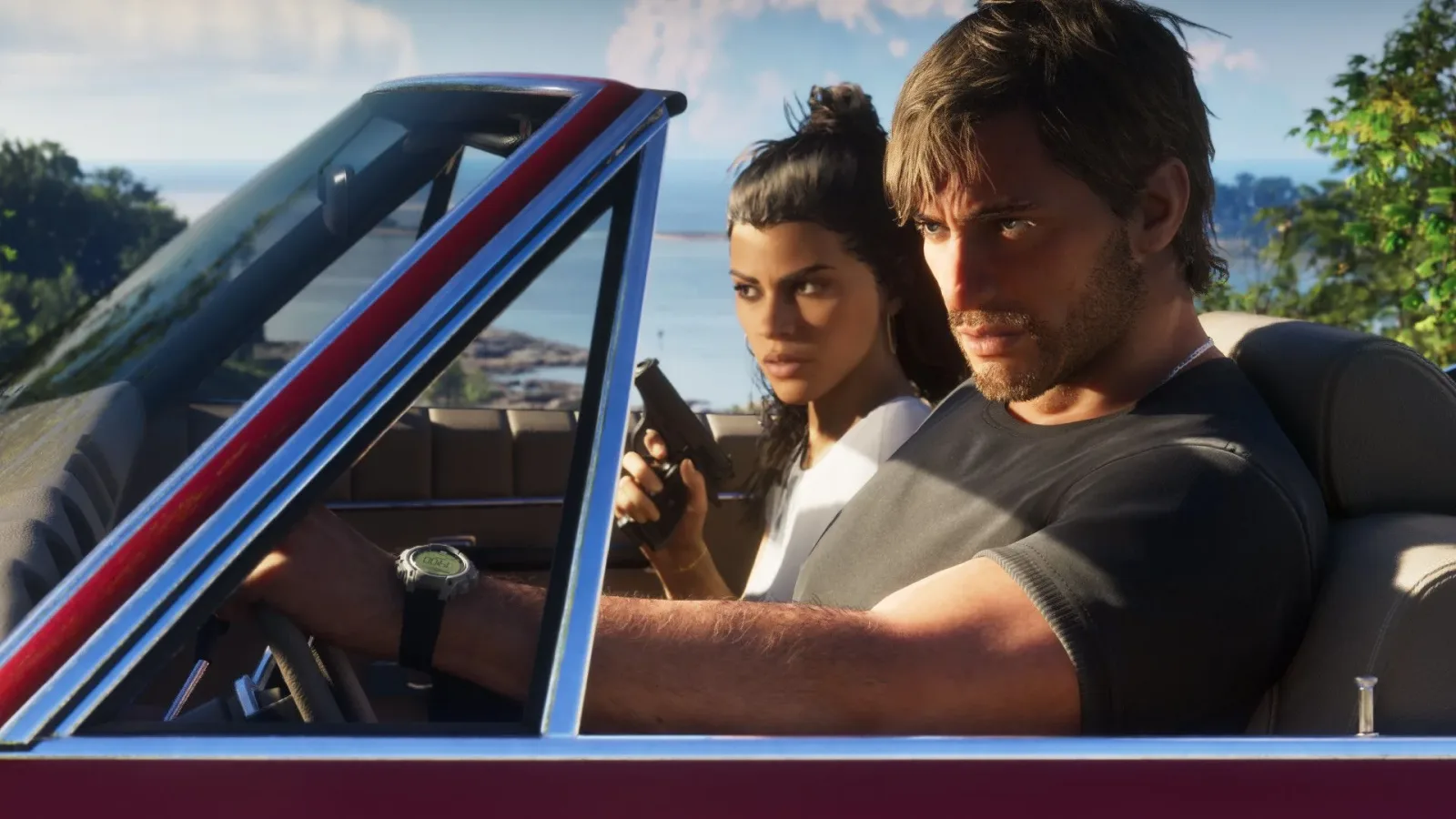
Arion Kurtaj, the hacker connected to the enormous Grand Theft Auto 6 leak in 2022, has been released after receiving a seven-year sentence for hacking offences against Rockstar Games and other targets. Kurtaj, now 21, was released on licence on the same day the sentence was imposed, having already spent most of that period in custody and in a secure hospital.
The case remains one of the most significant security incidents to affect a major video game publisher in recent memory. In 2022, material said to include at least 90 clips of early GTA 6 development footage spread online, offering an unprecedented look at a game that Rockstar had not formally revealed at the time. The footage quickly became a landmark example of how a breach can disrupt a closely guarded blockbuster project long before its intended release.
At sentencing, Mr. Justice Turner acknowledged Kurtaj's ability while delivering a clear warning against any repeat behaviour.
"You are a very talented young man," the judge told Kurtaj, before adding: "Don't let this happen again."
For useful background on this topic, read ROG Xbox Ally X20 review: A Brilliant OLED Handheld With a Price Problem.
Kurtaj has also been made subject to a five-year Serious Crime Prevention Order. Among its restrictions are limits on his use of online services, including Telegram and Discord. His release on licence functions similarly to parole: he is out of prison, but must comply with conditions and can face consequences if those conditions are breached.
A case shaped by age and mental-health findings
Kurtaj was 16 when the hacking activity involving Rockstar began. He was associated with Lapsus$, a hacking group linked to several high-profile cyber incidents. The group became known for targeting prominent technology and business organisations, and the Rockstar breach drew exceptional attention because of the status of Grand Theft Auto as one of the industry's biggest franchises.
The legal process did not follow a straightforward route. Kurtaj was found psychiatrically unfit to stand trial and was later ordered to remain in a secure hospital for an indefinite period. That decision was connected to findings concerning severe autism and his condition at the time. In January, his circumstances changed when he was transferred to a standard prison ahead of a planned retrial.
Last week, Kurtaj pleaded guilty to hacking offences involving Rockstar and other victims. The seven-year sentence reflects the seriousness of the conduct, but the time he had already spent in the secure hospital and prison meant that he was released immediately on licence rather than beginning a new seven-year stay behind bars.
That distinction is important. The result is not an absence of punishment or oversight. The combination of the sentence, time already served, licence requirements, and the Serious Crime Prevention Order leaves Kurtaj facing substantial restrictions for years to come. The judge's remarks also underscore that the court viewed his technical skill as something that could lead to legitimate outcomes, while stressing the harm caused when it is used unlawfully.
Why the 2022 GTA 6 leak was so consequential
Rockstar Games is famously protective of information surrounding its largest projects, and GTA 6 was arguably the most anticipated unreleased game in the world when the breach happened. The material that surfaced appeared to show work-in-progress gameplay, environments, characters, systems, and technical elements from the next Grand Theft Auto. It did not represent a polished final product, but its sheer volume made the incident unusually difficult to contain.
Early development footage can be especially misleading when stripped of context. Games in production routinely contain placeholder assets, incomplete animations, unfinalized interfaces, performance problems, missing content, and experimental mechanics. Yet once such footage circulates publicly, every detail can be scrutinised as if it were a confirmed final feature. That creates pressure on developers and can distort expectations among players.
Rockstar said the hack had cost the company $5 million. Beyond any direct financial impact, a leak of that scale can consume significant internal resources. Security teams must investigate the breach, developers may need to change working practices, and staff can be forced to deal with public reaction to material that was never intended to be viewed in that form.
The episode also illustrated a broader tension around secrecy in game development. Fans are naturally eager for information about a major new entry in a beloved series, particularly after a long wait. But an unauthorised breach is fundamentally different from a planned announcement, trailer, demo, or developer update. A publisher's official marketing can frame the game at the stage it chooses; leaked material removes that control and can expose employees' unfinished work to commentary years before launch.
Restrictions extend to commonly used online platforms
The five-year Serious Crime Prevention Order is a notable part of the outcome because it addresses the tools and services that can facilitate online coordination and communication. Telegram and Discord are used by vast numbers of people for ordinary social, work, and gaming communities, but they can also be used to organise unlawful activity or distribute stolen material. The order's limits are designed to reduce the risk of further offending rather than simply adding a symbolic penalty.
The exact practical impact of such restrictions will depend on their terms and supervision, but the message is clear: the court is treating online access as a meaningful element of the risk posed by the offences. In cybercrime cases, access to devices, communications platforms, accounts, and networks can matter as much as physical location. Conditions that would be irrelevant in many conventional criminal cases can therefore become central to preventing a repeat.
For the games business, the situation is another reminder that security is not only an IT concern. Major releases are built by large teams across many disciplines, often with remote collaboration, external partners, testing pipelines, and vast stores of sensitive assets. Protecting that work means balancing access for people who need to make the game with safeguards against unauthorised entry and extraction.
Rockstar faces fresh GTA 6 leak concerns
The 2022 breach is not the only recent hacking issue connected to Rockstar and GTA 6. Ahead of the game's launch, another individual or group using the name Cyberleek released multiple gameplay videos said to come from a seemingly near-final build of GTA 6. That has renewed concerns around the distribution of unauthorised game files and the possibility that leaked material could be modified or repackaged by others.
Cyberleek has also released what has been described as an Xbox build of the game. Modders are reportedly attempting to use that build as a foundation for a more complete unofficial PC port. The prospect is particularly striking because an unofficial PC version could theoretically emerge before Rockstar delivers an official PC release.
That possibility should be treated with caution. Work undertaken by modders on a leaked build is not an authorised release, does not establish that a functioning public PC port will arrive, and offers no assurance of stability, safety, completeness, or legality. It is also separate from any official plans Rockstar may have for the game. The existence of files or videos online should not be mistaken for a confirmed platform announcement or a legitimate way to access GTA 6.
Still, the reports demonstrate how difficult it can be for a publisher to regain control after material has escaped into wider circulation. Once game footage, assets, or builds are copied and redistributed, the issue can evolve beyond the initial intrusion. New actors may analyse, alter, archive, or attempt to run the material in environments never intended by the developer.
A warning with implications beyond one game
Kurtaj's release closes one major legal chapter in the 2022 GTA 6 leak, but it does not erase the incident's significance. The case combined youth, exceptional technical ability, mental-health considerations, high-profile victims, and the unusual challenge of sentencing conduct that took place largely through digital systems. Its outcome includes both a formal prison sentence and continuing controls intended to prevent future misuse of online services.
For players, the clearest lesson is that leaks rarely offer a reliable substitute for official information. They can reveal fragments of development, but those fragments often lack context and may never represent the experience a studio ultimately intends to ship. For developers and publishers, the incident reinforces the stakes of protecting unfinished work in an era when even a brief breach can turn private material into a global story.
And for Kurtaj, the judge's warning leaves little room for ambiguity. Technical talent can be valuable, but the court has made clear that using it to breach systems and expose protected work carries lasting consequences.
Community
Discussion
Start the conversation.
No comments have been posted yet.