

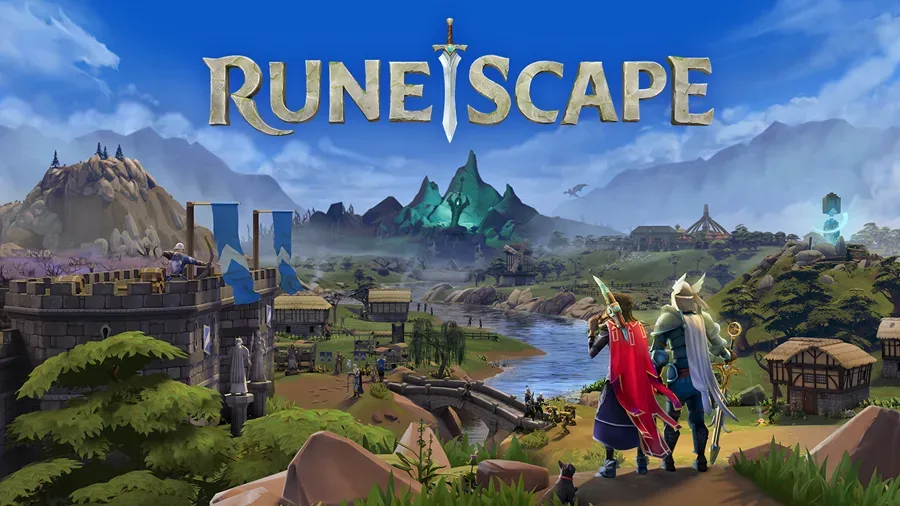
RuneScape players have removed more than 1.56 billion digital items purchased through microtransactions during the game's recently completed Well of Restoration event. The limited-time initiative ran for one week beginning on November 16, 2026, inviting both free-to-play and members to dispose of eligible items and currencies in return for in-game gold pieces.
The result is a remarkable number for a community-driven cleanup: more than 165 billion gold pieces were created over the course of the event, while over 1.56 billion eligible microtransaction items were permanently taken out of circulation. Once the event ended, items still marked for removal were automatically exchanged for gold equal to one quarter of their value.
Well of Restoration is a significant piece of RuneScape's wider 2026 Road to Restoration plan, a strategy that has already included the removal of the Treasure Hunter mechanic. Rather than merely retiring a feature and leaving its associated items in players' banks and inventories, the event gave the community a direct role in deciding what would be surrendered from the game's economy.
A player-led removal effort on an enormous scale
At its core, the Well of Restoration provided a clear transaction: players could throw qualifying microtransaction-related items and currencies into the well, then receive gold pieces in exchange. Thousands of players took part across the seven-day event, creating an unusual collective effort in which individual inventory decisions added up to a substantial game-wide result.
For useful background on this topic, read Steam Hall of Fame Voting Opens With Baldur's Gate 3, Elden Ring and Silksong in the Running.
The figure of 1.56 billion items reflects just how much material had accumulated over time. Digital rewards, currencies, and other eligible items connected to microtransactions can remain in an online game's ecosystem for years, even after a specific mechanic has changed or been retired. The event created a structured route for removing those objects rather than allowing them to persist indefinitely.
For participants, the gold payout offered an immediate practical reason to engage. For RuneScape as a whole, the event was also an economic and symbolic reset. The destruction of the eligible objects was permanent, while the distribution of gold gave players a defined compensation path as the game moved further away from its former microtransaction framework.
More than 165 billion gold pieces entering players' hands is itself an eye-catching total. Gold creation is always important in a long-running MMORPG because it can affect trading, purchasing power, and the perceived value of goods. The event's payout model therefore did more than delete items: it converted part of that stored value into a conventional in-game resource.
For another perspective on this story, read RuneScape Removes 1.56 Billion Microtransaction Items Through Well of Restoration.
What happened to items left behind
Not every eligible item needed to be manually offered to the Well of Restoration before the deadline. When the event concluded, remaining items scheduled for removal were automatically converted into gold pieces at 25% of their value.
That automatic conversion matters for players who did not log in during the week, did not notice every qualifying item in their possession, or simply chose not to use the well themselves. It means the transition did not depend entirely on perfect participation. However, the reduced value also made the event's active exchange the more rewarding option for those able to take part while it was live.
The distinction between the two outcomes appears designed to balance convenience with engagement. Players who personally contributed items during the event received the full exchange arrangement available through the well, while the post-event process ensured that the remaining affected items would still be cleared from RuneScape.
- The Well of Restoration began on November 16, 2026, and lasted one week.
- Both free-to-play users and members could participate.
- Players exchanged eligible items and currencies for gold pieces.
- More than 1.56 billion microtransaction-purchased items were removed.
- Players generated more than 165 billion gold pieces during the event.
- Unused eligible items due for removal were later converted automatically at one quarter of their value.
A major step in the Road to Restoration
The Well of Restoration was not presented as an isolated novelty. It formed part of RuneScape's Road to Restoration strategy for 2026, which has focused on reshaping the game's relationship with microtransactions. Earlier in that process, RuneScape removed Treasure Hunter, a mechanic long associated with randomised reward acquisition.
Removing a monetisation system is one challenge; addressing the assets and currencies tied to it is another. The Well of Restoration tackled that second issue in a highly visible fashion. Its design acknowledged that players had existing collections and balances connected to former systems, then gave those holdings a dedicated sunset process.
That approach is especially notable in a game with RuneScape's history. The MMORPG has existed through multiple eras of design, progression, membership models, seasonal activity, and player-driven trade. Changes to systems that touch rewards and the economy can have consequences far beyond a single update, because veteran players often hold inventories built up across many years.
The event's participation model also made the transition communal. Instead of a background database change quietly erasing old objects, players could actively choose what to deposit and see the broader cleanup become a shared goal. The final total gives that community action a tangible scale: billions of items are now gone from the live game.
Why the gold total is worth watching
The 165 billion-plus gold piece total will naturally prompt discussion among players interested in RuneScape's economy. Gold is a universal measure of value for many activities, from purchasing supplies and equipment to participating in player-to-player trade. Any large-scale gold generation event can become a point of interest for players tracking prices and market behaviour.
At the same time, the figure should be understood in the particular context of the Well of Restoration. This was a temporary exchange connected to removing designated microtransaction items and currencies, not a standard repeatable money-making activity. The gold entered the game as part of a specific conversion process tied to the Road to Restoration changes.
Its long-term effect will depend on factors that cannot be reduced to one headline number: how the gold was distributed between players, how much is spent versus retained, the volume of items and services available in the broader economy, and whatever future balancing measures or content updates follow. The immediate confirmed outcome is simpler: a huge amount of eligible paid-content material has been replaced by gold, and the old items have been banished.
Free players were included
Opening the event to both free-to-play and member accounts is an important detail. RuneScape's community spans players with very different levels of access and investment, so limiting an economy-facing restoration event to members alone would have left a sizable portion of the player base outside the process.
By making the Well of Restoration available to everyone, RuneScape allowed more players to handle qualifying items on their own terms. It also increased the potential scale of participation, helping explain how the removal total reached well beyond one billion items in only a week.
For free players, inclusion also reinforces that the Road to Restoration affects the whole live-game community rather than only the subscription side. The removal of legacy microtransaction-related content has implications for account inventories, progression experiences, and the overall identity of the game regardless of membership status.
RuneScape remains available across PC and mobile
RuneScape is available on PC, through Steam, and on iOS and Android devices. Cross-platform progression allows players to continue using the same account across supported PC and mobile versions, an arrangement that can be particularly useful during time-limited events such as Well of Restoration.
With the event now finished, its central outcome is clear: more than 1.56 billion microtransaction items have been removed from RuneScape, and the community generated over 165 billion gold pieces while doing so. The Well of Restoration has therefore become one of the most concrete milestones yet in the game's 2026 effort to move on from its previous microtransaction systems.
For a game defined by its long life and persistent world, that scale matters. Items that once occupied banks, inventories, and the wider economy are no longer part of the live experience. The next stages of the Road to Restoration will determine how RuneScape builds on that reset, but the well has already delivered a massive and measurable change.
Community
Discussion
Start the conversation.
No comments have been posted yet.