

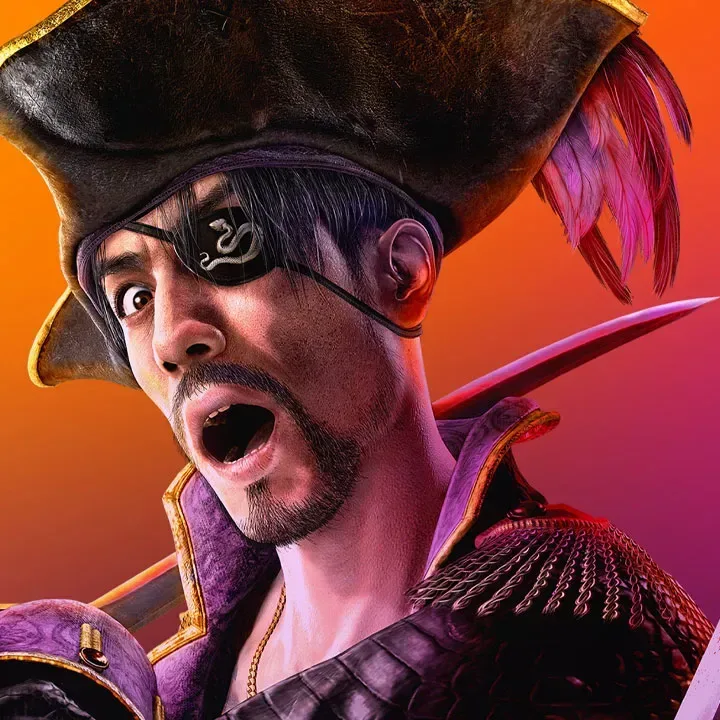
Sega's definition of a gamer is broader than simply someone who picks up a controller. Speaking in a September 7 interview, Sega president and COO Shuji Utsumi said the company has seen a growing number of people become devoted followers of its franchises without ever playing the games themselves. Rather than viewing that audience as separate from gaming culture, Utsumi said Sega considers those fans to be gamers and an important part of its expanding transmedia strategy.
The shift is especially visible around Sega's best-known properties, including Sonic the Hedgehog, Persona, and the Yakuza series, also known in some regions as Like a Dragon. These brands no longer exist only as games. They have become worlds that fans can encounter through movies, television, video clips, livestreams, apparel, collectibles, character goods, music, and online communities.
For Sega, that wider range of entry points is not a side project. It is central to how the company thinks about the long-term value of its intellectual property. A person may first meet a character through a film, become attached to a story through a streamer's playthrough, and later buy merchandise without ever purchasing a game. Utsumi's comments suggest Sega sees that chain of engagement as valid in its own right, even when it does not immediately lead to game sales.
A changing idea of what it means to be a fan
The traditional image of a game fan is straightforward: someone buys a game, plays it, and perhaps later discusses it online or purchases related products. That model remains hugely important, but modern entertainment franchises increasingly operate differently. Fan communities form around characters, fictional settings, music, memes, and shared social experiences as much as around the act of playing.
For useful background on this topic, read France Plans International Video Game Festival After Clair Obscur's Breakout Success.
Utsumi said Sega has noticed an increase in these non-playing fans across its titles in recent years. In his view, people who have not played a Sega release can still be deeply invested in its worlds and deserve to be recognized as both fans and gamers.
"Even people who have never played games are considered fans and gamers by us," Utsumi said, describing transmedia as a way to create more opportunities for people to discover and connect with an IP.
That perspective pushes against a longstanding debate within game communities over who gets to use the word "gamer." The label has often been tied to time spent playing, knowledge of game mechanics, platform ownership, or familiarity with particular genres. Sega's approach instead places more weight on affinity: if someone cares about the characters, stories, and creative universe, the company believes that person belongs in the audience surrounding the franchise.
It also recognizes how audiences now encounter games. Video platforms and livestreaming have made it possible for people to follow complete narratives without personally progressing through a campaign. Social media lets communities celebrate favorite characters, scenes, soundtracks, and jokes in real time. Film and television adaptations can reach viewers who may never browse a console or PC storefront. Merchandise, meanwhile, can turn an affinity for a character into part of someone's everyday life.
Yakuza merchandise shows the audience opportunity
Utsumi pointed to the Yakuza series as a particularly strong example. He said the franchise has performed exceptionally well with merchandise and that women account for roughly 60% to 70% of buyers. Many of those customers, he said, became attached to the series' setting, cast, and storytelling through Sega's YouTube channel and through popular creators streaming the games.
Crucially, Utsumi said many of those fans have never played the games. Their connection comes from watching the dramatic and often eccentric adventures of characters such as Kazuma Kiryu and Ichiban Kasuga unfold in another format. The appeal may be the interpersonal drama, the humor, the fashion, the music, or simply the emotional pull of the cast. From Sega's standpoint, none of that engagement is lesser because it began outside direct play.
This is significant because Yakuza has historically been known as a game series with a specific identity: crime drama, dense urban environments, minigames, melodrama, and a distinct Japanese cultural setting. Over time, its international profile has expanded considerably. Streaming and short-form video have made it easier for prospective fans to see its unusual tone before committing to a lengthy RPG or action game.
The series is therefore well suited to Sega's wider strategy. Its characters are recognizable, its stories generate discussion, and its worlds offer plenty of visual and emotional hooks for products beyond games. A person who starts with a clip, a character compilation, or a creator's stream could eventually become a merchandise buyer, movie or television viewer if future adaptations emerge, or a game player. Sega does not appear to require that final step in order to count the relationship as meaningful.
Merchandise is moving beyond collectibles
Utsumi also connected the changing fan base to changes in licensed merchandise. He previously worked at Cybird, a developer known for otome romance games aimed largely at women. That experience, he said, broadened his perspective on the kinds of products audiences may want from a favorite property.
Traditional game merchandise often focuses on collectibles: badges, figures, posters, acrylic stands, and other display items. Those products remain popular, particularly among dedicated collectors. But Utsumi described a significant expansion toward goods that can be used in daily life. Apparel, cosmetics, commemorative items, and limited collaborations with amusement facilities can all serve a different kind of fan relationship.
That distinction matters. A collectible may be intended to sit on a shelf, while a jacket, bag, cosmetic item, or practical accessory allows someone to incorporate an IP into their routine. It turns fandom from something displayed at home into something worn, carried, or experienced in public. For companies, these items can reach consumers who may not identify primarily as game buyers but strongly identify with a character or fictional world.
For Sega, female fans are an especially important part of that broader merchandising opportunity. Utsumi's comments do not suggest that women are new to games or game fandom. Instead, they highlight that publishers can miss valuable audience behavior when they assume every fan wants the same products, participates in the same way, or arrives through the same platform.
Sonic has already demonstrated the transmedia model
The most visible example of Sega's transmedia reach is Sonic the Hedgehog. Sonic has long existed beyond games through animation, comics, toys, music, and consumer products, but the modern live-action film series has made the character an even larger entertainment presence. All three live-action Sonic movies have performed strongly at the box office, and a fourth film is planned.
Those movies introduce Sonic, Tails, Knuckles, Shadow, and the wider franchise mythology to audiences that may have little experience with the games. Some viewers will likely move from the movies to the games, while others may remain movie-first fans. Utsumi's stance makes clear that Sega sees value in both paths.
That does not mean game releases stop being the foundation. Games create the characters, mechanics, worlds, and stories that give transmedia projects material to adapt and reinterpret. But Sega's strategy acknowledges that a franchise can grow in several directions at once. A successful film can raise interest in games, but it can also sustain a distinct audience through its own storytelling and merchandise ecosystem.
The forthcoming Persona series in development for Netflix offers another major test of that approach. Persona already has a reputation for stylish presentation, character-driven storytelling, and music with an identity strong enough to travel outside the games. A television adaptation could reach viewers who know the series through its soundtrack, artwork, cosplay, or online discussion but have not played one of its lengthy role-playing games.
More contact points, not one required path
The core of Sega's approach is the idea of multiple "entry points" and "contact points." In practical terms, that means there is no single required route into a franchise. A person can begin with a game on PC or console, but they can also start with a theatrical movie, a streaming show, a YouTube video, a popular streamer, an album, a piece of clothing, or a convention display.
Every route can potentially deepen engagement. Someone who watches a Sonic movie may seek out a soundtrack. Someone who discovers Persona through an adaptation may explore its music or character merchandise. Someone who watches a creator play Yakuza may join a community discussion and later decide to try a game. Just as importantly, some people may never make that purchase and still remain enthusiastic supporters of the brand.
Utsumi said engagement from non-playing fans can sometimes be greater than that of people who do play the games. That statement reflects how modern fandom is measured not only through game completion or unit sales, but also through attention, conversation, viewing, sharing, event participation, and merchandise demand.
For players, Sega's position may also have a practical upside. A larger audience can help support more ambitious adaptations, collaborations, events, and merchandise lines around beloved franchises. It can keep characters visible during the gaps between major game releases. At the same time, Sega will need to maintain a balance: the core game audience expects the company's franchises to continue receiving strong interactive releases rather than becoming brands driven mainly by licensing.
Sega's definition leaves the door open
Sega's message is ultimately inclusive. It does not erase the distinction between playing a game and watching someone else play it; those are clearly different experiences. But Utsumi argues that both can produce real attachment to a game world. The person who masters a difficult boss, the viewer who follows a full story playthrough, and the collector who loves a character may all be participating in the same larger cultural space.
As Sega expands Sonic through film, prepares a Persona project for Netflix, and develops merchandise strategies that reach beyond conventional collectibles, that wider definition will likely become increasingly important. The company is betting that its future is not limited to finding more players. It is also about welcoming more kinds of fans, wherever they first encounter Sega's characters and stories.
Community
Discussion
Start the conversation.
No comments have been posted yet.