

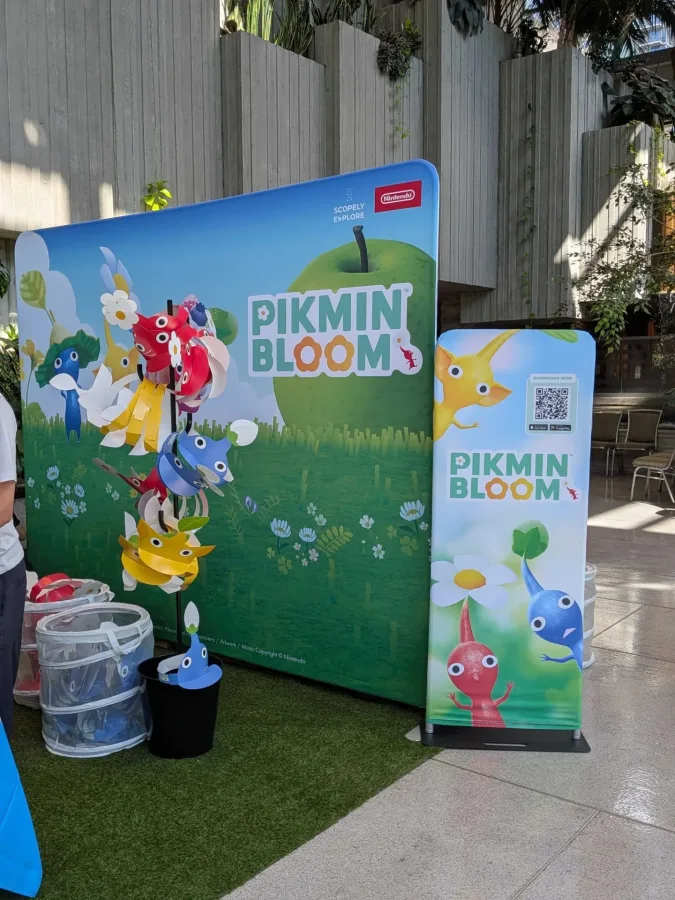
Nintendo did not maintain a formal presence at PAX West this year, yet one of its most recognizable game worlds was difficult to miss throughout Seattle. Pikmin Bloom, the mobile walking game built around Nintendo's tiny plant-like creatures, received a substantial promotional push around the convention, from transit advertising to a dedicated show-floor booth and wearable paper crowns handed to attendees.
The result was an unusual kind of convention visibility. PAX West featured booths from several major Japanese publishers, including Bandai Namco, Sega, NIS, and Konami, but the familiar red, blue, yellow, purple, white, winged, rock, and ice Pikmin imagery repeatedly surfaced in crowds and public spaces near the event. With many people wearing the giveaway crowns, Pikmin became a conspicuous visual motif even though Nintendo itself had not set up one of its typically elaborate convention displays.
It was a notable outcome at a PAX West described as comparatively quiet. The convention had plenty of merchandise vendors, while the footprint for games and especially major publisher exhibits seemed less expansive than in past years. Sony, Nintendo, and Xbox were all absent from the main show floor, aside from some ID@Xbox-associated activity at a satellite event. That made the mobile game's campaign stand out all the more: an established title from 2021 was suddenly one of the most visible game brands connected to the weekend.
A five-year-old walking game gets a major moment
Pikmin Bloom first launched in 2021 as a location-based mobile game developed by Niantic. The game later moved to Scopely in 2025 as part of the transfer of Niantic's gaming business. Its premise has always shared broad DNA with location-driven games such as Pokémon GO, but its everyday routine is built more directly around walking than around traveling to particular landmarks.
For useful background on this topic, read White House Pulls 'Build the Wall' Tetris-Style Game After Tetris Company Copyright Warning.
Players accumulate steps to grow Pikmin, expand their squad, plant flowers on the map, and earn rewards. Its collectible element is a major part of the appeal: Pikmin can wear a wide variety of decorative items, from food-themed accessories to other novelty headwear. For players who enjoy an ongoing collection game, those costume variations turn an ordinary walk into a chance to add another tiny companion to the roster.
That structure can make Pikmin Bloom easier to maintain than some other mobile location games. It rewards routine movement, commuting, errands, and casual walks, rather than demanding that players organize their day around a specific place. At the same time, it is the kind of game that can easily fade from a player's habits when daily travel changes. Someone no longer commuting, for example, may find that their step total and interaction with the game declines naturally.
That history makes the scale of the PAX West campaign particularly interesting. Mobile games frequently support seasonal events and local activations, but large transit takeovers and a convention-floor presence are more often associated with a new release, a major expansion, or a competitive live-service game making a direct pitch to a new audience. Pikmin Bloom is instead a mature game receiving a conspicuous burst of attention five years after launch.
Seattle transit and PAX crowds filled with Pikmin
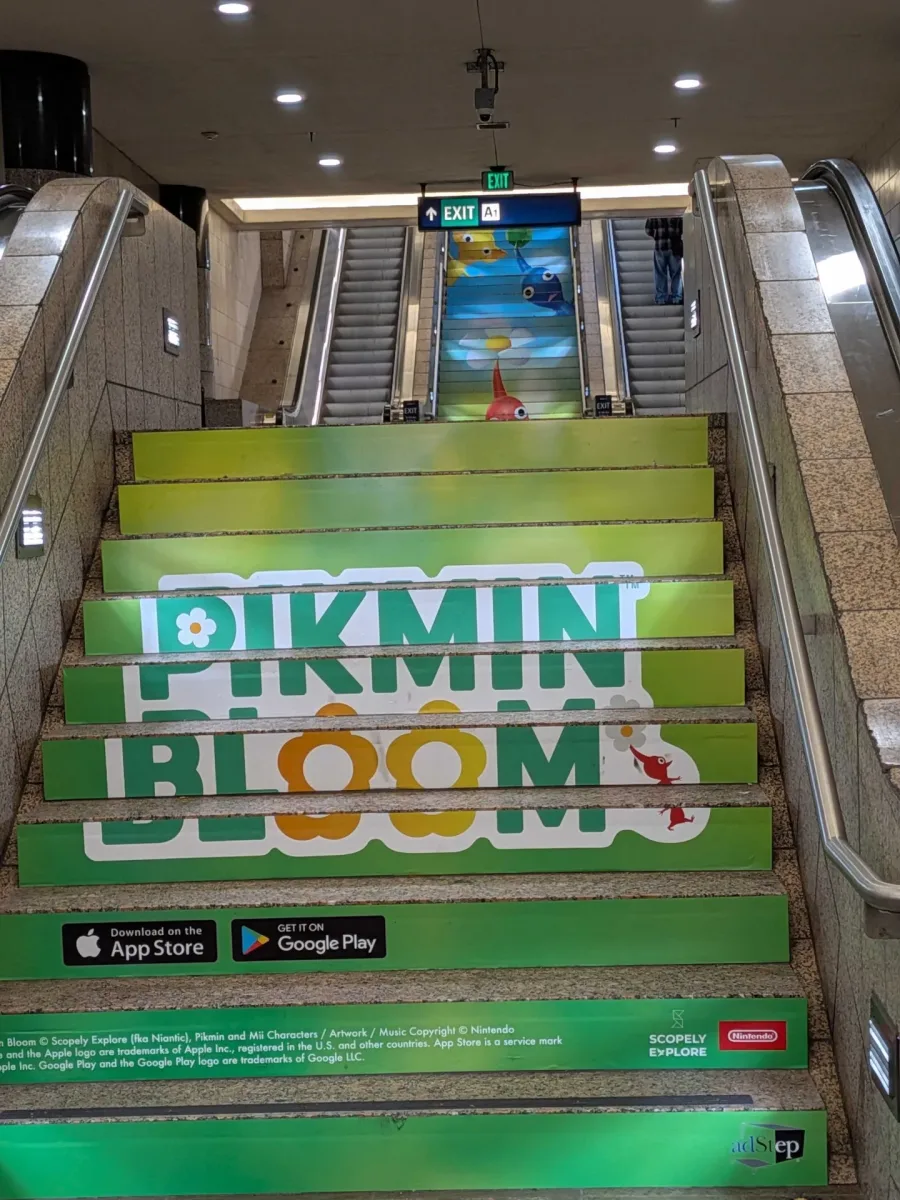
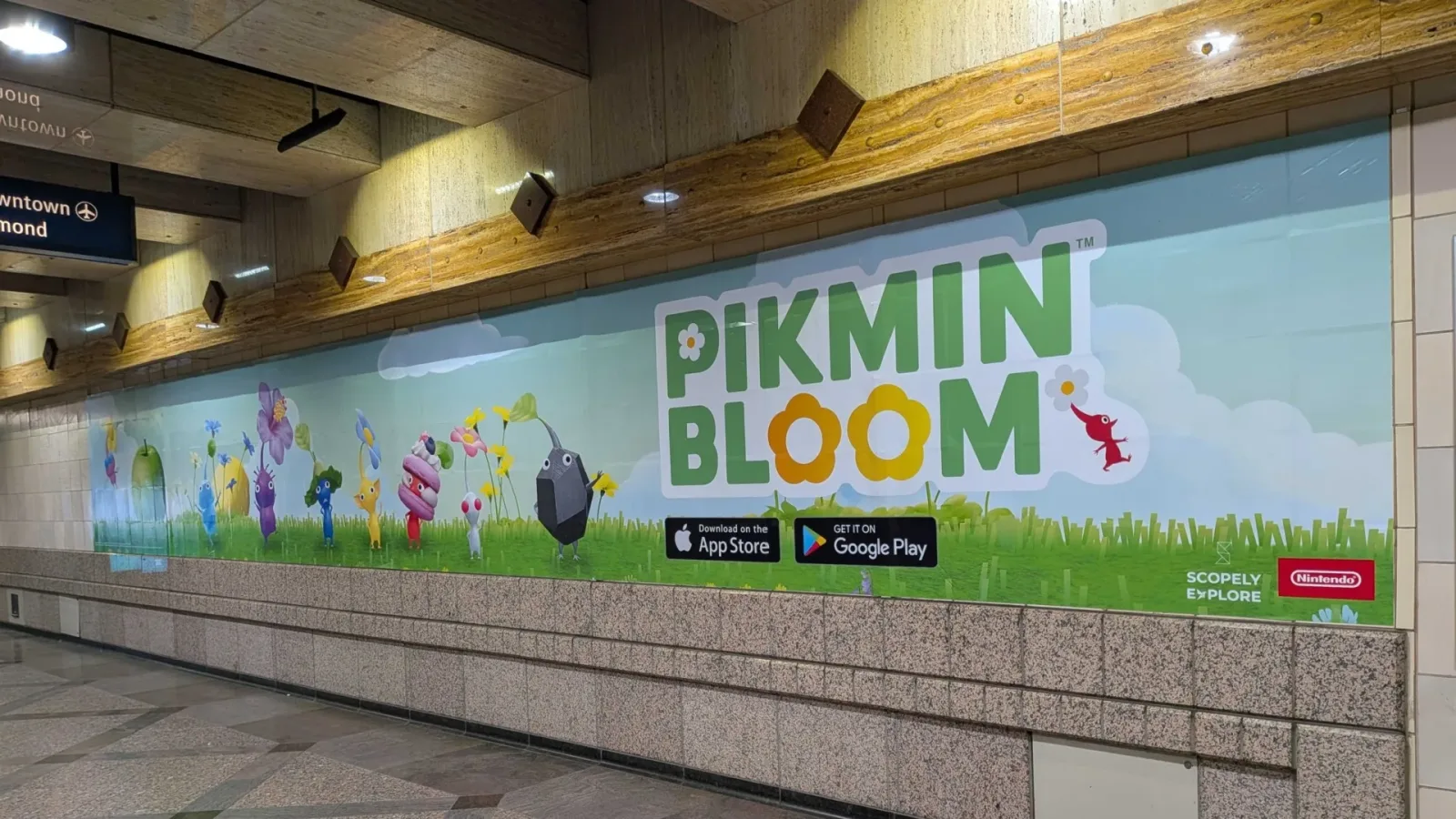
The promotion extended well beyond the convention center. Pikmin Bloom advertising appeared around Seattle before and during PAX West, including on buses and at multiple light rail stations. Westlake Station, a particularly useful stop for attendees traveling to the convention area, received especially extensive branding. Ads covered walls, floors, and stairs, ensuring the game's characters were present throughout the route many visitors used to reach the show.
Inside PAX West, the Pikmin Bloom booth supplied one simple but effective piece of convention marketing: small paper Pikmin crowns. Attendees wore them throughout the event, transforming ordinary foot traffic into an ongoing advertisement for the game. A convention booth does not need a huge demo line or a towering set piece to be memorable if it gives people something playful they genuinely want to take with them.
That approach suited Pikmin unusually well. The series has always relied on instantly identifiable character silhouettes and an affectionate, slightly strange charm. A little Pikmin accessory is easy to understand at a glance, even for people who have never played the mobile game. It is also highly suited to a fan convention, where costumes, badges, plushes, and other visible signals of fandom are already part of the atmosphere.
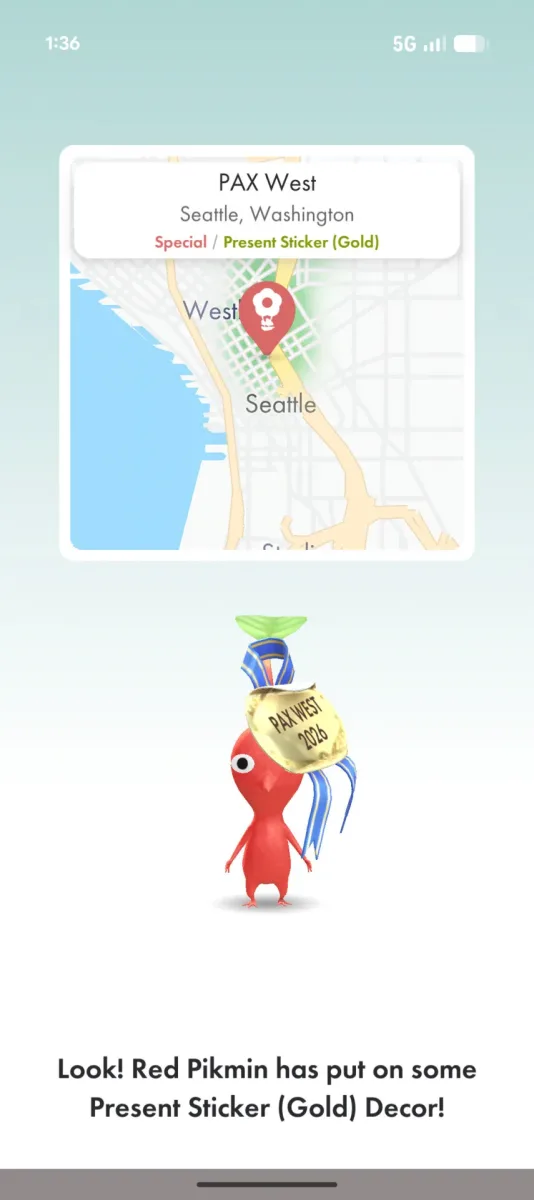
There was also an in-game reason for Pikmin Bloom players to pay attention at the event. Visitors could obtain a PAX West-themed special Pikmin by attending. This kind of location-based collectible is a natural fit for the title's design, giving regular players a souvenir tied directly to the show while offering lapsed users another reason to reinstall and check in.
Seasonal content continued alongside the convention promotion
The PAX activity arrived alongside a seasonal in-game event with an Oktoberfest-style theme. The event included Pikmin wearing sausage-shaped hats and tasks involving pretzel collection. Such playful decorations are very much in keeping with Pikmin Bloom's ongoing approach to content, which often emphasizes themed outfits and limited collections over dramatic systemic changes.
On its own, a seasonal event would not necessarily explain the scale of the Seattle ad campaign. Limited-time content is a normal component of a live mobile game, and food-themed costumes fit the game's established tone. The more intriguing question is why this particular moment received such a substantial public-facing investment.
One possible explanation is straightforward: Pikmin Bloom may simply be performing well enough to justify new marketing. While it can be easy to assume that every Pokémon GO-adjacent mobile game struggled to retain a sizable audience, Pikmin Bloom has reportedly generated more revenue each year since it launched. That pattern suggests a durable player base and a business case for trying to broaden it further, even years into the game's life.
It also demonstrates the advantage of a game designed around low-pressure, repeatable habits. Pikmin Bloom does not need to dominate broader gaming conversation every day to sustain itself. If a committed audience continues walking, collecting, completing events, and engaging with cosmetic rewards, the game can remain viable for a long time. A well-timed convention promotion may then be enough to bring back people who played early on but let the app slip off their phones.
Could the campaign be pointing toward more Pikmin?
The unusually prominent marketing naturally invites speculation about whether Pikmin has a larger moment ahead. A Nintendo Direct was scheduled for the day after the convention discussion emerged, creating an obvious opportunity for fans to wonder if another Pikmin-related announcement could be on the way. There is no confirmed connection between the PAX West push and any separate Nintendo plans, however.
It is possible that the campaign was simply a focused effort from Scopely to promote Pikmin Bloom in a city packed with game enthusiasts. It is also possible that visibility for the franchise is useful ahead of something else. Without an official explanation, either reading remains speculation.
What is clear is that the campaign achieved one of marketing's hardest tasks: it made an older game feel newly present. A player who had stopped playing in 2023 might see Pikmin on trains, walls, stairs, and convention attendees' heads, then remember why the game initially appealed to them. Returning to the app now reveals more activities and more collectible Pikmin than were available in its earlier years, while the decorative hats remain central to its appeal.
Pikmin Bloom's PAX West presence showed that a publisher does not always need a massive hardware-stage presentation to own the visual conversation at a game convention.
Nintendo's absence from PAX West was still noticeable, especially given the company's proximity to Seattle and its history of bringing entertaining displays to the event. But Pikmin Bloom offered a different model for visibility. Through a partner-managed mobile title, a citywide transit campaign, a collectible tied to attendance, and a giveaway people were happy to wear, Pikmin became a defining image of the show without Nintendo needing to occupy a traditional booth.
For a franchise often associated with quiet exploration, tiny companions, and turning walks into small adventures, it was a fittingly unconventional way to take over a convention.
Community
Discussion
Start the conversation.
No comments have been posted yet.