

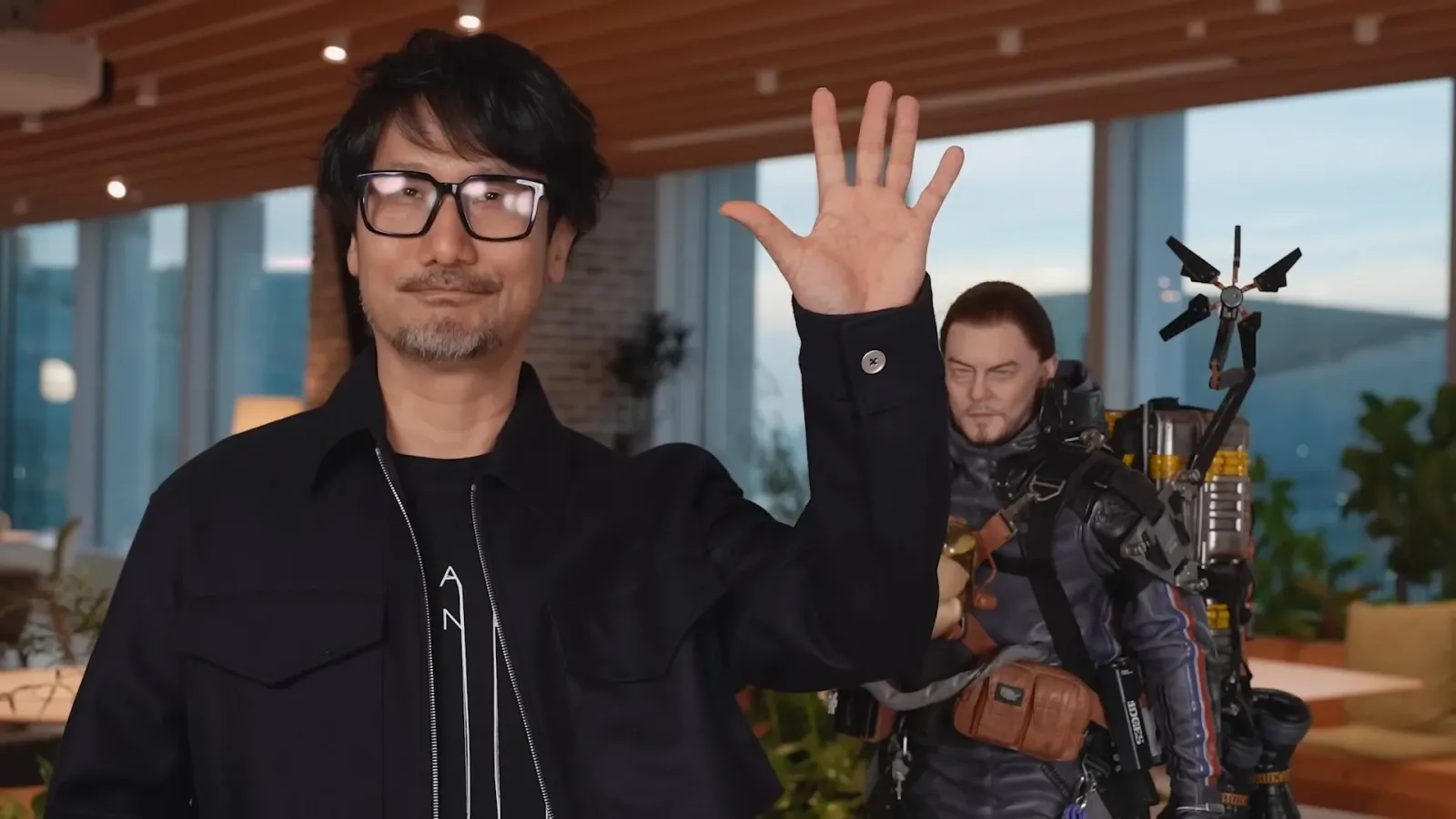
Former PlayStation executive Shawn Layden has made an emphatic case for the importance of game auteurs, arguing that the industry's most enduring works often emerge from creators with unusually forceful, individual visions. In a discussion on The Trophy Room podcast, Layden pushed back on the suggestion that games culture may overvalue famous directors and studio leaders, using the work of figures including Hideo Kojima, Ken Levine, Neil Druckmann, and Todd Howard as examples of why recognizable creative leadership still matters.
Layden's central point was not that game development is the work of one person. Modern games are made by huge teams spanning art, engineering, design, animation, audio, production, quality assurance, and many more disciplines. Rather, his argument is that great teams can benefit from a person who can maintain a coherent creative direction when difficult decisions, competing ideas, and outside pressures threaten to pull a project apart.
For Layden, the result is easy to recognize in retrospect: the games players continue discussing, replaying, and remembering are often those with a distinct point of view. He described auteurs as people who helped build the games business and suggested that the unusual, occasionally chaotic energy surrounding a strong creator can be inseparable from the work that makes it to players.
Auteur-led games leave a clear identity
The term "auteur" comes from film criticism, where it is commonly used to identify directors whose personal sensibilities are strongly visible across their work. In games, the label can be more complicated. Unlike a film director, a game creator may have different degrees of involvement in writing, mechanics, technology, visual design, production, or day-to-day management. A game's final form is also shaped by hundreds or thousands of contributors.
For useful background on this topic, read Rob Run Surges on Steam Despite Mixed Reviews, AI Disclosure and Server Complaints.
Yet certain developers have become associated with styles and priorities that audiences can identify quickly. Kojima's name is perhaps the clearest example. From Metal Gear to Death Stranding, his projects are known for their cinematic presentation, dense themes, unconventional systems, and willingness to make narrative delivery itself part of the experience. Whether every player embraces every choice is beside the point; the games tend to feel authored rather than interchangeable.
The same reasoning can be applied to the other creators raised during the conversation. Levine is closely linked with the ambitious ideological settings and player-driven tension of BioShock. Druckmann is associated with the character-focused dramatic approach of The Last of Us. Howard's work has long been tied to Bethesda's expansive, exploratory role-playing worlds in The Elder Scrolls and Fallout.
Those associations do not erase the work of their teams. They instead illustrate the value of a public-facing and internally decisive creative figure: someone who can articulate why a game should exist, what its defining features are, and which compromises would damage its core. In an industry where projects can spend years in production and involve multiple layers of management, that clarity can be difficult to preserve.
Layden's criticism of committee design
Layden contrasted auteur-driven development with games made "by committee," saying he had not seen a good game built that way. His statement is deliberately blunt, but it speaks to a familiar anxiety within large-scale development. Committee decision-making can be useful for reviewing risk, accessibility, technical feasibility, schedules, and player feedback. Problems arise when a project's creative direction is repeatedly softened in pursuit of the broadest possible approval.
When every department, executive, stakeholder, and market concern has equal power over an artistic decision, a game can lose the traits that would have made it stand out. The pressure to include familiar features, chase an existing trend, or avoid alienating any potential audience may yield something technically polished but creatively anonymous. Players often sense when a game has no strong answer to the question of what it wants to be.
That does not mean every uncompromising creative decision is automatically wise. Auteur-led projects can be expensive, demanding, and divisive. A celebrated director can make mistakes, overextend a concept, or create a difficult environment if accountability is absent. "Creative genius" should not be treated as permission for poor working practices, unsustainable schedules, or disrespect toward the teams that turn an idea into a finished game.
But Layden's comments frame the issue as one of balance. He sees the function of leadership as supporting a creative vision while removing institutional friction around it, not replacing that vision with an endless cycle of approvals. The goal of both executives and creators, in his view, should be the same: making a great game.
The executive's role: remove obstacles
Layden drew on his experience within PlayStation leadership to explain how he viewed that relationship. He said a studio chairman's role was to get obstacles out of the developers' way. If a corporate office or headquarters created a distraction, his job was to handle that issue so the team could continue focusing on the game.
It is an appealing model of executive support because it acknowledges that major games need organizational protection as well as creative ambition. Studios have to navigate budgets, staffing, technical milestones, marketing demands, platform-holder requirements, and corporate expectations. If creators are constantly forced to defend each artistic choice to people far removed from the project, the production can become less nimble and more cautious.
Protection does not have to mean a blank check. Healthy oversight can challenge assumptions, identify risks early, and ensure that a project has the resources to reach the finish line. The distinction Layden emphasizes is between questioning a plan to strengthen it and interfering so frequently that the team can no longer follow a consistent direction.
This is particularly relevant as blockbuster development becomes more costly and prolonged. The larger a game's budget, the greater the temptation to prioritize recognizable formulas and universally agreeable features. At the same time, the scale of investment makes a singular identity more valuable. A project needs a reason to command attention in a crowded market, and a strong authorial voice can provide it.
Games need both vision and collaboration
The discussion should not be read as a rejection of collaboration. The best auteur-led games are still collaborative achievements, often made by specialists whose contributions are impossible to separate cleanly from the final experience. Level designers turn broad ideas into playable spaces. Writers and narrative designers refine themes into scenes and systems. Engineers make ambitious mechanics function. Artists, composers, performers, and testers provide the texture and reliability that transform a concept into a game people can play.
What a prominent creative leader can provide is a unifying framework for all of that work. A team can disagree vigorously about implementation while still sharing an understanding of the project's destination. That common destination matters more, not less, as teams become larger.
Other developers frequently described in auteur terms reinforce Layden's wider point. Yoko Taro's games are known for tonal shifts, layered storytelling, and a willingness to play with the boundaries between player and fiction. FromSoftware president Hidetaka Miyazaki has become synonymous with worlds that reward curiosity, environmental storytelling, demanding combat, and community-driven discovery. Their games have inspired imitation, but their specific identities remain difficult to reproduce through formula alone.
That is why the debate over auteurs is not simply about celebrity developers. It is about whether the industry makes room for creative work that is strange, personal, risky, and memorable. Players may not agree with every decision made by a Kojima, a Miyazaki, a Yoko Taro, or any other high-profile creator. They may even strongly dislike a particular project. But distinctive games create conversations that generic ones rarely can.
A case for protecting memorable ideas
Layden's view ultimately presents auteurs as a valuable counterweight to industrial caution. A successful game studio needs processes, discipline, budgets, and a great deal of teamwork. It also needs someone willing to make a choice that cannot be justified solely through a spreadsheet, trend report, or committee consensus.
As games continue to grow in scope, preserving that willingness may become increasingly difficult. The challenge for publishers and platform holders is not to abandon oversight or pretend that a single creator makes a game alone. It is to build structures that let talented teams take direction from an identifiable creative vision, while protecting the people doing the work and holding projects to realistic standards.
Layden's comments are a reminder that the medium's history has been shaped by projects that did not feel designed to satisfy every possible audience. Their creators took unusual routes, their teams made those routes playable, and players remembered where those paths led. For an industry always searching for its next major hit, that kind of identity may be one of its most important assets.
Community
Discussion
Start the conversation.
No comments have been posted yet.