

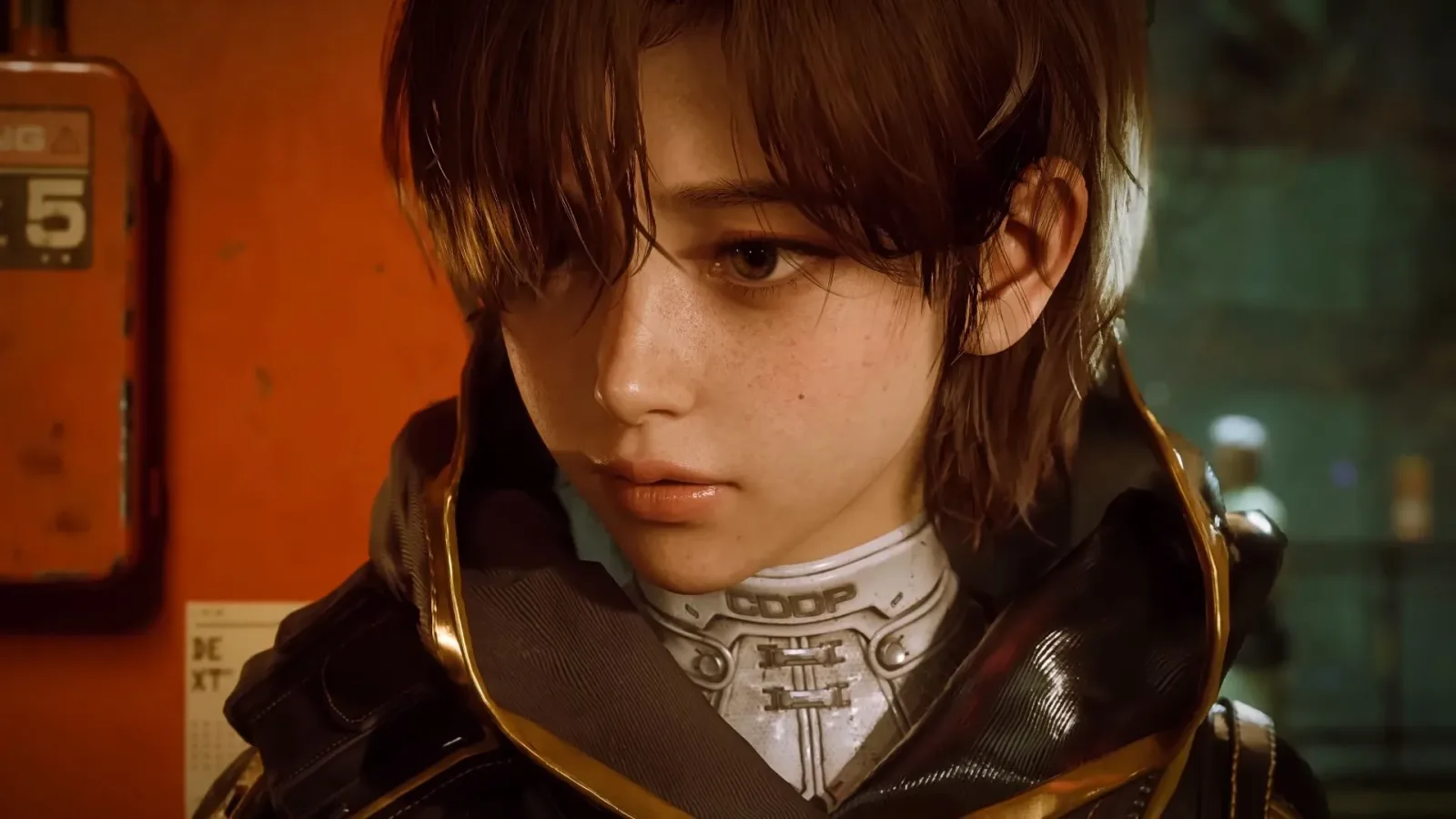
Stellar Blade: Blood Rain is once again at the center of a debate over generative AI, human authorship, and what studios mean when they describe a game as handmade. Shift Up CEO Kim Hyung-tae has said the team now works under a "handmade from start to finish" principle following a heavily criticized music video connected to the game. At the same time, he has made clear that this does not mean artificial intelligence has been removed from the project's development pipeline.
The distinction matters. The controversy was not simply about whether a game studio uses modern software tools behind the scenes. It was driven by the public response to a music video containing generative-AI material, which renewed concern among players about creative ownership, visual quality, labor, and how prominently AI may shape a major game's identity. Shift Up's current position appears to be that human developers are still responsible for the final creative result, while AI can be employed during intermediate or technical stages.
That explanation may satisfy some players, especially those who differentiate between generative content presented directly to the public and automation used in production. Others may see a tension between the language of a fully handmade work and an admission that AI remains involved in several areas of development. Blood Rain has therefore become a notable example of the increasingly complicated way game makers are trying to explain their AI policies.
A response to the music video backlash
Blood Rain returned to public conversation after its original reveal earlier in the summer, when a music video associated with the project drew strong criticism for its use of generative AI. Kim initially defended the video by saying that Evie, the featured star, had been made by human developers from beginning to end. That defense did not resolve the wider objection from fans, many of whom were concerned that generative material had still been used in a high-profile promotional piece.
For useful background on this topic, read GTA 6 Exotic Animals Front Guide: Find the Cash Stash at Three Sheets Liquor Store.
Shift Up later said it was taking those concerns seriously. However, the studio also maintained that AI has significant influence and impact within game development. Kim's more recent comments build on that earlier response rather than reversing it entirely. The studio is not presenting an absolute rejection of AI tools. Instead, it is framing their use around limits, review, and human refinement.
Under this approach, "handmade from start to finish" is less a literal claim that no algorithmic systems contribute at any point in production, and more a statement about responsibility for the finished product. Human artists, designers, and other developers are expected to shape and polish the end result so that it does not resemble work created wholly through generative processes.
That is an important difference in wording, but it is also likely to be the central point of disagreement. For players upset by the music video, the presence of AI at any stage may remain a concern. For Shift Up, the key issue appears to be whether staff members retain authorship and quality control over what reaches players.
What AI may be doing during development
Kim described AI as something used for intermediate tasks rather than as a substitute for the people building Blood Rain. The examples he gave point toward technical support work: texture weathering, polygon reduction for performance, lighting tests, and organizational tasks. He also characterized AI as part of a broader toolset that can assist with quality assurance and debugging.
These categories cover a wide range of game development work. Texture weathering can involve adding signs of wear, age, dirt, or environmental damage to surfaces. Polygon reduction can help optimize 3D assets so that they demand less from hardware while retaining an acceptable visual appearance. Lighting testing can speed up experimentation with how scenes read under different conditions. Organizational support could refer to handling large volumes of assets and development information.
Quality assurance and debugging, meanwhile, are often labor-intensive parts of producing a game. Teams must test large numbers of systems, reproduce bugs, identify possible causes, and verify fixes. Kim's argument is that removing AI entirely is no longer especially practical because software-assisted processes now touch many areas of development, from relatively simple testing work to more complex technical investigation.
None of that necessarily answers every question raised by the public. The term AI covers a broad set of technologies, and players may want more specific detail about which systems are being used, what data they rely on, and whether they generate assets that appear in the final game. Kim's comments establish that AI is present in the workflow, but they do not lay out a complete technical breakdown of every tool or process involved.
Human polish is the studio's dividing line
Shift Up's stated dividing line is final human intervention. AI may assist with certain processes, but human developers refine the work afterward and are meant to ensure that the game has an identity distinct from projects produced entirely through automated generation. In this view, the technology is an aid rather than the principal author.
Kim also pushed back against using AI primarily to accelerate schedules or maximize output. He argued that pursuing efficiency and productivity alone is the wrong goal, suggesting that projects made with that mindset can become the kind of low-quality material players dismiss as "slop." The remark reflects a concern shared by many players: that studios could use generative tools to flood storefronts and promotional channels with work that is cheaper and faster to produce, but less coherent, distinctive, or carefully made.
For Blood Rain, Shift Up says its use of AI is intended to support a level of quality that would otherwise be difficult to reach, not simply to get a game out the door faster. That is a more ambitious claim than saying the tools save time. It positions AI as a way to improve particular parts of a complicated production while leaving creative standards in human hands.
Whether that distinction is persuasive will depend on execution. Players generally judge a game by what they can see and play: its art direction, performances, writing, combat, technical condition, and overall personality. A studio can describe internal safeguards, but trust is built through the final work and through transparent communication about the choices behind it.
Why the wording remains contentious
"Handmade from start to finish" is a powerful phrase because it suggests a work fashioned directly by people, with care present through each stage. In ordinary use, it can imply the absence of automated creation. That is why the phrase may continue to draw scrutiny when paired with confirmed AI use for any production tasks.
There is room for a reasonable distinction between AI-assisted technical work and generative images, music, video, or written material placed in public-facing content. Yet that distinction needs to be communicated carefully. The music video backlash showed that players do not necessarily accept a broad assurance that humans were involved somewhere in the process. They may instead ask how much of an asset was generated, who made the final decisions, and whether the work reflects deliberate artistic contribution.
The issue is even more sensitive when it concerns promotion. A music video is not an invisible internal optimization step. It is a public statement about a game, its characters, and its creative tone. If players believe it looks or feels generated, the controversy can affect perceptions of the entire project, even if the game itself is made through a more traditional pipeline.
Shift Up's revised motto can therefore be read as an effort to reassure the audience that Blood Rain's core is still being built and finalized by people. But the studio's acknowledgement that AI continues to have a role means it will likely face ongoing questions about where that boundary sits.
Blood Rain's larger challenge
For Shift Up, the conversation around AI arrives alongside high expectations for the next chapter in the Stellar Blade series. The project already has considerable visibility, and the involvement of The Weeknd has been presented by the company as evidence that its appeal reaches beyond the game industry into a broader cultural space. That greater attention also means its creative decisions will be examined more closely.
AI policy is becoming part of that scrutiny. Players are increasingly alert to generative content in game trailers, marketing, art, localization, and production. Some are comfortable with narrowly defined tools used for technical assistance. Others prefer studios to avoid generative AI entirely, particularly where it can replace artists or obscure the origin of creative work. Many fall somewhere between those positions but expect clear disclosure.
Blood Rain will not settle that industry-wide argument on its own. Still, Shift Up's messaging illustrates the balancing act facing major developers. Studios want to use new tools where they believe the tools are helpful, while audiences want confidence that the art they value has not been hollowed out by automation.
Kim's comments make Shift Up's current stance clear enough in broad terms: AI remains in use, but the studio says people direct, revise, and complete the work. The harder task will be showing players that the promise of a handmade final game is more than a slogan. As Blood Rain moves forward, its reception may depend not only on the strength of its action RPG experience, but also on whether the studio can earn trust through the care and character visible in the finished result.
Community
Discussion
Start the conversation.
No comments have been posted yet.