

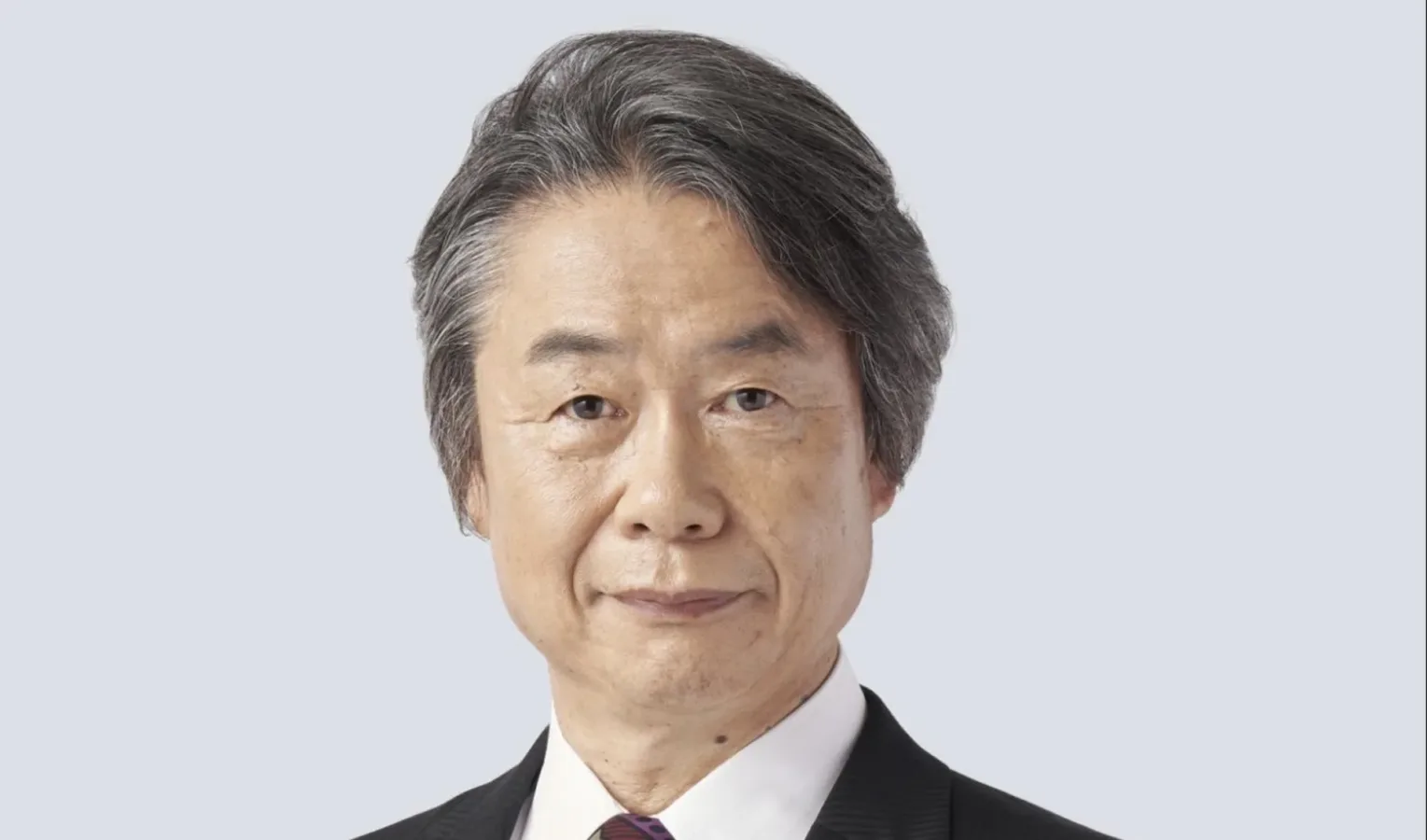
Shigeru Miyamoto has offered a measured view of artificial intelligence's potential role in creative work, saying he does not know whether AI could someday take over every part of the creative process. For now, though, the Nintendo veteran sees the technology as an opportunity to think more carefully about the difference between making something with intention and simply completing a task.
Miyamoto made the comments while accepting a Japanese national honor recognizing his cultural contributions through games. The award arrives nearly 50 years after he joined Nintendo in 1977, before the company became globally synonymous with video games. Looking back on that span, he described himself as fortunate to have been present during such a dramatic period of change for both Nintendo and the medium as a whole.
His remarks connected several subjects that have defined his career: collaboration, accessible design, the changing place of games in the home, the expansion of Nintendo characters into movies and theme parks, and the difficult questions raised by generative AI. Rather than framing AI as an immediate replacement for artists and designers, Miyamoto suggested that increasingly capable tools could make the human side of creativity more visible.
An Honor Shared With Nintendo's Many Teams
Miyamoto stressed that games are not made by one person working alone. He accepted the recognition as a representative of the many people with whom he has made games and related projects across his career. That perspective is particularly relevant to the breadth of Nintendo's current work, which extends beyond console software into physical attractions and screen entertainment.
For useful background on this topic, read ARZOPA's 16.1-Inch 144Hz Portable Gaming Monitor Drops to $97.
He specifically pointed to his work with Universal Studios Japan on Super Nintendo World, where game worlds and characters have been translated into a shared real-world space. For Miyamoto, the honor was something to celebrate with colleagues in many different disciplines, not merely with game developers.
That collaborative outlook has long been central to how Nintendo presents its biggest projects. Even titles closely associated with individual creators are the result of programmers, artists, sound teams, producers, hardware engineers, testers, and many others contributing toward a single experience. Miyamoto's comments served as a reminder that the public face of a game can never fully represent the scale of the team behind it.
From Living-Room Games to a Wider Audience
When Miyamoto arrived at Nintendo, the company was known primarily for products such as playing cards and board games. Those were items designed to be used in the home, often around a table with family or friends. He said that this sense of games belonging naturally in a living room has remained important to him as video games developed into a much larger industry.
His concern was not simply whether a game could display more impressive technology. It was whether gaming hardware and software would feel welcome in people's daily lives. That concern became especially significant during the transition from the GameCube era to the Wii.
At that time, consoles were growing more powerful, audiences were growing, and games were becoming increasingly prominent among younger players. Yet Miyamoto saw a divide between people who played games and people who did not. He worried that conventional controllers, despite being designed to make gaming enjoyable, could appear too complicated to someone trying a game for the first time.
The Wii became Nintendo's answer to that question. Its motion-focused controls and straightforward setup were built around the idea that players should be able to participate without already understanding the language of traditional gamepads. The Nintendo DS similarly broadened the ways people could interact with games through touch controls and two screens. Later, smartphones further pushed games into everyday life for an enormous global audience.
Miyamoto's reflections do not reduce those changes to a single hardware feature. Instead, they point to a wider philosophy: game design should consider the people in the room, including those who may be watching, joining in briefly, or encountering the medium for the first time. Accessibility, in this view, is not an afterthought. It is part of deciding what kind of social role games can have.
Nintendo Characters Beyond the Controller
The increasing familiarity of game characters has also changed Miyamoto's thinking about adaptations. He said he was once opposed to turning Nintendo games into films because he had designed their characters specifically for interactive experiences. A game character comes alive in a distinct way when players control them, explore through them, or repeatedly learn their abilities. Film cannot reproduce that exact relationship.
Over time, however, the broad affection audiences developed for Nintendo's characters showed that they could exist meaningfully in other forms. Their identities had become strong enough to move beyond the screen, whether into films, theme parks, merchandise, or other cultural spaces. That does not erase the value of interactivity, but it expands what those characters can represent to fans.
This evolution mirrors Miyamoto's larger point about games becoming part of the cultural landscape. The people who grew up playing them are now adults, and many are raising children of their own. As familiarity with games has spread, the boundary between game culture and everyday culture has become less rigid. Characters once experienced primarily through a television and controller can now appear in a theater or a themed attraction without seeming out of place.
AI, Tools, and the Meaning of Making Something
When discussing AI, Miyamoto drew a comparison to earlier changes in design tools. He recalled a period when designers learned lettering, a specialized ability to reproduce text neatly for materials such as posters. At the time, being able to carry out that technical skill could itself be a major qualification for design work.
As computers and word processors advanced, however, many of those mechanical requirements became easier. Text could be copied, pasted, and rendered cleanly. Images could be assembled from different places. Once software handled more of the technical labor, Miyamoto argued, personal strengths became more apparent. A person's instinct for composition, layout, and visual communication could matter more than their ability to execute lettering by hand.
He used that history to explain why he sees generative AI as a potentially useful moment for reevaluation. The technology may automate or accelerate certain tasks, but that does not automatically answer the more important question of what a creator is trying to express. Tools can assist with execution. They cannot, by themselves, establish the personal intention behind a design.
"The more AI takes over various tasks, the more it becomes an opportunity to think deeply about what it actually means to create," Miyamoto said. "I think that's a very good thing."
Miyamoto described a distinction at Nintendo between "creating" and "working." In his explanation, creation begins with establishing the larger framework or structure of an idea. Filling in the remaining details, refining them, and polishing the work comes afterward. He emphasized that this labor is enjoyable in its own right, because hands-on work can provide the satisfaction people associate with having made something.
The risk, he suggested, is becoming satisfied with the process of working and mistaking that feeling for proof that the result is meaningful or good. This is where AI may make the question sharper. If a system can complete more tasks quickly, creators may need to more consciously identify what their own contribution is: the concept, the choices, the taste, the judgment, and the reason for making the project in the first place.
Human Intention Still Matters
Miyamoto did not claim to know the endpoint of AI development. He acknowledged the possibility that the technology may advance far beyond its present capabilities and said he cannot say whether it will eventually handle everything, including acts people currently describe as creative.
Still, his present conclusion was clear: there remains plenty for people to do. He contrasted enduring work with design that merely assembles copied elements. A lasting design, in his view, reflects an individual's decision to make something. The computer's role is to help realize that decision rather than replace it.
That perspective fits the themes running through Miyamoto's career. Whether considering a controller that welcomes newcomers, a game character adapting to a new medium, a theme-park space built by specialists from different fields, or an AI-assisted workflow, the focus remains on the experience being created for others. Technology changes. The tools available to developers change. But the need to understand why an experience should exist, who it is for, and what people may feel when engaging with it remains a human responsibility.
As AI becomes a more prominent topic across games and entertainment, Miyamoto's comments offer neither an uncomplicated embrace nor a declaration that technology must be avoided. Instead, they argue for attention to intention. For an industry built on rapid technical evolution, that may be the more demanding challenge: ensuring that faster tools leave room for the thoughtful, collaborative, and distinctly human choices that give games their lasting identity.
Community
Discussion
Start the conversation.
No comments have been posted yet.