

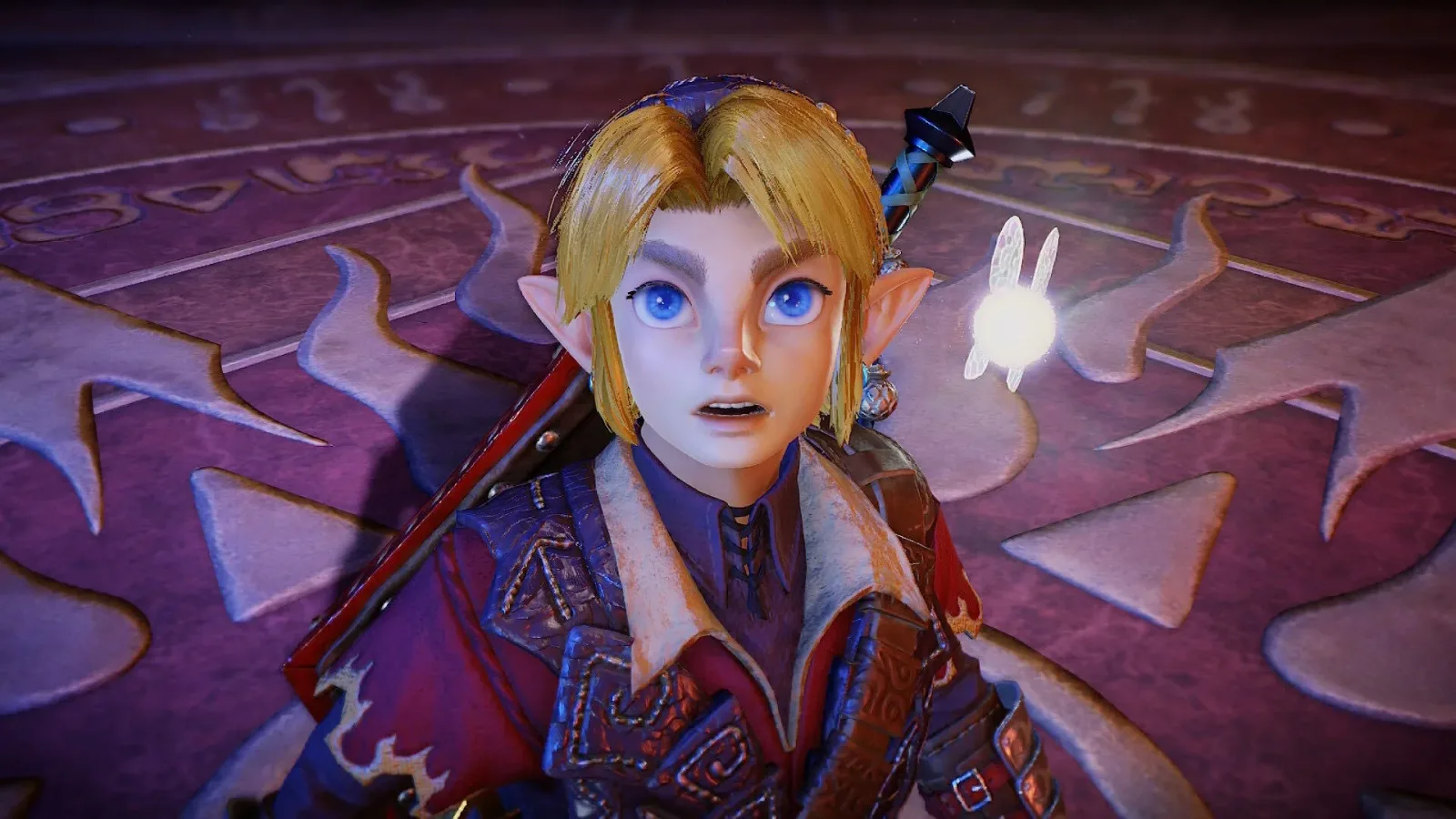
The Legend of Zelda: Ocarina of Time remake has prompted the kind of discussion that inevitably follows any revisit to a landmark game: what should be preserved, what should be modernized, and what can change without altering the identity of the experience? For players returning after years away, the remake offers a welcome path back to the tightly designed, puzzle-led structure that defined Nintendo's 1998 adventure. After a long era in which Zelda has been associated with the vast, exploratory freedom of Breath of the Wild and its successors, the focused progression of classic temples can feel newly refreshing.
There has been some debate over whether the remake smooths away too much difficulty. That conversation will likely continue, particularly among longtime players who remember every locked door, enemy encounter, and obscure puzzle solution from the original. But accessibility and challenge are only part of the remake equation. A much smaller alteration can have an outsized effect when it changes a player's emotional relationship with a place.
In this case, the most notable disappointment is not a redesigned puzzle or a less punishing battle. It is the updated music for the Spirit Temple. The composition remains recognizably the same, and much of what made it distinctive is still present. Yet its revised mix softens the music's most unnerving qualities, turning a track that once commanded attention into something more atmospheric and easier to overlook.
That may sound like a narrow criticism. In a game as large and beloved as Ocarina of Time, one dungeon cue is hardly the whole story. But the Spirit Temple is not just another location. It is one of the adventure's most important mood pieces, and its music has always helped define why stepping into it feels so different from the temples that came before.
For useful background on this topic, read Shadow the Hedgehog Returns to PC Through Shadow Recompiled.
A return to Zelda's deliberate dungeon design
One of the strongest arguments for revisiting Ocarina of Time is its pace. The game continually directs players toward a series of handcrafted spaces with clear themes, intricate internal logic, and a satisfying rhythm of discovery. Progress is not primarily about crossing a huge landscape in search of whatever catches the eye. Instead, it is about gradually gaining the tools, knowledge, and confidence needed to solve the next elaborate obstacle.
That older Zelda framework has a particular pleasure to it. A dungeon is a puzzle box, but it is also a narrative environment. Each room suggests a purpose. Each new item changes how the player reads the surrounding architecture. Locked routes, switches, enemy placements, and spatial tricks build toward the feeling that Link is navigating a hostile system designed to test him.
The remake's return to that structure can be especially appealing after more than a decade of Zelda adventures built around open-ended exploration. There is no need to treat those approaches as enemies; the openness of modern Zelda brought its own sense of wonder. Still, the more concentrated style of Ocarina of Time offers a different kind of satisfaction. It is carefully paced, continuously authored, and often intensely atmospheric.
The Spirit Temple arrives late enough in the journey to draw on everything the game has taught the player. It is typically the last major dungeon before the endgame, so it carries a natural sense of finality. More importantly, it is rooted in a region that the player has not truly explored until this point: the dangerous desert territory associated with the Gerudo and with Ganondorf himself.
Why the Spirit Temple needs to feel dangerous
By the time Link enters the desert, the game has already established what the Gerudo region represents. This is enemy territory, a place linked directly to the central threat looming over Hyrule. Ganondorf was born and raised among the Gerudo, and the journey into this land creates a feeling of crossing beyond the familiar boundaries of the kingdom.
The desert setting does much of the work on its own. Sand, stone, distance, and ancient ruins all suggest isolation. But the Spirit Temple needs more than visual scale. It has to create uncertainty. Players should feel that they are moving through a place with deep history, hidden power, and an underlying menace that is difficult to name. It is an area that asks for awe, but not comfort.
In the original game, the music was essential to that effect. The Spirit Temple track did not merely fill silence while players solved puzzles. It made the dungeon feel alert and dangerous. Its unusual instrumental palette stood apart from much of the rest of the soundtrack, helping the temple register as a location outside Hyrule's ordinary musical language.
Played through the limitations and character of late-1990s hardware, the original arrangement had a directness that could be difficult to ignore. Large gong-like strikes gave the piece weight. Synthesized strings shaped its murky, suspended atmosphere. Most memorably, a reedy lead voice resembling a duduk carried a melody that felt slightly dissonant and exposed. It did not settle comfortably into the background. It cut through it.
The old Spirit Temple theme was not simply exotic color for a desert dungeon. It was a source of tension, constantly reminding the player that this was unfamiliar ground.
That piercing melodic presence made a practical difference during play. Even when a player was occupied with moving blocks, fighting enemies, or deciphering a room's next step, the music kept working at the nerves. It sustained the impression that something ancient and hostile was nearby, just outside the limits of what the player could see or understand.
The remake preserves the notes, but changes the impact
The remake does not discard the Spirit Temple theme. Its key ingredients remain identifiable, and the piece is still beautiful in a conventional sense. The issue is less about the composition itself than about how it has been balanced and presented.
In the updated version, the overall sound is more ambient. The central melody appears to blend more closely into the surrounding string arrangement instead of pushing forward above it. The result is smoother, more spacious, and arguably more polished. It is also calmer.
For some listeners, that will be a welcome refinement. A modern remake often aims for a fuller, more naturalistic soundscape, and a subtler mix can make a dungeon feel cohesive rather than aggressively musical. There is no universal rule stating that a remake must reproduce the sharp edges of older audio technology. New arrangements should have room to reinterpret familiar material.
But reinterpretation has consequences. In this instance, reducing the lead melody's prominence also reduces the track's sense of unease. What once felt like a strange voice calling from inside the temple now feels more integrated into a broad wash of sound. The music creates ambience, but it does not intrude in the same way.
That distinction matters because the original track's intrusion was part of its storytelling. The Spirit Temple is supposed to be imposing. It should feel as though the player has entered a place that is not meant to be fully comfortable or easily understood. When the music becomes more relaxed, the dungeon can feel less precarious, even if every room, puzzle, and enemy remains largely recognizable.
Background music versus a musical threat
There is a difference between music that supports a scene and music that actively reshapes it. The remake's version of the Spirit Temple theme may function well as environmental texture. It leaves space for the player to focus on gameplay, and it supplies the expected desert mysticism without overwhelming the rest of the audio. Yet that very restraint can make it less memorable in the moment.
The original was more than texture. It behaved almost like another presence in the dungeon. The prominent melodic line continuously pressed against the player's attention, lending even routine navigation a sense of anxiety. It could make an empty corridor feel charged. It could make a pause between puzzles feel uneasy rather than restful.
This is one reason soundtrack changes in remakes can be more significant than they first appear. Players often remember a game not as a collection of individual systems, but as a web of sensations: the look of a room, the friction of movement, the timing of a sound effect, and the way a particular melody enters at a specific emotional threshold. Alter one piece of that web and the game remains recognizable, but its mood can shift.
For veterans, the contrast is particularly sharp because the original Spirit Temple music is attached to powerful memories. Hearing its MIDI instrumentation through a CRT television was part of the experience for many players. Its imperfections and synthetic qualities were not obstacles to immersion; they were part of the track's identity. The electronic timbres helped make the temple feel uncanny rather than merely ancient.
A small complaint in an otherwise rewarding revisit
None of this means the remake fails as a revisit to Ocarina of Time. Returning to its sequence of themed dungeons, concise adventure structure, and puzzle-driven progression remains deeply enjoyable. Nor does one altered mix settle the wider discussion about whether the game has become easier. Those questions concern a larger set of design decisions and will naturally vary from player to player.
Still, the Spirit Temple cue is a useful reminder that fidelity is not only about layouts, mechanics, or dialogue. Tone is equally important, and music frequently carries tone more effectively than any visual upgrade can. A remake may retain the rooms and retain the melody, yet lose a little of the pressure that made those rooms unforgettable.
Fortunately, the 1998 version remains available for anyone who wants to revisit that original sound. New players may still find mystery and ethereal grandeur in the remake's Spirit Temple, because the location's design remains potent. But the older version of the theme has a harsher, more haunting character that is difficult to replicate once it has been softened.
In a game full of iconic musical moments, the Spirit Temple's original track did something unusually bold: it made discomfort part of the reward. It transformed an already ominous dungeon into a place that felt spiritually vast, alien, and faintly threatening. The remake's arrangement is lovely, but loveliness is not quite the same thing as danger.
Community
Discussion
Start the conversation.
No comments have been posted yet.