

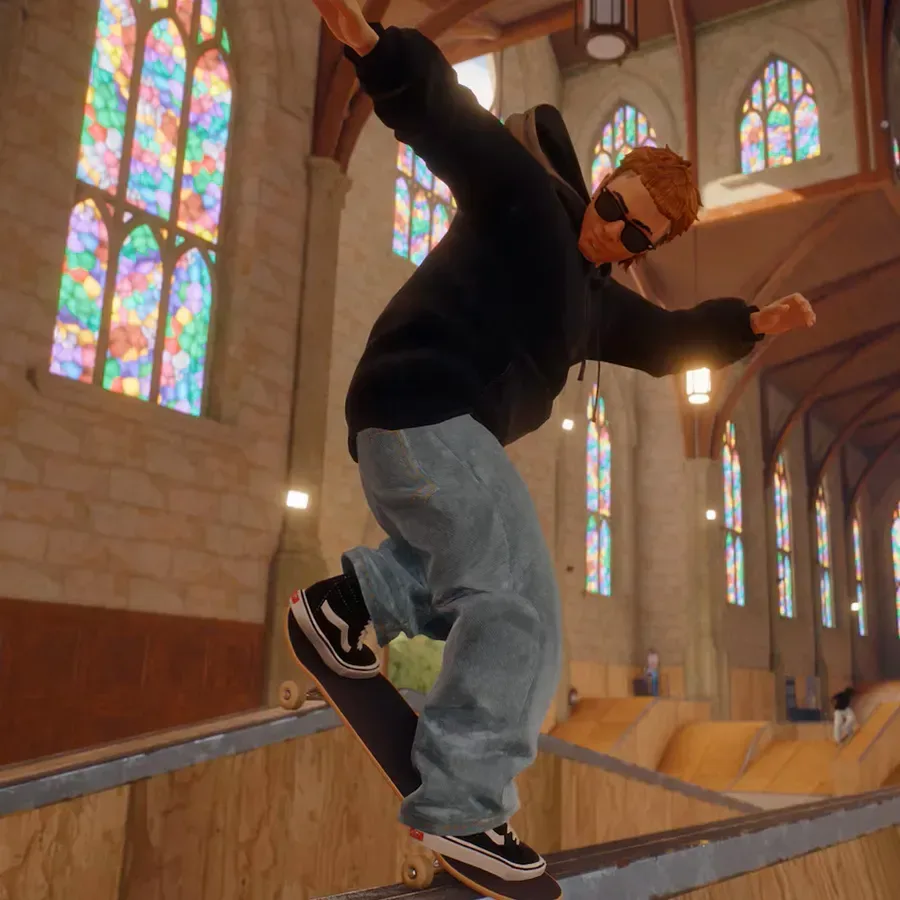
Skate developer Full Circle has addressed the explosive growth of community-made mods surrounding its skateboarding sandbox, saying it is working on official tools intended to give players broader and deeper ways to create. The statement arrives after ReSkate, a fan-built modding platform, rapidly became a major talking point among the game's community.
Released publicly roughly a week before Full Circle's October 9 statement, ReSkate offers capabilities that go well beyond a conventional cosmetic or quality-of-life mod. Its features include offline play, private servers, player-made maps, and other options that have clearly resonated with people looking for more control over their time in San Vansterdam. The project has surpassed 350,000 downloads on GitHub, a striking number for a community tool built around a live game that launched in September 2025.
Rather than responding with an immediate shutdown, Full Circle acknowledged the enthusiasm behind player-led experimentation. At the same time, the studio made clear that support for creativity does not mean every kind of modification is acceptable. Its message establishes a boundary between community expression and tools that interfere with paid content, gated material, or the commercial rights tied to the game and its partners.
Embedded X/Twitter post
Full Circle welcomes creativity, with clear limits
Full Circle framed Skate and skateboarding culture more broadly as spaces shaped by communities and personal expression. That perspective is central to why the developer says it enjoys seeing players push San Vansterdam in unusual directions. The studio also connected that sentiment to the game's broader sandbox ambitions: Skate was designed to let players have fun and make their own kinds of content.
For useful background on this topic, read Grand Theft Auto's Early Driving Physics Returns in a Playable 'Remaster' Demo.
However, the studio's position is not an unrestricted endorsement of all third-party tools. Full Circle specifically identified three areas where it will draw the line: modifications that bypass systems to obtain paid cosmetics, tools that release content intended to remain gated or unreleased, and unauthorized assets or features used to generate profit.
That distinction matters because it explains the tension at the heart of the ReSkate conversation. Community projects can expand what players are able to build and share, but they can also create legal, commercial, and security concerns when they bypass the systems supporting a live game. Full Circle argued that circumventing paid cosmetics or exploiting unreleased material harms the artists, skate brands, creators, and development staff whose work is represented in Skate.
The statement is therefore neither a blanket celebration of modding nor a declaration that all mods will be removed. It is a public outline of what Full Circle sees as acceptable creative activity and what it considers a breach of its systems and partnerships. For players watching ReSkate's next steps, the practical question will be whether the platform can continue to operate in a way that stays outside the categories Full Circle has identified as unacceptable.
Official creation access is being built
The most significant part of Full Circle's response may be its confirmation that official creative tools are in development. The studio said it understands that players want more freedom and more customization options, and that it is currently building secure, official access tools to support a wider and more substantial level of community creation.
Full Circle did not provide a timetable, feature list, release window, or explanation of exactly how those tools will work. There is no confirmation yet that official options will duplicate ReSkate's offline support, private-server functionality, map-making pipeline, or any other individual feature. Players should not assume that an eventual official toolset will mirror the fan platform feature for feature.
Still, the announcement gives the community an important signal: demand for more expressive tools has been noticed. The studio's choice of words also suggests that it is considering infrastructure and safety alongside creative freedom. "Official" and "secure" access are particularly important terms for a game connected to paid cosmetics, external brand relationships, and ongoing development.
For Full Circle, a formal creation ecosystem could provide a way to encourage maps, shared experiences, and player experimentation without opening the door to unrestricted access to systems that were never intended to be publicly available. For players, the appeal is straightforward. Better sanctioned tools could make it easier to create, share, and collaborate without worrying that their work depends on an unofficial project whose future may change quickly.
ReSkate coincides with a major player surge
The momentum behind ReSkate is visible not only in download numbers but also in Skate's recent player activity. Following the platform's release, the game's active population climbed sharply, reaching more than 7,000 players on October 5. That was Skate's highest peak in months after its September 2025 launch.
A single spike cannot prove that one project alone caused every returning player to log in, but the timing makes the community interest difficult to ignore. ReSkate appears to have tapped into an audience eager for possibilities that extend beyond the game's standard structure. Offline access, private spaces, and custom maps are all features that can change how a community engages with a sandbox, especially when groups want to experiment together on their own terms.
That enthusiasm is also why Full Circle's response has attracted attention. When unofficial tools bring a sizable wave of players back to a game, developers face a delicate decision. They can focus solely on protecting their technical and commercial systems, or they can also study the demand those tools reveal. Full Circle's statement indicates it is doing both: protecting the areas it sees as essential while preparing some form of expanded official support for creation.
It is too early to know whether that approach will satisfy everyone. Players who want complete flexibility may see official tools as too limited, while players invested in the live game's economy may welcome stronger safeguards around paid and unreleased material. The eventual details will matter far more than the promise alone, particularly around sharing creations, hosting sessions, building maps, and accessing content with friends.
The fan project's future remains uncertain
The ReSkate creators have acknowledged that they did not anticipate the project becoming as large as it has. They have characterized the work as something made out of affection for Skate, while also recognizing that a legal challenge remains possible. The team has said it is prepared to take ReSkate down if asked to do so by EA's lawyers.
For now, no shutdown has been announced, and ReSkate remains available. Full Circle's October 9 message does not specifically declare the platform prohibited, nor does it promise that the project will be allowed to continue indefinitely. Instead, it sets out the principles the developer intends to apply to mods and related tools.
That leaves ReSkate in a notable but uncertain position. Its popularity has helped demonstrate a large appetite for more expansive Skate creation options, and it may have accelerated public discussion around features players want. At the same time, its future may depend on how its functions evolve, how those functions interact with Full Circle's boundaries, and whether official tools eventually address some of the same needs.
What players should watch next
The next development to watch is Full Circle's promised follow-up on its official access tools. Until the studio provides specifics, the community does not know what scope of customization, creation, or sharing it plans to support. The key issue is not simply whether more tools are coming, but how much meaningful freedom those tools will provide.
- Creation depth: Whether players will receive robust options for making and sharing their own spaces or content.
- Community access: Whether official systems will make it easier for groups to play and collaborate in controlled private environments.
- Content boundaries: How Full Circle will distinguish legitimate creativity from access to paid, restricted, or unreleased items.
- ReSkate's status: Whether the fan platform continues as it is, changes its approach, or eventually faces a request to stop operating.
For the moment, Full Circle's position is measured but unmistakable. It recognizes that Skate players want more ways to build, customize, and experiment, and it says official solutions are on the way. But the studio also intends to defend paid cosmetics, unreleased content, and the work of the people and brands involved in the game. ReSkate's viral success has made the demand for creative freedom impossible to miss; the coming challenge will be turning that demand into official tools that feel useful without undermining the systems Full Circle is determined to protect.
Community
Discussion
Start the conversation.
No comments have been posted yet.