

Minecraft has supported almost every kind of player-made reinvention imaginable over the years. There are mods that turn it into a survival simulator, a factory-management game, a fantasy adventure, a horror experience, or a technical showcase packed with machinery. Combat has also been a major target for modders, largely because the base game's fighting can feel deliberately simple: strike, block when possible, watch positioning, and repeat.
Soulbound, a Minecraft mod by Pixelcite, takes a dramatically different route. Rather than simply adding another weapon set or making enemies tougher, it rebuilds combat around the turn-based, dodge-heavy ideas associated with Undertale and Deltarune. Following a substantial 2.0 update released this week, the mod has gained significant attention and has passed 140,000 downloads on Modrinth.
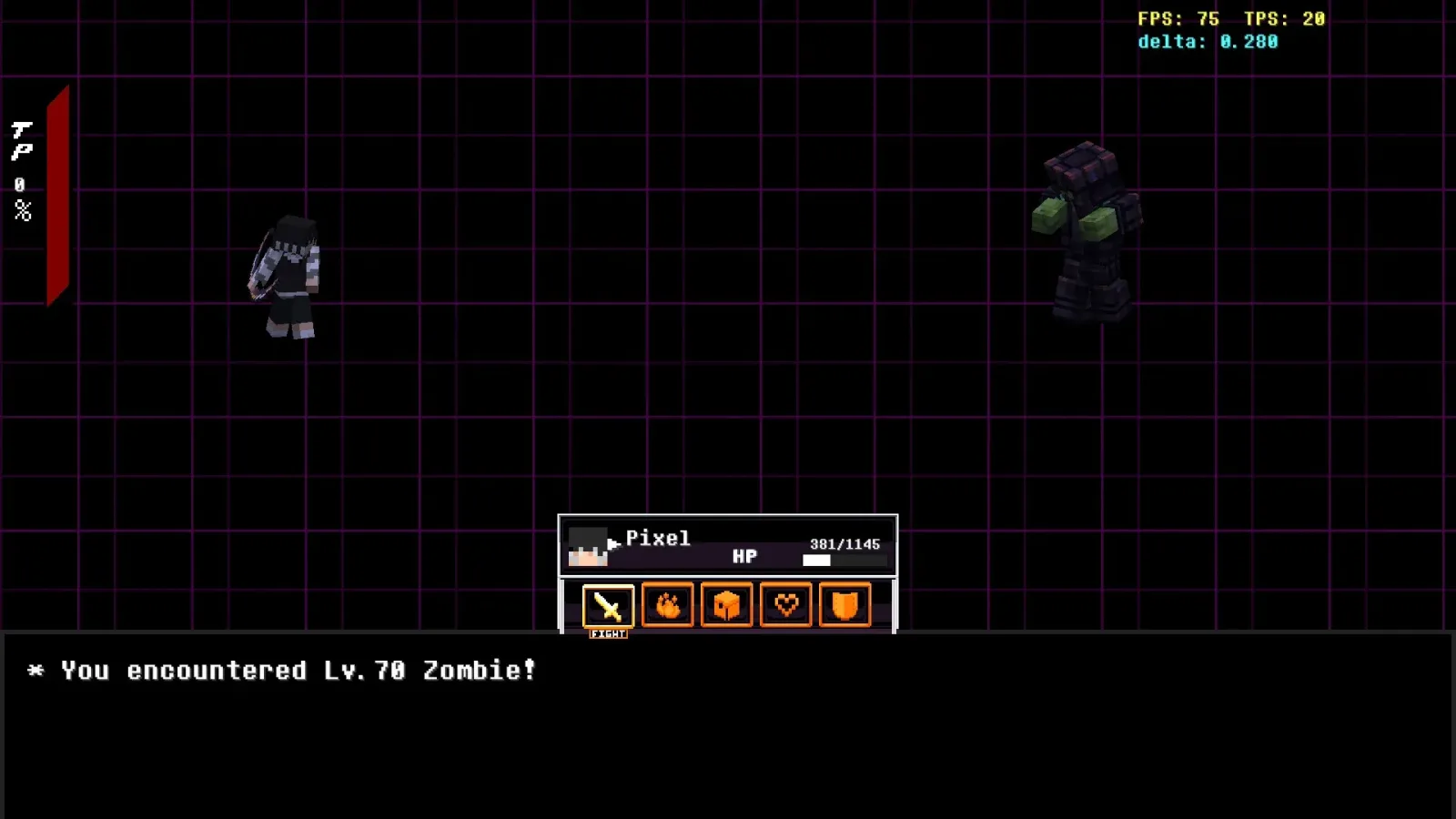
Its pitch is immediately unusual. Minecraft's familiar blocky landscapes remain present, but encounters can shift into a stylized RPG battle format where player choices, character setups, and bullet-hell-style evasion take priority over ordinary real-time sword swings. The result is not merely a cosmetic crossover. Soulbound appears designed as a full alternate combat framework that uses Minecraft as its foundation while pursuing its own systems and atmosphere.
A different answer to Minecraft combat
Vanilla Minecraft combat has evolved in small ways over time, including the addition of newer weapons and mechanics, but it remains accessible by design. That simplicity works for building, exploration, and survival, though players wanting deeper character progression or more elaborate encounters have often looked to the modding scene.
For useful background on this topic, read RuneScape Reignited canceled After Player Feedback, Jagex Refocuses on Main Game.
Soulbound addresses that demand by treating combat as something closer to a role-playing game than a reflexive action loop. Character creation involves more than choosing an appearance and entering a world. Players are asked to distribute stats, select buffs, and pick from multiple combat styles. Those choices suggest that individual builds can meaningfully affect how battles play out, giving players reasons to experiment beyond finding stronger gear.
That structure is important because it moves the mod away from the idea of simply dropping recognizable Deltarune-like visuals into Minecraft. A player's choices begin before the first hostile encounter, and those decisions are meant to feed into a more deliberate battle system. The mod's apparent goal is to make players think about preparation, roles, and advantages in addition to their movement during attacks.
Once in the game world, Soulbound still initially resembles Minecraft. The environments retain the familiar visual language of Mojang's sandbox, while human enemies can appear throughout the landscape. But approaching one of those enemies changes the rhythm. A confrontation can become a turn-based encounter with distinct attack patterns, including projectile-dodging sequences reminiscent of the battles that made Undertale and Deltarune so recognizable.
Bullet-hell patterns built for a block world
The most striking part of Soulbound is its use of original bullet-hell attack patterns. In the games that inspired it, success is often about avoiding dense arrangements of projectiles in a confined space. Soulbound brings that underlying idea into Minecraft rather than trying to force Minecraft's usual melee mechanics to imitate it.
That distinction matters. An adaptation can be inspired by another game without merely repeating its exact content. Soulbound's battles reportedly feature their own attack sequences, and the experience has been praised for feeling responsive in play. It uses the familiar reference points of its inspirations while giving Minecraft players a format that suits a modded sandbox environment.
For players accustomed to Minecraft combat, dodging carefully arranged hazards may be a major adjustment. The base game generally asks players to manage distance, terrain, enemy behavior, hunger, armor, and equipment durability. Soulbound adds a more focused moment-to-moment test: reading an attack pattern, moving precisely, and surviving long enough to make tactical choices matter.
There is also a visual customization option for players who prefer a different retro-RPG flavor. Soulbound can be adjusted to evoke EarthBound, another influential game in the broader lineage of quirky, character-driven RPGs. That option reinforces the mod's interest in classic console role-playing aesthetics, even as it sits within a game better known for cubes, mining, and crafting.
Creating Dark Worlds inside Minecraft
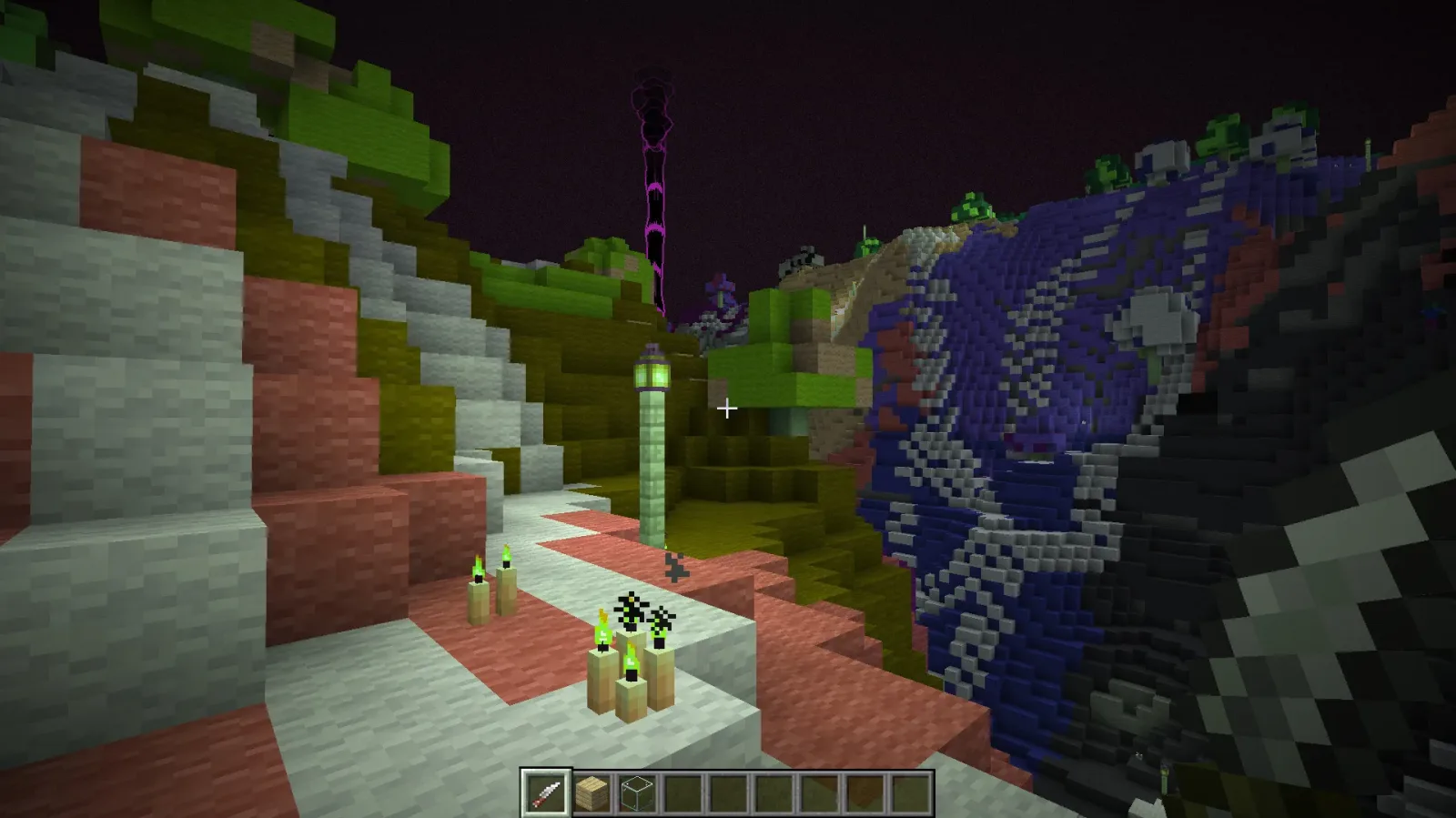
Soulbound is not confined to combat arenas. It also introduces the ability to create Dark Worlds, echoing the alternate realms central to Deltarune. In Minecraft, these worlds are represented as procedurally generated dimensions that can be assigned different themes by the player.
The system appears to give the mod a larger sense of adventure than a battle overhaul alone could provide. Instead of treating encounters as isolated minigames, Dark Worlds offer a way to enter new spaces built around a particular identity. One demonstrated example used a wool theme, created after the player used a knife on the ground inside a makeshift hut. From that simple action, the game generated a separate themed world.
Procedural generation is a natural fit for Minecraft, whose appeal has always included the unpredictability of newly created terrain. By applying that strength to alternate dimensions, Soulbound creates room for repeatable discovery. Themed worlds can potentially make each playthrough feel distinct while still preserving the mod's RPG personality.
It also gives players a way to participate in the fantasy of opening a path into somewhere stranger than the Overworld. Minecraft mods often add dimensions, but Soulbound's Dark Worlds are especially notable because they connect directly to its influences and broader role-playing premise. They are not just extra biomes or resource zones; they are meant to feel like a shift into another kind of adventure.
Why the mod's development approach has drawn attention
Soulbound's rise arrives during a period when game modding has seen an influx of hastily assembled crossover projects promoted with generative AI-driven workflows. Some of those projects have promised improbable combinations of popular games but offered little beyond surface-level novelty or unstable mechanics.
That context has made Soulbound stand out. The mod's scale, polished presentation, and combination of systems could lead some viewers to wonder whether generative AI was involved in its creation. Moderators in Soulbound's Discord server have said that it was not. Modrinth also requires uploaders to disclose generative AI use. Pixelcite, the mod's lead developer, had not responded to a request for direct confirmation at the time of reporting.
That leaves an appropriate degree of uncertainty around the developer's own public statement, but the available moderation messages and platform disclosure rules have shaped the discussion around the project. More importantly for players, the mod's visible work shows a level of design consideration that separates it from a simple mash-up pitch.
Soulbound does not appear interested in declaring that Minecraft has become Deltarune. Instead, it takes particular RPG ideas--character builds, turn-based encounters, projectile evasion, themed otherworlds, and a playful retro presentation--and works them into Minecraft's flexible framework. The difference is substantial. A crossover can be a joke, while a thoughtfully designed reinterpretation can become a new way to play.
A promising showcase for Minecraft modding
The 2.0 update seems to have been the catalyst for Soulbound's recent momentum, and its download total indicates that plenty of players are curious about a more elaborate RPG-style Minecraft experience. The mod's popularity is also a reminder of what continues to make Minecraft's community so durable: the game can accommodate wildly different creative directions without losing its identity entirely.
For fans of Undertale, Deltarune, and retro RPG combat, Soulbound offers an intriguing experiment in translating familiar ideas into a very different game. For Minecraft players tired of the normal routine of striking hostile mobs with increasingly powerful tools, it offers a more structured challenge built around builds, timing, and evasion.
There is no shortage of Minecraft mods promising bigger monsters, more weapons, or more dimensions. Soulbound's appeal is that it connects those ambitions into a coherent RPG concept. Its battles ask for concentration, its character setup encourages planning, and its Dark Worlds extend the experience beyond a single encounter. With its 2.0 update now available, the project has become one of the more distinctive examples of how far Minecraft modding can push the game's fundamental formula.
Community
Discussion
Start the conversation.
No comments have been posted yet.