

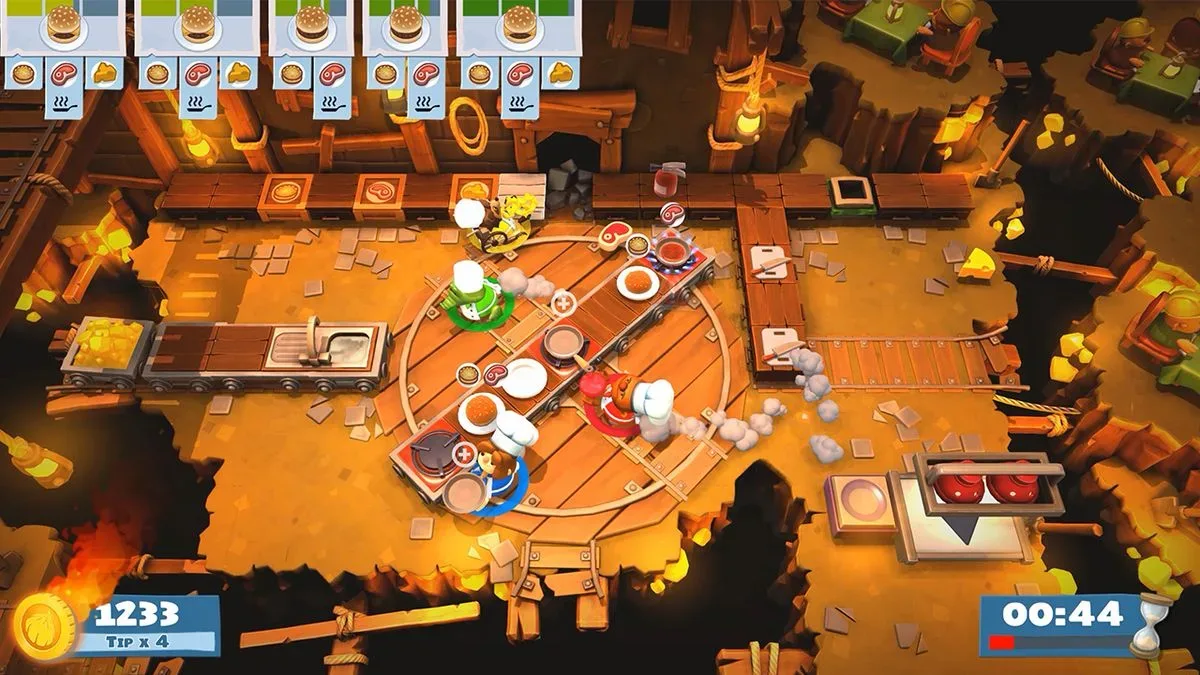
Ghost Town Games built its reputation on the kind of co-op pressure that can produce either glorious teamwork or a spectacular argument. Overcooked, first released in 2016, made communication its central mechanic: players had to chop, cook, plate, wash up, and react to ever-changing kitchens before the clock ran out. The result was hilarious, demanding, and infamous among couples and friends who discovered that a missed order could feel oddly personal.
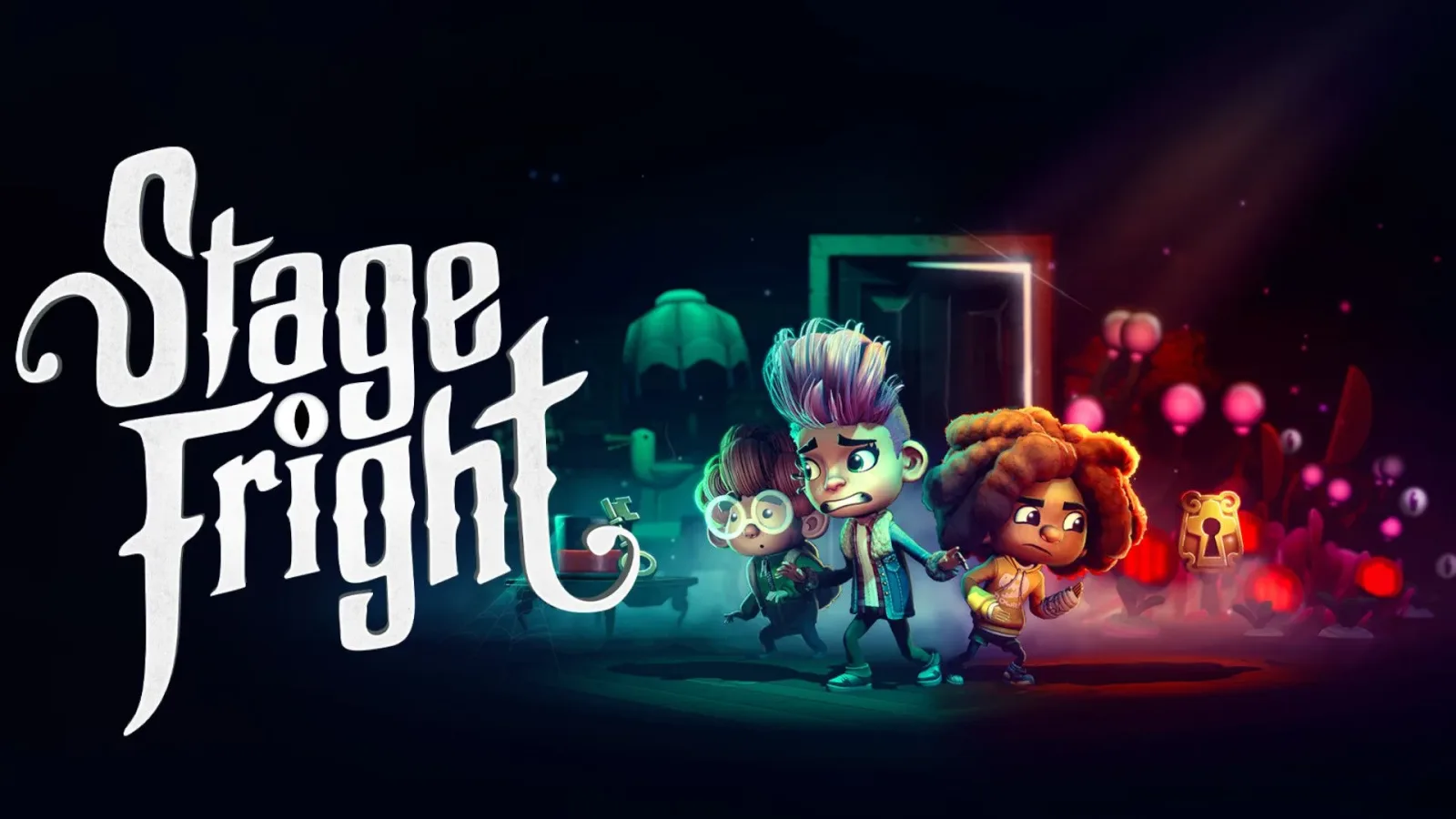
With Stage Fright, the studio is deliberately taking a different path. The newly discussed two-player game still depends on communication, but its creators want that communication to feel connective rather than relentlessly combustible. Co-founders Phil Duncan and Oli De-Vine describe a co-op experience designed for players to settle into together: a narrative adventure with a cute-but-unsettling atmosphere, escape-room-style puzzles, and room to think through problems without every moment being dictated by a timer.
Stage Fright is currently planned for release sometime in 2027. While many specifics remain under wraps, Ghost Town Games' early explanation of its approach makes clear that this is not simply Overcooked with a new theme. It is a substantially different structure built around a mystery, a coming-of-age tale, and the changing relationship between its characters.
From kitchen panic to a night-in co-op adventure
The difference starts with the intended mood. Overcooked was engineered around escalating disruption. Kitchens moved, split apart, caught fire, appeared in unlikely places, and demanded quick coordination. Its storytelling existed mostly as a framework for the next outlandish culinary challenge. Players came back because the moment-to-moment action was so immediate: spot the problem, shout instructions, improvise, and hope dinner reaches the window in time.
For useful background on this topic, read Magic: The Gathering Marvel Darkhold Destiny Brings Supernatural Horror to the Multiverse.
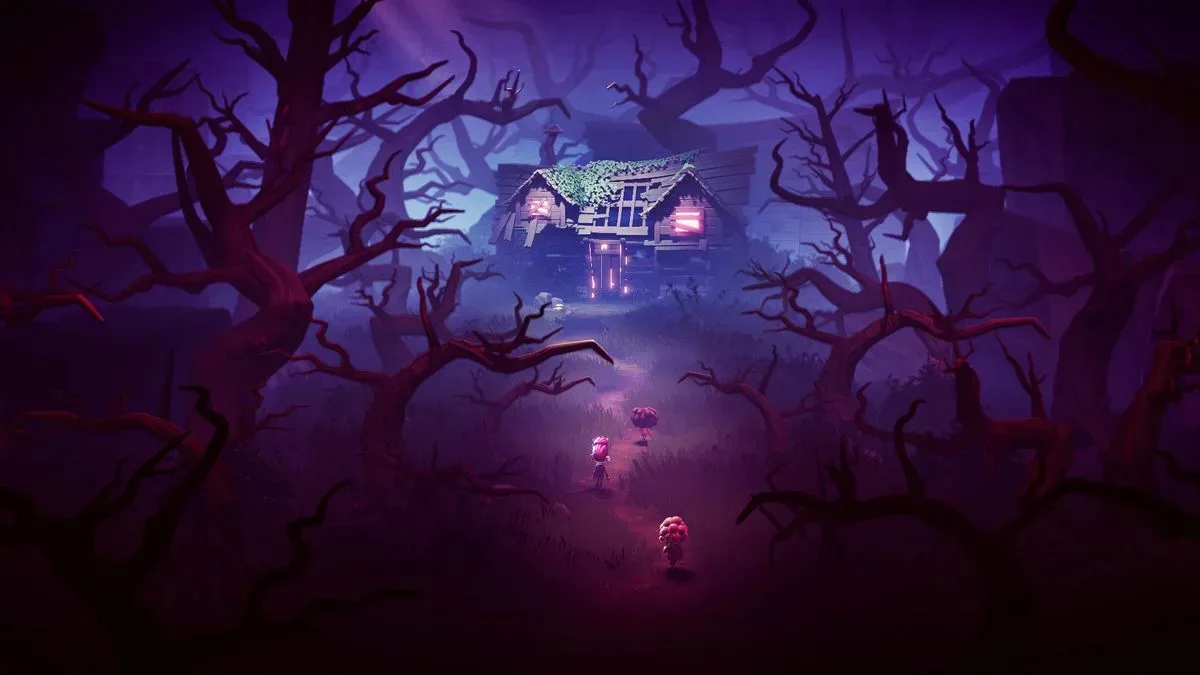
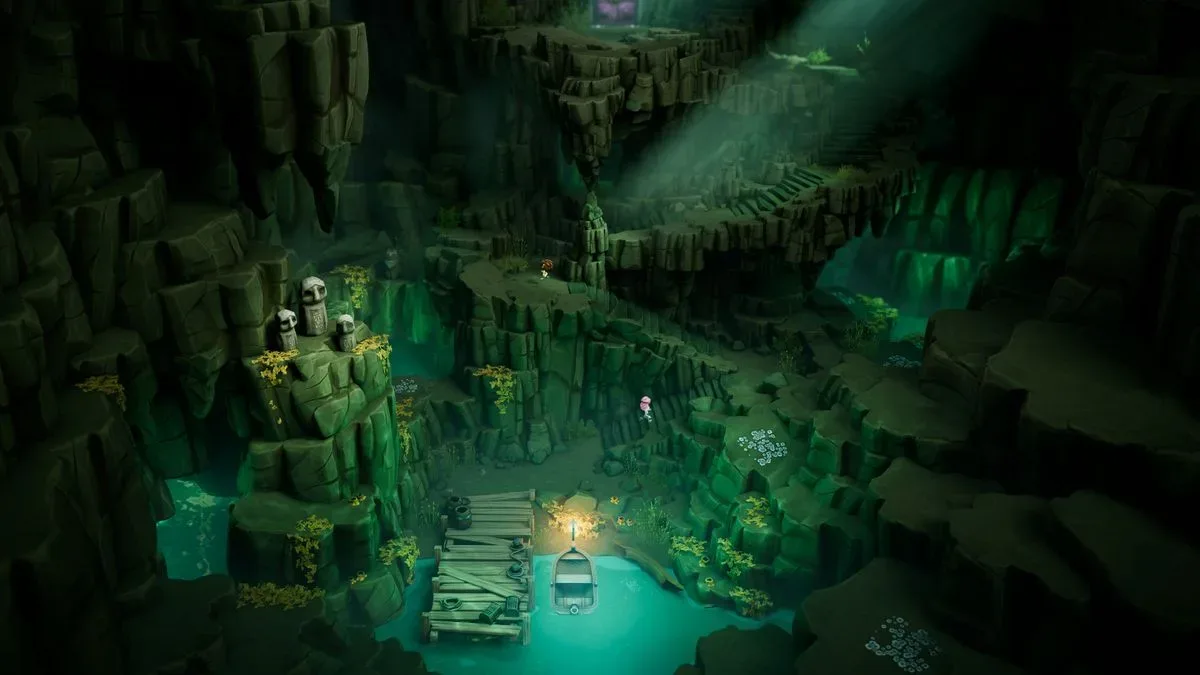
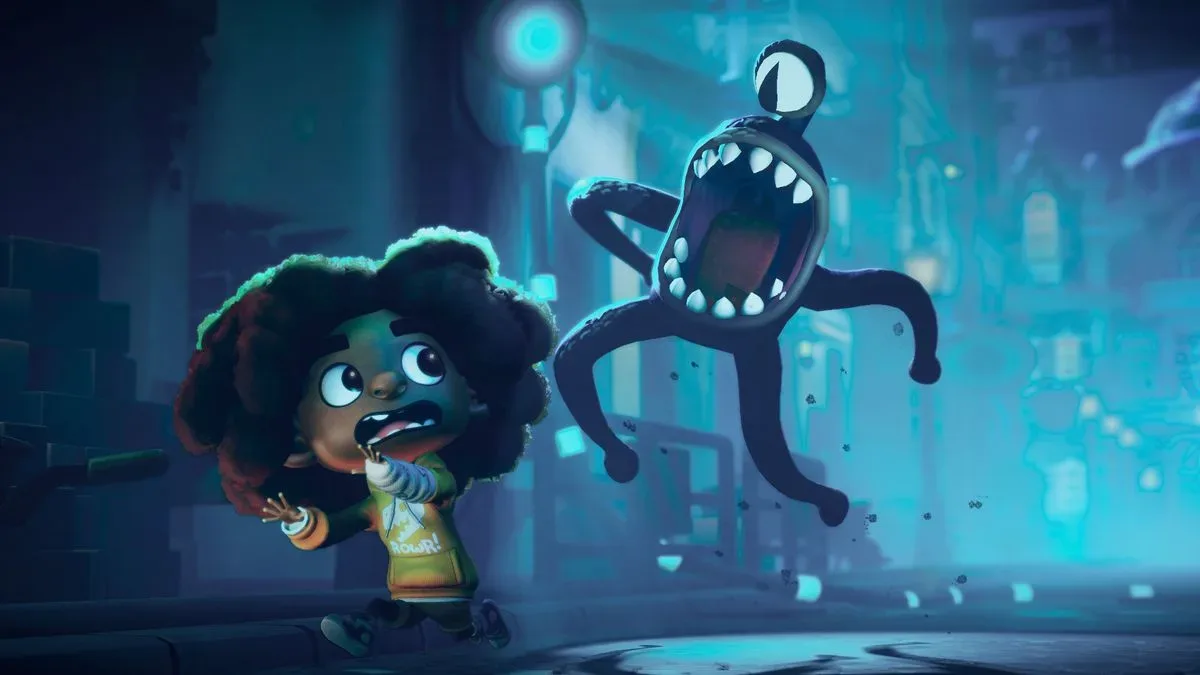
Stage Fright is being built around a more sustained story. Players will follow three protagonists through a seaside coming-of-age mystery, navigating a world that mixes charm with spookiness. Rather than presenting a string of arcade-like trials, the game will use a linear and structured journey in which puzzles, character interactions, and narrative developments are connected.
Duncan said the team did not want to make a purely chaotic game this time. The goal is for two people to sit down together for an evening and share an experience that may bring them closer rather than test their ability to withstand stress. That does not mean the studio has abandoned its understanding of how entertaining friction can be. Instead, Stage Fright appears to be interested in a different kind of co-op tension: the suspense of incomplete information, the excitement of solving a problem jointly, and the occasional playful disaster when partners fail to coordinate.
This shift is significant because Ghost Town Games is not moving away from the principle that defined its earlier work. Communication remains the point. The studio is changing the conditions under which players communicate. In Overcooked, they respond to rapidly collapsing routines. In Stage Fright, they will compare observations, explain what they can see, and work through challenges that neither participant can resolve alone.
Three characters, two players, and changing responsibilities
One of Stage Fright's more unusual ideas is its cast structure. The story follows three protagonists, but the game is strictly for two players. Rather than asking each person to select a single character and stay with them from beginning to end, Ghost Town Games will move players between roles as the narrative progresses.
That decision is about more than keeping the presentation fresh. Duncan and De-Vine want to avoid a common co-op imbalance, where one participant feels like they are simply following the other player's lead. If one person has a role that repeatedly carries the action while the other waits, watches, or performs a lesser task, the shared adventure stops feeling truly shared. Rotating responsibilities gives both players opportunities to engage with different abilities, viewpoints, and styles of challenge.
The developers used a spotlight sequence to illustrate the concept. In that situation, one player controls a light while the other must remain within its safe area as dangers surround them. Crucially, the controller of the spotlight is not locked into that job throughout the entire sequence. Responsibilities can shift, forcing both people to understand the problem from multiple angles.
This also speaks to how Stage Fright may accommodate different player strengths. One person may excel at word-based puzzles, while another may be better at spatial reasoning or more comfortable with dexterity-driven tasks. The developers have already used playtesting to consider how each player is participating in a given moment. The aim is not merely to vary the activities, but to prevent a capable puzzle-solver from taking over every challenge while their partner becomes a spectator.
That philosophy is especially important in games intended for mixed-experience pairs. Ghost Town Games has long made titles accessible to people who do not regularly play games, while still giving experienced players meaningful systems to master. Stage Fright's changing-character setup suggests the studio is trying to preserve that broad appeal without flattening the game into something either player can complete for the other.
Split-screen as a puzzle tool, not just a display option
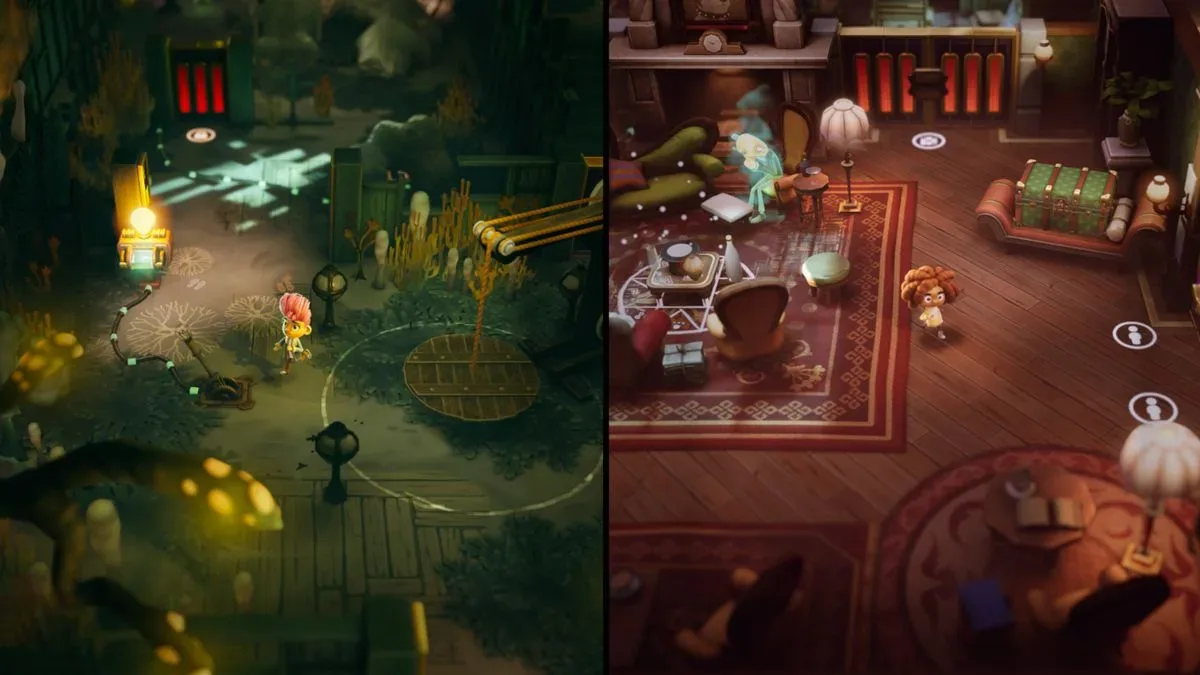
Stage Fright will maintain split-screen whether players are together on a couch or playing online. That choice is central to the design, not simply a visual callback to older local multiplayer games. Each half of the screen can present a different location, separate information, or distinct details in a shared environment. The players need to talk because their view of the world is intentionally incomplete.
De-Vine explained that even when the pair occupies the same area, they may notice different things. One player can miss a clue their partner sees, and that partner has to communicate not only the clue itself but the reasoning behind it. The structure is meant to make it impossible for one person to simply perform the entire game while the second person tags along.
It is a smart answer to a frequent co-op problem. Some games advertise themselves as collaborative but can effectively be handled by a single confident player, with the other participant serving as backup. Stage Fright's split perspectives make collaboration an explicit requirement. Players will need to articulate what they are seeing, listen carefully, and combine separate pieces of understanding.
That naturally complements the seaside mystery at the heart of the game. Mysteries thrive on fragments: a strange object, a suspicious character, a detail in the background, or an event that means something different once another piece of evidence appears. Splitting that information between players can make the act of solving the story feel more communal. The game's narrative is not only something the pair watches unfold; it is something they help reconstruct through conversation.
There will still be danger, but less punishment
Players who appreciate Ghost Town Games for its capacity to induce panic should not assume that Stage Fright will be entirely gentle. The developers say there will be chaotic moments, adrenaline, and opportunities for players to get each other killed in a playful manner. The distinction is that failure is not intended to be a constant punishment system.
The spotlight example again shows the intended pace. If the player controlling the light stops moving, the other can remain safely in its center. There is no equivalent of an ever-ticking order timer demanding that the pair immediately push forward. Players can pause, discuss their plan, and then continue.
This creates a rhythm of tension and release. A dangerous sequence can make communication urgent, then a quieter stretch can give players the time to absorb the atmosphere, examine a puzzle, or simply laugh about the previous mishap. Duncan described this as balancing bursts of adrenaline with moments that cool players down.
De-Vine's framing is equally telling: the game should be difficult when players are not communicating effectively, and satisfying when they are. That is a different standard from raw speed or mechanical punishment. The obstacle is not just execution; it is the ability to develop a shared plan.
An evolution of Ghost Town Games' co-op identity
Stage Fright may look far removed from the food-prep frenzy of Overcooked, but the connection between the two is easy to see. Both are games about the gap between what one player knows and what the other player needs. Both seek to create memorable stories between the people holding the controllers. The key difference is emotional texture.
Where Overcooked turns misunderstanding into comic catastrophe, Stage Fright is aiming for a more thoughtful partnership. Its spooky visual setting, narrative focus, and puzzle-driven progression offer an alternative for players who love the idea of co-op but do not necessarily want every session to become a frantic test of nerves.
There is still plenty to learn before Stage Fright arrives in 2027, including the full nature of its mystery and the range of challenges awaiting its three protagonists. For now, Ghost Town Games' ambitions are clear. The studio wants to retain its talent for designing games that make people talk to one another, while creating a co-op adventure where listening, observing, and sharing the spotlight matter as much as reacting quickly.
Community
Discussion
Start the conversation.
No comments have been posted yet.