

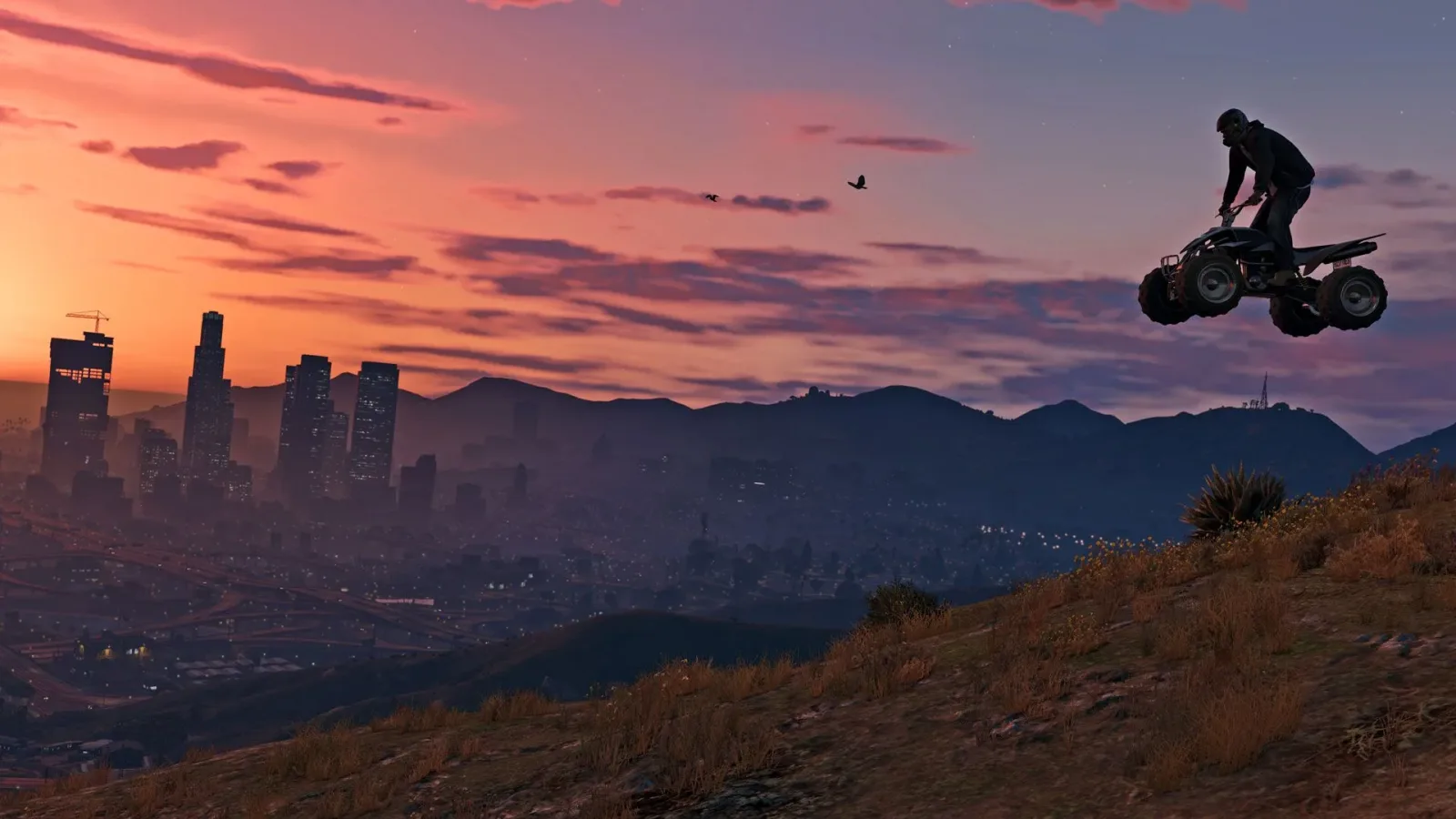
Grand Theft Auto 5 was an extraordinary technical and creative undertaking when it arrived in 2013, but its most lasting achievement may be the development framework it established for Rockstar Games. The game's depiction of Los Santos was not simply a large map built to house missions. It was designed as a cohesive place first: a city and surrounding countryside with its own shape, mood, landmarks, social contrasts, and room for stories to emerge.
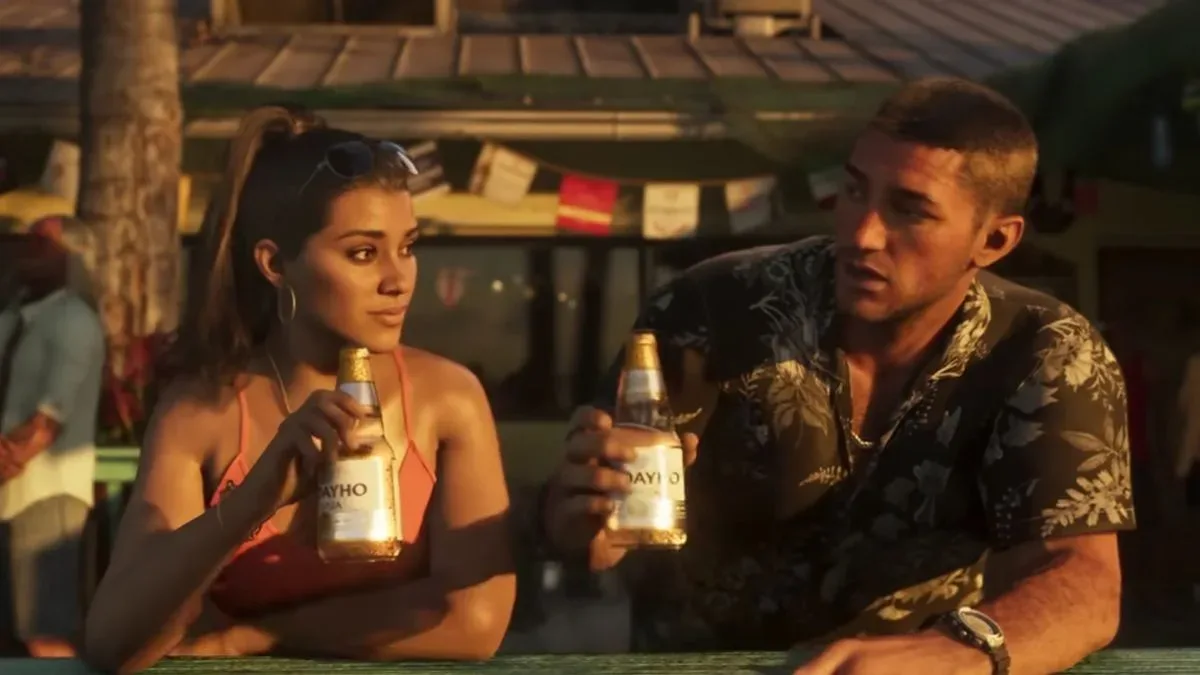
That philosophy is particularly relevant as the series heads back to Vice City with Grand Theft Auto 6 and its two central characters, Jason and Lucia. Aaron Garbut, now a co-studio head at Rockstar North and previously art director on GTA 5, has described the choices and compromises behind Los Santos in detail. His recollections outline a studio process rooted in flexibility, careful observation, and a willingness to let the needs of a gigantic game reshape even early plans.
The result was a world that supported not only GTA 5's three-protagonist single-player campaign, but also GTA Online's long-term ambitions. More than a decade later, those priorities help explain why Rockstar's worlds are remembered less as collections of activities and more as places players can inhabit.
The city came before the story
One of the most important details about GTA 5's creation is the order in which its pieces were assembled. Rather than beginning with a finished mission structure and constructing locations around it, Rockstar North started by making the world itself. A smaller portion of the art team worked through pre-production to create a white-box version of the city, establishing the roads, sightlines, skyline, major landmarks, and the balance between districts.
For useful background on this topic, read E.T. Programmer Howard Scott Warshaw Warns AI Could Create a New Game-Market Crash.
That early work was not merely technical planning. The team spent extensive time driving through and adjusting the unfinished environment, testing whether routes felt good and whether areas flowed into one another convincingly. The aim was for separate neighborhoods to feel like parts of one larger city rather than isolated zones designed for individual missions.
Only as missions and narrative elements developed did Garbut work alongside level designers to place major locations and make fuller use of the map. It is a process that gives the setting its own authority. The game's story must work within Los Santos, but Los Santos is not reduced to a backdrop for the story.
For a series built around player freedom, that distinction matters. A linear game can focus heavily on the exact route that a player will take from one set-piece to the next. Grand Theft Auto has to account for players who may abandon a mission, climb a mountain, steal an aircraft, drive across the map, or simply explore the streets. Building a world as a world first helps make those detours feel supported rather than accidental.
Three protagonists created anchors, not separate worlds
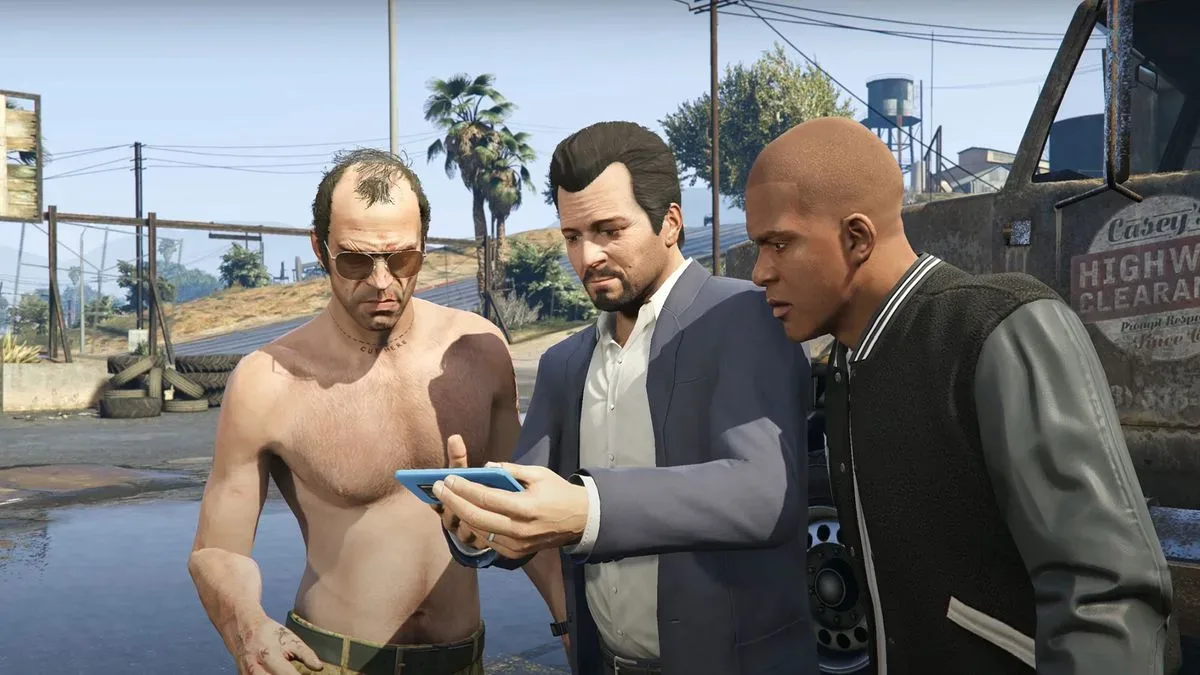
GTA 5's most obvious structural gamble was its trio of playable leads: Michael, Franklin, and Trevor. The ability to switch between them was a major change for the series, and Garbut characterized the idea as a leap of faith. It promised new storytelling and mission possibilities, but it also risked changing the core experience in a way that could have failed.
In world-design terms, however, the three protagonists did not require Rockstar to build three disconnected experiences. Garbut said that the basic biographies of the characters were known early enough to establish a few key anchor points. Trevor, in particular, called for territory far from Los Santos' urban sprawl.
A research trip with Rockstar president Sam Houser helped define that direction. While driving through California, the pair reached the Salton Sea and eventually visited Bombay Beach, a location Garbut recalled as feeling like somewhere Trevor himself might suddenly appear. A later reference trip sent a team to the Salton Sea area for several days, helping inform the harsh, strange atmosphere that would become central to Trevor's side of GTA 5.
Yet the game's overall needs remained bigger than any one protagonist. Since GTA Online was planned as a substantial, sustainable part of the package, the team could not treat the map as something designed only around the single-player campaign. The full world needed a consistent standard of quality, a coherent identity, and incentives for players to explore every part of it.
That meant the three leads supplied contrast and orientation, rather than dictating the entire map. Their homes, personalities, and territories gave the world useful points of focus, but its density, detail, and variety would have been necessary regardless. It is an instructive precedent for GTA 6's Jason and Lucia. Two protagonists can create strong narrative perspectives on a setting, but a Rockstar open world must also stand up beyond those characters and beyond the missions attached to them.
Rockstar's version of a real city is deliberately edited
Los Santos is perhaps the series' closest approximation of a real modern city, drawing heavily from Los Angeles while remaining unmistakably fictional. Garbut's view of that relationship is revealing: Rockstar does not set out to recreate a city street by street. It uses reality as raw material and then reshapes it for the needs of a game.
The process begins at the macro level. Developers identify the kinds of districts they need, then work down toward individual streets, buildings, and landmarks. At every stage, they retain the freedom to move neighborhoods, compress geography, or change the relationship between locations. The goal is not cartographic accuracy. It is a place that feels right to navigate and that captures a recognizable cultural image.
Garbut has argued that a literal reconstruction could be less satisfying for both developers and players. Most people do not know Los Angeles, New York, or another major city through exhaustive daily familiarity. They know it through films, television, photographs, music, short visits, and popular imagination. Those are already selective versions of real places.
Rockstar's cities follow a comparable logic. They emphasize memorable features, heighten contrasts, and arrange areas so that the player's experience has rhythm. A mountain, a beach, an industrial yard, an expensive hillside neighborhood, and a run-down desert settlement can all sit within a playable relationship that would not exist in the real world. That compression helps make travel meaningful without becoming exhausting, while the exaggeration strengthens each district's identity.
Vice City's return therefore carries an expectation beyond visual fidelity. Its success will likely depend on how effectively Rockstar translates the popular idea of the region into a playable fictional state: the atmosphere, contradictions, spectacle, and spaces that make sense for criminal stories and spontaneous exploration. GTA 5 demonstrates that the studio's strongest recreations are not copies. They are interpretations.
Lighting turns a map into a place
Garbut places enormous importance on lighting, calling it vital to the completed experience. In an open-world game, lighting does far more than make assets look attractive. It unifies locations built by many teams, sets the mood of a scene, guides a player's attention, and changes how a familiar road feels at different times of day.
GTA 5's lighting work combined extensive tuning, highly optimized code, and practical visual tricks to create effects that would otherwise be difficult to achieve. The technology helped the game present longer-distance shadows and more convincing nighttime illumination. For Garbut, seeing shadows stretch across the city from the air was one of those moments when the potential of the game suddenly became clear. Later, improvements to lighting detail across distance made the world feel notably more alive after dark.
These breakthroughs continued a pattern within the series. GTA IV's arrival brought a major shift through real-time shadows after years of more static, baked lighting on PlayStation 2-era games. Earlier still, the use of neon in Vice City represented an important visual step. Each advance did not just produce a better screenshot; it changed the emotional language of the world.
That history gives the return to Vice City special resonance. Neon is part of the city's legacy within Grand Theft Auto, but modern lighting systems can make nighttime spaces feel more reactive, dimensional, and inhabited than they did in earlier generations. The lesson from GTA 5 is that lighting is not a finishing touch applied after the city exists. It is one of the systems that makes the city believable.
Iteration matters more than protecting old ideas
Perhaps Garbut's clearest development lesson from the GTA series is the need to avoid becoming attached to a process, asset, plan, or concept merely because it was chosen earlier. For a project as vast and interconnected as GTA 5, every major component influences the others. The world arrives first, then missions, then broader structure and story, while the underlying systems continue to evolve. None of those layers can remain completely fixed.
This does not mean changing direction without reason. The principle is to let what serves the game best determine the next decision. Rockstar's teams continually played, refined, and adjusted the experience, looking for ways to make its individual parts function better together. Garbut described the process less as routinely discarding material and more as adapting plans with a willingness to reassess them.
He compared it to drawing or sculpting: first establish the broad vision, then build it up in successive layers of detail. The difference, of course, is scale. GTA 5 required something like a thousand people working on the same evolving canvas. Long-running collaboration within the studio helped make that possible, as experienced teams had internalized many of the challenges of open-world production.
The most rewarding stage arrived once locations, mission flow, and cutscenes began to connect. What had been separate systems and incomplete spaces finally became a game. It was also the stage when the hardest choices had to be made: changing elements that did not work, iterating repeatedly, and accepting that a great deal of time would be spent finding the final shape of the experience.
A living world cannot be finished in the traditional sense
Garbut noted that GTA 5 contained far more potential plans and ideas than could fit into its initial release. That is inevitable on a project of such scope. As launch approaches, the room for additions narrows sharply. But GTA Online offered a way for the game to keep evolving rather than remain permanently static.
That ongoing structure also created more direct contact between developers and players through online communities and discussion spaces. For a studio that values adaptation, being able to observe what players enjoy and what they dislike fits naturally with its internal approach to refinement.
GTA 5's legacy, then, is not only its commercial reach or the scale of Los Santos. It is a demonstration of how Rockstar approaches the challenge of making a place that can support years of stories, systems, and player memories. Its three-character experiment succeeded because the world remained coherent. Its California-inspired setting worked because it pursued a heightened impression rather than strict replication. And its most memorable technical advances mattered because they served the fantasy of living in an enormous, changing city.
As Vice City prepares to take center stage again, those fundamentals remain just as significant as any individual feature. Jason and Lucia may provide the new entry's human anchors, but GTA 5 shows that Rockstar's greatest protagonist is often the world itself.
Community
Discussion
Start the conversation.
No comments have been posted yet.