

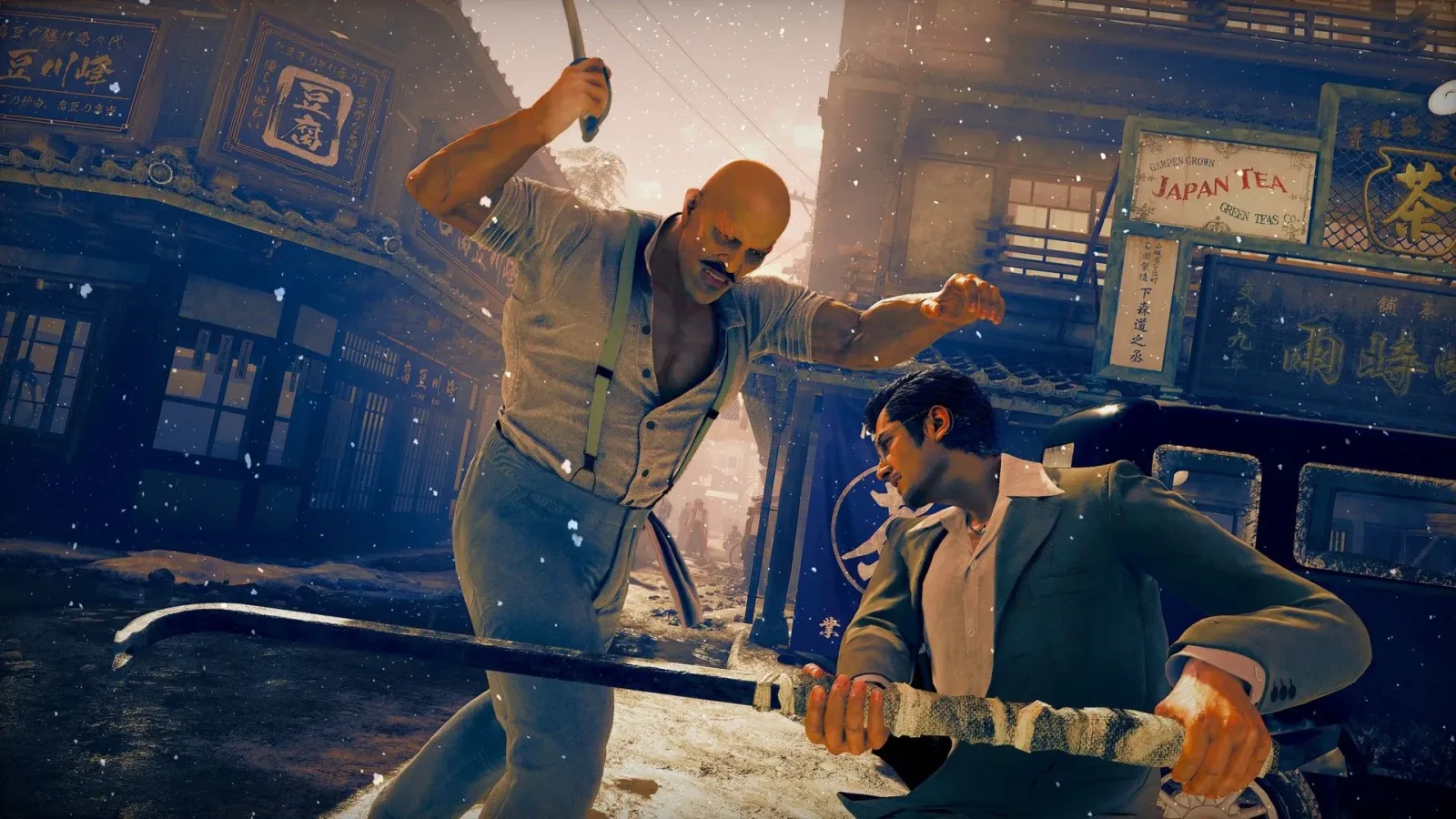
Stranger Than Heaven is shaping up to be a major combat departure for RGG Studio. While the developer's past crime dramas have often made players feel like unstoppable brawlers after learning a few dependable attack strings, its new multi-era action game appears designed to make every exchange feel more hazardous. Fights are built around separate left and right controls for attacks and defense, asking players to read an opponent's stance, react to weapons, and commit to carefully timed blocks rather than simply overwhelm everyone in front of them.
Producer Hiroyuki Sakamoto has described the design as intentionally more intuitive and rough than combat in the Like a Dragon and Yakuza lineage. His comparison is blunt: earlier games could sometimes be played through persistent button presses, with players able to beat enemies without giving each encounter their full attention. Stranger Than Heaven aims for the opposite sensation. The goal is to put the player directly into the rhythm, discomfort, and split-second decision-making of a street fight.
That distinction could prove central to the game's identity when it arrives for PC, PlayStation 5, and Xbox Series X on January 15, 2027. RGG Studio has long been celebrated for dramatic crime stories, vivid Japanese settings, eccentric side activities, and satisfyingly excessive brawling. Stranger Than Heaven still carries the studio's interest in period settings and violent underworld conflict, but its combat system suggests a willingness to challenge expectations around how powerful its protagonist should feel.
A left-and-right system changes the feel of every exchange
The most immediately unusual aspect of Stranger Than Heaven's fighting is its use of individual controls for each side of the character's body. On an Xbox controller, LB and LT are assigned to the left arm, while RB and RT govern the right. The arrangement is not merely a cosmetic control change. It creates a framework where leading with one side, answering an incoming swing from a particular angle, and deciding whether to protect yourself with one arm or both become active considerations.
For useful background on this topic, read Halloween The Game Guide: Civilian and Michael Myers Tips for Surviving Haddonfield.
Defense reflects that same approach. Pressing B together with either LB or RB produces a one-sided block, while using B and both side inputs commits to a two-armed guard. That extra layer matters when enemies are aggressive or equipped with weapons. A player may need to make room for a counterattack with a single-arm defense, but a larger threat can demand a more secure block that protects the character at the cost of immediate offensive options.
Rather than reducing combat to a memorized combo list, the system seems intended to establish a physical cadence. One hand can probe, another can deliver a heavier response, and a defensive action can become the opening needed to step close for a grab. Sakamoto's description of making players feel more involved in each fight fits the structure. The controller layout encourages people to think about body positioning and momentum in a way that conventional light-attack and heavy-attack mappings may not.
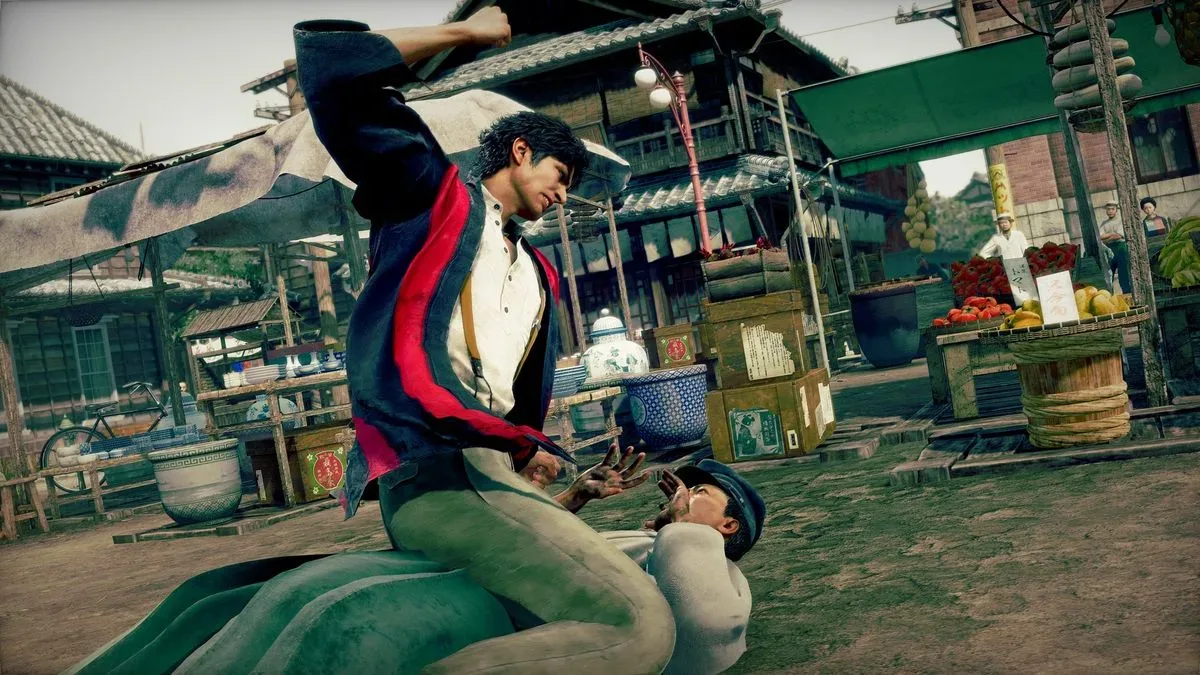
There is still room for the kind of hard-hitting spectacle players associate with RGG Studio. Grapples remain part of the toolkit, and successful close-range exchanges can lead to brutal strikes that put enemies on the ground. However, the apparent emphasis is on earning those moments. Players are not simply handed dominance at the beginning of an encounter; they have to establish it through blocks, spacing, and well-chosen punches.
Three historical periods offer a rising combat challenge
A hands-on demonstration was divided across three brief segments set in different Japanese locations and years: Kokura in 1915, Kure in 1929, and Osaka in 1943. The sequence also doubled as a difficulty progression. Kokura was presented on easy difficulty, Kure on normal, and Osaka on hard, giving the combat system a chance to show how its demands change as enemies become more capable and more threatening.
In 1915 Kokura, a smaller group serves as an introduction to the fundamentals. These early opponents allow the player to understand the left-and-right striking arrangement, experiment with basic defensive timing, and become comfortable with grapples. It is a controlled beginning, but it establishes the key idea that even basic attacks are connected to a more deliberate sense of engagement than in a typical arcade-style brawler.
The 1929 Kure section pushes further. Enemies begin to behave more intelligently, attempting to surround the player instead of waiting patiently to be struck one at a time. A taller mini-boss adds another level of pressure. Being encircled is especially important in a system built around directional arms and defensive choices, because it limits the time available to assess the next threat. The player is encouraged to keep moving, identify an opening, and avoid letting the group dictate the pace.
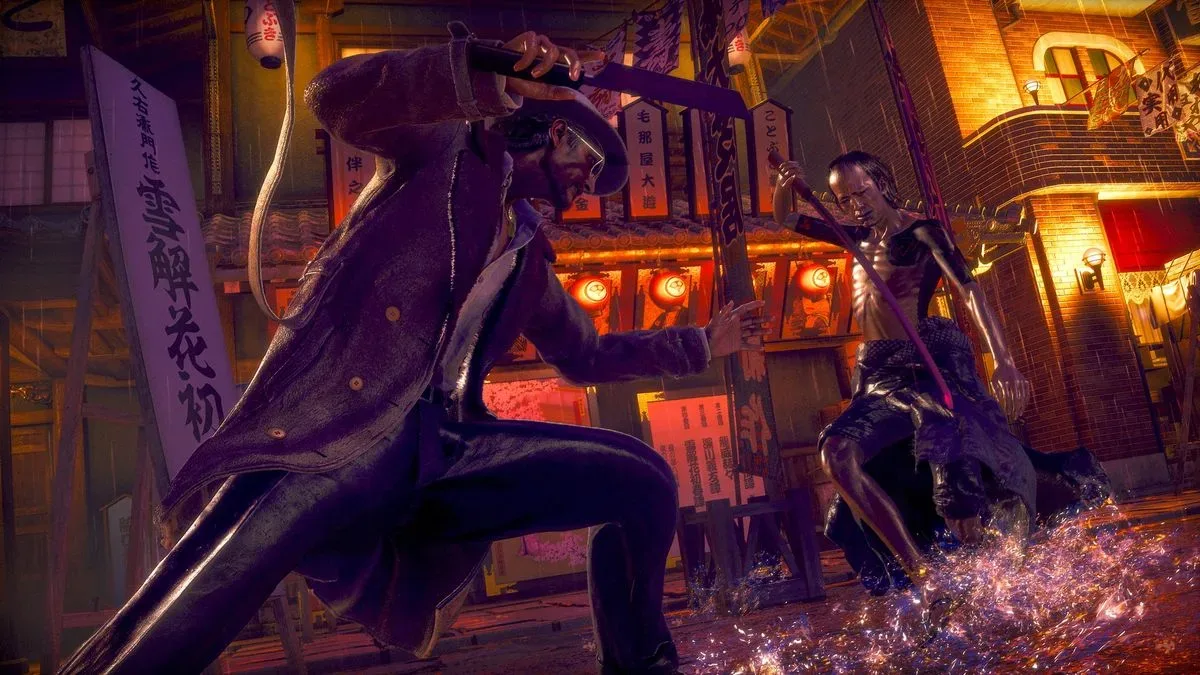
Then comes 1943 Osaka, the hard segment and the clearest indication that Stranger Than Heaven is willing to punish mistakes. A knife-wielding opponent rapidly changes the nature of the encounter. Blocking is no longer just a helpful defensive option; it becomes essential to surviving. The enemy can deal damage quickly, forcing a more focused approach than the player may have used in the previous demonstrations.
The weapon user also does not remain predictable. After blocks start neutralizing the initial pressure, the foe changes stance and lunges with startling speed. This ability to alter behavior prevents the fight from becoming a simple exercise in repeating the same successful reaction. Players need to recognize when a rhythm has changed and adjust before an opponent takes back control.
Hard mode emphasizes resilience rather than effortless dominance
The Osaka fight illustrates what may be Stranger Than Heaven's most interesting promise: it can make an RGG Studio protagonist feel vulnerable without stripping away the satisfaction of eventually winning. The knife enemy's speed and damage output initially make the player seem outmatched. That is a notable shift for a studio whose action games frequently allow a skilled character to flatten a room full of attackers with growing confidence.
Victory comes through patience. Timed blocks close the distance safely, short openings become opportunities for hooks, and successful grabs create the chance for punishing follow-up attacks. When the enemy charges again, a two-armed guard absorbs the assault before another grapple returns the momentum to the player. The final result remains forceful and bloody, but it feels less like an automatic finishing move and more like the conclusion of a tense contest.
The violence itself appears suitably harsh for the premise. Blood and visibly damaging blows help sell the severity of these confrontations, particularly when a desperate opponent keeps rising after being knocked down. Yet the combat's force is not only about gore. It is about the escalating emotional effect of seeing a foe adjust, knowing an incorrect block could be costly, and choosing when to risk moving in close.
This is where the "rough" quality Sakamoto discussed becomes meaningful. Roughness does not necessarily mean unresponsive controls or random difficulty. The early impressions instead point to fights that are less polished into a carefree power fantasy and more interested in awkward, dangerous, physical exchanges. An enemy with a blade can interrupt confidence. A group can collapse on the player's position. A defensive read can be the difference between a clean counter and a quick defeat.
RGG Studio's new direction could broaden its action identity
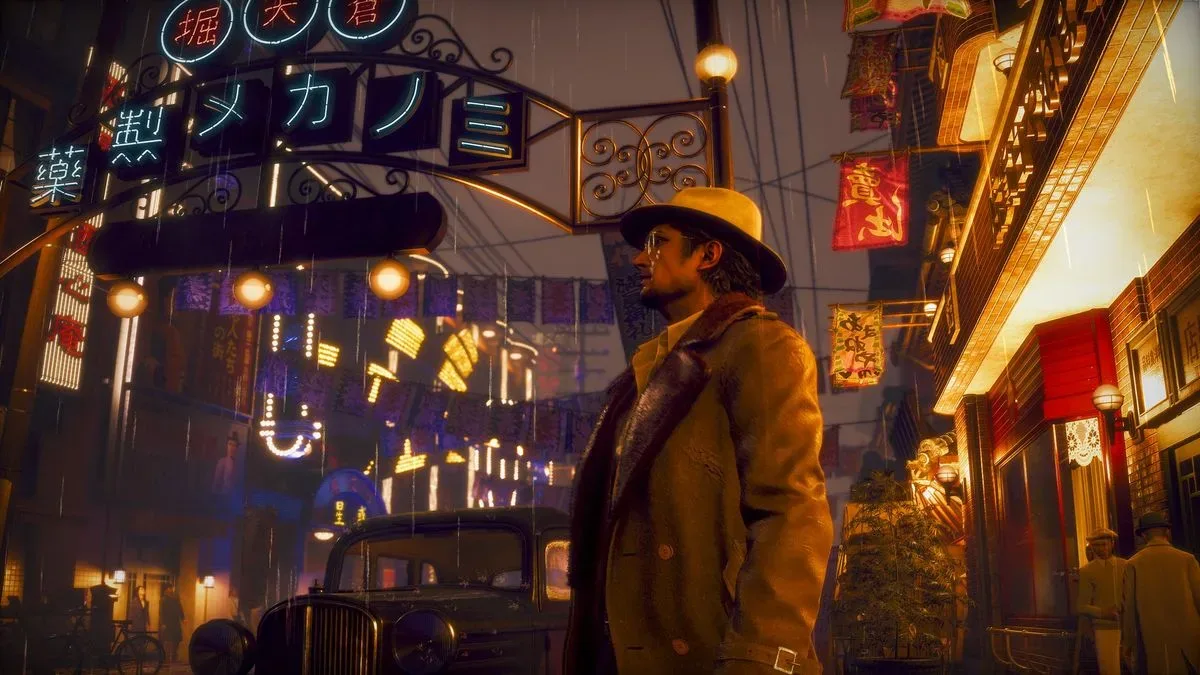
Stranger Than Heaven is not abandoning the studio's established strengths; it is applying them through a different combat philosophy. Its time-spanning structure already separates it from the modern and late-20th-century settings most closely associated with RGG Studio's crime games. Moving from 1915 to 1929 and then 1943 gives the game a broad historical canvas, while the playable demonstrations suggest that each era can still support the developer's familiar strengths in atmosphere, street-level drama, and intense close-quarters action.
What remains unknown is how deeply the left-and-right system will develop across the full game. The available look focuses on early-to-mid combat demonstrations rather than a complete campaign, so questions remain about character progression, advanced techniques, boss design, weapon variety, and how the difficulty curve will work beyond the three showcased periods. There is also no confirmation here of whether the game will offer additional combat styles, accessibility options, or modes that alter the underlying control scheme.
Even so, the core idea is compelling. RGG Studio appears to be taking the tactile pleasure of its brawlers and putting more friction between the player and victory. Instead of asking only whether players can execute flashy moves, Stranger Than Heaven asks whether they can recognize a threat, choose the correct side to defend, find a safe route into grappling range, and remain composed when an opponent suddenly changes tactics.
For fans who enjoy the studio's storytelling but want more resistance from its action, that could be an exciting evolution. The familiar fantasy of becoming a fearsome fighter is still present, but it looks as though it will arrive through learning and persistence rather than simple repetition. Stranger Than Heaven's hardest encounters may leave players battered before they feel powerful, and that seems to be precisely the intended effect.
Stranger Than Heaven launches January 15, 2027, for PC, PlayStation 5, and Xbox Series X.
Community
Discussion
Start the conversation.
No comments have been posted yet.