


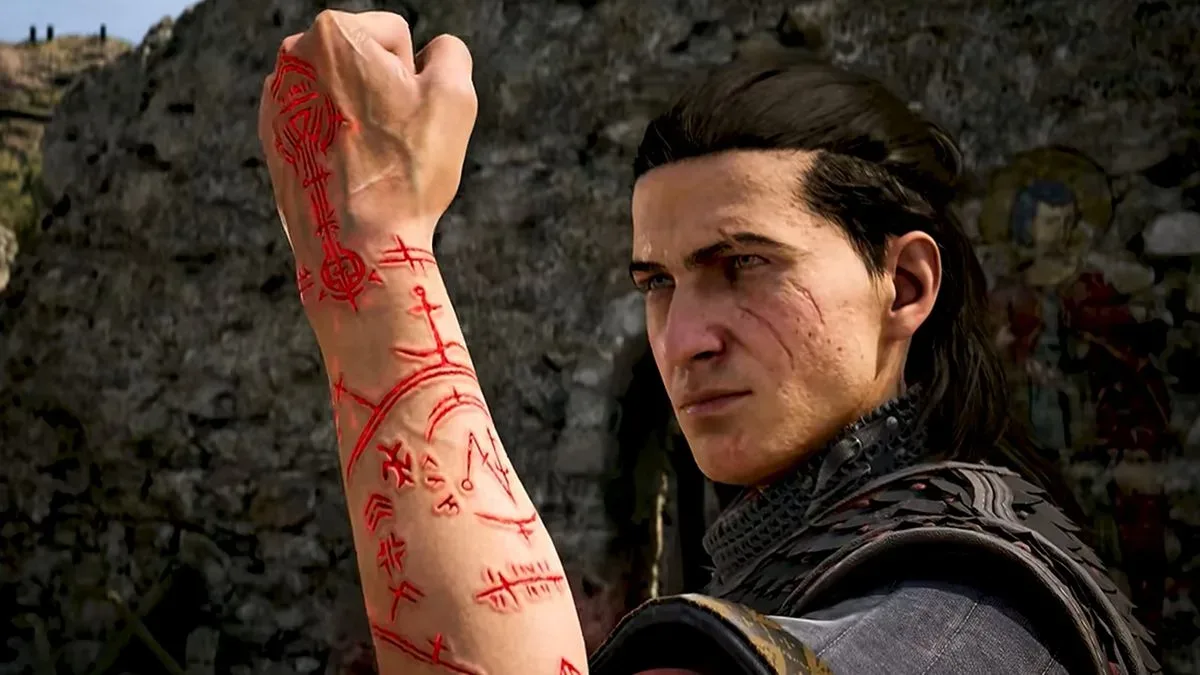
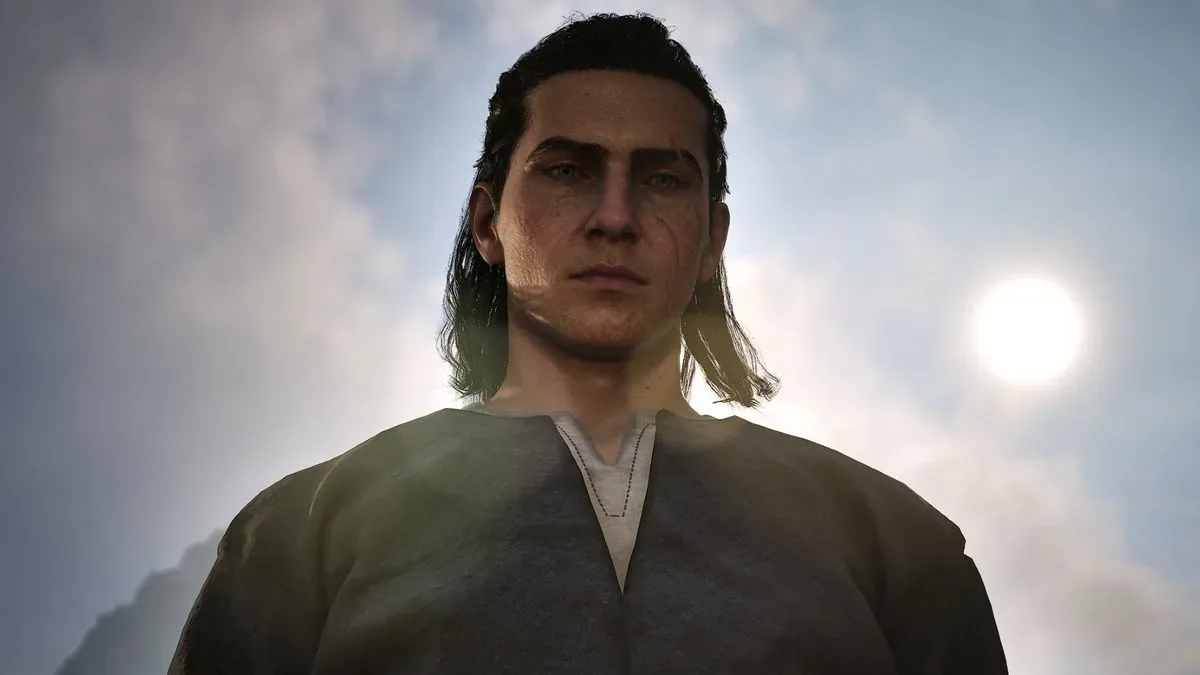
The Blood of Dawnwalker opens with an unenviable situation for its protagonist, Coen. He has been turned into a vampire without choosing it, his family has been taken, and the pressure is immediate: there are only 30 days and nights available to save them. That time limit turns every detour, battle, conversation, and investigation into a decision with consequences.
That structure already promises a tense action RPG, but choosing the game's hardest setting, Duelist, makes the opening stretch substantially harsher. Enemy aggression is elevated, incoming attacks are much more punishing, and Coen's stamina pool is significantly reduced. Enemies do have less health in return, but that is hardly a free advantage when a single bad exchange can end a fight.
The result is a demanding but exciting version of Vale Sangora, one where vampirism is not merely an interesting role-playing direction. It can become a practical survival strategy. Building Coen around claws, blood, mobility, and nocturnal ambushes gives his transformation real mechanical weight, while the strict calendar prevents endless grinding until every obstacle is safely manageable.
Duelist difficulty demands discipline rather than endurance
Duelist mode appears designed for players who want to fully engage with The Blood of Dawnwalker's defensive and offensive rhythm. It is not a setting where stamina can be spent carelessly on repeated attacks or panic rolls. Each dodge, block, and counter has to matter.
For useful background on this topic, read Nearly Half of Women Surveyed Say Gaming Culture Does Not Welcome or Represent Them.
Combat on this setting encourages the sort of deliberate timing associated with tightly tuned action games. Perfect blocks and late dodges are not optional flourishes; they are essential tools. A player can understand the right response in theory, but Duelist forces them to execute it consistently under pressure.
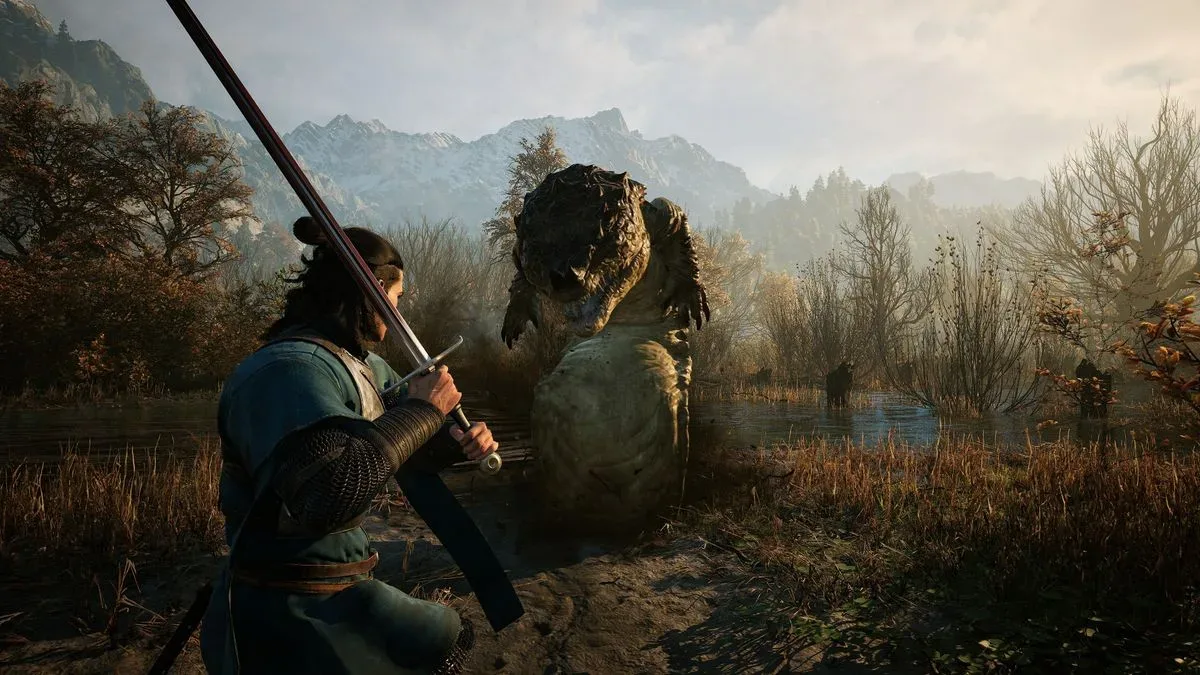
An early encounter in the mountains makes that lesson extremely clear. While exploring a cliffside clearing marked by standing stones and wind chimes, Coen is confronted by what initially seems to be part of the scenery. It is instead a massive bear, and its opening charge can kill him in one blow after a mistimed evasive move.
It is an optional encounter, which is important. With only 30 days to resolve the central family-rescue objective, choosing when not to fight is as meaningful as choosing when to fight. The bear may have a reward, but it is not worth sacrificing valuable time and repeated deaths before the player is ready.
That encounter establishes a sensible first priority for a Duelist playthrough: improve fundamentals before chasing every possible challenge. The game's difficulty does not simply ask for better statistics. It asks for better habits.
Vampiric abilities offer a powerful route through Vale Sangora
Once the mountains become temporarily too dangerous, Brencis' soldiers provide more manageable targets. Their campfires and torches make them easy to identify after nightfall, and their patrols become a practical place to learn the game's systems in lower-stakes engagements.
Investing perks in the vampirism skill branch changes the texture of these fights. Improved claws that cause bleeding add strong close-range pressure, while extra stamina provides a much-needed margin for error. Shadowstep becomes especially valuable, allowing Coen to rapidly close gaps or position himself behind isolated enemies.
The appeal of this build is not just numerical efficiency. Coen's claws are described as feeling more fluid than his sword, giving a vampiric character path a distinct fighting identity. Sword combat remains useful, particularly during the day, but the claws and mobility powers better support a predatory, aggressive approach.
Stealth does not appear to be a complete solution, however. It can help skirt enemy awareness, yet detection is inconsistent enough that committing to a clean silent takedown may quickly turn into a group battle. When a shadowstep attack on a guard outside a ruined tower draws the attention of nearby soldiers, the confrontation becomes a direct test of parries, positioning, and stamina management.
That is where repeated combat practice pays off. Soldiers remain dangerous, but they are more readable than the mountain bear and more manageable than later supernatural threats. The best approach is neither a flawless stealth run nor mindless brawling. It is opportunistic violence: strike, survive, heal with available blood, and withdraw when the situation becomes unstable.
Guerrilla tactics build both strength and reputation
There is an interesting narrative effect to this combat-focused progression. Fighting Brencis' men across the region raises Coen's notoriety while also naturally connecting him to the resistance operating in Vale Sangora. A mission involving the rescue of a local miller leads toward the rebel faction, which directs Coen to seek them out in the capital city of Svartrau after proving himself an enemy of the vampires.
This creates the beginnings of a vampire vigilante fantasy. Coen may be using increasingly monstrous powers, draining blood and stalking roads at night, but his victims are occupying soldiers and hostile forces. The contrast gives a vampiric build a compelling moral tension: he is becoming stronger by embracing what he has become, even as he aims that strength at the people responsible for Vale Sangora's suffering.
Several promising leads emerge through this hit-and-run campaign, including prisoner transports that can be ambushed and blood stockpiles that can be destroyed. Those activities sound especially suited to the game's time-based structure. Players must evaluate whether a side objective gives enough resources, information, or political support to justify the hours it consumes.
After several days of fighting soldiers, the bear encounter becomes a very different fight. One large opponent is easier to study than a disorderly crowd. With the rhythm of perfect blocks established, each swipe can be answered by heavy greatsword strikes. The victory earns a standing-stone glyph that lets Coen summon ravens in battle, though the ability is only available while he is human.
For a player committed to vampirism, that reward may not be transformative. The bigger gain is confidence. An enemy that initially delivered an instant defeat can be overcome through practice rather than through an inflated character level. Duelist's severity is balanced by that gratifying sense of tangible improvement.
The abandoned convent raises the stakes
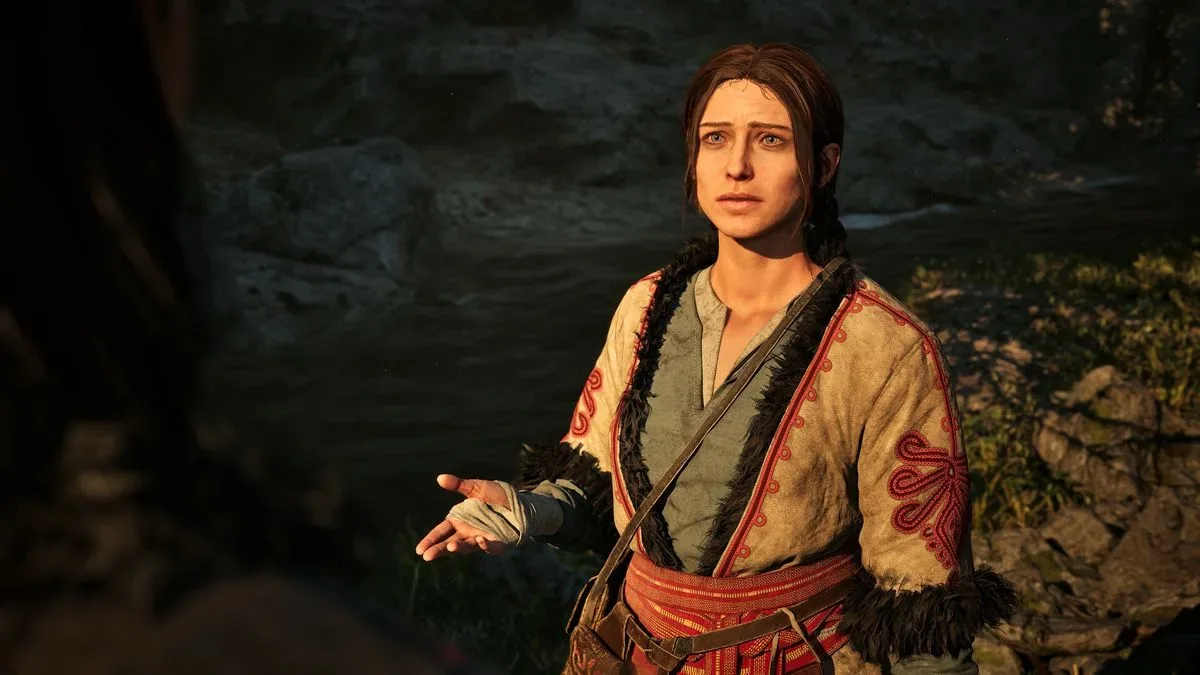
After four days spent building combat experience, the main story leads south to Anca and an abandoned convent. Anca believes the site's forbidden books may contain knowledge needed to defeat the vlakhir. Naturally, the convent is not empty.
A scarlet fog surrounds it, its former nuns have died during a plague, and the dead are still roaming the grounds. The undead are particularly troubling because putting one down does not necessarily keep it down. A fallen enemy can rise again, transforming even a briefly cleared area into a continued threat.
Soldiers barricaded in the infirmary offer access to a safer route to the library in exchange for help retrieving a relic. But the convent's more immediate mysteries can be pursued through investigation and distraction. Ringing the church bell draws the horde away, opening space to search for clues before daylight brings another shift in possibilities.
The library eventually sends Coen into catacombs, where the source of the convent's horror awaits: a rotting nun who once turned to demonic power in an effort to protect the convent from the Black Plague. She is beyond persuasion and becomes the first major wall for this Duelist run.
Her abilities combine several kinds of pressure. She can direct ravens at Coen, blink unpredictably across the catacombs, wield a rapid dagger attack, and raise additional undead. The fight punishes any player who has only learned how to duel straightforward soldiers or predict a bear's physical attacks.
Repeated defeats ultimately point toward the same answer as the earlier mountain encounter: stay focused, stay aggressive, and avoid giving the enemy room to dictate the fight. The lesson is not that aggression solves everything automatically. Instead, controlled pressure prevents a dangerous enemy from freely chaining movement, summons, and surprise attacks.
A demanding opening week leaves major questions ahead
Defeating the nun lifts the convent's curse and grants access to a cache of banned books. Studying them with Anca reveals two notable leads: a saint's magical sword and the enigmatic Font of Life. Yet even successful discoveries consume time, and the maps pointing toward the Font cannot be immediately followed if Anca refuses to travel into the mountains at night.
That is the persistent tension at the heart of The Blood of Dawnwalker. A player can gather power, help rebels, hunt supplies, explore ancient sites, and train against optional monsters, but the clock never disappears. The first week ends with the Font of Life still waiting in the mountains and Svartrau still unvisited.
So far, Vale Sangora seems to favor a grim, grounded fantasy mood in the vein of sprawling dark fantasy RPGs, even if its early side content has not yet offered many deeply developed detours. Its strongest first impression comes from combat. Duelist mode is unforgiving, expressive, and demanding enough to turn even a routine patrol into a meaningful encounter.
For players willing to embrace its pressure, the mode also makes character role-playing feel unusually concrete. Going all-in on Coen's vampiric side means more than selecting a thematic talent tree. It means choosing claws over comfort, blood over conventional healing, nighttime ambushes over safe roads, and a fighting style that rewards nerve at the exact moment hesitation is most tempting.
The next logical steps are clear: find the Font of Life, travel to Svartrau, and continue the search for Coen's family before the 30-day deadline closes in. But after surviving bears, soldiers, plague-ridden undead, and a teleporting nun, the first week has already proven that every victory in Duelist mode will have to be earned.


Community
Discussion
Start the conversation.
No comments have been posted yet.