


The Expanse: Osiris Reborn has an intimidating target in front of it. It is entering a crowded field of cinematic science-fiction role-playing games, it carries the expectations of a major multimedia franchise, and it comes from Owlcat Games, a studio already associated with deep, systems-heavy RPGs. The first substantial hands-on showing suggests the foundations are there for a compelling action game set in the world of The Expanse. There is responsive cover shooting, a rapidly escalating disaster, recognizable lore, and a squad-focused structure that naturally invites comparisons to genre giants.
What is less clear, at least from an hour-long slice of the game, is how fully Osiris Reborn will let players inhabit a version of the solar system that feels shaped by their own decisions. The demo offers hints of choices and character builds, but spends most of its time on a guided infiltration that turns into a hectic escape. That makes for an entertaining showcase of combat, yet it leaves the central question unanswered: what kind of RPG is The Expanse: Osiris Reborn aiming to be?
Owlcat Games lists PC, PlayStation 5, and Xbox Series X as platforms for the game, with a Spring 2027 release window. The studio's pedigree gives reason to expect more role-playing depth than this particular segment reveals. Its previous work on Pathfinder games and Warhammer 40,000: Rogue Trader has built a reputation around party management, narrative decisions, and dense character progression. Osiris Reborn is taking a markedly different form, however, trading isometric or tactical presentation for a third-person, cover-based sci-fi adventure.
An undercover assignment with surprisingly little resistance
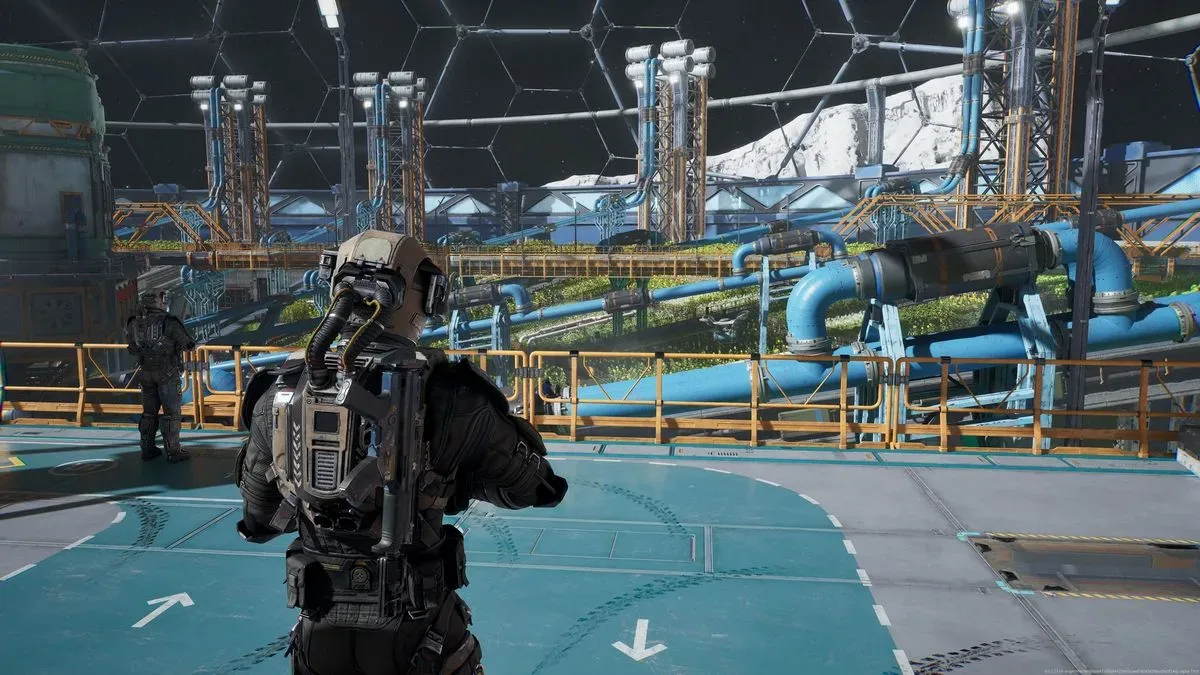
The playable mission begins at an outpost storage facility. The player character is looking for information kept inside a case, and secrecy is supposedly essential. Accompanied by their twin, J, the protagonist wears an Osirian space suit intended to help them blend into the location. The setup immediately sounds like a promising test for an RPG: a guarded environment, a false identity, a valuable objective, and plenty of room for social manipulation or stealth to go wrong.
For useful background on this topic, read Resident Evil Film Will Give the T-Virus New Behaviours Beyond the Games.
In practice, the infiltration seems unusually forgiving. Early on, two guards catch the pair where they do not belong. It feels like a natural moment for a dialogue skill check, a bluff, a threat, or an abrupt shootout. Instead, one guard simply persuades the other to let the intruders go. The result is an easy pass through a potentially consequential encounter, with no evident need for the player to use their character build or make a persuasive choice.
That pattern continues across the facility. Security systems become progressively more aware that something is amiss, while the people on the ground do not seem especially interested in stopping the player from moving around. Public terminals can be examined, server rooms can be entered, and the operation continues without much pushback. J even comments on the dated appearance of their disguises, which makes the lack of scrutiny feel more conspicuous.
There are some ability checks during the sequence, and one difficult quartermaster provides a more direct obstacle. But the demo does not appear to use its premise to show the range of role-playing outcomes that players may reasonably expect from Owlcat. An early mission does not need to present every system, of course. A tightly directed demo can also be designed to keep players moving toward a combat encounter. Still, when the game's core pitch involves a character-led RPG in an established political and social universe, it is understandable to want more evidence of negotiation, consequences, alternate solutions, or meaningful failure.
Once the alarms sound, the action comes alive
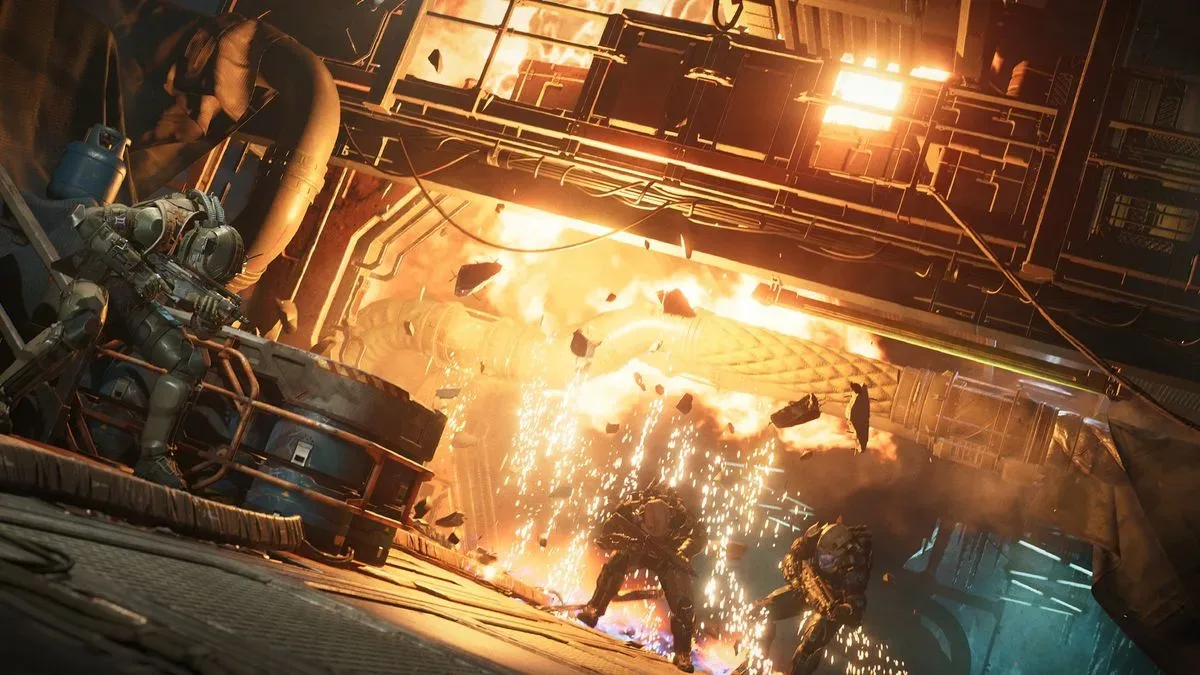
The mission gains energy when it becomes clear that the security response is not entirely about the player's presence. A military squad blasts through the station roof and drops into the facility, disturbing a biohazard container suspended overhead. Inside is a crystalline hybrid creature familiar to fans of The Expanse. Its arrival transforms a quiet data theft into a crisis, sending the protagonists into an urgent flight through a station collapsing into panic.
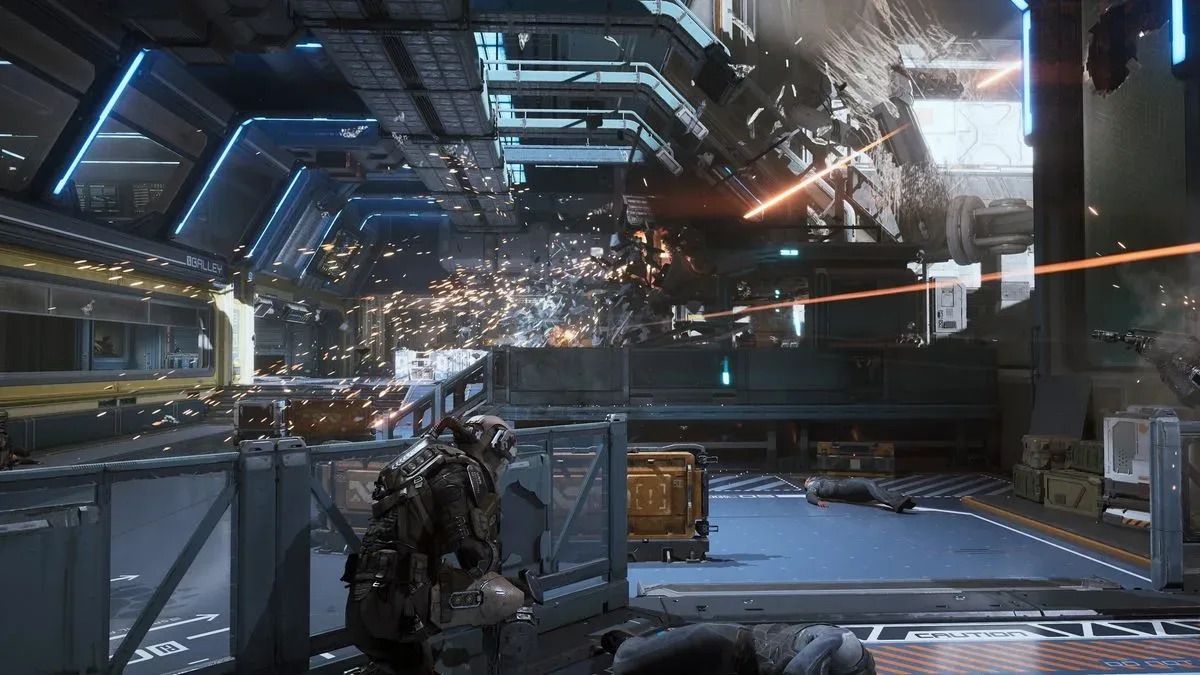
This is where Osiris Reborn makes its strongest immediate case. The player character in the demo has a build tailored around remote support tools: a deployable drone and turret that can attack from useful positions when a direct shot is difficult. It is a focused loadout rather than a broad tour of every class or ability option, but it supports the game's cover shooting effectively. The tools make combat feel more tactical than simply leaning out and firing, asking the player to consider sightlines, enemy placement, and when a stationary gadget can create pressure from a safer angle.
Encounters also start demanding more deliberate movement. One battle leaves limited safe cover while enemies attack from higher ground. Another introduces a heavy opponent who uses firebombs to force the player out of protected positions. Those situations give the drone and turret real purpose, while the escalating chase lends the firefights a momentum that the earlier infiltration lacks.
The comparison point is obvious: Osiris Reborn is reaching toward the broad space occupied by Mass Effect-style squad RPGs, where dialogue, companions, abilities, third-person shooting, and galaxy-spanning drama all meet. The demo's gunplay does not need to duplicate any older series to benefit from that lineage. Its own combat identity appears to be rooted in the harsher, more grounded atmosphere of The Expanse, where survival is often messy and confined spaces become dangerous quickly.
For viewers invested in the television adaptation's sense of pressure and catastrophe, the hybrid sequence should be a reassuring sign. The stakes are not abstract. Civilians are trapped, infrastructure is failing, security forces are hostile, and a creature capable of devastating a station is bearing down on everyone. The setting's recognizable imagery is not merely decorative; it provides the reason the mission becomes a desperate scramble instead of a standard extraction.
A consequential decision without a visible aftermath
The demo does offer one more substantial decision near its conclusion. The protagonists need to draw the hybrid to an agricultural area so they can use a solar array against it. Farmers in the area are endangered, and the player must choose whether to send a companion away to guide civilians to safety or keep that ally nearby for the coming confrontation.
Keeping the companion seems like the pragmatic combat choice. Going into a boss encounter with fewer people at hand is an unattractive prospect, especially after the preceding escape has established how dangerous the hybrid can be. But choosing the stronger fighting position potentially leaves the civilians more exposed. Some are killed amid the confusion, although their fate is complicated by their own panicked movement through the combat space.
It is the type of decision that could become meaningful in a full campaign. Perhaps rescued civilians, companion approval, future quests, public reputation, or the condition of the outpost will reflect the choice. Perhaps the game will instead treat it as a localized moment of tension. The demo ends before the hybrid boss battle and before any clear response to the player's decision can emerge, so there is no way to judge the longer-term impact.
That missing aftermath is emblematic of the broader uncertainty. The footage and hands-on material demonstrate a capable shooter with an appealing setting. They do not yet demonstrate how extensively Osiris Reborn will branch, how much companions can influence events, whether alternate character builds substantially change approaches, or how often players will be asked to define their own captain and crew.
Strong potential, with important questions still open
It would be premature to take one curated demo as a full measure of an RPG's depth. Role-playing games are notoriously hard to communicate in a short hands-on appointment, particularly when their best qualities depend on accumulated decisions, relationships, progression, and knowledge of the wider world. A vertical slice may prioritize a flashy action sequence simply because it is easier to show quickly than the consequences of a conversation from ten hours earlier.
And there are meaningful positives here. The Expanse: Osiris Reborn appears to understand that its license needs more than familiar names and imagery. The setting's hazards, factions, technology, and frightening biological mysteries can create a distinctly tense backdrop for third-person action. The drone-and-turret build suggests that abilities may matter beyond passive stat bonuses. Most importantly, Owlcat's history gives players a credible reason to believe the deeper RPG layer may be waiting beyond this narrow mission.
For now, Osiris Reborn looks like a solid cover shooter that knows how to stage an Expanse-flavored emergency. Its next challenge is proving that players will not just shoot their way through that world, but meaningfully shape their place within it. With a Spring 2027 launch window, there is still time for future showings to put its character choices, party dynamics, and branching consequences in the spotlight.
Community
Discussion
Start the conversation.
No comments have been posted yet.