

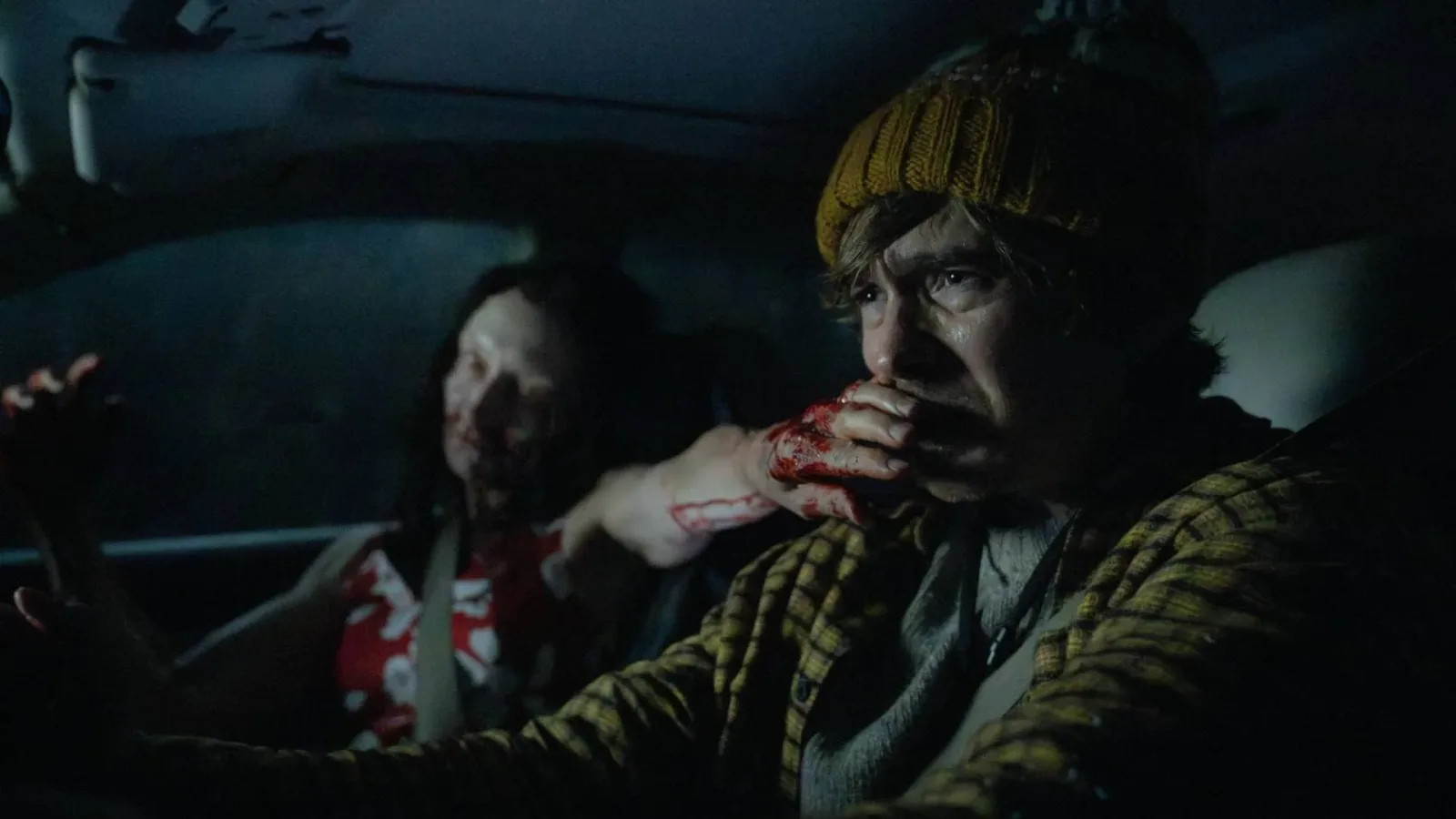
The new Resident Evil movie is approaching with a premise that should sound both familiar and deliberately unpredictable to longtime players. Umbrella Corporation is part of the picture. The T-Virus is part of the picture. Zombies are certainly part of the picture. Yet writer-director Zach Cregger is not treating the infection as a simple visual checklist pulled directly from Capcom's survival-horror games.
Cregger has said the film will feature unique behavioural changes in the way its T-Virus functions--ideas that do not appear in the games. Crucially, he does not view those additions as breaking the rules or disregarding the series. Instead, the intention appears to be finding room within Resident Evil's established biohazard fiction to create a version of the outbreak that can surprise an audience, including fans who already know the franchise's many monsters, mutations, and corporate catastrophes.
That distinction may be important for a series with decades of lore behind it. Resident Evil has never presented the T-Virus as a harmlessly straightforward zombie-making device. Across games, films, animated projects, and other adaptations, the consequences of viral experimentation have varied widely. Infection has produced shambling undead, aggressive mutations, and increasingly elaborate biological weapons. Cregger's comments suggest that the new movie will explore another angle: not simply what an infected person or creature looks like, but how the virus may alter behaviour in a way players have not previously encountered.
A familiar virus with unfamiliar consequences
Speaking about the film, Cregger explained that the new material is meant to sit alongside the games rather than openly contradict them. He also indicated that identifying the exact creature or situation behind his comment would reveal too much of the movie's plot. That leaves plenty unresolved, but it establishes an intriguing expectation ahead of the theatrical release.
For useful background on this topic, read Civilization 7's Arc of Tomorrow Update Will Add the Atomic Age in 2027.
"I don't think they break the rules of the games, but you'll see unique behavioural things about the way the T-virus works that the games don't do," Cregger said. "That's something that I really enjoy. I think it's cool."
For fans, the phrase "behavioural things" is more suggestive than a promise of another new monster design. Resident Evil's best-known enemies often communicate their danger immediately through silhouette: a zombie's decayed gait, a Licker's exposed brain, a Tyrant's imposing frame, or the grotesque forms associated with later-stage mutation. Changing behaviour, by comparison, can reshape suspense. It can affect the rules that characters use to survive, alter whether a threat can be anticipated, and make a familiar hallway, house, or isolated shelter feel newly unsafe.
The trailer has already offered glimpses of zombies as well as more unsettling creatures, several of which do not appear to line up neatly with recognizable game mutations. Cregger's explanation gives that imagery additional context. The movie is not necessarily using unfamiliar designs merely for novelty. At least some of its creatures may be tied to a broader effort to present an outbreak with its own disturbing patterns and physical logic.
The "giant human tumbleweed" is a separate mystery
One trailer creature that has already caught attention is not, however, the subject of Cregger's guarded T-Virus tease. The director specifically separated his spoiler-sensitive comment from the multi-limbed figure encountered by Bryan at a remote cabin. That creature, which has also been featured on a poster, has been described by Cregger as a "giant human tumbleweed."
It is an arresting description, and it points to a monster built around motion as much as appearance. Rather than relying exclusively on digital effects to establish the creature's strange locomotion, the production used physical performers in its development. Cregger worked with performers including Cirque du Soleil artists to study how such a tangled mass could move, halt, and roll in a convincing manner.
"I used a lot of physical performers, like Cirque du Soleil people, to approximate it, so we could see how it would move and how it could stop and start and roll correctly," Cregger said.
That process reflects an approach well suited to Resident Evil. The games have always derived much of their horror from movement: a slow figure coming through a door, an animalistic enemy suddenly closing distance, or a creature whose animation makes it difficult to read. A "human tumbleweed" could become memorable not simply because it is grotesque, but because the audience sees it move with an unnerving internal structure before it is fully understood.
Cregger described researching, studying, and ultimately realizing the creature as a particularly satisfying part of the production. While the final effect will naturally determine how it lands on screen, the emphasis on performers suggests a desire for weight, rhythm, and tactile unpredictability. That could help set it apart from a generic CG monster, especially in the confined and hostile environment suggested by the cabin material.
An adaptation choosing its own protagonists
The film has generated substantial discussion because it is not centered on familiar game heroes such as Leon. For many viewers, characters like Leon S. Kennedy, Claire Redfield, Jill Valentine, Chris Redfield, and Ada Wong are inseparable from what Resident Evil means. They carry the emotional continuity of the game series, and each has built a following through multiple entries and reinventions.
Cregger is aware that some fans are frustrated by the absence of Leon in this particular story. His response has been to argue that the movie is still intended to make those fans feel recognized. The presence of Umbrella and the T-Virus is therefore more than brand decoration; they are the foundational ingredients through which the film is attempting to connect with Resident Evil's identity, even as it tells a story with a different focus.
That approach carries an obvious challenge. An adaptation can stumble when it repeats familiar names without capturing the tension, atmosphere, or worldview that made the original memorable. But it can also become overly cautious when it treats every deviation as forbidden. Resident Evil itself has changed repeatedly across its history, moving from the mansion horror of the original game to action-heavy global outbreaks, village folk horror, and first-person survival terror.
The upcoming movie appears to be pursuing a similar balancing act: recognizable institutions and biohazard concepts, combined with a plot and creature behaviour designed specifically for this film. Whether that blend works will depend on the execution, but the T-Virus comments make clear that Cregger is not merely recreating an old outbreak beat for beat.
Resident Evil 4 and Resident Evil 7 as different points of inspiration
Cregger has also discussed drawing distinct inspiration from Resident Evil 4 and Resident Evil 7. Those games represent very different flavors of the franchise, which makes them revealing reference points for the movie.
Resident Evil 4 is known for pressure, hostile rural environments, escalating set pieces, and threats that often feel organized and aggressive rather than traditionally undead. Resident Evil 7, meanwhile, returned the series to a tighter, more intimate form of horror, with a decaying domestic setting and a first-person perspective that emphasized dread, vulnerability, and uncomfortable proximity to the infected.
A movie shaped by both could potentially combine forward momentum with claustrophobic fear. The remote cabin setting seen in promotional footage already evokes the kind of isolation that can make Resident Evil 7's influence feel relevant. Meanwhile, the promise of unusual viral behaviour and gnarlier creatures suggests an escalation that fits the heightened danger associated with Resident Evil 4.
There is no indication that the film will directly adapt either game's story, characters, or specific enemies. The influences instead appear to concern tone and creative direction. That leaves room for the movie to use familiar franchise DNA without requiring viewers to treat it as a scene-for-scene translation of a particular campaign.
Why the T-Virus still matters
In a franchise crowded with parasites, molds, engineered strains, and increasingly complicated bio-organic threats, the T-Virus remains one of Resident Evil's clearest symbols. It is tied to Umbrella's ambition, the collapse of containment, and the terrifying notion that a corporate experiment can transform ordinary places into disaster zones. Bringing it back for a new theatrical story offers instant thematic recognition, even if the mutation rules are being expanded.
The key question is not whether every infected victim follows a previously documented game pattern. It is whether the virus creates the right kind of dread: a sense that exposure changes the environment, destroys trust in the body, and makes human control seem fragile. Cregger's comments suggest the movie wants to make that uncertainty active rather than decorative. If the audience cannot entirely rely on what it knows from the games, the T-Virus can feel dangerous again.
That uncertainty also gives the film an opportunity to distinguish its horror from simple monster recognition. Players may enjoy spotting a familiar reference, but a new cinematic threat needs to work for audiences who have never fired a handgun in the Spencer Mansion or escaped Raccoon City. Behaviour is one of the most direct ways to establish that threat. It can be understood immediately, even before an explanation arrives.
Resident Evil reaches theaters September 18
Resident Evil is set to arrive in theaters on September 18, less than two weeks after Cregger's latest comments. Early tracking has indicated strong interest in the film, though its ultimate reception will hinge on how effectively it combines its fresh ideas with the expectations attached to one of gaming's defining horror series.
For now, the trailer's odd creatures, Umbrella's return, and the prospect of a T-Virus that behaves in previously unseen ways offer a clear message: this is not aiming to be a museum piece. It is a Resident Evil story built around recognizable ingredients, but one willing to let the infection evolve. Fans will soon learn what Cregger has kept under wraps--and whether those new behavioural rules produce the kind of fear that has kept Resident Evil alive for so long.
Community
Discussion
Start the conversation.
No comments have been posted yet.