

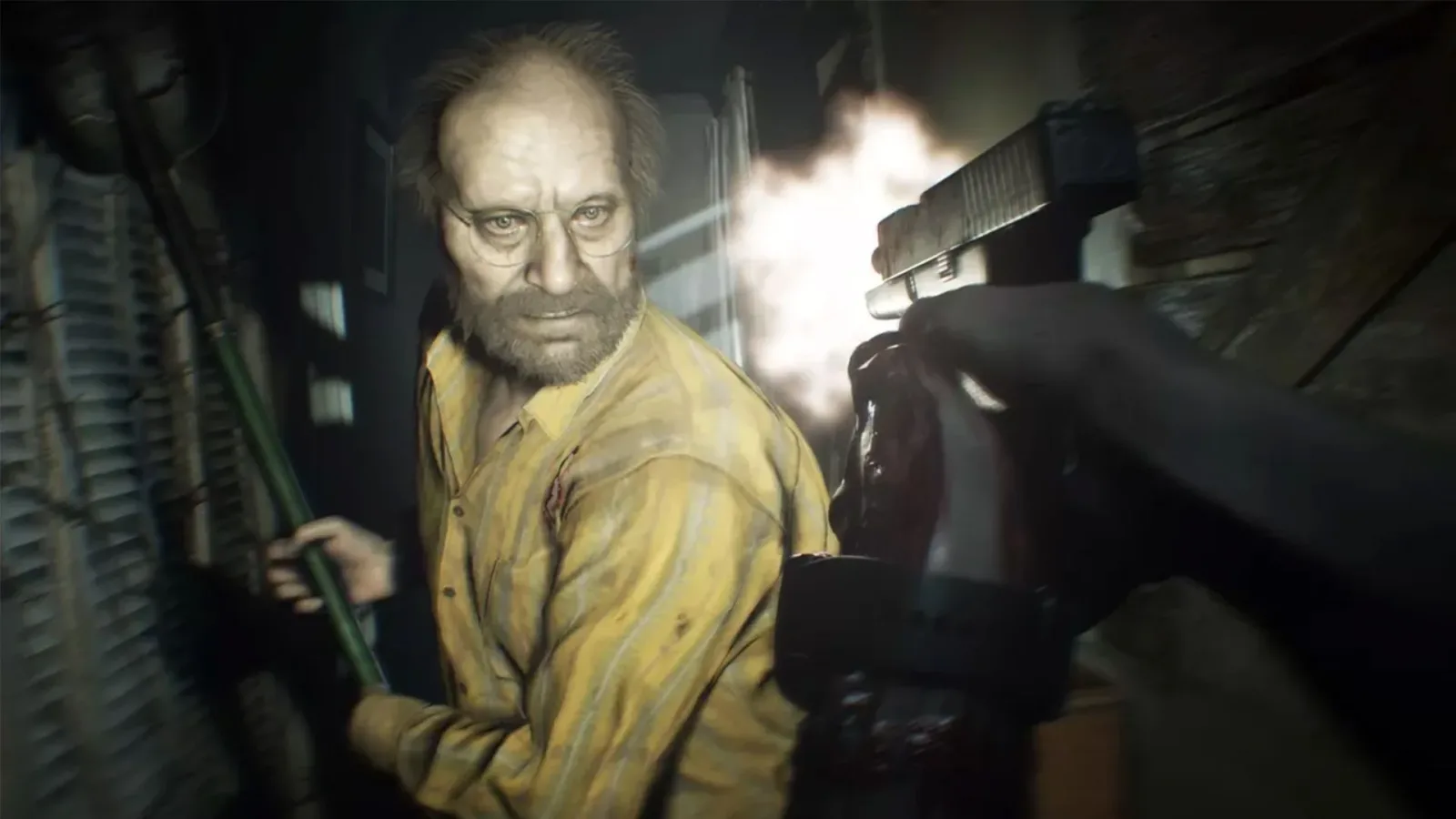
Resident Evil 7: Biohazard is widely remembered as the moment Capcom's long-running survival-horror series found a sharper identity again. Its move to a first-person perspective, its claustrophobic Louisiana setting, and the deeply unsettling Baker family all marked a major contrast with the globe-spanning, action-heavy spectacle of Resident Evil 6. Now, former Capcom senior manager of global production Miguel Corti has offered further perspective on the thinking behind that transformation.
In a detailed series of comments shared on BlueSky, Corti said that early plans for Resident Evil 7 passed through multiple versions. A key influence, he said, was not simply the explosive popularity of multiplayer shooters or the growing audience for zombie modes in games such as Call of Duty. Instead, the development team looked closely at the impact of The Last of Us, particularly its ability to combine commercial success, critical admiration, and a strongly authored single-player story.
Corti's recollection helps explain why Resident Evil 7 did not merely reduce the scale of its predecessor. It also refocused the series around mood, character, mystery, and a more intimate kind of fear. The game retained the franchise's monsters, conspiracies, and elaborate lore, but it presented them through the eyes of Ethan Winters, an ordinary-seeming protagonist entering an isolated nightmare in search of his missing wife, Mia.
A Search for a New Direction
By the early 2010s, Capcom was navigating a complicated period for Resident Evil. The series remained enormously important and commercially powerful, but its identity had broadened considerably. Resident Evil 4 had revolutionized third-person action design, while Resident Evil 5 expanded that formula into a cooperative blockbuster. Resident Evil 6, released in 2012, pushed even further toward large-scale action with several playable leads, intersecting campaigns, extensive set pieces, and a story spread across numerous locations and threats.
For useful background on this topic, read Anime Galaxies codes: Active Gems, Trait Crystals, and Stat Rewards.
That approach had supporters within the company. Corti noted that Capcom executives were satisfied with how Resident Evil 6 performed. Its commercial results meant that a complete rejection of its ideas was not necessarily an obvious business decision. Yet the response from many players and critics was more divided. For some fans, the game's multiple campaigns and escalating action came at the expense of the dread, tension, and careful resource management that had defined earlier entries.
The challenge for a new mainline installment was therefore not just to make a game that sold. It was to determine what kind of Resident Evil could feel meaningful in a market where cinematic single-player games were increasingly attracting major attention.
"The devs wanted the critical acclaim other games were garnering," Corti wrote, adding that many of those games had themselves been visibly shaped by the legacy of Resident Evil.
That desire for recognition is an important part of Corti's account. It suggests the team's shift was not framed purely as a reaction to sales figures or genre trends. Developers wanted the series to once again be part of the critical conversation around ambitious, memorable single-player games. In Corti's telling, The Last of Us offered a compelling example of what that could look like.
The Last of Us as a Creative Touchstone
Released in 2013, The Last of Us became a major point of reference for narrative-driven games. Its post-pandemic setting contained infected enemies and survival elements, but its reputation was built above all on the relationship between Joel and Ellie, its grounded presentation, and its emotional storytelling. Corti said that early concepts for Resident Evil 7 took cues from that kind of experience, with a mandate to place narrative at the center of a single-player game.
That does not mean Resident Evil 7 became an imitation of Naughty Dog's game. The finished title is structurally and tonally very different. Where The Last of Us follows a long journey across a ruined United States, Resident Evil 7 confines much of its opening and most memorable horror to the Bakers' decaying property. Where Naughty Dog emphasized a companion relationship, Capcom used isolation to make Ethan's vulnerability more immediate.
Still, there are clear areas of overlap in the broader priorities described by Corti. Both games take their characters and settings seriously, use horror-adjacent threats as part of a larger personal story, and seek immersion through detailed environments rather than constant spectacle. For Resident Evil 7, those ideas were filtered through the franchise's own traditions: locked doors, hidden keys, grotesque bio-organic weapons, elaborate documents, puzzle-solving, and the persistent fear that safety may only be temporary.
Corti also said the plan was for the game to be more narrative-led while establishing stronger lore connections. This was a notable goal after Resident Evil 6, whose dense, multi-character plot could feel difficult to follow even as it assembled familiar figures from across the series. Resident Evil 7 initially seemed more detached, introducing a new protagonist and an unfamiliar rural setting. As its story unfolded, however, it connected the Bakers' tragedy and the mold-based threat to the broader Resident Evil universe.
From Global Spectacle to Close-Quarters Terror
The finished game's first-person camera became one of the clearest symbols of its course correction. It put players directly inside the Baker estate's narrow corridors, dim basements, and grimy rooms. Instead of watching an established hero execute stylish maneuvers from a distance, players were invited to feel exposed. Ethan could fight, but he often seemed outmatched, injured, and unsure what waited around the next corner.
That perspective also supported the game's most effective horror sequences. Jack Baker's relentless pursuit through the house gave the experience an unpredictable, stalking quality. Marguerite Baker introduced a different kind of body horror, while the old house and its insect-infested spaces leaned into disgust and discomfort. Even when the game expanded beyond the main house, its strongest moments generally remained rooted in the sensation of being trapped somewhere hostile and deeply wrong.
It is telling that Corti described Resident Evil 7 as the result of several iterations. Major creative shifts rarely emerge from one simple decision, especially for a franchise with the commercial importance of Resident Evil. The eventual game had to satisfy a variety of needs: restore fear, modernize the presentation, tell a coherent story, preserve connections to the series' mythology, and establish a foundation for the future.
In that sense, the game's compact focus may have been as important as its camera angle. The Bakers gave the experience a recognizable central threat and a human dimension to its horror. Ethan's search for Mia gave players a clear immediate objective. The mold and Eveline provided a unifying mystery. The result was still strange and frequently exaggerated in the classic Resident Evil way, but its core journey was easier to grasp than the sprawling conflicts of its predecessor.
A Foundation for Resident Evil's Modern Era
Resident Evil 7 did not need to replicate the exact commercial scale of every blockbuster peer to prove its value. Its impact was more visible in what followed. The game revitalized enthusiasm around the mainline series and established Ethan Winters as the lead for Resident Evil Village, the eighth numbered entry. That sequel continued the first-person approach while widening the scope, moving from the Bakers' oppressive estate to a broader village filled with distinct horror domains.
The success of the seventh game also arrived during a period in which Capcom further strengthened the franchise through acclaimed remakes. Together, those projects demonstrated that Resident Evil could support several different expressions of horror: modern first-person stories, reimagined third-person classics, action-oriented confrontations, and slower survival-focused tension.
Corti's comments place The Last of Us within the creative environment that encouraged this evolution. The influence he describes is indirect but meaningful. It was not about copying another game's exact structure. It was about seeing proof that a single-player horror-adjacent story could command both a huge audience and serious acclaim, then asking how Resident Evil could pursue that ambition on its own terms.
With Resident Evil Requiem continuing the series in 2026, the legacy of that decision remains evident. Resident Evil 7 was a reset in tone without being a break from the franchise's past. It showed that Capcom could reconnect with fear and narrative focus while still embracing the strange mythology that makes Resident Evil distinct. More than a retreat from Resident Evil 6, it became a blueprint for how the series could move forward.
Community
Discussion
Start the conversation.
No comments have been posted yet.